Assuming Intent

The year was 1997. Accomplished chess player Garry Kasparov was again facing a unique opponent, the computer known as Deep Blue. When the computer made a move that appeared irrational to Garry, he grew agitated and visibly upset. Understanding that the computer was programmed to “see” all of the possible outcomes many moves into the future, Gary assumed intent behind this seemingly nonsensical decision. Frustrated, Garry walked away, forfeiting the game.

Only later to find out that the strange move by the computer was driven not by advanced programming, but rather by a glitch in the software. Garry had assigned intent to the move, when it was actually just a random action in response to an error.

I found myself thinking of Garry yesterday when I was attempting to navigate the icy roads of Atlanta after a surprisingly large snowstorm. A car suddenly cut in front of me in order to move from the far right lane to far left. At first, I was angry, assuming that this person knew about the cars behind him and intentionally made the decision to cut them off, slippery roads not withstanding.

And then a red light allowed me the opportunity to study the man behind the offending car. Far from the cocky and arrogant demeanor I expected from someone who apparently believed they had the run of the road, he seemed lost. Confused, even. I had been assuming intent behind his actions, when his countenance made it seem more like it was a random (and careless) action in response to an error.

How often do we fall into similar traps? Assigning meaning to the meaningless… Believing in intent when it’s accidental… Envisioning targets on our backs when really we just happen to be standing in between the arrow and its goal…

When we see the outcomes, we easily believe that we also understand the motivations. We assume intent and often act on these assumptions. Yet when we do so, we’re responding not to the reality of the situation, but rather our premature understanding of it.

The next time you find yourself assigning intent to someone’s actions, think of Garry and take a moment to consider that maybe what you’re seeing is just a mistake.



The Unintended Consequences of Overreacting

overreacting

The unintended consequences of overreacting…

One of the characteristics of a good marriage is that it is a safe space for both parties. Ideally, it becomes the sanctuary where you can take off your armor and feel comfortable wearing only your thin and vulnerable skin. It’s the place where you don’t have to pretend, where you can say what you feel and be loved for who you are. It’s where the tough conversations happen and wild emotions are tamed in the interest of the team.

I failed my first husband in this regard.

I went into that marriage scared. Scared of losing him. Scared of being alone. Scared of being unlovable. Scared of the consequences of adult decisions. And scared to face my own fear.

And the result of all this fear was that I didn’t create a space where he could feel safe expressing his own doubts, his own worries, his own fears. I unintentionally communicated the message that he wasn’t able to be open with me because I was too afraid to sit with the uncomfortable feelings it would stir up in me. I went into the marriage feeling abandoned – by my dad and by my friends who had died way too young – and my ex quietly assumed the role of reassuring me that I wouldn’t feel left again.

And so when his own crisis hit, when he began to feel less-than and unworthy and scared, he didn’t feel like he could turn to me. Instead, he turned inward. He tried to drown his shame in drink, he covered his fears with lies and the whole time, he kept me feeling safe. Secure.

I never told him he couldn’t talk to me. I never belittled him or questioned his feelings.I never lied, never raised my voice and never responded with contempt.

I thought I was doing my part to create a safe space for him.

But I wasn’t.

I didn’t give him the freedom to say the hard things without facing the entire brunt of my emotional burden. It must have felt like opening the car door only to fear being flattened by an oncoming eighteen-wheeler. Safer to simply keep the door closed.

I thought I was a good wife because I tried my best to lift him up.

But I wasn’t.

I didn’t understand that, rather than focus on him, I could do more good by focusing on me. By addressing my fears and my reactions, I had the power to help shape the very nature of our marriage, to make it a safer place for both of us to be open and vulnerable and to remove the burden of my emotional well-being from his shoulders.

I thought that I was doing the right thing by ignoring my fears of loss.

But I wasn’t.

Shoving those feelings aside didn’t mean that they were not there. Instead, they became a quiet hum, the perpetual background noise that would rise to a scream anytime it was provoked.

In all the lessons from the end of my marriage, perhaps one of the most important has been learning how to be okay with the idea of loss. To be okay staying with the uncomfortable feelings without erupting into a panic. To be okay hearing the hard words without internalizing them or catastrophizing them. And to make every effort to be calm even when my now-husband is expressing things I would rather not hear.

Because part of making marriage a safe space is to create an environment where each person can feel permitted to speak without excessive consequence. And that ultimately comes down to taking care of your own emotional wounds and narratives.

I still struggle sometimes with not overreacting. But like with anything, practice makes better. And life seems to give plenty of opportunities to keep learning.


A quick note here on responsibility – I am not excusing my ex husband’s decisions. What he did was oh-so-very-wrong in every way. I did not make him cheat, lie and turn to addiction. His choices and actions are his responsibility. My role is to look at what I could control, how I contributed to the environment that allowed his actions to occur, and address those things. I can’t change the past, but I can learn from it and keep trying to do and be better.


The Problem With Always Being “The Strong One”

strong

On Wednesday, I taught the wrong lesson to my 6th grade classes. And then on Thursday, I somehow lost the lesson I had previously prepared for my 8th grade classes. Friday was blessedly uneventful and then on Saturday, I walked into my yoga studio without any of my yoga gear.

None of this is like me. I’m always the Type A, super-planned and over-prepared type of person. My yoga bag, that I’ve never forgotten before, has two of everything. You know, just in case.  I’m the one that acted as a reminder and an alarm clock for friends and family before phones evolved to provide those services. My brain usually attends to details and dates without a problem. Both professionally and personally, I’m seen as the dependable, responsible and has-her-stuff together one.

But right now, that’s not the case.

Luckily, I’m not having trouble because of anything bad. I’m just struggling to handle too much. Yet in some ways, the results are similar. I’m having a hard time and, because I’m typecast as “the strong one,” I don’t always feel like I’m allowed to have a hard time.

I see this dynamic so often in single parents as they appear to balance it all during the day, only to collapse in tears behind the privacy of the closed bedroom door at night. They have no choice but to be strong – to keep it together for their children, even as they feel like they’re falling apart.

On the one hand, it feels good to be deemed strong, it means you’re independent, determined and resourceful. On the other hand, the moniker often brings with it an additional burden.

Because when you’re always the “strong one,”

You don’t feel like you’re allowed to break down.

When you’re always told that you’re strong or that you have it together, you don’t feel like you’re given permission to be any other way. You may be  told that you put this pressure on yourself, but the labels also promote this pressure. The expectations are there, you can uphold them or dash them.

You help others even when you need help.

When you’re the strong one, others depend upon you. Your own hardships get sublimated or postponed in your efforts to support others. Sometimes, this can be a blessing, because you’re not able to wallow when you’re busy lending a helping hand. Yet other times, you push yourself to exhaustion because you don’t give yourself permission to take a break.

You feel like you have to maintain the image.

When you’re the strong one, others look to you to learn how to push through. And you don’t want to let them down. Once you’ve assumed that role, it’s hard to take a break from its demands. And if you’re modeling fortitude for your children, it’s even harder to admit that sometimes you simply can’t do it.

People minimize your struggles.

“Oh, you’ve got this,” your friend breezily says as you try to confide your growing panic. When others perceive you as indomitable, they have a hard time believing that you are really fighting to keep it together. Your complaints are brushed aside or excused with a pat response, leaving you feeling like you have to do this alone.

You don’t know how to ask for help. 

You’re not accustomed to asking for help, so you ask quietly, or obtusely. Since you’re the one others turn to, you don’t know where to go now that you need support. You know that it’s okay to ask for help, but you still grapple with truly believing it.


All of us have time when we are the strong ones and time when we need to rely on the strengths of others. There is no need to be typecast in one role or the other, we can all move fluidly between the two positions.

One of the gifts I received from my divorce was the shattering of my lifelong “strong one” title and the need to learn to accept help. Even in my weakened state, I learned that people didn’t think less of me because I couldn’t do it all. In fact, I think, if anything, my increased vulnerability made me even closer with others.

Because all of us have times of strength and times of need.

It’s okay to embrace your role as the strong one.

And it’s also okay to let it go.


Turning Back the Clocks

My social media feeds this morning have been filled with various iterations of the following:

IMG_1074

The meme made me think. If I could turn back the clock to twenty, would I want to?

My immediate (and powerful) reaction was hell, no.

I had a specific image of twenty come to mind. I was in the living room of the apartment that I shared with my now-ex. The generous space was only furnished with a cheap couch from Montgomery Ward and a large, black, hand-me-down trunk that was serving as a television stand. It was shabby and yet I had such pride in the space because it was mine.

It was a Sunday, and so I was home just after 6:00 pm from my job as the manager of a tanning salon. I was grabbing a quick bite to eat before tackling an assignment for one of my classes (which was always frustrating because this professor used an online platform for submission and our dial-up internet often wasn’t up to the task).

While eating, my then-boyfriend came through the door. As always when he returned from his work at Sea World, our pug pressed her nose into every inch of his uniform, inhaling the delicious (to her) smells of sweat, oil and fish. He soon stripped off his uniform and headed to the shower while I headed to the home office to begin my assignment.

We were in limbo that year. His job offered no opportunity for advanced, he found the work un-stimulating and the wages were not sufficient to provide for any real future. He didn’t have much direction, but knew that we would most likely have to leave San Antonio in order for him to secure something better in his field.

Meanwhile, I had already given up on my first degree choice and was weighing options for a second choice while I completed the basic requirements. I hesitated to make any firm decisions, waiting instead to see where his job would take us.

Yes, in some ways life was easier then. Having little in terms of income or possessions meant there was little to lose. I had the certainty only found in the young that my boyfriend would always be by my side. I was drifting, but also not too worried about it because time seemed to stretch out in front of me like an endless Texas highway.

But I still wouldn’t want to go back.

Because I am grateful for every experience I’ve since then, either because I enjoyed it in the moment or because that event imbued me with wisdom and perspective. And even though I would love to have the smooth skin of twenty again or the ability to recover easily from a late night, I would much rather have the more wrinkled and tired version of myself that I am now. Because this is the person that my twenty-year-old self was waiting to find.

How about you? Would you want to turn back the clock? If so, to what age?

Not Suitable For Release

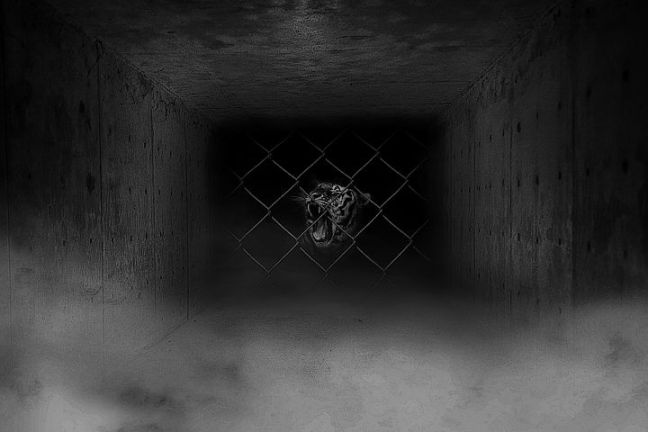
Several days ago, a tiger was spotted near I-75 just outside of Atlanta. I can only imagine the initial reaction of the 911 center when the first call came through early that morning –

“911. What’s your emergency.”

“Uh, yeah. There’s a tiger walking down my street.”

“Did you say a tiger, sir?” the operator responds, trying to maintain professionalism and keeping the incredulousness out of her voice.

“Yes. A tiger.”

Hours later, a woman was alerted to something by the sharp barks of her dog outside in the yard and the sudden illumination of her kitchen from the headlights of the police cars. The timing was serendipitous; just as the great cat snatched the small dog in its jaws, the police fired upon the tiger. The dog was fine. The cat, unfortunately, had to be killed. With the city beginning to stir and children heading to their bus stops soon, it was simply too dangerous to wait for the team with the tranquilizers darts to arrive on scene.

It wasn’t until later that night that the full story came out. The tiger was part of a circus convoy driving to Tennessee. Somehow, it managed to escape the trailer while it was parked overnight and it decided to explore the wilds of central Georgia.

This story made me think about the life of that female tiger. I don’t know if she was born in captivity or captured as a cub, but I do know that she spent years in captivity. In some ways, her life as a kept animal was easier than that in the wild – she never had to face hunger, she didn’t have to work too hard for food and any injuries or illness would be quickly attended to.

And like all animals accustomed to captivity, I’m sure she adapted. Over time, those natural instincts to hunt and wait and fight for food would begin to soften. Her nose, no longer needed for survival, would become lazy. And her ability to endure the hardships would weaken as she grew comfortable in her limited and unchallenging world.

After only a brief period in captivity, many wild animals are deemed, “not suitable for release.” They have become too soft, too complacent to make it out in the real world with its fights and its famines. They no longer know how to hunt. They have forgotten how to interact with the group. They have lost the drive and the grit to survive.

Much the same can happen to us. When we’re held in environments that both constrain us and overly care for us, we can become soft. Forgetful of how to be hungry and fearful of struggle. Like the captive animals, we become accustomed to things being easy and we can flounder when circumstances become more difficult.

There’s a lesson here, one of which I’m always cognizant of in the classroom, when we try to make things too easy, to remove all of the discomfort, we are teaching our children and ourselves to be dependent, not suitable for release. I’ve never been a fan of “no pain, no gain,” but I’m a big believer in the idea that struggle is what makes us strong. There’s a huge span between comfortable and pain. And that’s where the growth happens.

However, all that being said,

Snip20170929_1