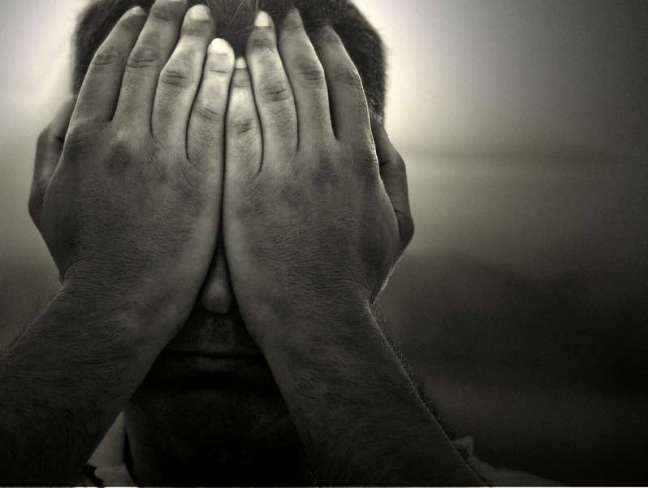
Signs It’s Time to Make a Change

Change is hard.

And so, like with many things that are hard, we often do our best to avoid it.

Sometimes, we are left with no choice. After all, when the house is on fire, there’s nothing to do but run out out the door.

But instead, if that house is just a little too confining or the wrong layout or misplaced for our needs, we’ll engage in all sorts of mental gymnastics to avoid making a change.

And of course, this doesn’t just apply to homes. It’s true when it comes to careers, to appearances, to habits and to relationships. When we’re not quite content, but there is a lack of an urgent need to change course, we’re in a state of limbo.


“I’m fine where I am,” you say.

I don’t feel at peace with myself,” you think.

“I’ve been doing this for years, why change now?” you say.

If I don’t make a change now, I never will,” you think.

“At least this is a known entity. The alternatives could be worse,” you say.

But I won’t know unless I try,” you think.

“I could fail,” you say.

I am stagnating,” you think.

There are no clear and consistent signs that deciding to make a change is the right choice.

Yet there are four indications that the challenge of change is preferable to the temporary comfort of staying put:


There Are No More Variables Left to Change in the Current Situation

I am going to continue with the house analogy here, because it make this easy to understand. If you’re unhappy with your home, it makes sense to first paint the walls and install a new area rug. If that doesn’t improve your feelings towards the house, maybe next you invest in a more substantial remodel. Yet at some point, if you’ve addressed all of the logical variables that can be modified and you’re still not satisfied, it’s time to move on.


Staying With the Status Quo Has Begun to Feel Like a Grind

There are always times in life when we have to put our heads down and simply push through to get through. Yet all of life shouldn’t feel like mile 60 in a 100-mile race. We are creatures of inertia; we’re very good at doing what we’ve done and less skilled at changing direction. Yet maybe that is exactly what needs to happen if the groove carved by trudging the same path feels like you’re digging your own grave.


You Approach the Thought of Change With Both Excitement and Fear

Not only is change hard, it is scary. It requires a leap of faith as you leave behind the implied security of the known terrain. It asks you to meet new challenges before you’ve proven yourself. Yet at the same time, change can be exciting, as all new and interesting things are. When fear and excitement are playing a fairly-matched game of tug-of-war in your mind, it’s a solid indication that you’re going the right way.


There is a Feeling of Lightness When You Make a Move Towards Change

When we’re in the wrong situation, it weighs on us. Pulls us down. If you make a decision towards change and feel relief (even if you’re still having doubts), that’s quite telling.


Change may be hard, but that’s no reason to avoid it.

After all, everything worthwhile in life takes effort.

Make sure your efforts are aligned with your goals.

It’s Nice to Be Important

Not long after we started dating, I accompanied my teenage boyfriend to his grandfather’s funeral. I had never met nor heard anything about the deceased; my first impression came from the pastor’s opening lines:

“It’s important to be nice, but it’s more important to be important.”

Surprised at the mutilation of the common quote, I turned quizzically to my boyfriend.

“He messed up,” he confirmed in a whisper, “But it’s accurate in this case.”

I spent the remainder of the service wondering about the life and priorities of a man who left his family with that impression.

You can read the rest over at The Good Men Project, where I am now a contributing writer:)

Dishonorable Mention

“What’s your biggest fear?” I asked my teenage boyfriend as we lay side by side on the top of a picnic table, looking up at the night sky ablaze with unmolested stars.

His body, once subtle and molded to mine, became firm, rigid even with anger and intent, as he replied,

“Turning into my father.”

His father was a man who was once successful but squandered it away. His father was a man feared by many but respected by few. His father was an alcoholic who courted drink at night rather than his wife. His father was a man who went from top billing in his career to collecting unemployment. His father was a man who was unreachable to his son, there but not there.

I looked over at my boyfriend, recalling his openness, his resolve, his capacity for intimacy and couldn’t imagine him turning into his father.They were polar opposites in my view and I assured him as such.

I should have listened.

Fast forward a few years and that boy became my husband. He worked hard and found success. He created a life he could be proud of, a life worlds apart from his father.

And then something happened.

I’ve had to make educated guesses about this part, since this is where the lies began. It may not be entirely accurate, but it certainly feels right.

His company closed. He lost his job. He couldn’t find another. This happened when those around him were finding success. He probably saw echoes of his father’s fall from grace when he plummeted from the tops of the working ranks.

He let his job tell him what he was worth. So when he had no job, he had no value.

He felt ashamed. And scared.

As before, he worked doggedly to carve out a path different than his father. Only this time he was desperate. Blinded by fear and shame.

And his desperation led him along a path parallel to that of his old man.

He lied about employment, using credit to create “income” where there was none.

And the shame grew.

He began to drink, turning to alcohol to try to hide from the truth.

And the shame grew.

He created an alternate persona and introduced him to people that didn’t know his past. That persona never faced failure. Never felt fear. Never experienced shame.

But the real man was buried deeper. Each action making it harder for him to ever come out of the hole in which he found himself.

Shame told him he was broken. Worthless. Unworthy as he truly was.

And he listened.

And his greatest fear came true.

Because he was too ashamed to look vulnerable.

Too ashamed to ask for help.

Too ashamed to face his choices.

He gave up the fight.

He gave up himself.

A dishonorable dischange from his own life.

When he left, some of that shame latched on to me. I felt a fool for being blind. I felt like I failed by not stopping the descent. I felt stupid for trusting.

These mantras wrapped through my mind like the stock updates in Times Square.

That was bad enough.

But it was private shame. Bearable.

But when I had to face others with financial reality of it all?

It still stops me in my tracks.

Every time I have to act on a bill from him or face the reality of my piss poor credit, I cower. I tremble. I feel sick, my insides churning.

I feel unworthy.

I feel dirty, broken.

I feel ashamed.

I allow the numbers on the accounts to dictate my value and I feel judged for their balances.

It should be improving. I have a house (even though it’s not in my name) and the debt from him that I’m still paying is down to an amount that feels doable. By 2015, I should be free.

It should be improving.

But it’s not.

I still let money, or the lack thereof, tell me what I’m worth.

I’m listening to shame.

And she lies.

She tells me to hide rather than face.

Conceal rather than reveal.

Which is precisely why I share.

Shame is like a vampire, exposure to the sun can weaken or even kill it.

I know her tricks. The fear she uses to try to bury her victims.

And I won’t be one of them.