Instead, it wisps in slowly through tiny cracks. Velvet-trimmed lies whispered into trusting ears. The smoke builds until you no longer remember what it is like to see clearly and your head is filled more with the thoughts of your abuser than with your own.
It’s often only possible to identify covert abuse once you have escaped its clutches (and even then, it usually takes a period of months or years to fully grasp what happened). It’s like a domestic form of Stockholm Syndrome, the persecutor masquerading as a protector.
The following are the subtle signs that were present in my ex husband. Small dots of data that when connected, paint a crimson flag of warning. If you see a preponderance of similar signs in your relationship, it warrants further investigation. If you recognize these traits in your former relationship, it can give you some information that can aid in the healing process.
These signs are subtle and can have many causes and manifestations. Just because someone fits these descriptors, it does not mean they are covert abusers or narcissists. But it does mean that you should look twice. Especially before you leap into marriage with them.
Inevitably, when I motion for a student to quiet down, I hear the response,
“It’s not my fault.”
(Or its synonym, “It wasn’t me.”)
It is a knee-jerk reaction to any pronouncement of culpability.
And rather than grow out of it as we grow older, we begin to pay others to tell us that it is not our fault.
———-
When I first starting getting into health and fitness in the early 90s, I noticed that the industry advice came in two distinct forms – one voice said that you could transform your life and your body through willpower and hard work while the other side spoke of reassurances that the excess weight or sagging muscle was due to no fault of your own (and often this burden shift would be followed up with a “quick fix” for the low, low price of only $19.95).
And I soon figured out that the second view led to increased sales.
Even as it failed to create the desired body.
Because we all like to hear that it’s not our fault. That someone or something else is responsible for whatever is holding us back.
Yet even though we all have situations and circumstances that make certain goals more challenging, you are ultimately the only thing holding you back.
I encounter people that tell me that they cannot lose weight because of PCOS or hypothyroidism. “It’s in my genes,” is offered as a reason for the Type II diabetes or metabolic syndrome. I hear others defend their lack of fitness by claiming that their family or job requires all of their time.
They feel a freedom by stating that it is not their fault.
Yet really they are in chains of their own making.
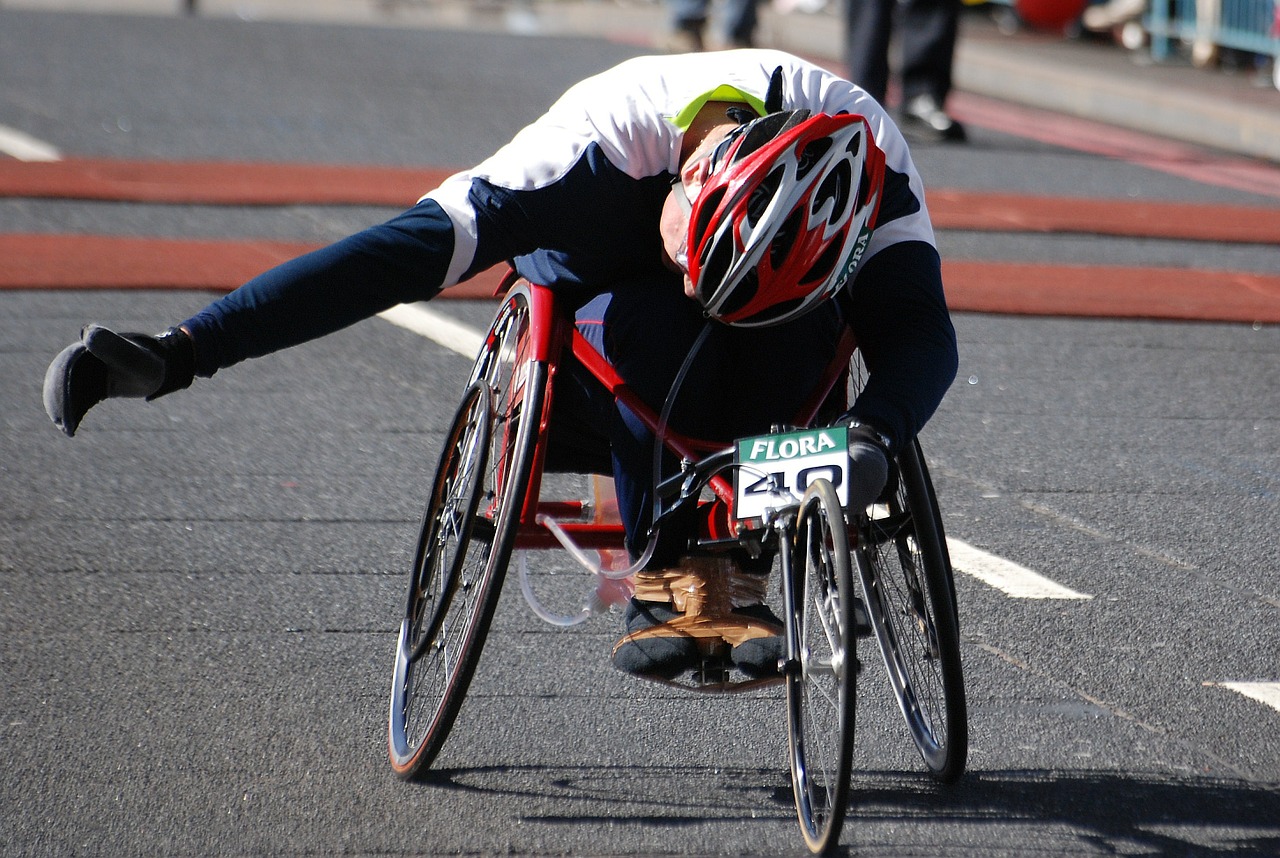
I workout alongside people who use wheelchairs and people with artificial limbs. I have friends who alternate days at the gym with nights at the hospital as they are treated for their autoimmune disorders. I know women with PCOS who accept that weight loss will be harder for them even as they strive to work within the limitations of their disease. I work with single parents who problem-solve creative ways to exercise while the kids are at practice or asleep.
I’ve never once heard any of these people say that the situation is not their fault.
And it’s no accident that they are constantly pushing the boundaries of their situations.
———-
The problem with, “It’s not my fault,” is that it so easily slides into “And therefore there’s nothing I can do about it.”
And the two declarations are vastly different.
It is not your fault if you have been cursed by faulty genes that cause your body to grasp onto every fat cell for dear life.
(And what are you going to do now?)
It is not your fault if you suffered at the hands of abusive or negligent parents who failed to give you the tools to excel in adulthood.
(And what are you going to do now?)
It is not your fault if you have been exposed to trauma, bruising and damaging your very core.
(And what are you going to do now?)
It’s not your fault if your brain struggles with anxiety or depression.
(And what are you going to do now?)
It’s not your fault if your spouse cheated or abandoned you.
(And what are you going to do now?)
In all of these cases (or in any limitations and struggles you have in your life), you can spend your energy on blaming the fault-carrier. Others will help you, either for pay or for free. After all, it’s easy to point fingers at others.
Because then we are absolved of any effort.
Of course, we are also guaranteed not to make any progress.
Because the last time I checked, reps of reciting “It’s my hormones,” had a dramatically lesser effect on fitness than reps on the weight machine.
And assigning liability to a screwed up family of origin is inherently dissatisfying because they’re too entrenched in their own drama to absorb yours.
And calling your cheating ex an ass won’t help you get off yours to build your new life.
So rather than focus on what happened, focus on what you can do now.
Replace “It’s not my fault” with “It is my responsibility.”
Rather than point fingers (or waste your time and money on those that help you pass blame), use those fingers to grab your own bootstraps.
Nobody else is going to do it for you.
———-
Your future is your responsibility.
Your well-being is your responsibility.
Your happiness is your responsibility.
And if you don’t accept that responsibility, that IS your fault.
———-
It is my responsibility to …
Shift my attention from what happened to me to what I am going to make happen.
Focus on what I can do.
See my limitations as my starting point, not as excuses to never start.
Be realistic with my goals.
Set a limit to the amount of energy I expend on placing blame. That energy can be put to better use.
Surround myself with people who believe I can.
Ask for (and accept) help when I need it.
To refuse to allow somebody else to define me.
Communicate my needs clearly and calmly.
Manage my emotions so that they do not control me.
Establish and maintain appropriate boundaries.
Speak and act with kindness. Towards others and also towards myself.
Believe in myself and act in accordance with that belief.
In some ways, I wish my divorce was happening today. All I would need to do is supply the word “narcissist” or “narcissist abuse” to my attorneys, my psychiatrist and pretty much anyone else I had to deal with and they would instantly gain insight into the insane world I was attempting to navigate in order to sever ties with my ex.
The use of the label, “narcissist,” in regard to my ex-husband would alert others to following:
-He will not behave according to the standard laws of human decency and interaction. He will lie, project and manipulate anyone who stands in the way of what he wants.
-He will be very charming in person. His intellect will shine through and he will display his expertise at making others feel good about themselves.
-He will make promises. They mean nothing.
-He will concoct elaborate stories that shift the onus of the financial and relationship situation onto me. They will seem plausible. Because he’s good. Very good.
-He will use others for his own gain and then discard them. This extends to his lawyer. Even before payment has been made.
-He was gaslighting me for many years. And it takes time for clarity to return.
But at the time of my divorce in early 2010, the term “narcissist” had not yet left the DSM and entered the common vernacular. There were no templates available for the lawyers and the judge to understand how to handle someone that will manipulate the rules of the game even as they pretend to play. There was precedence for the judge to believe that he would simply ignore her orders, continuing to march to the beat of his own drum. And there was no help for me to start to understand the covert abuse I endured; I still believed that abuse always came with obvious cruelty.
If my divorce happened today, I believe that it would be handled differently. The attorneys would be a bit more aggressive in their demands and less willing to delay based on his excuses. His lawyer would likely have demanded payment up front, not trusting that “the check is in the mail.” The judge may have changed the verbiage in the decree, making the consequences for noncompliance more severe. And I may have received more understanding for the Alice-In-Wonderland-effect of prolonged gaslighting.
Because the proliferation of a label helps to increase public consciousness and understanding of an issue. The more we talk about it, the more we see the common threads and realize we are not alone. The more stories we hear, the more insight we gain into our own experiences as the collective wisdom is cultivated and disseminated.
The popularity of a label can certainly benefit those who fall under its umbrella.
But there is another side to a label becoming in-vogue.
A darker side.
———-
I first went gluten free in 2007 after suffering from gastrointestinal symptoms for several months after recovering from food poisoning. At that point, I had only a vague notion of what gluten was and I had never heard of celiac disease or gluten intolerance.
I only knew that I was hurting. (Along with other things, of which I’ll spare you the details).
Thinking that I may have IBS, I looked online to find the recommended diet and I stumbled across a chart which listed the symptoms of IBS (I had two) and the symptoms of gluten intolerance (I had them all). I immediately pared down my diet to fruits, vegetables and dairy.
And within three days, my bloating and pain were gone.
Each day after the first two weeks, I reintroduced a food. During week four, I got sick again. I looked at the label of the tea I consumed that morning. Third ingredient? Barley. I was further convinced when the ingestion of my multi-vitamin (gluten? really?) brought me back to misery.
In those days, gluten free was anything but trendy. It was unheard of. I had only a small selection of GF products available at the health food store or via mail order that were priced insanely high and tasted insanely bad. I had to forgo eating anything of substance in restaurants and prepare my own food at home using naturally gluten free ingredients.
And in some ways, I wish that my gluten sensitivity had manifested later in life. Because now I can obtain GF pizza, cupcakes and even grilled cheese all within a short drive of my home. It’s a world I dreamed of back in 2007.
But even though I enjoy my GF goodies, it’s not all good.
Because with the popularity of the label comes a cheapening. A watering down.
It’s assumed that I avoid gluten because it’s the “in thing.”
That I wanted to be part of the crowd.
When the reality is that I could not care less about the crowd. I’m doing what I need to for my own well-being.
———-
The increase of the use of the term “narcissist” is much the same. It’s a helpful label for those who are attempting to disentangle their lives from a manipulative and deceptive person. It has brought needed awareness to the fact that some people won’t play by society’s rules. It’s a reminder that sometimes wolves walk around in sheep’s clothing and that not everybody who appears trustworthy is. And, most importantly in my view, it has brought awareness to the fact that abuse can occur quietly and softly behind the scenes.
But as the label is applied generously to everybody who acts selfishly, there is a cheapening of the term. A watering down.
It seems as though everyone’s ex is a narcissist.
At which point, the term becomes useless.
Labels are designed to be a shorthand for understanding. A starting point for awareness. Not an endpoint for assumptions. Or a focal point for your life.
If you identify your ex with the characteristics of a narcissist, then use that collective wisdom to help you understand his or her motivations and actions. Listen to the stories of others and find comfort in the fact that you are not alone. Allow the characteristics of a narcissist to help you separate what was done to you to what happened because of you. Let the label work for you.
Because at the end of the day, it doesn’t matter if your ex is a narcissist. (And, if they are, the fact that you are keeping your attention on them simply feeds their desires.)
Whether you have been on the receiving end of these words or you have uttered them to your partner, they are three of the most uncomfortable words in a relationship. They are loaded words, filled to the brim with uncertainty and fear. They may signal a time of transition and renewal or they may be the death knell of the relationship.
The words themselves are simple. Three short syllables.
The feelings and motivations behind them are complex. Multifaceted.
And often left undefined and unspoken.
———-
I want out and I’m too scared to say it.
This is the response that the recipient of these words often fears and sometimes it’s accurate. A request for space can mean that the person is already done but instead of giving a clear, “No,” they are clouding the issue with a muddy, “Maybe.”
I feel like I’m losing myself and I need to take a step back to define myself again.
When couples are together for an extended time, the lines delineating one from another can blur. A request for space can be a sign that interdependence has slid into dependence and one partner is seeking more independence.
I want to be able to have some parts of my life that are separate from you.
This overwhelm can come from anywhere – work, school, kids. Some people require more alone time than others, especially when life’s demands become too much. This is a plea for quiet.
I am feeling panic about increasing intimacy and vulnerability and I need space to acclimate.
I often describe increasing intimacy in a relationship like coming up from a deep dive. You have to pause and acclimate occasionally. If you climb too far, too fast, it will make you feel unstable. This is one of the 7 reasons that people may withdraw in a relationship.
I need to direct my energy to other things for a time.
Maybe it’s an ailing family member or a huge project at work. When something is pulling all of our energy, any additional requests for attention can be too much. A relationship can survive attentions that are directed elsewhere for a time. But it cannot last forever.
I feel like you’re making me responsible for your happiness and it doesn’t feel good.
Repeat after me, “It is not my partner’s job to make me happy.” And if you try to make it their job, don’t be surprised if they decide to quit.
I’m reminiscing about a more free period in my life and I’m trying to decide if commitment really is for me.
Ahh…the hallmark of the so-called midlife crisis. We look upon our youth with rose-colored glasses. And sometimes, we try to return.
I’m trying on the idea of life without you to see if fits.
This is the spouse that hasn’t shut the door on the relationship but they are not convinced of its viability either. This is the partner that wants the security of home base and a little space to wander outside its fences before making a choice.
———-
If you’re the one asking for space, be aware that the mere suggestion of these words may incite panic in your partner, causing them to grasp you ever-tighter, thus creating the opposite of the space you requested. Be honest and forthright in your underlying motivations. Be as comforting as you can. If you are not contemplating leaving, reassure your partner of that. If you already have one foot out the door, do not give your spouse false hope.
Being on the receiving end of, “I need space” is a scary world, a land in limbo where you watch and wait from afar. It’s easy to see this declaration as the first step off a cliff and respond by gripping with every fiber of your being. Easy, but also counter-productive. Your partner isn’t saying they need to know you want them. They’re saying they need you to loosen that grip and let them fall or fly on their own.
Also, understand that sometimes the words have nothing at all to do with you and with the relationship. Be open to idea that the pressure may arise from an external source or from prior history. Ask questions to see if you can get to the root cause and be patient as your partner tries to sort it out.
If you find yourself in this place, turn your attention to your own well-being apart from your partner. You cannot control his or her actions and decisions, but you also don’t have to stand idly by as you wait for information. Invest in yourself; it pays dividends.
“I need space” is a landing between floors. It is a brief period of stasis before you either climb to another level or exit the stairwell of the relationship.
They come into my classroom with a scowl upon their face and a dark shadow behind their eyes. They sit slumped and defiant or spend the entire period looking like they’re ready to fight.
Some of them are hard to love.
They respond to a positive word with a curse, cutting others down with their words even as others try to lift them up. They seek out the weak and bully them into bruised submission.
Some of them are hard to love.
They scrawl their writings on the walls and destroy the belongings of others, leaving a path of destruction in their wake.
Some of them are hard to love.
And those are the ones that need love the most.
Because hurt people hurt people.
And we can (and often must) respond punitively, creating consequences for actions and penalizing behaviors. Parents are called. Detentions and suspensions are meted out. Communicating that the behaviors are not permissible and hoping to make the outcome severe enough to shape the choices made in the future.
But when the behaviors come from a place of hurt (as they so often do), simply communicating, “You shouldn’t do that” followed by a repercussion doesn’t halt the behavior. It doesn’t alter the root cause.
Because hidden behind the unlovable shell is a wounded child. Scared that the family will be evicted from home after overhearing a heated conversation about the ever-tightening finances. Angry at the parent that walked out and moved on to start a new family, discarding the old. Ashamed that he or she did something to invite the unwanted touches that seem to come with increasing frequency. Anxious about being perceived as dumb as the demands of school become overwhelming.
And all of that hurt gets compressed into a dense and potent projectile, aimed and ready to fire at anybody that gets too close. Choosing an offensive strategy in an attempt to feel in control and to limit further pain.
And in some ways, the strategy is effective. People are kept at a distance and connections (that risk pain upon breaking) are not formed. But of course, the pain remains. Not only within, but shared generously with those around.
Hurt people hurt people.
———-
In the beginning of the divorce, I focused on the bad. The malignancies within his character and the implied cruelty in his actions.
Part of that was intentional. A sort of insurance that I would stay safely out of love with him. But much of it was simply inevitable. The shock and awe so bright that it blinded me to any possible good in him.
I was hurt.
And I was determined to hurt him in kind.
For months, I studiously avoided any memories that painted him in a favorable light. Or, if they came despite the lack of an invite, I immediately voided them by deciding that either the memories were false or the man I remembered loving was simply putting on a play for my benefit.
In my mind, he was all monster and no man.
And that worked for a time. It certainly severed my love swiftly and completely. It ensured that I remained at a safe distance. And it even allowed me to be grateful that he was no longer in my life.
But then at some point, that view no longer served me.
In fact, it held me back.
Dismissing 16 years of wonderful memories as all false was like excising a benign and harmless tumor from my flesh. I knew what he had become but I didn’t have to believe that he was always that way. I couldn’t believe he was always that way. Because I once knew the boy before he became the man. And the monster.
So, I started to allow in the good memories. The smiles. I allowed some of the brutish paint to wash off of him. And I examined what lay beneath.
A wounded soul.
And I cut that rage, that disgust, that fear with equal parts understanding and compassion.
Portrait
Not because I approve of his actions.
Not because I wish to excuse him of any consequences.
And not because I intend to allow him to hurt me any more.
But because I remembered of all of the hard-to-love students that I have had move through my classroom over the last many years. And I recalled how once I learned their back stories and understood the root of their pain, I could find compassion for a student that once provoked only rage.
And I reflected on the power of that compassion.
Sometimes, it was enough to wash the bladed armor off the hard-to-love child. Turning a problem into a blossoming to celebrate.
And yes, often it wasn’t enough. Maybe the wounds were too deep to heal properly or the kindness too short-lived or inexpertly applied.
But then I also remembered that I have never once regretted viewing a hard-to-love child with compassion. That I remain hopeful that some seed has been planted that may one day grow. And that I feel more at peace when I lead with empathy rather than anger.
And so I used that experience to reconsider my view of my ex husband. To allow that maybe, just maybe, his actions were carried out not in a desire to hurt but because he was trying to escape his own hurt.
And like with my hard-to-love students, I felt my anger dissipate and peace flow in its place.
Hurt people hurt people.
And when you allow yourself to see the hurt, you become able to see the person. Not just the ugly mask.
———-
I often face push back for the view I choose to have of my ex. It’s seen as “too soft” or giving in to what the narcissist wants. And it is true that some people see compassion as a weakness and move to take advantage. And it may very well be true that he is not capable of feeling remorse or compassion himself.
It doesn’t matter.
Compassion doesn’t come with qualifiers for use. It’s not meant to only be applied to those with whom we relate and those who elicit feelings of sympathy.
Because often the ones who are the hardest to love are the ones who need it the most.
So how do you practice compassion in such a way that you do not enable or come to further harm?
Consciously.
Rather than practice knee-jerk kindness, strive to act with conscious compassion.
The Seven Keys of Conscious Compassion
1) Set and maintain boundaries to protect yourself.
2) Allow or provide appropriate consequences.
3) Avoid expectations of behaviors and responses.
4) Do not take the behaviors personally.
5) Seek to identify the root cause of the behavior.
6) Accept that you cannot control the other person’s responses and actions.
7) Apply conscious compassion to everyone, including (perhaps, especially) yourself.
Here’s how I strive to practice (and yes, it’s always practice, never perfect) conscious compassion in regards to my ex husband:
1) Set and maintain boundaries to protect yourself.
I immediately directed my paycheck into a new account so that he did not have access. Next, I make a commitment to avoid looking him up online after the divorce papers were completed. I am fortunate that he took care of excising himself from my life, but I would enforce a no-contact rule even if he hadn’t. In this case, this is compassion from a distance.
Compassion and boundaries are not mutually exclusive. You can behave compassionately and still refuse to tolerate certain behaviors. You can practice kindness and still remove somebody from your life. In fact, if you practice blind compassion towards others without the boundaries that you need, you are not behaving compassionately towards yourself.
2) Allow or provide appropriate consequences.
Perhaps I went a little overboard with this one in the beginning. I didn’t have to call the police. But the bigamy was a felony:) I no longer attempt to make him face the consequences, but I also refuse to do anything to shield him from their impact. His cause. His effect. Or, as Rush Limbaugh said, “Compassion is no substitute for justice.”
3) Avoid expectations of behaviors and responses.
This is a difficult lesson. Before I returned his car to him (crazy and long story here – read the book), I combed through the items left and I took much of it as evidence (like the wedding vows in his own handwriting to his other wife!). I found two sentimental items in the glove box – a pocket watch that had belonged to his deceased grandfather and a cassette recording of his childhood best friend’s father, a folk musician. I left them on the driver’s seat.
Stupidly, I expected to receive some indication of thanks. Or at least a slackening in the on-going assault against me in the courts.
There was nothing.
But even then, I was still glad that I gave him back those items. And from that experience on, I never again expected anything in return for any kindness. Except the very real fact that just doing it made me feel better.
I hadn’t read the book yet, but this little acceptance changed my life. When I embraced this message, I began to forgive and to release the anger. Before that point, I saw him as deliberately working to destroy me. On some level, I pictured him plotting in his basement office, stroking the soul patch on his chin,
“Let’s see… I’ve already maxed out this card. Hmmm…I know! I’ll use the one in her name so that she has to deal with it later. Okay, now that the financial ruin has been planned, what else can I do? Well, obviously, an affair would be upsetting. Now, where can I find a willing woman? Oh, and at some point, I’ll have to leave her – yeah, that will really destroy her! What would be the worst? In person? Phone call? Letter? Sticky note? Skywriting? I know! I’ll do it with a text message. She’ll never see that coming!”
Pretty crazy, huh? I was taking it personally. In reality, he was not thinking of my well-being any more than I considered his during the divorce. Once I realized that his decisions and actions were about him, not me, I could stop reacting defensively and start seeing more rationally. He was hurting too.
It is difficult in a divorce to not take things personally. After all, you two were a partnership, a team, and now your partner has been recast as your adversary. It’s a wake-up call to realize how individual we really are. You were married to each other, yet you each experienced the marriage through your own experiences and perceptions. We can have empathy for another yet we have to take responsibility for ourselves.
Our egos take a beating in divorce. They perceive any attack as directed and they try to fight back. Put down the gloves and accept that the ego is simply protesting, much like a child throwing a tantrum. Let it cry. Let it scream. And then wipe its tears.
5. Seek to identify the root cause of the behavior.
This is often tricky because the person who has hurt you is often unable or unwilling to dig that deep into themselves. So you have to be a detective and assemble the clues. In my ex’s case, his parents were both alcoholics and I have a suspicion that there may have been abuse by another adult in his life. I had the benefit of being able to reflect on interactions I had witnessed between the boy and his parents and the childhood home videos that I viewed with his teenage commentary in my ear. I have my guesses as to the root causes. They may not be accurate, but that’s not the important part. Just recognizing the possibility allowed my anger to soften.
6) Accept that you cannot control the other person’s responses and actions.
His choices were/are his choices. His responsibility. I refuse to engage in “what if” thinking, exploring potential differing outcomes based upon what I did or didn’t do. My locus of control only extends to myself. So that’s what I chose to focus on.
7) Apply conscious compassion to everyone, including (perhaps, especially) yourself.
Because inside all of us has been a wounded child. And often that child just wants to know that he or she is seen and the pain is acknowledged.
Hurt people hurt people. And sometimes we turn that around and hurt ourselves. To thine own self be kind.
———-
Conscious compassion keeps you safe.
But it also gives you freedom.
A way out of the cycle of hurt people hurting people.











 Lessons From the End of a Marriage