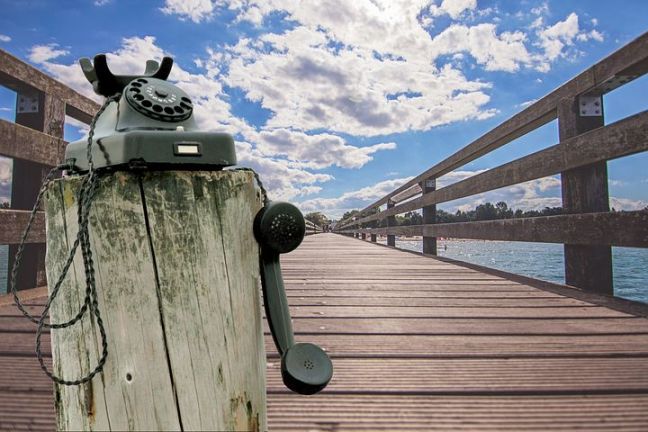
Who Can I Talk to About My Divorce?

divorce talk

I talked to everyone about my divorce.

No, really.

The abruptness and the shock of it all seemed to manifest itself in an overabundance of thoughts and an inability to keep them to myself.

The clerk at the gas station learned why I trembled with anxiety every time I ran my debit card (because I was still afraid that my ex would somehow manage to drain my personal account). My coworkers heard about the latest information I gleaned from my still-legal-husband’s other wife’s blog (the description of them showering with monkeys in Uganda was a crowd favorite; you can’t make this stuff up). And my poor parents and the friend I lived with were subjected to pretty much every thought that pinball through my spinning mind.

I don’t recommend that approach.

In my case, the fallout from the verbal explosion was minimal. The mutual friends either jettisoned my ex immediately or I decided that they were not worth the effort. There were no children to get caught up in the web of oversharing. I didn’t join Facebook until after I had learned to keep my mouth shut. And, thanks to the wise encouragement of those around me, I never revealed his identity to those that didn’t already know him.

Many people react like I did and talk about their divorces too often, too openly or with the wrong people. Others decide that it’s all too personal and elect to clam up and hold it all in.

The best response is one in between, where you deliberately choose who to talk to about your divorce so that you get the support you need without the risk of additional drama or negative consequences.

Talk About Your Divorce With Impunity


Your journal – The absolute safest place to share all of your thoughts about your divorce is in a private journal. This is the one place where you can say anything (even the darkest thoughts and fears) without worrying about facing judgment. Just make sure that your journal is password-protected or locked if there are others around.

Your counselor, clergy or physician – These people are all professionals whose job is to help you. They are trained to be non-judgmental and required to keep your information confidential. Keep in mind that you may have to hunt around a bit to find people that seem like a good fit for you. But once you find them, don’t hold back. The more they know, the more they can assist you.

Supportive friends and family – You may have to test the waters a little bit to see who can listen sympathetically, offer the necessary guidance and keep your conversations private. Once you find these confidants, talk openly. They’re your cheerleaders and often your motivators.


Talk About Your Divorce With Some Caveats


Intimate strangers – I know it seems like an oxymoron, but it’s not. These are those people that you connect with briefly but deeply. You may meet on a plane, at an out-of-town bar or sitting in adjacent seats in a waiting room. You never exchange names or identifying details, yet the anonymity allows for a certain reckless vulnerability. In these situations, share as much as you wish about the emotional impact but withhold the particulars. Throughout, be mindful of the other person’s reaction. If they are asking questions or sharing their own circumstances, they are receptive. If they seem uncomfortable with the exchange, it’s time to move on.

Blogs and internet support groups – These can be a lifesaver when you don’t have an in-person support group or you are looking for others who have experienced similar situations to your own. These are similar to the intimate strangers in that you get to know them very well in some ways and not at all in others. Again, refrain from sharing identifying details or names of others involved (it’s up to you if you want to share your real name). In addition, be mindful of the tone of any groups that you’re joining and strive to stay within their cultural norms.

More judgmental friends and family – These are the people that love you and want the best for you, but they don’t necessarily “get” you. They may respond to your cries with, “Everything happens for a reason” or “God won’t give you more than you can handle.” Your frustrations with your ex might be met with, “I never did like them. What did you expect?” They mean well, but their perspectives and responses can hurt more than help in the short term. Feel free to censor what you share with them to avoid unnecessary grief.

Attorneys – Obviously, when it comes to the legal aspects, tell your lawyer everything. But the emotional? It’s best to keep it to a minimum. Oh, they’ll listen. But you’ll end up paying. Literally.


Talk About Your Divorce With Caution


Social media – If it’s online, assume it can and will be read by everyone. If you’re still in the process of divorcing, err on the side of caution and say nothing. Social media excerpts are quite commonly used now in divorce and custody cases. After the legal proceedings are finalized, you can share some information. But be careful to avoid creating drama.

New dates – Once you’re dating, it’s natural to talk about what brought you to dating. If you can’t discuss your divorce or your ex without becoming emotional or going into the whole saga, it’s best to steer clear. If you do decide to talk about your divorce, focus more on what you’ve learned from it than on how much you despise your ex.

Children – Obviously, you will have to talk with your kids about your divorce. Repeatedly. As you do, remember that these conversations are for them, not for you. They need to hear that it’s not their fault, that both parents love them and that there will be some stability in their lives. Allow their questions to guide the conversation. It’s okay to let them know that you’re sad or scared, but you also need to show them how to move through those feelings.

Mutual friends – These poor folks are caught in the middle. If you want to keep them as friends, it’s best to keep the divorce talk to minimum.


Talk About Your Divorce With Abridgment


Professionals on the periphery – Your accountant, insurance adjuster and maybe even your child’s teacher will need to know something about your change in marital status. Share only what is necessary and only when necessary.

Coworkers – If you’re friends with any coworkers and trust their restraint, feel free to share more. Otherwise, it’s best to stick with an elevator-speech divorce announcement just to keep them in the know and to alert them that you may be having a harder time than usual at work.

Acquaintances and neighbors – Keep it short. Keep it simple. And keep any salacious details out of it. These are often the folks that like to create drama.


And When Not to Talk About Your Divorce


It’s okay to respond to questions that feel intrusive or that come at inopportune times with, “I’m not wanting to talk about that right now.” You are not required to tell anyone about what you’re going through and when and if you do share, you get to decide how much. However, be careful about being overly private and cautious. When we bottle too much up, the pressure has a tendency to build. When we share our stories, we also share the burden. Allow others to help lighten your load.

A Case of Mistaken Identity

mistaken identity

My car turned yellow while I was at work today.

As did the car next to it.

And the one next to that.

In fact, the entire parking lot looked like it had been handled by the grubby fingers of a kid after eating off-brand Cheetos.

And all because trees are not subject to public indecency laws.

My body has decided that tree pollen is as threatening as a hostile missile attack. No matter how much I try to talk my immune system out of responding at a code red threat level, I’m summarily ignored as the defenses are rallied.

My students laugh as my “sneezures” interrupt class several times an hour. My husband grumbles as I cough and wheeze in my sleep. And even my dog looks at me funny when my voice suddenly sounds like that of a seventy-year-old chain smoker.

And all because of a case of mistaken identity.

The pollen, as much as I like to curse it, isn’t really my problem.

My problem is in my reaction to the pollen.

My misery is rooted in my body’s inability to distinguish between a perceived threat and an actual one.

Geez, that sure sounds familiar.

My brain has been known to have the same problem.

When I think back on the times my mind has perceived a threat in my now-marriage, I can recognize that it was assuming a full-on attack and preparing for assault when the reality was as harmless as some yellow dust on the windshield.

A case of mistaken identity.

And my problem wasn’t really what my husband did or didn’t do, said or didn’t say.

It was in my (over)reaction to the situation because of a misidentification.

One of the possible approaches to treat allergies is to submit to a series of shots where you’re repeatedly exposed to a small amount of the offending substance. The science isn’t fully known, but it’s suspected that the process helps to “teach” the body that the allergen doesn’t actually mean any harm and there’s no reason to prepare for battle when its presence is detected. The shots often work, although relief frequently takes longer than expected.

That’s sounding familiar again.

Over the past few years, I have had many opportunities to face small iterations of my fears of abandonment and betrayal. At first, my reactions were extreme. But over time (and yes, far more time than I expected), I learned that often what I perceived as a threat was closer to the level of a messy irritant. 

And now that I fall victim to mistaken identity far less often, I have found relief.

As long as I avoid the procreating trees.

funny-Spring-allergy-tree-nature-cartoon-vert.jpg


Marriage: Should I Stay or Should I Go?

marriage: should I stay or go

From time to time, I have people contact me with a description of their marriage or their thoughts about filing for divorce. After describing the situation, they often conclude with the following question: should I stay or should I go?

I have yet to encounter an email which prompts me to answer that question directly with the advice to divorce or to stay in the marriage. After all, barring the extreme cases of physical threats and violence, that is not an outside observer’s call to make. Instead of offering a verdict, I instead pose questions gathered from the shared information.

I have found that often the inclination to stay in a marriage or to leave via divorce is often rooted in some assumptions or thoughts that have not been fully explored. These are common statements that I receive and some of the questions that I pose in response –


The following are not always a good reason to leave a marriage:


I miss or crave the independence and freedom that comes with being single.

Specifically, what does freedom look like to you? Feel like? How would being independent change how you move through life and alter the decisions you make? Are there ways to find more space and agency within your marriage?

What are some of the downsides that come with the freedoms of single hood? What are some of the positives you only gain from a long-term relationship? Is the grass actually greener, or is it because of your current perspective? Are you putting energy into watering your own grass?

How much of this feeling of being tied down can be attributed to your marriage and how much is because you’re feeling the pressure of being an adult (and maybe missing the freedoms of your youth)?


I have a crush on somebody and it makes me feel so alive.

Isn’t that feeling of early infatuation so powerful? What do you like about yourself when you’re with this person? What do they see in you that makes you feel desired? How are you different with them than you are with your spouse?

Are you seeing this crush in their entirety, or are they only presenting their best selves? Does the crush have the traits that would make them a good long-term partner or possible parent?

What was it like when you first met your spouse? Do you put as much energy and intention into the relationship now as you did then? Are there times when you still see your spouse through that lens of infatuation, excitement or curiosity? Do you struggle to see them apart from their role as parent or caretaker or are you taking on a “parental” role with them?

When are other times or situations that also make you feel alive?


I’m bored in my marriage; it’s just not exciting anymore.

Are you bored or are you boring? What are you bringing to the marital table to bring excitement or interest? Do you tend to respond with “yes” or with “no”? Are you curious about your spouse?

When was the last time you and your partner did something new together? Do you ever ask your spouse questions that you do not know the answer to?

What do you do as an individual to keep from becoming stagnant? When was the last time you did something that scares you or that you struggle with? Are you taking responsibility for your own stuff?


I’m feeling restless. I want to make some major changes in my life.

Have you brainstormed areas of possible change? Have you approached your spouse with some of your ideas? Are you assuming that they aren’t interested in your propositions before you’ve asked?

Are you living a life that feels purposeful? Do you have any feelings of emptiness? Do you feel like you can be yourself around others? Have you been living the life you want, or the one that someone else decided for you?

Are you uncomfortable with some area(s) of your life and you’re hoping to leave them behind? How do you envision life being different after you make these major changes?


I feel like my life has gone off course. This isn’t what I imagined.

Has your destination changed or is it more that the path isn’t as straightforward as you pictured? What adventures and sights have you enjoyed that you wouldn’t have if your life took the expected course?

What role did you expect your spouse to play in your life? How did you think marriage would look? Do you struggle with the contrast between the partner you imagined and the one you have?

Have you strayed from your core values and beliefs? If so, what can you do to recommit to your guiding principles?


My partner has changed. They are no longer the person I married.

What are some of the life events that have impacted your partner or your marriage since you met?  In what ways has your partner changed for the better? Can you find a way to reframe the other changes in a more compassionate or understanding light?

Can you respond to these changes with curiosity? Have you tried to get to know your “new” spouse? Have you talked to someone who likes your spouse as they are to gain their perspective?

Would you be upset with a child for not being the same person at high school graduation as they were in preschool? How have you changed since the beginning of the relationship? How have these changes in your partner challenged you to grow?


The following are not always a good reason to stay in a marriage:


Leaving would break my spouse’s heart.

Do you feel like it’s your role to protect your partner’s feelings and/or to take care of them? Is it fair to your spouse for you to withhold important information from them? How might they feel if they find out later that you wanted to leave?

Are you underestimating your spouse’s strength? Have you explored this thought with them? Do you know with certainty that your partner wants to stay in the marriage? How can you broach this topic with them in a kind and compassionate manner?


It’s easier just to stay.

If your friend described this same situation, what advice would you give them? Have you ever gone through something difficult that was worth it in the end? Is there energy required to stay?

Do you feel like you have a realistic idea of the effort needed to divorce and start a new life? Have you talked to somebody who is a year or more out of divorce to gain insight into the process? How do you think you will feel about this decision ten years down the road? Twenty?


I’m scared to leave. I am intimidated by starting over. I’m worried that I’ll be alone forever.

Fear can be so convincing, can’t it? What scares you the most about leaving or starting over? Are you trying to look at the whole big picture at once? Have you broken it down into smaller, more manageable steps?

What is a time in your life when you overcame a fear? How did you feel leading up to your action? How did you feel after?

Which is worse for you – the idea of feeling alone in your marriage or the idea of being alone? Is it possible that your fear is lying to you?


I’m staying for the kids.

Are you and your spouse able to maintain a loving and peaceful environment for the kids? Do your marital tensions impact how you interact with your children? Have you seen changes in the kids that may be indicative of their stress at home?

Will you stay after the kids leave home? How might their parent’s divorce impact them when they are older?

Have you talked to divorced parents and/or adults of divorced parents to learn more about what it’s like from someone who has experienced it? Did you have a traumatic experience from your own parents’ divorce? How could you make divorce less harmful for your children?


I’m hoping it will improve.

If you know for certain that your spouse and/or marriage would be the same in five years, would you decide to stay? Have you communicated your wants and needs with your partner in a way that they can understand?

Are you putting up with abusive or cruel behavior? Would you want your child to be in a marriage with somebody like your spouse?

Are you in love with your partner’s potential? Have they promised to change? Have they made any efforts? How long are you willing to wait for promised change?


I’m staying out of obligation.

Do you feel trapped by your marriage? Do you feel contempt and/or frustration for your partner? If so, how might that impact the energy in your home? If your spouse gave you permission to back out of your vows, how do you think you would respond?

Are there situations when it is okay to change your mind? Are there any “dealbreakers” in marriage for you? What are they?

If you discovered that your spouse was only staying out of a sense of obligation, how would you feel? Does divorce feel like failure to you?


And for those of you seriously considering divorce, here are twelve questions you MUST ask yourself first.

8 Years Ago Today

8 years ago today

There’s something about the tangible signs of the passage of time that makes it all the more real.

I had a precious visit with my dear friend and her daughter last Sunday. This was the friend who took me in during that awful year between the tsunami and the legal cessation of the marriage. And she welcomed her daughter into her home only months before she also welcomed me in.

Her first birthday corresponded with my court date. And when I saw her, now nine and quickly catching up with me on height, I remembered that Sunday was the anniversary of my divorce.

I took a moment, took her in, and reflected on all of the growth we have both experienced these past eight years…


Eight years ago today, I awoke afraid of seeing the man who had abandoned me eight months before. And when he passed me in the courthouse hall, I didn’t even recognize him.

Eight years ago today, I was ready for the divorce I never wanted from the man I thought I knew.

Eight years ago today, I sat in a courtroom with the man I had spent half of my life with. A man I once considered my best friend. We never made eye contact.

Eight years ago today, I looked at his face for any sign of the man I had loved.  I saw none. After sixteen years, he was truly a stranger to me.

Eight years ago today, I sat alone in a hallway waiting for the attorneys to decide his fate and mine. Hoping that the judge saw through his lies and would not fall sway to him charms. She didn’t, even asking my husband’s attorney if he was “psycho.” The lawyer could only shrug.

Eight years ago today, I cried and shook with the realization that it was all over. It was a relief and yet the finality was jarring.

Eight years ago today, I felt a heaviness lift as I cut the dead weight of him from my burden. I believed I couldn’t begin to heal until his malignancy had been removed.

Eight years ago today, I laughed when I learned he hadn’t paid his attorney. I had warned the man my husband was a con. Maybe he believed me now.

Eight years ago today, I held tightly to that decree, still believing that its declarations had power. I felt relief that he would have to pay back some of what he stole from the marriage. The relief was short lived.

Eight years ago today, I took my first steps as a single woman. Steps I never expected to take. The first few were shaky. But I soon started to find my stride.

Eight years ago today, I sat around a restaurant table with friends and my mother. A table that had held my husband and I countless times over our marriage. We celebrated the end of the marriage that night. I had celebrated my anniversary there the year before.

Eight years ago today, I read my husband’s other wife’s blog for the last time, curious if she would mention anything about the court date. She did not. I erased the URL from my history. It no longer mattered.

Eight years ago today, I sealed the piles of paperwork from the divorce and the criminal proceedings into a large plastic tub. As the lid clicked in place, I felt like I was securing all of that anguish in my past.

Eight years ago today, I started to wean myself off of the medication that allowed me to sleep and eat through the ordeal. I was thankful it had been there, but I no longer wanted the help.

Eight years ago today, I fell asleep dreaming of hope for the future rather than experiencing nightmares of the past.

And now, eight years on, I could not be happier with where I am.

Not because of the divorce.

But because losing everything made me thankful for everything.

Because being blind made me learn how to see.

Because being vulnerable created new friendships and bonds.

Because being destroyed made me defiantly want to succeed.

And because losing love made me determined to find it again.

I am happier than I’ve ever been.

And I could not be where I am without eight years ago today.


21 Important Repercussions of Marrying Young

marrying young

When I married my first husband at the age of twenty-two, I certainly didn’t think I was marring young. We had been together for six years, lived together for four and had even moved across the country as a couple. I felt grown. Capable. Confident.

And so sure that I was making the right decision.

And for the ten years we were married, I never questioned that decision. It was only after the marriage ended that I became aware of some of the repercussions of marrying young:

1 – Independence isn’t fully developed.

I felt independent because I was paying my own way and out from under parental control. But the reality is that I was still relying greatly on my boyfriend turned fiancé turned husband. I never had to make decisions completely by myself because I was never completely by myself.

When we’re young, independence can be confused with the ability to stay out without a curfew or to eat cereal for dinner for week straight. It’s only later that we realize that independence also means being willing to accept full and complete responsibility for your choices and being able to make major decisions based upon what is right for you, not because of what is the easiest.

2 – You can be blinded to changes in your partner.

I had a false confidence in my perception of my first husband. I thought that since I knew his mother’s maiden name, his childhood friends and even the location of his preschool, that I knew him. What I didn’t yet know was that the sixteen-year-old I fell in love with had morphed as we moved into our twenties.

We are all prone to confirmation bias, yet there is a surety that accompanies young marriages that doesn’t happen when we’re older. And when we see people as they were, not as they are, we can be opening ourselves up to some very rude awakenings.

3 – You’re afraid to change or grow because it may threaten the relationship.

Youth is characterized by growth and change. Yet, if you’re already in an established relationship, you may find yourself hesitant to explore your beliefs and interests because of the threat that personal transformations may have on your relationship.

This restraint can easily morph into resentment and a feeling of being “held back.” This dissatisfaction (and the fear it can trigger in the other partner) can become a major threat to the health of the relationship.

4 – The family of orientation and the family of procreation become muddled.

The family of orientation is the one you grew up in. When you quickly move from this family to the one of procreation (or choice), you often finalize your growing up within the second family.

This overlap means increases the chances that you respond to adult situations in a childlike way and that you carry your roles from childhood into your adult life without reflection and adjustment.

5 – Boundaries between self and the couple become blurry.

It was an eye-opening moment for me when I realized how many of my now-ex husband’s beliefs I had adopted. Assimilating his views wasn’t intentional; it was simply a matter of proximity and laziness. I simply found it easier to agree than to examine my own preferences.

When you’re together from a young age, “I” and “we” can become synonymous. I see a healthy relationship as an overlapping Venn diagram where each person has significant autonomy as well as the shared life of the partnership. In marrying young, the overlapping region often dominates the others.

6 – Ending the relationship is seen as overwhelmingly terrifying.

Before my divorce, I could not imagine life without my first husband. In fact, the thought of losing him (either to death or divorce) was enough to send me into a panicked mess. And that overwhelming fear was a contributing factor in my inability to initiate the difficult conversations or to see the reality of what was happening.

There is a balance between being willing to call it quits after the most minor of road bumps and being so afraid to leave that you’ll put up with anything. When you marry young, you can end up accepting or ignoring behaviors because of an overwhelming fear of being alone.

7 – You may feel a sense of being repressed or restricted.

I will never forget the strange sense of mania that possessed me during my divorce. I was a woman unleashed.

Many people that marry young have a feeling of being held back by their marriage or their spouse. They can feel frustrated or restless within the bounds of their marriage and they may look for ways to act out or push for more freedom.

8 – Both partners may obsess over what they missed out on.

The grass on the other side isn’t greener, but you don’t know that if you’ve never explored other pastures.

When you marry young and settle down at the time when others are stepping out, you can believe – either accurately or not – that you’ve missed out on important experiences and milestones of youth that others have enjoyed. These thoughts can be persuasive and even become all-consuming.

9 – Adulthood becomes synonymous with couple hood.

When my ex husband left, I realized that I had never dated men before. Only boys. It was a strange feeling, realizing that I had never been an adult without him. There was childhood…and then there was couple hood. Nothing in between.

Growing up doesn’t mean that you have to be married or even partnered. There is a benefit to learning how to adult before you learn how to be married.

10 – The false confidence of youth may leave some questions unexplored.

I knew everything when I was sixteen. Now, twenty-four years later, I feel like I know less than I did then.

The unchallenged certainty of youth means that you’re less likely to challenge your assumptions or consider alternate ideas. And as I’ve learned over the years, being sure often correlates with being wrong.

11 – Major decisions can be made with an “I’ll show them” attitude.

We all know that the best way to ensure that a teenagers will do something is to tell them not to do it. Many young marriages begin as a way of asserting independence over parental or community control. This is especially true for those who have grown up in very conservative or repressive environments.

It’s natural for teenagers to want to break free and to explore their own ideas and desires. Yet when those urges are combined with a serious vow, the consequences of the commitment may not be fully realized until later.

12 – There are fewer data points to analyze when evaluating a potential partner.

I hope to never be judged by the person I was in eighth grade. Yet I married a man larger based on who he was in high school. When you marry young, you have less information about your partner. You don’t yet know how they are at sustaining friendships over many years or how they handle being passed over for a promotion at work.

When relationships develop later in life, you have more information about how the person handles life’s challenges and you have more data points to connect to determine their character.

13 – The power of “firsts” can increase emotional intensity.

Do you remember your first kiss? How about your third? Or tenth? Firsts, based solely on their novelty, have inflated power and importance. When you marry young, you are naturally going to experience many of these first with your partner.

There is a beauty in sharing your life with the person with whom you shared many firsts, yet the added importance and power of memory can also make it more difficult to let go when it is necessary.

14 – Insecurities around career launching can lead to poor decisions.

In modern society, we often define ourselves and our worth at least partly through our careers. Marrying young means that you’ve entered into a commitment before your place in your career is fully realized.

There is often an insecurity that tags along like an insistent little brother while you’re navigating those formative adult years and trying to find your niche, not to mention your purpose. And insecurity often leads to poor decisions.

15 – A naive conviction in a “life script” can lead to marrying for the sake of marrying.

I often see young people more in love with the idea of being married than they are with their partner. At some point, they decided that they needed to be married by a certain age in order to fulfill their ideas about what adult life should like.

And so they say “I do” before they consider what comes afterwards. Marrying young often accompanies an idealism about how life will unfold. And when reality fails to follow the script, it can lead to some major doubts and uncertainty.

16 – The immature communication habits of youth may become ingrained.

When I was in middle school, many “conversations” with my boyfriends occurred through third parties, three-way calls or passed notes. Very little information was exchanged through direct one-to-one communication.

When marrying young, those inefficient and ineffective communication patterns can easily become habit and develop into the normal way of conveying information within the marriage. Considering how critical open and honest communication is for a relationship, this can develop into a major problem.

17 – Both partners are more likely to have an idealistic view about finding their soul mate.

The teenage fascination with the Twilight series offers a glimpse into the romanticized viewpoint of the teenage mind. The young are more likely to believe in a soul mate and may be more likely to view marital strife as an indication of choosing the wrong person instead of a sign of needing to learn how to work together.

Age brings with it an acceptance of imperfection and allows for more realistic expectations of self and others.

18 – The intensity of adolescent feelings can overwhelm rational thought.

There’s a reason that the characters in Romeo and Juliet are teenagers. Adults would rarely respond with such impulsive passion. Every teenager I’ve ever known (which, after seventeen years of teaching, is in the thousands), has believed that they are the first ones to ever feel so intently.

Especially when you’ve only felt the initial and overwhelming neurotransmitter cocktail of early love once, you can falsely attributive to your partner rather than your biology. Marrying young arises from an emotional response whereas sustaining a marriage requires more of a rational approach.

19 – There is a lack of peer-based marital support.

There is a marriage support group that meets every Friday morning at the Starbucks near my school. The youngest members look to be in their late twenties. When you marry young, you’re in a different world than that of your peers. And it’s difficult to get emotional and relationship support from people that can’t relate to your situation.

Marriages exist within a larger community. When that community consists of singles trying to hook up or bouncing from one path to another, it’s easy to feel like you’re stranded on a marital island with no one to turn to.

20 – Financial stressors are pretty much a given from the beginning.

I remember feeling rich the first time I earned more than minimum wage. That extra $.15 per hour meant that budgeting for the weekly grocery trip was just a little bit easier. Like most young people, money was a struggle from the very beginning. There was never enough coming in and it was challenging to prepare for the unexpected – yet inevitable –  expenses.

Money stress is relationship stress. When marrying young, you are going to experience financial pressures from the beginning and you may not yet have the communication skills and experience to successfully navigate them. Don’t underestimate the emotional power that money has over us; fights about money are often about so much more.

21 – Your sense of self is intertwined with your partner.

This is probably the biggest repercussion of marrying young. It may be cliche, but it’s true – your twenties are all about figuring out who you are. And when you cannot see yourself without your partner, you never really get a chance to fully develop who YOU are apart from the relationship.

Ultimately, marrying young doesn’t doom a relationship any more than it guarantees a happily ever after. The age in which you enter into a relationship is only one of many factors that determines its longevity and success.

And if you use this post in an attempt to persuade some young ones to wait to marry, I’m afraid you’ll be disappointed. After all, they know everything. 🙂