Spring Bouquet

I am practically jumping out of my skin. As soon as the morning rush hour dies down (assuming I can be patient that long), I’m driving across town to my favorite discount plant nursery. This place and the planting that followed used to be a spring break ritual for me. I eagerly anticipated the trip, making lists and amending them as their availability page updated. I would fill my car with a hundred small plants (what? they’re cheap!), carefully stacking and wedging pots. The day would be spent planting – the soil my canvas and the plants, my paint.

After the divorce and the subsequent loss of the house, I missed my spring ritual. I mourned the loss of my garden and my daily walks within its walls. I ached for the sight of the new growth pushing through the soil every spring. I wondered how my plants, carefully tended from small starters, were faring under their new owners. My spirit felt the empty hole left by the removal of my garden.

I substituted a membership to the botanical gardens for my own, finding some connection to the soil and nature’s rhythm in that public space.

But it was never the same.

And I wondered if it would ever be.

bulb-care-daff

We moved into this house in September. One of the reasons we chose the house was its outdoor space. It was full of potential. While waiting for the house to close, I brainstormed a list of plants I wanted to acquire that would complement the space. I started painting the garden in my mind, filling the space with blooms and greenery.

Yet I resisted actually getting my hands dirty.

Some of it was practical.

I was busy painting and moving and setting up the interior space. It was a cold and wet fall, not ideal for planting. And, as the yard and I had just been introduced, I felt like I needed to get to know it a bit better before I went sinking my hands into its depths.

But some of it was emotional.

I poured a lot of my soul into my old garden. And its loss was painful. So painful, that I wasn’t sure I ever wanted to start again. I had become accustomed to being mobile. Setting down literal roots is a commitment. And I wasn’t sure I could handle that risk.

I planned to do some planting this spring, but I didn’t have my old excitement, my old drive, about it. It was matter-of-fact.

Until I pulled up the plant availability page at my favorite nursery two weeks ago.

And then I got giddy. Alive with excitement and possibility.

So now, here I am. My fingers are twitching in anticipation of the trowel. A tarp lies in wait in my trunk, ready to accept its verdant cargo. The beds have been weeded and the trees trimmed. The compost and fertilizer are staged at the side of the yard. All I need are the plants. And some patience:)

I have a garden again.

Colorful_spring_garden


In honor of the re-establishment of my spring ritual, here is a bouquet of spring garden themed posts.They are partly about literal gardens. But they are also are metaphorical, highlighting the similarities between nature’s rhythms and our own. All have pictures that remind us that beauty follows even the harshest of winters and words that remind us not to be afraid to bloom.


The Garden

In my old life I had a garden.

When we first moved into our home, the 1 acre yard was a motley medley of scraggly grass and tenacious weeds; too wet to mow and too shady for grass to thrive. It was a blank canvas. Slowly, I began to paint, using the medium of small starter plants, tree seedlings obtained from the forestry department, and cuttings and divisions nurtured from friends and neighbors. Click to read the rest.


The Beauty of an Early Spring Garden is in the Details

At first glance, the early spring garden is barren. There are few leaves, few flowers, no raucous plants fighting for attention. It is a different garden.

The beauty of an early spring garden is in the details, subtle interplay of color and texture, and the bright green of new growth tentatively poking its head though the soil. In order to see the beauty, the quiet spectacle that is the wakening garden, one must be patient and in tune with the rhythm of life. Click to read the rest.


Awakening From Hibernation

Ahh, February. It’s not quite spring but we are well over winter. In the south, the trees and flowers are jut beginning to stir. The first signs of the cherry blossoms have appeared. The daffodils are letting their yellow undercoats peek out at the tepid sun. Tree branches are rounded with the soft buds of the new leaves. The stirrings are not limited to the plants. Joggers are beginning to fill the trails, especially on those days between cold and rain fronts. The squirrels are out in force, digging up the acorns they buried months ago. The birds have lifted their self-imposed ban on song and their chirps and warbles fill the mornings once again.

It’s natural to hibernate when the world outside becomes too harsh to bear. It’s instinctive to curl up and tuck in, settling into a protective stasis. We do it annually to some extent as we follow the natural rhythms of shorter days and colder nights. We tend to narrow our worlds in the winter, paring back and slowing down. It is a time of restoration. Click to read the rest.
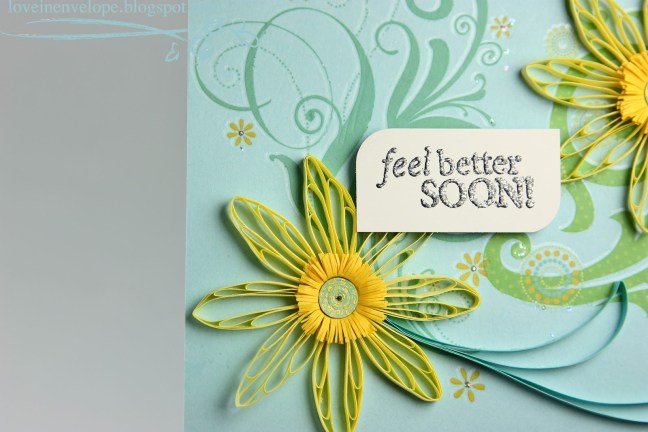


When Will I Feel Better?

“When will I feel better?”

This is perhaps the question I hear the most often.

And it is also the most difficult question to answer.

Because there is no single answer.

Healing does not speak calendar.

Feeling better has nothing to do with lunar cycles or landmark anniversaries.

It operates on a different timeline for everybody, depending upon the circumstances, prior experiences, coping skills and support systems. Some may feel better in weeks, while others take years. One person may appear to be healed while holding in the pain while another wears the pain until it wears off. Feeling better is not linear. It is more the slow decrease of bad moments intermixed with the increase of good than a step by step progression.

Feeling better depends upon perspective. You have to remember how bad bad could be to realize that it’s not so bad anymore. Healing is often subtle. The pain may have come in a great crashing wave, but it recedes like the tide, slowly and often leaving pools behind.

Your progress should not be measure against the progress of others, only against the way you felt in the past. There are no shoulds, no benchmarks to meet. As long as you are making progress, you are okay. You can accept where you are in the moment while still striving to do better.

Some of healing is passive, simply standing by and letting time wash your wounds. But if that is your only approach, you will be limited. In order to truly feel better, you have to take an active role in the process. Fuel yourself with quality food, good sleep, exercise and social connections. Seek out therapy or participate in therapeutic writing.Learn to calm your mind through meditation or yoga or time in nature. Have mantras and goals and scheduled smiles.

The biggest lie we often tell others is, “I’m fine.”

It’s okay to not be fine at all times. It okay to need help or a hug.

The biggest lie we tell ourselves is, “I can’t.”

But you can.

You can feel better.

It may not happen when you want it to.

But it will happen when you need it to.

The way you feel right now is not the way you will feel tomorrow. Or next week.

Find peace in the process and inspiration in the intention.

And you’ll feel better.


Remodeling

My grocery store of choice is currently being remodeled. They ran the numbers and decided that it made more financial sense to remain open during the construction and perform the construction at night when the store is closed. Of course, this also makes for a much more protracted process. Every evening, the closing employees have to drag shelves out of the way and move some of the product to a holding location. Then, every morning, the early crew moves the shelving back and restocks the product.

I’m friendly with many of the morning employees there (that happens when you go grocery shopping while other people are still sleeping!) and they are tiring of the project. They’re frustrated at making progress only to have it wiped out again the next night. They feel stuck. Motionless yet always moving.

I’m frustrated too. Even though I spend less than an hour a week there, I don’t like the experience at the moment. Nothing is in the same place from week to week. The aisles shrink and grow, breathing like a huge set of bellows. The produce bins seem to be playing musical chairs and their contents are bruised from additional handling. Even the atmosphere isn’t as nice. It’s generally a very well-kept store with good lighting and nice floors. But now? It feels dark and dingy, the floors a calico pelt of stain.


But, like all transitions, it’s temporary.

Change always requires some discomfort.

To make things better, you often have to strip them down.

Change can be unsightly. Ugly even.

Remodeling makes us face our assumptions and expectations.

It breaks habits. And that can be painful.


Progression is rarely linear; there are usually steps backwards as well as forward.

Change is frustrating. It’s hard to accept being neither here nor there.


But without remodeling, the knowledge born of experience could never be used to build a better future.

Without remodeling, nothing adapts to meet changing needs and demands.

And without remodeling, everything stagnates after a time.

Not just grocery stores.


Voices of Divorce

We all know about The Five Love Languages, but do you know about the five voices of divorce? You may not refer to them by name, but if you have faced the end of a relationship, you have certainly heard their call. Unlike the gentle languages of love, the voices of divorce are harsh, often abusive in tone. They tell us that we are broken, they implore us to lash out at ourselves and others and they plant seeds of fear and doubt. If we listen to the voices for too long, we risk believing their lies and falling into their trap. Learn the tricks that the five voices of divorce use and how to escape their grasp. Click here to read the rest of the post.

Sprained

If I ever hear one more person say, “Just get over it,” I am going to scream.

Loudly.

I’m warning you now so that you have time to buy earplugs.

I have a little story, an analogy (I know, shocking!), to help the getoverers understand why there are some things you don’t just simply get over. Feel free to share this with anyone who tells you to get over it. And then scream if needed.

Fifteen years ago, during my first winter in Atlanta, I slipped on ice while taking the garbage out to the apartment dumpster and sprained my ankle in the process. Since I’m a Type A personality, it was a Type A sprain, bad enough that the physical therapist I worked for at the time added me to the therapy rotation. Rehab was pretty intense for the first few months. For the next year or so, the injury was always on my mind due to chronic pain and instability. I wore a brace of some sort for most of that time.

As time went by, the injury became less apparent and the brace went into a drawer. But the injury is still there. Every time I take a balance pose in yoga on that side, I have to focus to keep the ankle from collapsing. Whenever my mileage increases with running, I develop biomechanical issues on that side because my hip has to compensate for the wobblyness of the ankle. And, the worst part, is that my ankle is prone to further injury. It’s as though it carries a memory of the trauma in the soft tissue and becomes damaged again with only minor assault.

I haven’t let my ankle slow me down. I wear high heels. I run marathons. I master balance poses in yoga. The vast majority of people in my life don’t even know that the whispers of an old injury lie beneath the scarless skin.

But even though I can still live a full life, I can’t simply get over the injury and pretend it never happened. It’s there. A part of me. I don’t have to give in to it yet I also have to accept that it exists and that it occasionally needs attention or support. The structure of that ankle has been changed. Permanently.

But even though I still limp sometimes, I can still kick ass. And that’s even better than simply getting over it.

Because it shows that I can take a licking and keep on ticking.

It shows that I refuse to turn my traumas into liabilities and limitations.

It shows that accepting weakness is a part of strength.

It shows that even though there are some things you don’t just get over, you don’t have to let them hold you back.

Here are the lessons I’ve learned from my ankle (who’s currently sobbing after a spill on a wet kitchen floor last week) and how they apply to “getting over” divorce:

Rehabilitation  The early and intensive rehabilitation on the ankle was critical and I am so thankful that I had the assistance of an expert. If those interventions had not occurred, it would have been a much slower healing process. In divorce, don’t be too shy or proud to call in the professionals in the beginning. Make taking care of yourself your job. It will pay dividends in the future.

Support At the beginning, my ankle was too weak to go unsupported. If I tried to walk without a brace, it would fold over and re-injure the damaged tissue. Yet I couldn’t cast it forever or it would never grow strong enough to stand on its own. It’s okay to wrap yourself in protective bandages after divorce yet make sure you remove them when ready. Struggle is what makes you strong.

Adaptation Once I realized that my ankle would always be weaker, I worked to strengthen the surrounding muscles. I learned what kind of shoes aggravated the injury and I avoided them. I became more aware of activities that were risky for re-injury and I added support or used caution. After divorce, your circumstances will change. Change with them.

Acceptance I could spend my days cursing my injured ankle. But honestly? I don’t even really think about it. It just is. It doesn’t stop me yet it also doesn’t allow itself to be ignored. But now addressing its needs is second nature. And that’s how divorce is too. It’s there. It doesn’t have to stop you yet it also will need attention at times. And that’s okay.   So next time somebody tells you to just get over it, tell them a little story about the little ankle that could. And then show them that you can still kick ass.