A Complete Guide to Coping Strategies During Divorce

Divorce is a time when you need to have every possible coping strategy at the ready because it seems that every day brings with it a new challenge.

It also seems like everyone is ready with advice – do this, don’t do that. Usually offered with compassion even when it’s off-base.

And the combination can often feel overwhelming as you’re trying to navigate your new reality and filter out the advice that works for you.

So here’s your guide –


The Three Ground Rules of Coping Strategies During Divorce


1. Do what works for you; not what someone tells you to do.

Breaking news – we are not all the same. What worked miracles for one person might be a total dud for you. When you receive advice, consider the source. Do they have your best interests at heart? Do they know you? Even if the answer to those is “yes,” you have permission to ignore the suggestion if it does not resonate with you. Remember – you are the expert on you.


2. Try many things. Keep what works.

Finding coping strategies that work is a bit like trying to locate a pair of jeans that fit after you’ve experienced a significant change in body type. If you only try on a couple, it’s easy to declare that “it’s impossible.” Gather many options with the understanding that most will be discarded.


3. What works today may not work tomorrow.

As you progress, your needs – and what works to address them – will change. Don’t be afraid to retire coping strategies that have lost their effectiveness. That is not a sign of giving up or an indication of failure. Your strategies need to adapt as you do.


Your Coping Strategy Toolkit


Strategies to Survive Financially

  • Start by assessing where you stand. It’s all-too-easy to catastrophize the situation when you don’t yet have all the facts. Figure out exactly what is coming in, going out and what type of credit you have available.
  • Consider low-cost attorneys or mediation for divorce. Before allocating money to the courts, make sure you research what you’re getting for that expense.
  • Be ruthless in designating your financial priorities. A setback in lifestyle now is worth it for financial security later.
  • Utilize these psychological hacks to help you save money.
  • Find a way to keep track of your progress towards your goals. Make it visual and tangible.
  • Tie a dreaded financial task with something pleasant or positive. For example, every month when I made a payment towards the debt my ex incurred, I wrote something that I was thankful for in my new life. I pretended like the payment was going towards these positive changes.
  • Remember that your bank account does not determine your worth and that improving finances takes time.


Strategies For Sleep

  • Make your bedroom a sanctuary as much as possible. If this was your shared space with your ex, do whatever you can to reclaim it. Move the furniture. Buy new bedding. Surround yourself with things that make you feel secure and loved and remove anything with too much emotional attachment. Refrain from using the space to look at old pictures, prepare documents for the divorce, etc.
  • If you’re feeling anxious, wait to try to go to bed. If you wake up and can’t fall back asleep within a few minutes, get out of bed. Have an activity designated for those nights that’s always at the ready so that you don’t spend your time doing something that will ultimately make you feel worse (social media, looking through old pictures, etc.). Some ideas to consider – a puzzle, a book, baking, walking, journaling, etc.
  • Have a routine where you prime your mind for positive thoughts and/or purge negative ones before sleep. Journaling and gratitude journals are good for this.
  • Try podcasts and/or sleep stories (available through apps or YouTube) to help distract your mind as you fall asleep.
  • If your bed feels empty, try a weighted blanket or large heavy pillow to help to fill the space and provide a sense of physical comfort.


Strategies to Reconnect Mind and Body

  • Yoga can be a phenomenal tool to help bring you back to your body and breath during times of stress. Here’s a discussion of the benefits it can bring and what to look for in finding the right practice for you.
  • Try mindfulness apps or reminders on your devices. If meditation takes your mind to bad spaces right now, try something more active – walking, baking, playing an instrument.
  • Get a massage. Non-sexual and no-expectations touch can be very healing. It’s amazing how much of our emotional pain becomes stored in the body. Massage helps to release it and, perhaps more importantly, increases our awareness of this physical manifestation.
  • Try a breathing strategy. There are many of these (box breathing, alternate nostril breathing, 4 7 8 breathing, etc.). They all help to calm the nervous system and interpret the “fight or flight” response.
  • Play with temperature extremes. Sometimes when we’re stressed, our bodies become almost numb. Saunas, steam rooms, and alternate hot and cold pools can help to release tension and also wake the body back up.


Strategies to Maintain Energy and Motivation

  • Exercise. Inertia is real. When you’ve been at rest too long, you stay at rest. So get – and stay – moving. Find the type of exercise that works for you (solo or group, indoors or outdoors, morning or evening, cardio or strength, skill-based or mindless) and do it.
  • Give yourself quality fuel. You may be drawn to “comfort” foods, but those tend to drain us instead of feed us. Think of this as healing from an illness or injury. Quality nutrition matters just as much when we’re healing from emotional wounds.
  • Set goals for yourself. They can be small and they don’t have to even have anything to do with healing from divorce. Make them achievable, measurable and tangible. Write them down and put them where you’ll see them. Track them and celebrate your progress.
  • Build in structure and accountability. It’s normal to feel a lack of motivation during the overwhelm of divorce. When the internal is flailing, put in the external supports (here are 5 ideas).
  • Allow yourself permission to rest. Build in breaks. Schedule them ahead of time and take them guilt-free. I like to see them as refueling stations on a run.
  • Create two lists – “Things I can control” and “Things I can’t control.” Make sure your energy (which is a limited resource) is going to those things you can control.


Strategies to Process Emotion


Strategies for Parenting

  • Generate a list of what is most important to you for your children (values, experiences, feelings, etc.). Seek to ensure that those get priority and give yourself permission to relax on the rest. For example, if it’s important to you that your kids know that they are loved, expressing and showing that on a regular basis is important. Having the perfect birthday party is not.
  • Outsource some of the duties. If you can, hire help with housework or transportation. Trade with another parent so that you have more flexibility.
  • Have your own outlets for emotional outbursts and difficult conversations. You can’t keep it together all of the time. You have to keep it together for the kids and so you also need opportunities to let yourself fall apart.
  • If you have shared physical custody, plan ahead for those times when your home is empty. Don’t let yourself wallow.
  • If coparenting is a struggle, research different approaches and strategies. Consider hiring a mediator if needed.
  • Focus on the positive. Here are 7 things that divorce actually teaches children. Divorce is hard, but it’s not all-bad.


Strategies for Work

  • Work can be both a respite and an impedance during divorce. Here is a collection of strategies you can try if you’re struggling to keep your mind on the tasks at hand and the emotion out of the office.


Strategies to Fill the Void

  • Think back to interests that you had during childhood that have been neglected. Are there any of those you want to pick up again?
  • Consider what you’re really missing when you say you miss your ex – the companionship, the adult helping with the kids, the shared history? Do you have other people or things in your life that can meet that need?
  • Looking for more ideas? Here are other ways that you can fill the void left after divorce. And if you’re feeling lonely, here are 52 different things you can try.


Strategies for Nurturing Self

  • Try cooking for yourself. In the most literal sense, you’re nurturing yourself and saying that you are worth the time and attention.
  • Set aside time to take care of yourself. If you don’t make it a priority, it won’t happen. So schedule it and set reminders.
  • Here are some other tips that you can try when you’re feeling overwhelmed.


Strategies for Escape

  • Be mindful about the digital content you consume. Instead of mindlessly Netflixing, find a series or movies that you truly enjoy and given them your attention.
  • Make a note of how you feel after time on social media. Consider blocking people, deleting apps or altering your feeds to create a more positive and uplifting environment.
  • Set a time limit for yourself on how many minutes or hours you will escape each day. Escape has its place, but it’s no place to live for the long run.
  • If you’re finding that you’re spending too much time escaping, confide in a friend and ask them to help by calling you out on your excessive behaviors. Often just being aware of them can help.


Strategies For Dealing With Others

  • Develop an “elevator speech” about what you’re dealing with that you can use when people inquire and you don’t want to go into detail. Keep it brief and practice it until you can deliver it without emotion.
  • Tell your support system what you need – and don’t need – from them. They want to help and will actually feel relieved it you can give them specific things they can do or say. (Or what NOT to say!)
  • Give yourself permission to take as many time outs as you need to. It’s okay to limit time with certain people.


The more coping strategies you try, the more likely you are to find some that will work. You CAN make it through this, but it won’t happen automatically. Healing is a process that requires that you be an active participant. So keep trying and keep taking those baby steps:)


After Divorce: The Rule of Three

after divorce

The period after divorce is chaotic as demands fight for attention and everything seems to require a decision and an action. It’s overwhelming with its ability to impact every single facet of your life. And it’s confusing as you struggle to make the right decisions when your emotions are smothering your abilities to think rationally.

So here’s something simple. Straightforward. And yet still helpful.

I call it the rule of three.

Rule 1 – Find Something to Release

In the last few years of my first marriage, I made extra money tutoring. I spent up to 15 hours a week teaching math after my day job of teaching math. Accepting the jobs had become habit. And then the marriage ended suddenly and I had to cancel the tutoring jobs that I had while I worked to find my equilibrium.

In those weeks, I realized that tutoring was something that I no longer wanted to do. In addition to becoming a habit, it had become a burden. A drain on my energy and attitude. And so I let it go. And I immediately felt a little better.

Divorce is an opportunity to examine what is in your life and to discard that which no longer serves you. Find one thing that you’re doing out of habit, out of concern for how others see you or because you feel like you “should” do it. And then release it.

Rule 2 – Find Something to Reintroduce

My ex hated the smell of pancake syrup and bubble gum. And so out of respect for him, I eliminated these foods (okay, food-like compounds) from my diet.

After he left, I found that frozen waffles were one of the few foods that I could choke down. With plenty of syrup, of course. And I enthusiastically chewed the pinkest, fruitiest bubble gum within the confines of the car.

Identify something that you have let go of or allowed to slide from your life that you used to enjoy. What have you eliminated because of time, responsibilities or because of your ex? Find it and then reintroduce it.

Rule 3 – Find Something New to Try

I have always been a doer. I struggle with slowing down and simply being. A few months after my marriage ended, I decided to challenge the view I had of myself and I booked a three night meditation and yoga retreat. To add to the test, I left all of my books – my preferred method of escape – behind.

It was a difficult few days, but it was also a transformative and incredibly powerful experience. I met a fear head-on, shook its hand and discovered that it wasn’t so bad after all.

Reflect on those things that you have told yourself that you “can’t do” or “won’t do.” And then pick one and try it.


So that’s it, the rule of three –

One to free in order to create space,

One to bring back to help you reconnect to self

And one to investigate to teach you to be curious rather than afraid.


A Day-By-Day Survival Guide to Get You Through the First Month of an Unwanted Divorce, Part 3

Survival Guide for Days 1-10

Survival Guide for Days 11-20

Day Twenty-One

Divorce, especially if it involved infidelity or abandonment, does quite a number on your confidence. It’s so easy to internalize any messages of rejection.

Today, commit to trying any one of these 21 ideas to help you boost your confidence after divorce.

And, if you’re starting to doubt that you’re strong enough to handle all that is coming your way, read this.

You’re awesome. Never let somebody tell you otherwise.

courage

Day Twenty-Two

Sometimes you simply can’t be the bigger person. Sometimes you just have to let it all out – complaints, frustrations, snark and all. Some of this is purgative and some is ego-saving. And the rest is just the temper tantrum of a hurting heart.

It’s okay to vent.

Be careful who receives your unloading and don’t abuse their willingness to listen. And when you have their ear, don’t hold back.

Day Twenty-Three

It’s easy to become overwhelmed with the emotional impact of divorce and neglect the practical matters. Set aside an hour to create a short-term budget based upon your current and foreseeable situation. It doesn’t need to be perfect and don’t expect it to be permanent. It’s just to ensure that you have an idea of what is coming in and what is going out.

Day Twenty-Four

Take a baby step towards better.

The first month is spent dealing, not healing. Yet even though you’re having to expend your energy on the inevitable crises and changes and even though the tears are still a daily companion, you can start to take the first, small steps to your new life by memory layering.

Think of one event or location that reminds you of your why-aren’t-they-ex-yet?. Take a deep breath and visit that place with somebody(ies) else. Memories of your ex will surface. Let them. But also strive to intentionally start to create some new memories associated with that place. As the layers build over time, the memories of the ex will slowly be replaced with newer recollections.

suffering

Day Twenty-Five

Scream.

Yell.

It’s not fair.

You don’t deserve this.

You didn’t plan for this.

Divorce sucks.

I’m sorry.

Day Twenty-Six

Hope is powerful. If you know how to use it.

Find a physical representation of what you want your new life to be like. Your seed. You don’t have to plant it yet. Or water it.

Just know that it is there when you are ready.

The Gift

Day Twenty-Seven

Start to identify your purpose. Your identity.

You were more than your marriage and you are more than your divorce.

Find yourself again.

Begin to craft your life mission statement.

Don’t stress – it’s just a rough draft.

In fact, the editing process may never end. And that’s okay.

Day Twenty-Eight

Write your goals for the next year. Let some be small and easily attainable. Allow others to be dreams that seem to grand to achieve. Don’t censor yourself; let the ideas flow.

Remember that gratitude list? Post your goals next to it.

It’s a reminder to be okay with where you are at the same time to want to be better tomorrow than today.

IMG_6052

Day Twenty-Nine

Celebrate your progress. What have you accomplished in the past four weeks that you thought you couldn’t? In what way(s) have you progressed? It’s okay if it’s small – a full night’s rest, a day at work without tears. Every improvement is a victory. Treat it as such.

If you have been journaling, this is a great time to look back at your first entries to see your progress in black and white. You may find that you don’t even recognize that earlier version anymore.

Day Thirty

One month. You’ve made it.

You’re further along than you were 30 days ago.

And yet you’re still at the beginning.

Divorce is a marathon. Not a sprint. And you have to learn how to run the mile you’re in.

Every person is different. Every divorce is different.

And every timeline to healing is different. But here’s an idea of what you may expect.

And even though it doesn’t necessarily get easier.

You get stronger.

And one day, you’ll realize that your divorce has made you even better than before.

story

A Day-By-Day Survival Guide to Get You Through the First Month of an Unwanted Divorce, Part 1

survival guide

Imagine a world where whenever you find yourself in over your head, an emergency survival guide for your immediate situation would suddenly appear. It would be succinct and on-point, telling you exactly what you need to know to make it through to the next day and only what you need to know to make it to the next day. The guide would be responsive, changing suggestions and recommendations based upon your current circumstances.

This is the day-by-day guide I wish I had to get me through the first month of a sudden and unwanted divorce.

Day One

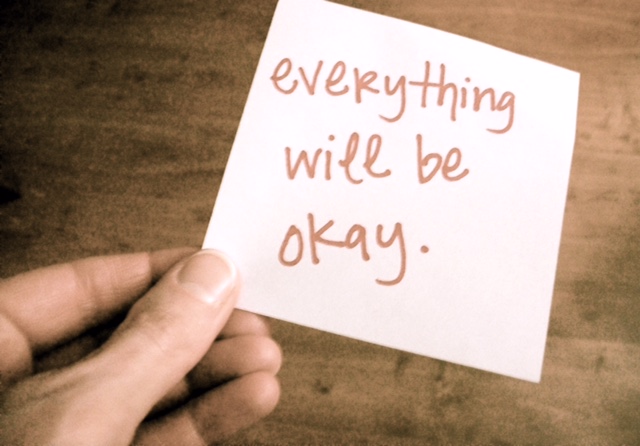
Change the wallpaper on your phone and computer to the following message (or something similar):

IMG_6042

You may also want to post it around your house. You don’t have to believe it yet. Just post it.

And make sure you can see it when you start calling attorneys.

Day Two

Tell somebody.

Maybe you feel ashamed or guilty. Maybe you want to protect those around you from the situation. Maybe you’re afraid of appearing weak or vulnerable.

Get over it.

You can’t do this alone. Tell a trusted friend or family member what is happening. The trusted part is important. You need an ally, not a saboteur.

Day Three

Find your cry space. Maybe it’s your car in an empty parking lot, the sanctuary in the church across from your office or in the pool, where the water washes the tears away. It only needs to be a place where you feel safe letting down the walls.

Consider journaling. The paper absorbs the tears.

12 Reasons to Journal After Your Divorce

Day Four

Don’t try to pretend that everything is normal. It’s not. Take some time off work. Call in a family member to help care for the children. Let the laundry slide and allow somebody else to head the upcoming presentation.

Allow yourself to not live up to your everyday expectations of yourself. This isn’t everyday.

And beating yourself up won’t help you get any better. So be kind to yourself instead.

7 Areas to Downsize During Divorce

Day Five

Develop your elevator speech. At this point, people around you are going to sense that something is going on, even if they do not know the particulars. And perhaps you don’t want them to know the particulars. Or, even if you’re okay sharing, you’re afraid that the floodgates may open at the wrong time.

Write a one-sentence explanation to give to people. Keep it simple and rehearse it until you can say it without tears or elaboration.

Feel free to steal the one I used after a friend gave it to me – “I’m in the middle of a major life renovation.”

Day Six

Enlist a publicity specialist. Not a professional one, unless you happen to be famous enough that your divorce is in the tabloids, but an informal one. The elevator speech is useful for relative strangers or people on the outside of your circle, but those closer to you will need more information. And if you don’t act proactively, they will either push you to talk before you’re ready or the rumor mill will be activated.

So enlist somebody to deliver the news to those who need to be in the know. Tell them what information you want delivered and what you want to keep private for now.

Day Seven

Check your sleep. At this point, the initial shock has faded into a zombie-like approach to daily life. You are preparing for a marathon, not a sprint. And you need to be rested. If you’re not sleeping, get help. You may need medication. It’s okay. There’s no shame in asking for help.

accept help

Sleeping too much is also a sign you may need help. If you’re struggling to simply get out of bed after the first week, it’s time to check in with a doctor or therapist. It’s okay. There’s no shame in asking for help.

Day Eight

Complete a social media and phone purge. Unfriend those who don’t bring you up. Or maybe decide to take a break from social media entirely for a time. Clean out your phone of photos you don’t want to stumble across or texts that bring tears. You don’t have to delete anything right now, just perform the digital equivalent of taking the photos off the wall.

One suggestion I read for those of you that have children – change your soon-to-be-ex’s name on your phone to “co parent.” It’s a powerful reminder of what is most important in a divorce with children involved.

And while you’re at your purge, examine your physical space as well. Sleeping alone but your sheets still carry the scent of the-one-who-is-now-gone? Wash them. A special gift taunting you from its resting spot? Put it away for now. Your brain will bring up enough painful memories on its own. No reason to help it along.

Day Nine

Nurture yourself today. Get a massage. Go to a nice restaurant and savor the service. Sleep in. Whatever sends the message to you that you are valuable and special. Do it. Feel it.

Don’t let one person decide your worth.

Day Ten

Buy a belt.

I bet by now your weight is starting to change. Either you respond to stress by refusing to eat or you use food to soothe the void in your heart. Either way, after several days, the effects will show. Don’t worry about them yet. Just make sure that your pants aren’t falling off.

Days 11-20 are in in Part Two of the Day-By-Day Survival Guide.

I’m Not Strong Enough

Every year I have some kids who break my heart.

It happens as soon as I task them with completing some assignment and they whisper to me with down-turned eyes, “I’m not smart enough.”

And my heart breaks for the broken spirit of the child.

Because the truth is, there are very few kids that are truly not smart enough to understand the math I teach and those are never even in my class.

But I can see how some may conclude they are not smart enough. After all, they see some of their classmates tearing through assignments like a kid at Disney World. They hear others volunteer answers before they have even processed the question. They feel their struggle while they see others’ successes.

But the problem is not that they aren’t smart enough.

Maybe they are not skilled enough, having missed earlier important concepts.

Maybe they are not present enough, excessive absences interfering with their ability to comprehend the material.

Maybe they are not supported enough, missing out on the help needed at home or at school.

Maybe they are not focused enough, allowing in outside distractions that make it difficult to think clearly.

Maybe they are not disciplined enough, forgoing homework for the call of video games and not participating in the needed practice.

Maybe they are not understanding enough, ignorant of their own ways of learning and demonstrating knowledge.

Or maybe they are not confident enough, perceiving themselves as lacking in some fundamental way that is fixed and rigid.

None of those things have anything to do with smart.

And all of those things can be addressed.

And overcome.

To expose the smart kid that was there all along.

Hiding behind those limiting beliefs.

———-

With adults, I rarely hear, “I’m not smart enough.” Yet I often hear, “I’m not strong enough.”

And it breaks my heart to hear the broken spirit.

Because the truth is, there are very few adults that are truly not strong enough to overcome the challenges that fall into their path.

But I can see how some may conclude they are not strong enough. After all, they see others speak and write and sing about their own journey and the conquering of it. They see others reach the finish line of their trauma before they have even finished processing their own. And they feel their struggle while they see others’ successes.

But the problem is not that they aren’t strong enough.

Maybe they are not skilled enough, having missed earlier opportunities to practice struggle and the overcoming of it.

Maybe they are not present enough, not able to put the time into healing that it requires because of other demands.

Maybe they are not supported enough, lacking the buttressing effect of family, friends and professionals.

Maybe they are not focused enough, allowing in outside distractions that make it difficult to think clearly.

Maybe they are not disciplined enough, electing to avoid the pain rather than face it and move through it.

Maybe they are not understanding enough, unaware of their own needs and what tools are effective for them.

Or maybe they are not confident enough, judging themselves as broken and somehow less than others.

None of those things have anything to do with strong.

And all of those things can be addressed.

And overcome.

To expose the strong person that was there all along.

Hiding behind those limiting beliefs.

———-

In the classroom, I work to help figure out what needs each kid has and then we work together to discover what methods and tools best meet those needs. I act as a cheerleader when they’re discouraged and a butt-kicker when they’re trying to avoid. I reveal my own struggles to them and help them to see their own strengths. I give them opportunities to shine when the quick-to-get-it kids often falter and I praise the effort that moves them forward. I highlight their progress, comparing them to themselves rather than to anybody else.

We talk about how everybody has some things that come easy and some things that don’t. And how often those that struggle become the better for it. They laugh when I tell them that math was my worst subject and that I almost failed Algebra II. They laugh, and then they smile because it gives them hope.

In the adult world, I do much of the same. I help people figure out their own needs and what tools will best match those needs. I encourage when the spirit is down and kick some butt when it is dragging. I share my own struggles (and the struggles that others have made public) and I help them to see their own strength. I look for opportunities for them to shine when maybe the quick-to-heal folks still stumble. I highlight their progress, comparing them to their earlier version rather than to somebody else.

We talk about how some people seem to move through trauma easier than others due to a blessing of biology, support, environment or prior experience. And that some may have to struggle more to get there.

And that struggle can make you better.

I had one client that had a life relatively free of trauma until a big one that sent her to me. She knew that it was harder for her to deal with the situation than others because as she was processing the pain, she was also doing the hard work of identifying her own strengths, weaknesses, needs and tools of best fit.

And she appreciated that effort even as it wore at her.

“I know this won’t be the only thing I have to go through in my life. If I do it well, it will serve me going forward and if I don’t do it well, it will become the thing that holds me back.”

And she’s right.

At the beginning, she wasn’t strong enough to reach the summit.

But she was strong enough to take the first step.

And then the next.

And each step built her strength.

Her confidence.

Her resolve.

YOU are strong enough.

I see it.

I want you to see it too.

And you don’t have to do it alone. Learn more.