Why We Struggle to Believe Things Can Be Different

I recently turned (gulp!) forty. Something about those milestone birthstone birthdays encourages reflection.

So I found myself thinking back to my thirtieth birthday…

Ten years ago, I awoke with the determination to learn to run a mile. My first efforts were pitiful, as I barely managed to cover a quarter of my goal. But it felt good to try, like I was giving aging the finger. My birthday gift that year was an assortment of running clothes to aid in my new goal.

Later that evening, I enjoyed a birthday dinner with my then-husband. I was completely in love and completely unaware of the duplicitous life he was leading. Ten years ago, I was finally feeling competent at my job and happy with my position teaching gifted and accelerated math.

At thirty, I reflected back on my twenties, to getting married, moving across the country and starting my career. My twenties had been a time of growth and change; and at thirty, I felt like I had arrived. I felt like I had done my evolving and that I could, with relative certainty, envision how I would be going forward.

And now at forty, I look back at the changes I’ve made over the last decade and it makes my head spin. Far from my expectations of my personal evolution slowing, my thirties were a time of incredible – and incredibly challenging – change.

That first quarter-mile run morphed into a completed marathon a few years later. That fabrication of a husband simultaneously destroyed me and resurrected me. After a few years of navigating a new system, I found myself back in an accelerated math teaching position.

My thirties were a period of destruction and rebuilding. Of losing one love and finding an even better one. Of impossible goals and painful journeys.

I hardly relate to the woman I was at thirty. She almost seems like a former friend. Her name has changed, her outlook is different and even the results of personality inventories have morphed. The changes have been so drastic and so complete, it’s difficult to comprehend.

And now at forty, I feel like I have arrived. Like my period of growth and change is over and now, with relative certainty, I can envision how I will be going forward.

Even though I can be almost guaranteed that I will feel the same way a decade from now.

In fact, research has shown that people inevitably underestimate how much they will change even into their eighties, continually expressing that now they have become truly the person they were meant to be.

It’s easy to look back and see the evolution, but it’s difficult to imagine that transformation continuing forward.

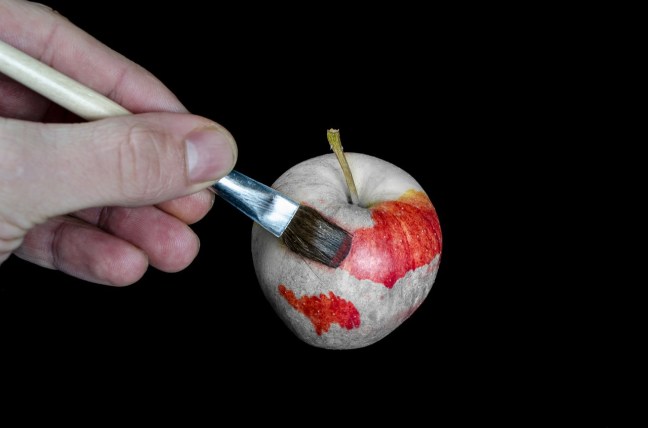
When we try to envision our futures, we rely heavily on our pasts and our present. It’s as though we’re trying to create a new painting using scraps of the old canvas. We can imagine some change, but we struggle to accept that everything could end up different than it is today.

On the one hand, it’s scary to think that we are always evolving, always becoming. That any feeling of “making it” will always be fleeting. Yet the realization is also exciting. Our futures may be unknown, but they are also unbound.

I just hope that my next decade has a little less drama than the previous one…


How Will Your Divorce Change You?

When I was dealing with the aftermath of my divorce, I was reminded of the PlayDoh extruder toy I had as a child. I would marvel at the smooth, even shiny, surface of the dough when it was first removed from the canister. Then, I would feed the material through the extruder where it was split and molded into a variety of forms. When it was time to clean up, I always tried to recreate the same smooth cylinder of clay as I started with.

It never worked. Because even though all the raw material was still there, it had been shaped and pressed to such an extent that it could never be the way it was before.

And that’s how the divorce felt. It was one of those life experiences where, even as you’re going through it, you know it will become a dividing line between the “before” and the “after.”

Because divorce changes you. That you cannot control.

But maybe you can influence just how it will change you. Read how here.


When You’re No Longer At Home In Your Own Skin

It was a snake that first taught me that growth is uncomfortable.

It was a Kenyan sand boa, a small and docile breed, that found its way into my life over twenty years ago. The gentle creature seemed to enjoy being handled and even was tolerant of the inquisitive sniffs and snorts of my over-enthusiastic pug.

All that changed one day when he acquired a defensive posture when I reached into his enclosure to refill his water. Startled, I pulled my hand back and examined him through the safety of the glass. I immediately noticed that his eyes were clouded and his normally striking patterns seemed muted.

I soon realized that the young snake had outgrown his own skin and was making preparations  to shed his restrictive covering. Curious and with a front-row seat of the process, I watched him over the next couple weeks.

And I learned that growth is uncomfortable.


The snake’s discomfort was clear. Instead of moving around his enclosure, he alternated between hiding under some debris and attempting to force the old skin off with the help of a rough branch. He refused to eat and he became irritable when stimulated. The translucent eye caps meant that he retained some sense of light and shadow, but he struggled to orient with his compromised vision.

Watching him, I alternated between awe at nature’s solution to a growing body in an inflexible skin and dread that this creature had to endure this experience throughout its life. Growth was inevitable, and with it, discomfort.

Early one morning, I was elated to see the old skin lying across the branch, which apparently had eventually been of assistance. The newly-unencumbered snake luxuriated on his heat rock; he seemed drawn to the warmth more than usual as his new and fragile skin was forming. Later that day, he gladly accepted the offered food, ready to embrace life again.


The snake left my life as abruptly as it had entered and I didn’t think of it for many years. Until one day, some weeks after my ex left, when I suddenly felt constricted within my own life. I had grown accustomed to labels and roles that no longer applied. I existed within limitations that had become self-imposed.

At first, I tried to make it work, to try to force myself back to who I was.

But it didn’t work.

I was uncomfortable, fighting against the inevitable and resisting in an attempt to regain some sense of power and control over my life. I found myself continually drawn back towards my old ways of doing things, wanting to turn away from the fear and the pain.

I attempted to avoid the discomfort, to give it a wide birth and fill my sightline with distractions.

But it didn’t work.

I wanted to lash out. I wanted to hide. I wanted to be anywhere but where I was. Anyone but who I was.

I tried to tell myself to snap out of it, to move on already.

But it didn’t work.

And that’s when the image of the snake filled me with understanding. The growth was unescapable and so was the discomfort. Relief was to found not in an attempt to hold onto my ill-fitting skin in desperation, but in finding the courage to let it go.

And the willingness to embrace what came next.


How Long Should You Wait For Promised Change?

“He promised he would change. But he’s still the same. I can’t go on like this.”

“She said she was going to be different, but it hasn’t happened yet. How long do I wait?”

One of the harder places to be in any relationship is waiting for the other person to follow through with promised change. I am often asked how long one should wait for the agreed upon changes to occur – what’s too long and what’s not long enough?

It’s never a pat answer. There is no magic formula, no rule that states how many weeks, or months or years have to pass while you wait powerlessly for the promise to be kept.

If you find yourself in this unenviable position, here are some of the things to consider as you ask yourself how long you should wait:

Who initiated the idea of change?

If you are the one who brought up the desired alterations, it’s time for a pause. You cannot change another person, no matter how much you want to. Even if it was agreed upon, if you initiated the idea, there’s a very good chance it will not come to fruition on your timeline (or at all). The question then becomes are you willing to wait for them to internally motivated to change or not?

Here’s a difficult truth – people never change for another. They change for themselves.

Are you hung up on potential?

The quickest way to anger a teenager is to bring up the fact that they have potential. They’ll immediately shut down, feeling simultaneously judged and unappreciated. Adults are no different. Yes, it’s difficult to see what somebody can become while, from your perspective, they’re squandering some of their gifts. And it’s easy to fall in love with somebody’s promise. But that’s no guarantee they’ll ever reach that ideal that you’ve pictured.

We are all always changing. They may move towards their potential and they may not. All you have to go on is who they are right. this. moment. How do you feel about that person?

snip20161218_24

Are there actions alongside the words of promise?

It’s one thing to claim an intention to change. It’s another to take steps. In these cases, the words tend be grandiose, full of promise and potential. They can distract and cloak reality. In contrast, actions, real actions towards meaningful change tend to be quiet, easily overlooked. Yet these are where you attention should focus.

Understand that change is hard and rarely linear.

As long as actions towards the goal are occurring, be patient and compassionate. Change is scary and often way more difficult that we anticipate. Be supportive. Be an a$$kicker and a cheerleader. When there are signs of progress, give the benefit of the doubt.

snip20161218_23

Set ultimatums with yourself and boundaries with the other person.

You need to decide exactly what you’ll tolerate. Think through those “if…thens…” and make firm decisions on your responses. Communicate these to the other person, not in the form of ultimatums, but in the form of boundaries – what you are and are not willing to put up with.

Ultimatums can be manipulative, seeking to control another’s response (which never goes over well). Instead, make your own decisions about you and communicate them clearly. Then allow the other to make their choices and follow through on what you promised yourself. That last part is important.

Accept that you may have to step back with the hope of one day stepping back in.

It may be that you cannot tolerate the situation unless and until the change has occurred. Or maybe the nature of relationship is in opposition to the change occurring while a certain level of contact is maintained. Distance can be helpful if it does without manipulative intentions and without the expectation of a guarantee.


Be honest about the limitations of change.

Behaviors can be learned or unlearned. Habits can be developed. Personal challenges can be managed. But ultimately, this person is who they are. Is that enough for you? If you are waiting for a total transformation, you’re not being fair to either one of you.

snip20161218_25

When you’re frustrated, change your approach or your response.

After all, it’s what you can control. And you may be surprised just how powerful that can be.


Is addiction a part of the story?

Addicts are extremely skilled at doling out promises of change (peppered with just enough evidence) to keep you waiting. If there is addiction (or the suspicion of) in the mix, you’re going to have to practice some tough love. Check out Al-Anon for help and support here.

Attend to yourself.

Sometimes we get so caught up in somebody else’s issues that we forget to take care of our own. And sometimes we use somebody else’s problems as an excuse to ignore our own. Make sure to attend to yourself.

And most importantly –

Although you may be waiting on change, refuse to wait to live.

Change is Never Easy, But it Can Be Easier

It’s not just seasons changing in these parts.

The school where I’ve worked for the past five years has become swollen. Overripe and bursting with more kids than the building was designed to hold. And so it’s being cleaved and the excess is being funneled into a new school, opening next fall.

My first reaction when confronted with the reality was that I wanted everything to remain the same.

Because change is hard.

And it’s so much easier to just keep on keeping on.

But that’s not always (or even often) a choice.

So when decision time came, I elected to transfer allegiance to the new school.

And between the additional meetings, the multitude of unknowns, the additional curriculum burdens and the physical sorting and packing, it has not always been easy.

But change never is.

Here are some strategies that I’m using now that help to make this change a little easier:

Accept Change As Inevitable

Even when things stay the course, the course changes, as do the people on it. Some change is obvious, the sudden endings and the hard right turns of life. And other change, most change, is more subtle and slow. The fraction of a millimeter added to a child’s height. The replacement of tall grasses with short trees that eventually grow to shade out the growth below.

When the abrupt changes occur, we often resist, digging our heels in and skidding through the turn as though we can alter reality through an act of sheer stubbornness.

We may as well push down on our children’s heads in an attempt to halt their growth.

Change is normal.

Change is unavoidable.

We may as well get used to it.

Frame Change As an Adventure

How exciting! You get to try something new!

Not feeling it yet? Keep practicing. Watch your words. Rather than speaking negatively about your situation, work to frame it as an adventure. An experience. Yes, there will be trials and tribulations. That’s part of what makes it more exhilarating. Aren’t you lucky to have this opportunity for excitement!

Part of the adventure mindset is to view setbacks as problems to be solved rather than roadblocks in your way. Be creative. Be flexible. And remember to have some fun along the way.

Control What You Can

We all feel better when we have the impression that we are in control of our lives. Unfortunately, life does not always agree. When you’re faced with unwanted change, it’s easy to fall into a victim mindset, taking the approach that all of this is happening to you and that there’s nothing you can do.

It’s true you cannot stop the change. But it’s also true that you’re not completely helpless either. In the midst of upheaval, control what you can, no matter how small or seemingly inconsequential. Simply recognizing that you have choice and acting upon those choices will go a long way to alleviating the fear and frustration that accompanies change.

What If It Is Your Circus and They Are Your Monkeys?

Create a “Worth It Because…” List

If you have chosen this change, you probably already have some idea of how it may benefit you down the road. If this change was thrust upon you, you’re probably drawing a blank as to the potential positives of the unwanted life renovation.

So figure them out. Step outside yourself and brainstorm some of the current and future reasons that this change is/will be worth it. You don’t have to like or agree with the change to uncover some of the positives. Some of these positive side effects may not be automatic. So put in the effort to make them happen.

The Upside of Betrayal

Piggyback On Your Change

You know that thing you’ve always intended to do but never quite got around to it? Now’s the time. You know that bucket list that has been collecting dust? Brush it off.

Change provides opportunities for more change. It’s harder to come up with excuses to avoid something new when new and different are everywhere you look. View this as a window of opportunity for you to bring to life some of the changes you have dreamt about.

—–

As for me, I am super excited about my upcoming change. It will push me. It will challenge me. Some days it will probably bring tears when overwhelm hits, but I’m confident that the effort will pay dividends. I’m thrilled to be part of building something new.