Ten Tips For Dating After Divorce

Dating after divorce tends to be a deliberate action, entered into consciously and tentatively after years or even decades with the same person. This can be an opportunity for you to clarify your needs and the needs of a relationship before you step out on that first date. The following are my suggestions for your ten commandments of dating after divorce. Read the tips on The Good Men Project.

Unmoored: Emotional Free Fall After Divorce

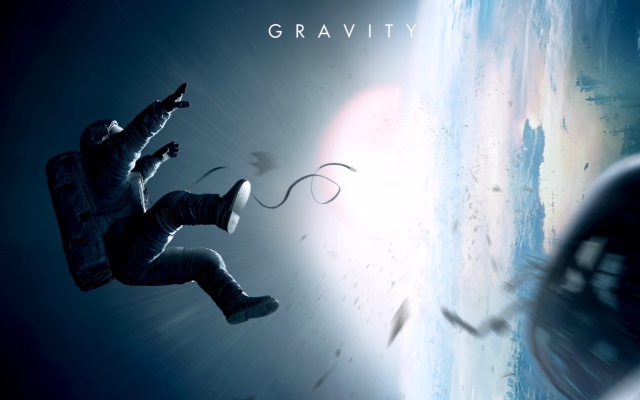
Brock and I watched the movie Gravity several months ago.

Unusually for me, it gave me nightmares. Recurring nightmares.

Several times a month, I would wake up after dreaming of myself in Sandra Bullock’s position – untethered, floating freely through space. Although my body was safely on the bed, my heart would be racing as though I was in mortal danger and it took several minutes for my brain to accept the idea that I was not alone and unmoored.

And that’s really the root of the nightmare, isn’t it?

My fears have nothing at all to do with being lost in space and everything to do with being lost in life.

In those early days, I struggled to find the words to explain how I was feeling. Nothing seemed strong enough. Encompassing enough. But one word kept floating to the surface.

Unmoored.

With the receipt of that text, my ties to most everything in my life had been severed. Those things that defined me, anchored me, were gone and I felt like I was floating uncontrollably away from myself. It was a panicky helpless feeling as my attempts to get back to myself seemed to occur in the dead space of a vacuum. I felt detached with a limited life support system and my oxygen quickly running out.

And in so many ways, that feeling of being unmoored was the scariest of all of the post-divorce emotions.

Because you have to fully let go of what you know in order to grasp on to your future.

I wasn’t free-floating for long. I started to feel anchored once my clothes were placed in the dresser in my friend’s spare bedroom, where I would spend the next year. Another tie came when my mom purchased a gym membership for me and that facility became my home away from my-home-for-a-year. School started up again and even though it was a stressful year due to administration, if felt reassuring to be back in the classroom, even as I answered to a name I no longer identified with. Yoga reconnected body and mind and I learned how to breathe again on a soft carpet on a therapist’s floor. Pen went to paper, and I started to explore the emotions that were within, the anger especially giving me purpose.

I realized only recently that some of the unmoored feeling persisted for quite some time. It was only this past spring, when I tucked plants into the soil in my yard (in an area that feels like home) with a ring again on my finger that I realized I felt anchored again. Not settled, but relaxed into where I want to be with anchors of my choosing.

After divorce, some people find they enjoy the freedom that comes from being unmoored; they design their new life with minimal ties and restraints to allow maximum flexibility. Others crave the feeling that comes from multiple ties to people and places, giving a sense of security and belonging.

Being unmoored alters you. It helps to build your confidence in your ability to survive. It carries a freedom that may frighten or awaken. It confirms who your true friends are and alerts you to the ones that need to be jettisoned. It whispers truths about you and your desires, uncluttered by the wishes of your ex. It’s a moment in time. A flash of clarity with clutter removed.

Because in free fall, you have no limits.

Related: Take Me to the Other Side

Only possibility.

Turning Points

Two high school girls came into my last period class on Friday to talk with my 8th graders about the decisions they would soon be facing about their high school classes and clubs. One of my students bravely said to me in front of a small group, “I’m nervous. I mean these are the first decisions that I am going to make that will impact the rest of my life. I’m going to look back on this as a turning point.” The others nodded in agreement.

And in many ways, she’s right. At 14, most of the major decisions impacting her life have been carried out by her parents. Over the next few years, her parents will have less influence on her life and she will begin to take the reins and the responsibility. And it’s a big responsibility.

At 14, she probably still believes that life is linear, that one decision once set in motion, will inevitably lead to the next logical step. She may not yet have learned that life has a way of inserting itself (sometimes rudely) into our plans. And that often those turning points sneak up on us when we’re busy blindly carrying out our life blueprint.

Those critical and conscious decisions we make certainly influence our lives: school, marriage, career, children. But the way that we respond to the setbacks and challenges often carries even more weight. Turning points are not only found in major course corrections; they live in how you approach every moment.

And as long as you keep learning and growing, no turning point is ever wasted.

photo-1

When Will My Divorce Be Over?

When will my divorce be over?

It seems like such a clear-cut question, doesn’t it? Obviously, the divorce is over when the legal process is finalized and you receive a decree embossed with your local court’s seal.

But that’s only a piece of the puzzle; that’s when the state sees you as divorced. Not necessarily when you do.

Because a divorce, like a marriage, is so much more than a piece of paper.

There are certain benchmarks that you have to meet before you can relax and truly see your divorce as over. These are in no particular order because they may occur at a different point for each person. And the timeline for healing will be different for everyone.

Release of Hope

Before you can view your divorce as final, you have to first accept that your marriage is over. Maybe you’re a fixer and you are still desperately trying to patch things together. Maybe you are still in disbelief and you keep hoping that your soon-to-be-ex will change his or her mind. Or maybe you have weathered many ups and downs over the course of your marriage and you are holding on to the idea that this down will again be followed by an up. It makes sense to hold on to hope as long as possible. After all, you don’t want to discard a marriage that is still salvageable. However, it’s also important to accept that you cannot control your partner’s choices and you cannot save a marriage on your own.

Acceptance of Circumstances

Divorce changes every aspect of your life – from living situation to lifestyle. Maybe you lost money in the deal or were ordered to pay alimony. Or the judge ordered joint custody when you were hoping for full. Perhaps you were made to move out of the marital home and your suburban spread has been replaced with a run down apartment. You may feel like your current situation is not fair, that you are being made to pay for situations beyond your control. And you may be right. Divorce isn’t about fair. It’s about getting through and moving forward. And that begins with accepting where you are.

Completion of Legal Matters

Divorce may be more than a piece of paper, but the acquisition of that paper sure can be a drawn-out and expensive process. And it’s difficult (if not impossible) to feel like the divorce is over while you’re still producing documents and cutting checks to lawyers. I have such empathy for those involved (either by circumstance or state law) in a year+ process (although I didn’t always feel that way). It’s difficult living in that limbo of separation where you’re neither married nor divorced.

Construction of Framework for New Life

It’s difficult to feel a sense of completion when the old chapter may be finished but the next is still a dark void. It’s much easier to feel like the divorce is fully behind you when you have at least the basics for the next steps in your life sketched out. You don’t have to know everything about the life you want to create post-divorce as much will unfold over time, but aim for some insight. Put the energy into laying out the framework for your new life; scaffolding makes moving forward more manageable.

Tempering of Bitterness

Are you still holding on to anger towards your ex or carrying a sense of derision for relationships in general? Even if you aren’t ready to date again (or even ever want to date again), this negativity makes it difficult to put the divorce behind you. Sometimes the residual acrid emotions are our attempt to avoid facing the sadness and loss hidden beneath. Other times, the anger is our shield because we are afraid of being seen as vulnerable and weak. Much of the time anger is simply pain screaming to be heard. So listen and answer.

Easing of Fear

Much like anger, fear can serve as a tether, holding you to your divorce. It’s scary facing the world alone when you’re used to having your spouse by your side. It’s terrifying to start over when you don’t even trust that you can stand. It’s daunting to think about dating again and starting a new relationship from scratch. And it may be even scarier to imagine being alone forever. The only way to lessen fear is to face it. Once you conquer those first few “I can’ts,” you’re confidence will build until you know you can.

Restoration of Balance

There is nothing balanced about life while you’re going through a divorce. Your emotions are running the show and are frequently as well behaved as a toddler on a sugar crash. You may be eating too much or too little or just too much of the wrong stuff. Perhaps you’ve become adept at avoiding reality through alcohol or distractions. Part of regaining your life after divorce is establishing healthy habits and a balanced environment. Re-evaluate what occupies your life and remove what no longer serves you.

Ultimately, your divorce is over when you see it as something that is a part of your story, your past. It no longer defines you or limits you. It speaks of where you’ve been, not where you are going. It’s an ending, yes. But one that allows a new beginning.

Related: Happiness is Divorce in the Rearview Mirror

What Do You Gain From Your Loss?

We are primed to fear loss more than we desire gain. Numerous studies have demonstrated that people perceive a loss as more significant than an equivalent gain and will often act conservatively in order to lessen the chances of diminution. One famous example gave the participants $50. One group was given the option of keeping $30 or gambling the $50 with a chance of losing it all or retaining the entire amount. The other group was essentially given the same situation, only their first choice was framed as losing $20. In the first case, framed as a gain, the participants overwhelmingly chose to hold on to their money whereas in the second loss-based scenario, the volunteers were more willing to gamble.

We act to avoid loss.

It makes sense. From an evolutionary standpoint, a loss of food or shelter or territory could be devastating whereas a surplus did not necessarily offer increased benefit (after all, food spoils and you can only use so much land at a time). It is also much more difficult to imagine what life would be like if we suddenly acquired more, but it is much easier to envision a life without the things to which we have become accustomed.

Marketing experts use loss aversion to frame their campaigns, focusing on accentuating any potential losses rather than highlighting gains (rebates and trial periods play right into this). Behavior and motivation experts use this theory to encourage their clients to stick to a new habit (ever heard of those gyms that charge you for missing a workout?). And educators use a fear of loss to influence student behavior and learning (there’s a reason a “-5” on a paper is more influential than a “+95”).

Loss aversion can be a positive trait. It limits risk-taking and promotes a conservative view of resource management. However, like so many of our primal urges, loss aversion often operates separately from rational thought and has the potential to highjack our brain and encourage illogical conclusions and actions (like the sunk cost fallacy, which often leads us to remain in poor relationships long after their expiration date).

In short, all of these situations show that loss hurts. And sometimes that pain can be disproportionate and irrational.

As I’m sure anyone who has experienced the end of a relationship will agree.

But just like how the researchers framed the same payout as a gain of $30 or as a loss of $20, you can reframe the end of your relationship in terms of what you have gained instead of what you have lost.

No, it doesn’t change the reality of what happened.

But it can change your attitude about what happened.

Because when you see the flipside of your losses as gains, it helps to alleviate some of their sting.

I may have lost everything, but I gained a chance at a new life from scratch. There’s something energizing about purging and starting over.

I lost the shared history with my ex, but I gained the desire to reach out and reconnect with other people from my childhood.

I lost the illusion of security I had in my first marriage, but I gained a wisdom and strength that I would not have the trial I endured. And I even found 7 upsides to being betrayed.

I gained perspective, opportunity, awareness and gratitude. I found purpose and pleasure in writing and made more friends and connections than I could have ever imagined.

I gained a new lease on life. And I want to make sure I don’t waste it.

I no longer see my divorce as a loss. I see it as a chance. A course correction.

A gain.

“When you change the way you look at things, the things you look at change.” Wayne Dyer