Diving for Pearls

There are times when Truth is important –

When my students use verified geometric theorems to prove triangles congruent.

When my husband tells me where he’s going on a Tuesday night.

When my doctor asks about my family history of cancer.


And then there are times when Truth really doesn’t matter.


A person reached out to me yesterday with the concern about their place in their former partner’s view – did they love me or did they use me?

As I sat on the bench in the gym locker room typing out a response, I was transported to a time when that same question consumed me. As the details of my husband’s other life began to surface, I couldn’t help but contrast what I was feeling at that time (loved) with what he was doing at the time (anything but loving). There was no doubt that he was acting without concern for me towards the end, but did that mean that he never cared for the entire sixteen years?

I was obsessed with answering this question. I would consider evidence in the form of memories or discovered facts and dutifully enter a mental tally mark in either the “He loved me” or the “He loved me not” column. And yet, I never seemed able to settle on a true answer. For every indication that he loved me at some time, I could find a counterclaim that I was merely a pawn in his game.

I was looking for definite proof. For Truth.

But what I really wanted was for the pain to stop.

And Truth, assuming it could even be ascertained, really didn’t matter.


I made a conscious decision to retire my search for Truth. I accepted that he had used me  in the final few years of the marriage and I chose to believe that the love I felt prior to that was real. Maybe I’m right and he did have the capacity for love until he collapsed under the pressure of shame and addiction. Or, I may be completely off base and he may have been a manipulative sociopath from the beginning.

It doesn’t matter.

The marriage is over. I don’t need this information to make any decisions in the present moment. My views don’t impact my ex one way or the other. I’m not presenting this conclusion as definitive and I’m not deceiving anyone. There are no judges evaluating the evidence for my claim and no real-world repercussions either way.

It only matters within me.

So I choose to believe the truth that brings me peace and allows me to hold onto some of the good memories instead of throwing sixteen years of my life away.


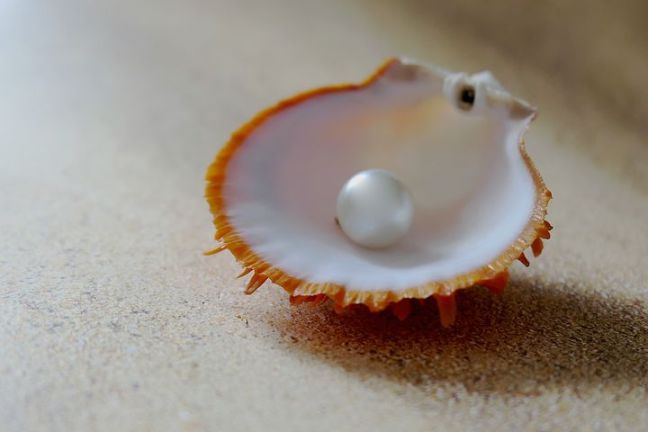
Oysters developed a resourceful strategy for handling unwanted and irritating invaders. In order to reduce the pain from a wayward grain of sand or grit, they surround the unwanted particle with smooth coating of calcium carbonate.

That’s how I see my resolution to conclude that I was once loved by him – a pearl enveloping and softening the pain.

And it may not be Truth in any real sense, but it’s real enough to me.


Was Divorce What You Expected?

Why Self Awareness is Critical for a Healthy Marriage

When asked to enumerate the critical components of a healthy relationship, most people appropriately include “communication” on their list. Communication certainly is critical to a healthy marriage; partnerships that depend upon mind-reading or are characterized by either raised or silenced voices rarely allow for intimacy and mutual support to develop.

Yet something is often missing from the discussion about communication – no matter how skilled a person is at delivering information in a clear and kind manner, they cannot convey what they do not know.

And so when it comes to relationships, self awareness is a vital precursor to communication. Before you can help somebody else understand you, you have to first know yourself.


What is Self Awareness?

Self awareness is an ability to observe and reflect upon ones feelings and responses. Anybody can feel an emotion; a self-aware person can name or describe the emotion. When somebody is self-aware, they are able to take a step back and describe themselves from a more objective viewpoint.

As with most things, self awareness exists on a continuum. Rather than being entirely present or entirely absent, it’s something that we all have to some extent. It begins when the infant first recognizes themselves in the mirror and continues when they learn to identify their agitation as “mad” or “sad.” Some people never advance much beyond those simplistic labels while others become quite adept at being able to describe their inner landscape and motivations. And for all us, self awareness tends to be easier in some areas than others.

Self awareness takes courage; you have to be willing and able to see the negative traits in addition to the positive ones. It requires curiosity, a willingness to ask questions and explore your reactions and assumptions. There is a certain humility that often accompanies self awareness because the imperfect nature of humanity is on full display whenever you look inward.

Awareness is separate from the ability to control an emotional response or make healthy decisions, but it is the first step. A self-aware person may not always act in their best interests, but with some effort, they will likely be able to identify the underlying cause of their behaviors. For example, two people may respond to a break up by drinking too much. The self-aware person will be able to identify that their fear and isolation from the break up is prompting them to look for an escape whereas the person who lacks this insight will fail to understand the reason for their imbibing.

Knowing yourself is never a perfect science. We all change (often below the conscious level) and we are all subject to the myriad fallacies of the human brain. We may reach conclusions that are not valid or neglect to face more undesirable characteristics. Self awareness is not about perfection. It’s not a goal to be reached and forgotten. It’s the consistent attention of a curious and questioning eye turned inwards.


Why Do Some People Lack Self Awareness?

One of the more common reasons that people may lack self awareness is from exposure to a traumatic experience. Trauma teaches people that their body, their self, is not a safe place to be. So after trauma, people often try to distance themselves from themselves. Looking too closely means having to face some painful and difficult truths, so instead they turn away. A knowledgeable therapist can be invaluable here in helping to reunite the person with themselves.

Others may have never been provided the instruction in developing a language to describe the inner working of their mind. And language is powerful. Without the words to describe what you’re feeling, there is a limited capacity to fully explore it, much less express it to others. The good news is that this language can be mastered no matter your age.

Some personality disorders also impact an ability to develop self awareness. Consider the classic narcissist whose inflated outer ego is a shield for a wounded and delicate inner self. They rarely seek therapeutic assistance because they cannot bear to see – or admit – the underlying pathology.


Why is Self Awareness Important in Relationships?

We all want to be seen and accepted for who we are. But first, it’s critical that we fully understand – and can communicate – who we are. A self-aware person has the tools to choose an appropriate partner, has the ability to reflect upon their own strengths and weaknesses and has the capacity to explore their role in the relationship dynamics.

Self awareness is key in boundary setting. Without an understanding of your own needs, it’s all-too-easy to subjugate them to others. You can’t stand up for yourself if you don’t know yourself.

You can equate a relationship to a dance between two people, an interplay of moves that requires a certain amount of cooperation and anticipation. Self awareness in a relationship is the equivalent of a dance partner knowing where their own body is in space; without this information, it is impossible for the couple to move in synch.


Six Reasons You’re Not Seeing the Results You Expected

This sign welcomed me at the gym today:


Not seeing the results you expected?

Visit the training desk to set up your personal training session now!


It prompted me to scan the mid-morning crowd with a curious eye, wondering how many of them were seeing the results in the gym that they anticipated when they first signed their contracts. I suspect that many of them, if asked, would express disappointment with their progress as measured against their initial expectations.

Pulling on my background with personal training and my own countless hours spent in the gym, I considered the most common reasons that people don’t see the fitness results that they expect when they first vow to get in shape. And then, like so often happens, I realized that these explanations are not limited to the gym.

These are the reasons that any of us fail to see the expected results in all areas of our lives – work, relationships, finances, education and yes, fitness:

pug-801826__480


You’re Not Working as Hard as You Think You Are

I often see the same people on the stationary bikes or the treadmills every time I enter the fitness center. They have the resistance and the speed set at some reasonable number and they dutifully put in their sixty minutes of daily exercise. I’m sure they feel like they’re working hard. The heart rates are elevated, the sweat is evident and there is probably some soreness the next day. The brutal truth is that this kind of steady-state cardio is beneficial for maintaining cardiovascular fitness and not much else.

It’s simply not hard enough.

We ALL have a natural tendency to stay within our comfort zones. When discomfort rises, we often respond by backing off. Which we then justify with our internal narrative –

“I’ll do more after this tough period of work is over.”

“This is all that I am capable of.”

“It feels difficult, so it must be my edge.”

“I need to play it safe so that I don’t get hurt.”


And by doing so, we’re robbing ourselves of the potential results.

There are some clues to indicate when you ARE working hard enough – You’ll have doubts in your ability to reach your stated goals. There will be times where you feel as though it’s impossible and it will rarely feel easy (and when it does, it’s swiftly followed by a humbling reminder that you still have a way to go). You will see progress and change; what was once difficult will begin to seem very doable. When you reach a goal or even when you put in the time, you will feel a sense of accomplishment or pride, knowing that you pushed yourself. There may be a sense of risk, since reward rarely travels alone. And finally, when you’re working hard enough, you will be uncomfortable.

 

dog-734689__480

You’re Working On the Wrong Thing

I’m frequently approached by women who want my advice on how to tone up. They are faithful to their Zumba classes or elliptical machines but have become frustrated with a plateau in their pants size. When I mention the addition of free weights or kettle bells, the response is often an immediate dismissal, “Oh, I don’t want to get too muscular.” And then they return to the efforts that are failing to deliver the desired results.

I see this dynamic often in those I work with following a divorce from a difficult person (I was also guilty of this myself!!). They are often frustrated with their ex’s lack of response to parenting responsibilities or inability to act like a decent human being. They funnel their energy into labeling their ex or trying to understand the motivations and the reasoning behind the actions. They are certainly working hard. But nothing seems to change.

Because they are working on the wrong thing.

It is SO easy to leap to a potential path once a problem or need has been identified. And then, we get so busy… well, being busy, that we neglect to reevaluate our efforts to see if they are having the intended effects.

Take the time to ensure that the path you’re slogging along actually leads to your intended destination.


dog-1414524__480

You’re Undermining Your Efforts

“I don’t get it,” my neighbor said to me. “I run every day. I lift weights three times a week. But still, I’m getting fatter with every year.”

“What’s your diet like?” I inquired.

The resulting blush told me all that I needed to know.

Sometimes, we are working hard enough and on the right things, but we’re neglecting something else. And any attempt to fill a cracked bucket will always lead to frustration and subpar results.

I’m very skilled at doing this at work when I feel stressed and overwhelmed. When the to-do lists feel daunting and I’m barely keeping my head above water, I have a tendency to increase my hours spent working.

Which inevitably leads to a startling drop in efficiency (and agreeableness).

In those moments, I would be much better served by taking a break and taking care of myself before putting more effort into the work.

It can be difficult to recognize when you’re undermining your own efforts. We can get strangely defensive and territorial over these adopted behaviors. It’s worth the momentary discomfort or embarrassment though if you want to ensure that your efforts aren’t in vain.

 

dog-94167__480

Your Expectations Are Unrealistic

“Get a Bikini Body in 20 Days!!!” the magazine practically screamed at me in the check-out line. First of all, what exactly IS a “bikini body?” A body that is currently wearing two pieces of fabric designed for water-based recreation? Hmm. Doesn’t seem like that would take more than 20 seconds to achieve. I’m assuming that the magazine was claiming that the reader could look like the size-two model in under three weeks. Which unless the customer is already a size-two model, is practically impossible.

Whether from the focus on the extremes from the media, the outrageous claims of advertising or the Cliff Notes version of a struggle from a friend, we often possess idealistic or romanticized expectations. And if you’re starting with an unattainable goal, you’re pretty much guaranteed to never see the expected results.

It can be difficult to determine the difference between lofty expectations and implausible expectations. Sometimes it means that we have to first face some uncomfortable truths about ourselves or our available resources.


rottweiler-1785760__480

You Need Outside Assistance or Accountability

There is a reason the personal training area of my gym is frequently occupied – we can all benefit from a little professional help sometimes. These trainers introduce people to new ideas and methods, cheer on the tired and unmotivated and hold their clients accountable for their progress. It’s no surprise that this population often shows the greatest growth within the entire gym.

I know I have a virulent case of the “I can do it myselfs!” And I know I’m not alone. we often perceive asking for help as a weakness, a sign of giving up. Yet sometimes a little shove or shout of encouragement is exactly what we need in order to scheme the expected results.


dog-2179454__480-2

You’re Taking the Short View of a Longer Process

“How long have you been doing yoga?” the young man asked from the mat next to me after class.

My eyes looked to ceiling as I mentally retraced my yoga journey, which began with videotapes in my childhood bedroom. “About twenty-six years,” I finally concluded.

“Wow!” he replied, a bit of a relieved look on his face. It seemed that he was expecting to master the practice (a bit of an oxymoron there, huh?) after a few short months and this response gave him permission to take more time to learn the nuances of the poses.

It’s frustrating when you feel like you should be at the finish line and yet it remains out of reach. I felt this acutely when my divorce was finalized. I had assumed that the emotional process would end when the legal one did. (Spoiler alert – it didn’t.)

When you don’t see the expected results, look instead for signs that you’re making progress towards the desired outcome. Most things in life require baby steps. You’ll get there; it’s just going to take a little longer than you may have planned. And you know what? That’s completely okay:)

When You Don’t Want to Go Home

One of the most painful sentences that I have ever been on the receiving end of was, “I didn’t want to come home.”

Those words were a cannonball to the gut, a sharp exhale followed by a tremulous and hesitant inhale.

Because home should be a place where you want to go. A sanctuary where you can recover from the bruises that the world inflicts upon you. Ideally, home is the welcoming hug. The safe space where your armament can be removed along with your shoes.

And so to be told that I was contributing to a home environment that brought dread instead of relaxed anticipation? Ouch.

And yet, I can understand this feeling of not wanting to come home. As I expect most of us can.

Relationships, even the best ones, are challenging. And there are times when having to take somebody else’s emotions and needs just feels overwhelming. Perhaps you’ve fallen into a cycle of negativity and you need some space to untangle the interactions. Or maybe you’re not feeling accepted as you are, which is ever more painful when it happens at home than in the broader world. And sometimes, we outgrow our home, the rigid shell binding when we crave expansion.

Pay attention to that feeling of not wanting to return home. What is it telling you?

In my old life, I always looked forward to coming home. Until that home transformed into an empty shell, a life’s vessel without its lifeblood. The floors echoed, sending out reminders of the years they had been traversed together. The walls seemed to taunt me, speaking of better times. I only managed one night there after he left, an endless darkness spent pacing the living room with a persistent hope that I would soon hear the garage door rumble open. The reminders proved too much for me to bear.

The next day, I escaped to a friend’s home. Which immediately became my home. One I wanted to return to at the end of each day. When it came time for me to establish my own space, I chose the apartment and its furnishings carefully in an attempt to cultivate a space that welcomed me back. Little from my old life occupied the space. It was a blank slate, ready to accept the imprint of a new life.

My home now welcomes me each day. It offers both reminders of the best times and the shared laughter and it also holds the impressions of loss and tears. It’s a place where I feel both accepted and challenged. And on those days when everything is just a little too much, it offers comfort and consolation.

Home holds so much power over us. It is where many of the best and the worst memories are formed. The most important relationships of our lives play out upon its floors. It receives our greatest hopes and dreams and sometimes surrounds us as we say our goodbyes.

It said that you can’t go home again. Yet as long as you accept that home changes with the years and you can rebuild at will, you can always find your way back.