After Divorce: It DOES Get Better

Just the other day, somebody contacted me who is in the early months of an unwanted divorce.

After responding to the specifics of their situation, I ended with, “It DOES get better.”

They responded, “Everybody keeps telling me that.”


This is one of those phrases that can seem like a pat response in the moment, akin to “Everything happens for a reason” or “You aren’t given more than you can handle.” It can feel like a hollow promise, words that skip like rocks on a pond right over the depths of the pain you feel today only to sink deep into your gut.

I can’t speak for the others that offer up this hope. But I can explain where I come from. When I hear about somebody’s suffering after divorce, betrayal or abandonment, I travel back to my own experience with it. I don’t simply read or listen to the words, I feel them. I embody that place again. And that space, that pitch-black room, that was once so familiar, now lives so far away from my day-to-day experience.

Because with time, effort, and patience. it DID get better.

It’s important to understand (and accept) that getting better doesn’t mean it’s like it never happened. Instead, it’s more like the pearl formed around a grain of sand. The irritant remains, but you learn how to live around it. Getting better is a combination of many factors, some within your control and others that simply are.

Here are some of the factors that contribute to it getting better –


The Rawness Fades

Think back to a time when you abruptly lost a tooth in childhood. At first, the newly exposed nerves were raw and shocky. The gap that once housed a tooth felt alien and your tongue kept worrying over the wound. Yet by the next day, the gums had begun to heal and the nerves were no longer so sensitive. Before long, the hole simply became part of the normal topography of your mouth.

It’s much the same with betrayal or unwanted divorce. At first, you’re raw. Exposed. Shocky. But that state doesn’t last. The wound is still there, but the pain is no longer quite so sharp and unsettling.


You Adapt to the New Reality

On a cold, blustery day, the last thing you want to do is leave the known warmth of the house to head out into the frigid air for a walk. And sure enough, those first few blocks are brutal as the wind steals your breath and you feel the warmth being pulled from your bones. But stay with it and the air no longer feels quite so cold as your body begins to acclimate to its new surroundings.

It’s amazing how much pain and discomfort is caused by change. We fight against it and desperately grip onto what was. Yet once we settle in and take a deep breath, we begin to adapt to the new reality. As with the winter’s day, it doesn’t necessarily mean it’s hospitable (at least not yet), but at least it’s a known entity.

After Divorce: Is This Your New Normal?


Time Softens and Blurs

When a sharp and pointed stone first finds its way into a stream, it maintains its jagged and cutting edges. Over time, the relentless passing of the water begins to smooth the surface, softening the edges.

Time does not erase, but it does blur. Those memories that right now play against your mind as clearly as a movie on the big screen will eventually be like the flickering image of an old Star Wars hologram. More importantly, time allows for opportunity to process what has happened and to layer new memories on top of the old.

Does Time Heal All Wounds?

You Fill in the Voids

From Displacement:

I was enjoying a bath the other day. The hot water filling the tub to the brim, my body submerged except for my hands holding a book and my face peeking out from the suds. I was relaxed. Content.

I heard Tiger begin to dance on the wood floors below as the garage door rumbled open.

That was soon followed by Brock’s voice, “Where’s mama?” he asked Tiger as both man and dog bounded up the steps.

“That looks good,” he said, slipping off his clothes and sliding behind me in the tub. For the next few minutes, we talked about our days  with the sound of the water draining through the overflow in the background. Eventually, the sound of the escaping water stopped as equilibrium was reached once again. The volume of the water replaced with an equal volume of Brock.

We stayed that way for some time, enjoying the company and the warm water.

He exited the tub before me, stepping out while simultaneously grabbing a towel.

The change in the bath was shocking. The water that had once covered my entire body now didn’t even make it around my hips. The once-full bath had been reduced to a few inches of tepid water.

In the beginning, your life is like that empty tub, cold and barren. What is lost is painfully apparent because it leaves a void behind. But then you make a new friend. Take on a new project at work. Help your child tackle a new challenge or take one on yourself. And slowly, those voids are filled in.

Five Healthy Ways to Fill the Void After Divorce (and What to Look Out For)


Other Things Happen

Two years ago, we suffered the sudden and traumatic loss of our beloved dog, Tiger. And yesterday, we celebrated the one-year anniversary of Emma’s “gotcha day.” Even as we still mourn the loss of Tiger, we love and enjoy the two pups that now share our lives.

Because that’s how life works – no matter how great the losses, it goes on. And as it does, those losses become part of the mosaic.


You Weave a Narrative Around the Situation

Early humans watched the sun and moon march across the sky. As they had no way to gather any factual understanding of what was happening, they created a story, believing that the daily lives of the gods were involved in this routine.

As humans, we crave understanding and feel a sense of discomfort and unease when we don’t see how something fits in to our larger worldview. We worry at it, obsess over it. At first, betrayal or unwanted divorce is a huge foreign object that plummeted from the sky, crushing your white picket fence. It makes no sense. Until you do the internal work of crafting a narrative and creating some sense. Once that happens, it no longer requires our attention and so we can begin to relax.


Some Memories Are Filed Away

I have a box in my attic that is filled with all the legal and emotional detritus from my first marriage. I feel like I have to keep it “just in case,” but I don’t need need it front and center. Instead, it’s sealed and tucked away in a safe place.

At first, your memories feel out of your control, slamming you at random moments and flooding your system with emotion. At some point, you may find that there are some memories that are simply too painful (and pointless) to keep handy. And so you tuck them away.


All of the “Firsts” Are Experienced

Watch any family with a new baby and you will appreciate the power of “firsts.” The first step. The first tooth. The first word. Do you when the second word was spoken? How about the tenth? Or the hundredth?

After divorce, you will several years of “firsts.” The first night alone. The first anniversary of your wedding day. The first holiday without your spouse. The first major purchase without your former partner. The first family event. And those firsts are powerful. The seconds or thirds? Not so much.


You Return to Your Happiness Set Point

Take a cup of water. Put it in the microwave for three minutes. The water responds with an increase in energy, coming to a boil. Leave the cup on the counter for a minute and soon the water will return to its standard state.

We are no different when it comes to our emotional states. Research has shown that we all have a happiness set point. And that major life events (either positive or negative) certainly disrupt our happiness for a time, but that we eventually settle back into our standard state.


The Emotional Response Lessens

Several years ago, my car fishtailed on the interstate after encountering a patch of black ice. By the time I made it home, I was a trembling and sobbing mess. For months, every time I drove that patch of road, I would feel an echo of that earlier panic deep in my chest. I practiced saying, “You’re okay. You’re safe.” with each new passing. Finally, with enough repetitions, my brain decided to believe me.

Our brains are malleable. We can learn to uncouple the emotional response from the memory. You can get to a point where you simply just don’t care as much. You remember, but you no longer have the physical response to those thoughts.

Memories Do Not Have to Equal Suffering


Gratitude is Uncovered

Have you ever fallen ill and been secretly thankful for the bug that forced you to slow down and take a few days to rest?

If you look hard enough and with an open mind, you can find something to be grateful for in every situation. It does’t sugarcoat the pain, but it helps to remind you that life is more than pain if we’re willing to see it.


Purpose is Created

This is the ultimate. If you can find this, a way to see your rock bottom as a foundation, life will be better. You cannot alter the past, but you CAN decide what you’re going to do with it. You can choose to see it as an impenetrable obstacle.

Or you can view it as opportunity.


From The Evolution of Suffering:

In the beginning, I embodied the pain.

It was thick, viscous. Its foulness touching every part of my being until I no longer knew where I ended and the suffering began. I could no more escape its malevolent embrace than I could pull peanut butter from a child’s hair. We were one, the suffering and I. My anguish kept it fed and in return, it kept me company. I may not have had my marriage but I had the suffering that was left behind.

But slowly, ever so slowly, the anguish started to fade. The loss grew more distant and hope grew ever closer. Starved of its preferred sustenance, the suffering started to wither. Its suffocating heft grew to more manageable dimensions and its once viscous nature grew thinner. Weaker.

I felt the pain.

I would have moments, even days, where the suffering was unseen. But its absence was always short-lived and my brain had a trigger-finger that would herald its return at the slightest provocation. My body held the memories like the discs in a juke-box, ready to play with the touch of a button. As long as I didn’t approach, I was okay. But as soon as I recounted the tale, my voice would tremble and the pain would come rushing back as though it had been lying in wait.

And so I kept telling the story. And with each retelling, the heartache faded a little more. And the suffering grew weaker. My once constant companion became like a distant friend – we may keep in touch on Facebook, but we have no real need for face to face.

I remembered the pain.

And yet I kept living. I would revisit earlier writings or conversations and marvel at the emotions I carried. I would reflect back on those endless nights and my emaciated and shaking frame. I could speak of the suffering, but only in the past tense, for it no longer touched my soul.

Unencumbered, I learned how to trust again. How to love again. How to be vulnerable again. I learned to tell the story without emotion. Because it didn’t happen to the Lisa of today. It happened to the Lisa of yesterday. And I no longer recognize her.

I appreciated the pain.

Not for the suffering it provided, but for the lessons hidden within. It is a path I would have never chosen, yet it has led to more glorious pastures than I could have ever envisioned.

If you carry it too long, suffering will weigh you down and seek to asphyxiate you with its heft. But carry it long enough, and that weight makes you stronger. Lighter. Better for the experience.

Everything changes.

Even suffering.


It DOES get better. Stay with it.

What One-Star Reviews Can Teach Us About Personal Rejection

I recently discovered (and have been devouring) a new-to-me author, Christian Galacar, who is often compared to Stephen King. After I finished my first download of his, I visited the Amazon page to learn more about him and what else he had published. I soon found myself going down the rabbit hole of reading some of the hundreds of posted reviews about the book.

Most were positive. The majority were fair.

And then there were the reviews that accompanied a single star.

And most of those were utter nonsense.

They were interesting reading because they had no emotional associations for me, I could scan them for generalizations and patterns. And in doing so, I realized that there is much in common with these one-star reviews and rejection in personal relationships –


One-Star Review Reason – “I haven’t used this product or service.”

I’m planning on surprising my husband with dinner at a local place that promises to serve Maryland-style crab cakes. Since I have never been there, I checked them out online to get a better sense of the establishment. I ran across a one-star review by a woman who admitted to never never eating at the restaurant and then proceeded to slam them for everything from food quality to service. Ummm…. what?

Personal Rejection Equivalent – “I was never present in the relationship.”

“We’re just not connecting,” they may say, ignoring the fact that they haven’t even looked in your direction in months. They are quick to blame you and even quicker to ignore the fact that their claims are based on assumptions.

_______

One-Star Review Reason – “I don’t like this type of thing.”

One of the poor reviews for my new author obsession mentioned that the reader doesn’t appreciate horror novels. Yet they proceeded to download – and negatively review – a book that is clearly marketed as horror. Completely confusing personal preference as being a sign of poor quality.

Personal Rejection Equivalent – “I don’t like this type of person.”

If we give them the benefit of the doubt, maybe they were not aware of their preferences in the beginning. Or maybe they thought that other qualities would somehow make this other thing not matter. Regardless, they made a poor choice for their needs or wants in the beginning and then tried to pass it off as being your fault.

_______

One-Star Review Reason – “I always give one-star reviews.”

For our recent vacation, I perused many Tripadvisor reviews. Before I gave a one-star review any credence, I checked the poster’s other reviews. And oftentimes, I noted that they were all negative. Some people are simply never happy, even when they’re on vacation.

Personal Rejection Equivalent – “I’m never satisfied in a relationship.”

And what’s the common denominator here? Hmmm. If they are never happy, that’s on them. Not you.

_______

One-Star Review Reason – “I can’t get beyond…”

Maybe the food was amazing, but the server seemed a little distracted. Or, the book was amazing but the ending didn’t meet expectations. Whatever the reasons, these reviewers allow one element to taint the entire experience.

Personal Rejection Equivalent – “I expect perfection and have trouble letting go of mistakes.”

This is the person with unrealistic expectations who also likes to hold a grudge. That one time you forgot to pick up milk at the grocery store two years ago? I bet you’re still hearing about it. No matter how much you try to please this person, it will always feel like playing Whack-a-Mole.

_______

One-Star Review Reason – “Through my lens…”

When I first started sharing publicly, the reviews and comments often gutted me. Except this style, which simply confused me at the beginning. “You never showed your husband any affection or attention. It’s no wonder he left you. What did you expect him to do? Live in a loveless marriage unhappy for the rest of his life?” Huh? This in no way described or marriage or matched what I had shared. And then it dawned on me – this man wasn’t really reviewing me. He was reviewing his ex-wife.

Personal Rejection Reason – “I feel this, therefore you feel this.”

Ah, projection. Our old friend. It’s a convenient way to avoid responsibility.


Most things in life – and that includes relationships – are neither one-star or five-star. Most things exist in the between, a mixture of both good and bad. There are things to critique and improve upon and also things to recognize and celebrate. And anyone who claims otherwise is either selling something, hiding something or trying to avoid something.


When Your Ex Has Moved On…And You Haven’t

After the Affair: The Dreaded Doctor’s Appointment

It took a few days for the realization to dawn on me.

“I need to make a doctor’s appointment,” I muttered half to myself and half to my mom, who was helping me sift through the rubble of my life. “I need to make sure that on top of everything else, he didn’t infect me with anything.”

The thought was horrifying. Mortifying. Infuriating.

I had only been with one man my entire life. This was not something I ever thought I would have to face.

Yet there I was.

Two weeks after the collapse, I walked into my doctor’s office. I was lucky. My provider, technically a nurse-midwife, had taken care of my annual visits for years. She knew me and I felt comfortable with her. It helped a little to counteract the immense humiliation I was feeling at being thrown into this situation without my knowledge or permission.

When she saw my drawn face, my trembling limbs and my emaciated figure, her mothering instinct took over. “Oh Lisa,” she sighed, pulling me in for a hug. Then, mother to mother, she hugged my mom, who (by my request) had accompanied me to a pelvic exam for the first time since middle school.

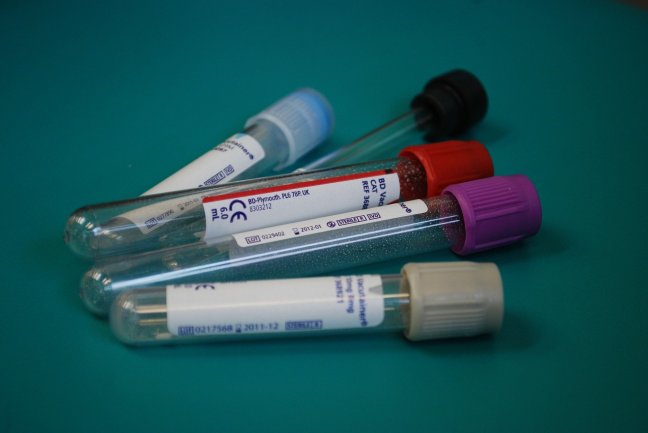
While my parts were checked and my blood was drawn, my provider kept talking to me in a soothing voice and kept a comforting hand on my arm or hand the entire time.

And then the waiting game really began. And along with it, the anger. Because it was easier to feel than the fear. Finally, I got the call.

“Everything looks good,” she said.

I felt relieved. At least my body would be okay. If only my heart could be cleared so quickly.


The dreaded doctor’s appointment is one more thing in an endless list of what is unfair about being cheated on. It’s yet one more way that we are left to clean up the mess they made.

The emotions involved run the gamut from confused (after all, if you’ve been monogamous for awhile, you tend to lose touch with what diseases are out there and what the implications are) to anger (how could they act with such reckless abandon when it comes to my health?!?). In between are often shame (because for some reason, we feel humiliated by their actions even when they don’t) and fear (are they going to curse me with a lasting physical reminder on top of everything else?). I know I also felt violated. This was not something I had consented to.

It’s a lonely feeling. An isolating one.

Yet it’s familiar to everyone who has ever discovered an unfaithful spouse.

It’s not fair. But it’s a necessary step.

Even though your partner didn’t take care of you, YOU need to take care of you.

I hope that your medical providers are as compassionate as mine were.

A Letter to My Ex On the Eve of My Wedding

This was first published in The Huffington Post almost seven years ago. It soon became one of my more controversial pieces. Some people claimed I obviously wasn’t over my ex while others related to the way that every relationship we experience becomes a part of our story.

It’s strange to read it now, as it was written on a day when I was feeling particularly nostalgic and contemplative, planning my second wedding naturally bringing up memories of the first. In many ways, this was my “good-bye” letter to him, one born more from compassion than the angry ones I actually sent to him in the beginning.

I wouldn’t pen the same letter today. In fact, today I have nothing to say to him because I’m beyond happy where I am. I rarely think of him anymore and I struggle to capture any images and memories from our time together.

Which is why I am sharing this letter again. It captures a moment in time. A woman standing on the bridge between the long road of healing and the gates to a new chapter.


Dear —–,

Fourteen years ago, I was preparing to marry you. I was so excited but, even more, I was so sure. Sure that we were so good together. Sure that we would continue to weather any storm. Sure that we would be together forever.

My belief in our marriage lasted until the day you left. I remember my shock, my disbelief so clearly. I couldn’t understand how you, my beloved husband, could do those things. Even now, four years later, I still don’t understand the choices you made. I suppose I never will.

In an instant, you went from the man I adored to a stranger I feared. In many ways, you have been dead to me since you left. I remember you as you were since I can’t comprehend what you’ve become. It’s almost as though you are two completely separate men to me — the one I was married to and the one who betrayed me. I just can’t understand how you could be both my protector and my persecutor.

I am no longer the same woman you abandoned four years ago; I’m not sure you would even recognize me now. You ripped everything from me — my marriage, my trust, my dogs, my money, my home and even my health. I had to rebuild from nothing except the support of family and friends and my desire to make something good come from all of this. It has not been an easy journey and there have been many moments where I thought I would fail. But then I think of you and I keep going. You have become my motivation to do more, achieve more, trust more, love more. Live more.

I have found a place of forgiveness and acceptance of our past. In fact, I am grateful for you. I’m thankful I had such an amazing and supportive partner for 16 years. You were my best friend. I smile when I think of our teamwork while working on the house or other projects. I’m grateful for your patience teaching me how to slow down and enjoy touch; I still treasure the memory of the hours spent lying astride you with my head on your chest listening to the calming beat of your heart. I’m appreciative of all that you introduced me to — from the comedy of Opie and Anthony to the details of carpentry. I’m thankful that you always made me feel listened to and respected and that you were a husband that I never had reason to complain about. We had a good run.

And, strangely enough, I’m even grateful that this happened. It has been the most difficult and painful experience of my life, one that I’m still paying for literally and emotionally. But it has also opened up a whole new world for me that I would not have realized otherwise. I faced my biggest fears and survived; I’m no longer bound by uncertainty. I’m happier now than I’ve ever been and I’ve experienced enough to be more grateful for that than I would have been before.

I still wish sometimes that things could have been different. That you would have been truthful with yourself and with me at whatever point you started to go down that dark path. That you could have received the help you needed before it was too late and that the collateral damage could have been reduced. But that’s not how it happened and we have both been left with the consequences of your choices, although you have yet to take responsibility for yours.

It’s strange, although you have been out of my life for a full 48 months, you have been very much on my mind. At first, I spent my time cursing you, assuming you were some sociopath bent on destroying me. Then, I started to pity you when I realized how lost and broken you were. I’ve written a book about you (thanks by the way for leaving me with the story that the officer who arrested you still calls “the top story I share after 21 years on the force”) and untold numbers of blog posts. Your spectacular fall from grace has shocked, entertained and enlightened thousands as they learn about the dangers of marital fraud and the reality of bigamy. The story has given hope to the betrayed and comforted others who have been through atypical divorces. It’s what I wanted — some good to come out of the tragedy.

In the typed letter you left me on the kitchen island, you stated that you knew I would move on to live a “happier and more honest life than (you) could ever give me.” You were right, although it has taken me time to see that. I was so afraid that your multiple betrayals had damaged me permanently, that I would never learn to trust or to love again. Luckily, that has not been the case and I have found love again with a man I am to marry soon.

I’m not sure what you would think of him. He is quite different from you — hard where you were soft, decisive where you were contemplative and most importantly, forthcoming where you were secretive. He challenges me in a way you never did; he encourages me to leave my comfort zone and fully live in a way I didn’t before. He has been so patient and so understanding as I have to worked to purge myself of you. I am excited about my upcoming wedding. Even more so than before, as this one is truly a celebration of love arising from the ashes.

You are not invited to the wedding, although in some ways you’ll be there. You will exist as the memory of the husband I loved and lost, without whom I would not be marrying the man in front of me now. Your name will not be mentioned nor your story told, but your influence will be felt by all as we celebrate the enduring power of love.

Thankful to be your ex,
Lisa