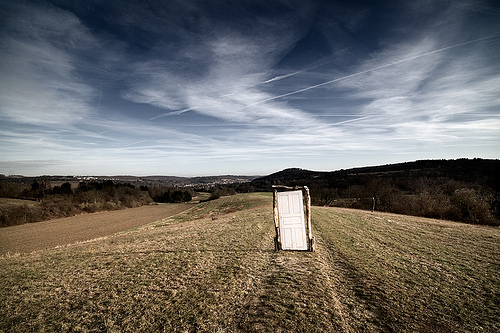
Renovation

I’ve witnessed an uptick in home renovations over the past several weeks. Home Depot is busier than ever, dumpsters fill area driveways and signs advertising handymen are planted amongst the flowers in many of the yards. As I walk and run the neighborhood streets, I keep track of these remodeling jobs. I take note of what is changing, from landscaping to paint to flooring to whole new kitchens. I celebrate when the signs of work dissipate and I envision the family enjoying their new or refurbished spaces.

But all too often, those signs of remodeling are followed quickly by a “For Sale” sign, the upgrades completed only to say good-bye. I get the freshening up of a new coat of paint before putting a house on the market. I understand that it’s easier to lay new flooring when the current furnishings are already disassembled and in boxes. But some of these remodels speak of dreams long held by the owners – additions that improve the house, adding decks or patios to enjoy the outdoors or updating a kitchen or bath that was dated when the house was purchased.

And that makes me sad. The thought of those improvements being put off until it is too late. The thought of the family settling over time and allowing the dreams for the space to fade. The thought that they didn’t make creating the best home for them a priority while they there.

Perhaps it makes me sad because it parallels what I so often see in marriages. The diet and exercise programs only undertaken after the papers are signed. The commitment to becoming more patient or more compassionate only embraced after the marriage is dissolved. Or, in my own case, the tendency to work too much only mitigated after the end of the marriage.

Just like you adapt to your surroundings in a home, you adapt to your marriage over time. You may have great goals and intentions for yourself and your life, but then they fade into the backdrop of daily noise. And so you let it go.

Until it’s time to put yourself back on the market. And then out come the remodeling tools.

But you don’t have to wait to create the change you want. Dream it. Then do it.

But you don’t have to wait to add that deck until you’re placing your house on the market. And you don’t have to wait to better yourself until you’re back on the market. Making the changes earlier only increases the return on your investment. Even if you do have to move.

Why People Cheat

I never thought I’d tackle this post. First of all, if I could answer this question with certainty, I certainly would not be teaching middle school math; I’d be taking over Oprah’s spot. The reasons people stray in their marriages are as varied and complex as marriage itself. Past, present and personality weaving together to create a perfect storm. To add to the complexity, the reasons people cheat are rarely the reasons they say they cheat. You are much more likely to hear excuses or blame because the truth takes bravery and insight along with a willingness to then divulge the understanding that was reached.


So, without further ado, here are the patterns I have seen emerge. We’ll start with the simplest.

The Bad Decision

This is the “it just happened” infidelity, although that excuse makes my skin crawl. This is the affair born of bad decisions that may or may not have other co-existing causes. There is no magic in a wedding band that suddenly causes all others of the opposite sex to be invisible. We all meet people that we find attractive and that awaken that little spark. But you always have a choice. Long before anything happens, you can make the decision to walk away. The earlier the better. The closer you get to flame, the more  difficult it becomes to leave. You may get to a point where your body has the best of you, but you can choose to use your brain before then.

The Need for Physical Connection

A marriage where the partners have different sexual needs is certainly a struggle. In this type of affair, one (or both) of the partners are craving more physical intimacy and they look outside the marriage to sate their appetites. My frustration with this type (and the affair described below), is that so often the straying partner is helping to create the desert at home by turning his or attentions away. This reason is also used as an excuse for infidelity and can even be created by the straying partner as a way for them to reconcile their decisions within their own mind. After all, it’s easy to claim a sexless marriage and difficult to refute unless you never close your blinds.

The Need for Emotional Connection

Two has the potential to be lonelier than one can ever be. There is no worse feeling that being with someone and yet feeling invisible. People can change and grow apart. In this type of affair, the straying partner is seeking responsiveness and demonstrative affection from another. They describe their marriage as “dead” and want to feel alive. I get it, but there are other options than an affair. Please, seek them out first.

The Need for Approval

This is often the affair of the narcissist. They are typically brief and in succession, a new partner replacing the former before he or she gets to know too much. This straying partner is driven by the need to be idolized, which is a trademark of early romance that fades as time reveals more about the person.

The Need for Stimulation

Affairs can be rewarding; there is a rush from the newness that is amplified by the necessary intrigue. Some people are wired to need more stimulation. These are your daredevils and stockbrokers. Others train themselves to need an increasing amount of stimulation, such as in the case of addiction. Their threshold for stimulation is set higher than a “normal” life can fulfill and so they are always seeking their next reward. I believe this is why there is a connection between Twitter use and affairs.

The Snipe Hunt for Happiness

I find this the saddest reason for infidelity. In this case, a person is truly unhappy and, rather than address the issue internally where it resides, they begin a snipe hunt for happiness, looking for it in external things and often, people. This affair is not driven by something missing in the marriage; it’s powered by something missing in the person. And, what makes it sad to me is that while they are on a winless quest for happiness, they steal joy from others along the way.


Many affairs can be described by more than one of the reasons above. After all, we’re all human with our complexities and fallibilities. Affairs happen. But maybe if we can understand more of why they do we can stop them before they start or learn from them once they do.


And, for those of you who have been betrayed, here is some more information for you:

Classification of Infidelity – A look at he types of infidelity from the perspective of the betrayed.

Will I Ever Trust Again? – A perspective on how to learn to trust again after betrayal.

Of Horses and Zebras – A description of how betrayal changes your brain.

The Upside of Betrayal – Betrayal isn’t all bad. There are some positives. I promise.

Divorce and Twitter: What’s the Connection?

Links to a recent study associating active Twitter users with an increased risk of cheating and divorce filled my newsfeed yesterday. The study shows a direct correlation between heavy Twitter use and the likelihood of divorce across age ranges. Many of the pieces that featured the study implied that romantic or sexual interactions on the social media platform were the precipitating factor in the end of the union.

But I’m not so sure it’s that straightforward.

You see, our brains are not that different than mice in a lab. We like rewards. And technology has capitalized on that part of human drive and motivation. You gets levels and badges for succeeding in a game on your phone, you get a buzz or chime every time someone contacts you and, on most social media, you vie for likes and shares. Each of those interactions is like giving the proverbial mouse a treat, eliciting a release of dopamine in the brain. And, just like a mouse that receives too much cheese, those electronic rewards fatten us as well. We become accustomed to that higher level of stimulation.

And real life, including real marriage, doesn’t offer neurochemical rewards on such a frequent basis.

But cheating does.

The risks and newness of an affair bring with it an increased production in dopamine, rewarding the cheater for his or her indiscretions.

So maybe the problem isn’t really found in flirty Tweets. Maybe the problem is that we’re training our brains to require an unnatural level of rewards. And then it becomes all too easy to seek the desired attention elsewhere.

Unless your spouse has a gold star chart for on the fridge. Who knows? Maybe that will become the new affair prevention technique:)

Value Added

When I interviewed for my current teaching position, one of the questions I was asked was to describe my value added. The interviewing committee wanted to know what worth I would bring to the school outside of the usual classroom duties. I described my passion for wellness and how I could help the staff and students with education and motivation with food and fitness. I guess my answer was acceptable, since I got the job:)

That question stayed with me over the past three years. All too often, people’s assets and strengths remain hidden. In a school environment, great leaders and planners and problem solvers often hide behind their classroom doors in an environment that may not reveal all of their strengths. And, unfortunately, sometimes liabilities are visible while assets are buried (I think about one former coworker who always missed meeting but was amazing at parent phone calls, which we rarely witnessed).

It’s all too easy to make assumptions about what someone brings (or fails to bring) to the table. But we only see a piece of the story. A part of the environment.

In a relationship, your partner may not be hiding some of his or her assets behind a classroom door (unless you’re married to a teacher, that is!), but it is still easy for strengths to hide and for you to fail to see some of the value added that your partner brings to the relationship.

I was aware of this in my own marriage this past week. I was on spring break, so I had time at home during the work week. I could overhear Brock conducting his business from down the hall and it reminded me all over again how expert he is at assertive negotiations. That’s a side of him I do not normally witness. I revealed some of my own value added by planning, shopping for and installing over 150 plants in a single day. He knew I could garden, but had never actually seen me in action. He was puzzled (about a third of them are roots and rhizomes still buried beneath the soil) but impressed.

We often fixate on what our partners don’t have; we ruminate on their weaknesses and liabilities. Next time you find yourself complaining about what isn’t there, try focusing on the value added that they bring to the relationship. If you feel like some of your strengths are unappreciated, ask yourself if they are hidden. We often assume that others are aware of all that we do, but there focus is on their thoughts and tasks. It’s okay to share your value added.

We all have strengths. Reveal them. Share them. Embrace them.

You are valuable.

And if you’re ever in Atlanta and have a talent for weeding, please give me call. I’ll be happy to see your value added:)

Closed

I used to be obsessed with finding closure.

I pursued it with the intensity of Tiger chasing a tennis ball, convinced that it contained the peace I so desperately needed. I yearned for it at night and awoke frustrated when it hadn’t been gifted to me in my slumbers. I kept searching for the one thought, the one idea, the one fact that would seal my past away behind an air-tight door. I feared that closure would not be possible within the limitations my circumstances provided. I worried that I was dependent upon him to create that closure. I was concerned that I needed an apology or at least an answer to form that seal against the pain. An answer and apology that I knew I would never receive.

I started to believe that my closure would forever be incomplete, a door ajar allowing the whispers of the past to carry through.

And that thought scared the hell out of me. So I used that fear to drive my search for the elusive closure. I had to be creative since I had few answers and even fewer signs of remorse.

Closure is closely linked with understanding. If we know why something happened, it’s easier to accept its occurrence. But sometimes circumstances don’t allow us to sift out the truth from the past. But you can create your understanding even when you don’t have all the answers.

I started my search for understanding by learning about and systematically affixing labels to him: sociopath, narcissist, addict, etc. None seemed to truly fit, but they allowed an anchor for understanding. Next, I assembled pieces of the past like a giant puzzle, looking for patterns and ideas that fit. Slowly, an image began to emerge of a man that carried a dark passenger, a man that was defeated by his shame and his secrets. My conclusions may be accurate or they may be entirely woven of fiction. But it doesn’t really matter where understanding comes from; it brings relief regardless of its origins.

I had hoped that understanding was enough to bring closure. It was not. It answered the “why” but still did not alleviate the pain. My anguish was still a doorstop propping open the door to the past. So I focused on being thankful, using gratitude to soften the sorrow. Allowing the perspective of the bigger picture to bring purpose to the pain. And it helped. But closure was still hiding. I felt like there was still some unanswered question that kept me from being able to reach a conclusion.

Eventually, I tired of the search. I stopped looking for what I couldn’t seem to find.

I figured closure would remain a dream for me.

But then I drove by my old house last Friday and felt nothing but gratitude. And I realized that I had finally had it. My search for closure is now closed.

Sometimes the best way to find something is to stop looking for it.

Sometimes you have to trust that doors will continue to open before you can close the one you came in through.

And sometimes dreams do come true.