Thoughts From the Edge of a Pandemic

It’s a strange time right now, isn’t it? The entire globe is facing an imminent threat, the first since technology has us so connected and plugged in all the time. It’s a pressure cooker for human behavior, amplifying our usual responses and coping mechanisms.

As of this moment, we don’t know what is overreaction and what is blind complacency. All we can do is try to sort out the valid information from the noise and make the best decisions we can from what we know.

It’s evident that we need to strive to understand this virus, its treatment and its prevention. Yet also critical is that we make an effort to understand the reactions within ourselves and within those around us. Because no matter what the next few months bring, we need to work together and not allow this to further divide us.


Fear Manifests in a Multitude of Ways

Right now, you have two opposing camps – those that are voicing their fears and those that are ridiculing the people that are expressing fear. Yet the truth? Both groups – and those in between that are staying silent – are experiencing some anxiety.

Fear can often express itself in some unexpected ways – covering from anger to humor to distraction. It’s easy to miss the signs in others or even in ourselves. Learn more about how fear manifests: 15 Ways Fear Hides in Plain Sight.


We Have a Need for Action

It’s easy to laugh at the people who have been stockpiling toilet paper. Yet I understand the urge. When we feel out of control, we have a drive to do something – anything – to try to mitigate the outcome. So, yes, filling your home with endless rolls of tissue is a nonsensical response to a respiratory virus, yet it is a tangible action that people feel like they can undertake. It’s not unlike the midwives of old ordering the men to bring hot towels. Purpose and action help to temper panic. Learn more: On the Need For Action


Denial is a Protective Stance

It can be frustrating when people refuse to admit what seems obvious to others. Yet to them, that denial is what is keeping them safe. It’s confirmation bias in action; we actively discard information that doesn’t match our beliefs while seeking out points of view that conform that we are correct. And confirmation bias is extremely resistant to change. Learn more: Jumping to Conclusions.


All Loss Brings Grief

At this point, the actual number of deaths in low from a global standpoint. Most of us are still untouched by the actual illness. Yet we are all grieving. Trips have been canceled or postponed indefinitely. Sporting events shuttered. Planned gatherings dissolved. School events removed from the calendar.

Yes, in the scheme of things, these things are minor. Yet, every loss brings grief as expectations are dashed and a new reality is accepted. And just like with everything, people respond to grief in myriad ways.


Shame is Used as Self-Protection

From racist remarks and actions towards the Chinese to memes implying that those who become ill are filthy and don’t have basic hygiene mastered, there is quite a bit of “us” vs “them” going around. Where whatever commonality that the “them” group shares is absent in the “us” group, thus providing a sense of invincibility. We want to believe that we have control and sometimes this is used as an excuse to hurt others.


When Stressed, We Think in Absolutes

Our stressed brains are not our best brains. The ability to reason and consider multiple perspectives is reduced and we have a tendency to revert to all-or-none thinking. This makes dialog more challenging, as it feels more like a battle for the “win” than an exchange of ideas.


A Plea For Patience

By all accounts, we’re in for a challenging few months, regardless of the trajectory of the virus. Lives have been upended (at least in the short run), financial futures are uncertain, and emotions are running high. Now more than ever, be kind to one another. Seek to understand the motivation behind the words or actions that seem out-of-place. Consider that people can have different approaches to the same problem and different responses to the same situations.

Remember that we’re all in this together.
I Want to Know How It Ends

My first marriage was in December 1999, the apex of the collective anxiety around Y2K. At the time, my fiance and I operated from a place of optimism, rationality and faith. Despite the warnings and fears that we were constantly being bombarded with, we decided to move forward with the assumption that everything would work out.

And it did. Well, at least the transition into the new century worked out. (The marriage was something else entirely, but I don’t think I can blame Y2K for that one.) All of that anxiety and fear building up to the new year grew as flat as the leftover champagne while the sun rose on January 1.

Staying calm and present during times of uncertainty is hard. By nature, we are uncomfortable with the unknown. Yet life is not a book, where we can peek at the final chapter before we dig into the narrative. Our lives offer up no synopsis prior to living so that we can prepare ourselves for what is to come.

It’s easy to get swept up in the anxiety of the unknown, to put life on hold while waiting for the conclusion to be revealed and for life to return to normal.

Yet even the idea of an “end” is a falsehood. Consider the current arrangement of the continents. We know they used to exist in one solid mass (Pangea), that has since broken apart and drifted into the familiar patterns we were quizzed on in school. Yet the drifting is not over, the formations are not set. Just because most of the changes are too slow to be perceptible within a human lifespan, does not mean that change is not occurring.

We want to know how it ends so that we can be reassured that we’re making the right decisions. We want to know how it ends so that we can be prepared. We want to know how it ends so that we can adjust our expectations accordingly.

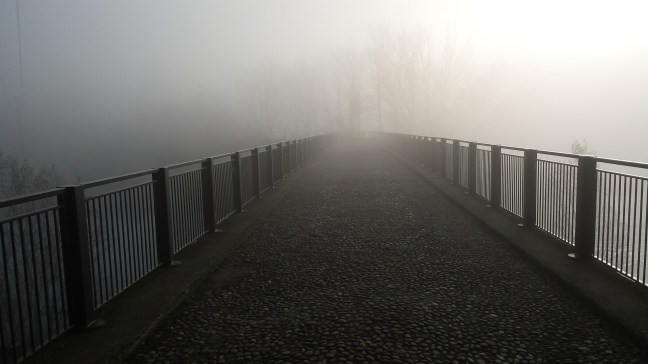
We want to see the end of the bridge, tethered securely to a welcoming shore, before we take the first step.

Yet standing still does not keep the unknown at bay. It simply restricts our lives as the future unfolds. We can’t see the end. We can’t change the end. But we can make the decision not to live in fear of the end.

I have a five-year spiral journal. My entry earlier this week included, “I wonder what we think about the coronavirus one year from today?” And I don’t know what entry might be recorded on that same page next year. The previous entry might remind me of a forgotten fear, the virus and the associated panic a distant memory. Or, life may have changed dramatically to the point of becoming unrecognizable. Most likely, the entry will fall somewhere in between. But in the meantime, I have 364 more entires to record. And I’m going to take them one day at a time.

Because we may never know how it ends, but we can be present while we get there.

Signs It’s Time to Make a Change

Change is hard.

And so, like with many things that are hard, we often do our best to avoid it.

Sometimes, we are left with no choice. After all, when the house is on fire, there’s nothing to do but run out out the door.

But instead, if that house is just a little too confining or the wrong layout or misplaced for our needs, we’ll engage in all sorts of mental gymnastics to avoid making a change.

And of course, this doesn’t just apply to homes. It’s true when it comes to careers, to appearances, to habits and to relationships. When we’re not quite content, but there is a lack of an urgent need to change course, we’re in a state of limbo.


“I’m fine where I am,” you say.

I don’t feel at peace with myself,” you think.

“I’ve been doing this for years, why change now?” you say.

If I don’t make a change now, I never will,” you think.

“At least this is a known entity. The alternatives could be worse,” you say.

But I won’t know unless I try,” you think.

“I could fail,” you say.

I am stagnating,” you think.

There are no clear and consistent signs that deciding to make a change is the right choice.

Yet there are four indications that the challenge of change is preferable to the temporary comfort of staying put:


There Are No More Variables Left to Change in the Current Situation

I am going to continue with the house analogy here, because it make this easy to understand. If you’re unhappy with your home, it makes sense to first paint the walls and install a new area rug. If that doesn’t improve your feelings towards the house, maybe next you invest in a more substantial remodel. Yet at some point, if you’ve addressed all of the logical variables that can be modified and you’re still not satisfied, it’s time to move on.


Staying With the Status Quo Has Begun to Feel Like a Grind

There are always times in life when we have to put our heads down and simply push through to get through. Yet all of life shouldn’t feel like mile 60 in a 100-mile race. We are creatures of inertia; we’re very good at doing what we’ve done and less skilled at changing direction. Yet maybe that is exactly what needs to happen if the groove carved by trudging the same path feels like you’re digging your own grave.


You Approach the Thought of Change With Both Excitement and Fear

Not only is change hard, it is scary. It requires a leap of faith as you leave behind the implied security of the known terrain. It asks you to meet new challenges before you’ve proven yourself. Yet at the same time, change can be exciting, as all new and interesting things are. When fear and excitement are playing a fairly-matched game of tug-of-war in your mind, it’s a solid indication that you’re going the right way.


There is a Feeling of Lightness When You Make a Move Towards Change

When we’re in the wrong situation, it weighs on us. Pulls us down. If you make a decision towards change and feel relief (even if you’re still having doubts), that’s quite telling.


Change may be hard, but that’s no reason to avoid it.

After all, everything worthwhile in life takes effort.

Make sure your efforts are aligned with your goals.

Living With Loss

I received the news yesterday that an amazing former student lost her life to cancer. The message wasn’t a shock, as I had known about the particularly brutal illness, but  advance knowledge of death only softens the blow as much as tacking a blanket to brick wall before a car slams into it.

It still takes your breath away.

I’m numbed right now, as the names and faces of all of the students and former students gone too soon keep tumbling through my brain. I grieve for their families, grappling with accepting the impossible. I grieve for their friends, trying to figure out how to assimilate this into their life script, balancing loss at the same time they’re ready to step foot into independent life.

I relate so much to these kids because I lost too many friends at a young age. By the time I left high school, the death toll had reached eleven. Eleven. Some were suicides, many accidents. One was a homicide committed by another friend. Yet I still managed to hold onto that sense of optimism that permeates youth.

Until that one October day when I called a high school friend from the hallway of my university only to learn of two more deaths.

I cracked.

It was simply too much. I remember quietly weeping while on the phone. And then, after hanging up, wiping my eyes and deciding that I was done. Not with the tears, but with letting myself be hurt. In that moment, I made the very deliberate choice to create distance from the friends in my life, only allowing my boyfriend (and future husband) to have access to my heart.

It made sense, I reasoned. After all, letting in these people caused pain. So I would head it off at the pass.

No love, therefore no loss. A simple calculation with unexpected results.

Years passed. I made new friends, unattached to high school and untouched by the curse that seemed to befall my alums. Yet I still remained guarded, feeling protected in my little bubble where only my husband resided.

And then I lost him.

The bubble burst. The walls cracked open. I realized that by striving to avoid loss, I had been avoiding life. It’s like protecting a smart phone with a case so padded that the device isn’t fully operational. It may not crack if dropped. But at what cost?

Again, I made a conscious decision. Only this time, my choice was to never again run away from connection because of the fear of loss. This time, I vowed to stay open, to be in the hard moments, even when they take my breath away.

So now, when I have to say goodbye too soon to another student, I feel grateful that I had the honor of knowing them and I try to help their friends make a different choice than I did all those years ago.

Loss is a high price to pay. But it’s the price of living.


Self-Doubt During Times of Change

I spent some time this morning journaling about self-doubt. And since this is a common reaction during periods of change and divorce certainly qualifies as a major life renovation, I decided to share my thoughts with you –

  • Self-doubt is a normal, natural and expected part of any transition.
  • It is temporary and it’s worst at the beginning when there is more planning/expectation and less progress/action.
  • Be careful not to feed your self-doubt. I have noticed that mine is fed through certain Facebook groups, information that feels overwhelming and conversations with people that either dismiss or amplify my anxieties (it feels best when people both hear my fear and also express their belief in me). I need to consciously limit my exposure to these, especially when I’m feeling more doubt.
  • Fears WILL change over time. What seems the scariest right now will become less intimidating and then new fears will emerge. Again, normal.
  • Hard is not impossible. We teach this to kids all the time. We may be older and more set in our ways, but the concept still applies. Besides, anything worthwhile in life takes effort.
  • What real evidence do you have to support your self-doubt? Probably less than you initially think.
  • What other times did you experience self-doubt? How long did it last? What did you do right to get through it? How do you feel about that scenario now? I reflected back on when I first started teaching (which was terrifying). The self-doubt built as I finished my degree and I went through the first few months of teaching feeling like an imposter. I did quite a bit right – I had mentors, I listened to lots of advice (and generally tried it to see if it fit before deciding if I should keep or discard it), I gathered an abundance of information, I made connections and I kept going. Now, teaching is automatic and I feel extremely confident in any related environment.
  • Take it slowly. It’s an elephant. Don’t choke.
  • Seriously, take it one day at a time.
  • After all, it’s not like you have a choice in that.
  • Unless you can go into suspended animation and awake only when the transition is over??? (If anyone knows how to do this, please message me.)
  • List your skills and strengths that are going to help you through this. And no, self-doubt is not a strength.
  • Confidence building will be important critical. What makes you feel confident? For me, I need a combination of things that get me out of my head (exercise, I’m looking at you!), things I’m good at and things that make me feel more secure.
  • Unplug. Take a break. Step away. Pushing all the time doesn’t make you stronger. It makes you tired.
  • This is exciting!!! No, really. That feeling in your stomach? That’s enthusiasm, not dread. You have an opportunity to learn, to grow, to challenge assumptions. You are entering a new world. It’s time to explore.
  • It’s an adventure. Be curious about what might lie around the next corner.
  • Self-doubt is not a stop sign. It doesn’t mean you’re doing something wrong. It’s only a sign that you’re doing something different.
  • Big rewards only come from risk.
  • Besides, things change no matter what. Isn’t it nice when you at least get to have some say in them?
  • You got this.
  • No, really. You do.
  • Your self-doubt is kind of like that bitchy girl back in middle school who puts everyone else down because deep inside, she’s really insecure. Your self-doubt is speaking from its own fears, not your limitations.
  • One day, you will feel comfortable and confident about this and wonder why you were so silly with all this angst.
  • You. Got. This. (and I do too)