How to Audit Your Personal Energy Budget (And Why It’s Critical That You Do)

When it comes to your money, I expect that you have some sort of budget or at least a sense of what is coming in (and where those dollars are coming from) as well as what is going out (and some idea of what that money is being spent on). Additionally, you have learned that spending more than you’re earning will eventually lead to trouble and that to avoid this you either have to spend less or somehow earn more.

We have an understanding and acceptance that there has to be a balance between money in and money out. Yet when it comes to something arguably even more important – our own energy – we are often much more careless and frequently operating in the red.

And just like financial debt is stressful and unsustainable, energy debt causes us to operate below our ideal and can even lead to an energy crisis and total breakdown. When we’re drained, we’re irritable, easily overwhelmed and have trouble making good decisions. And when we’re not at our best, we struggle to take care of others, so balancing energy in with energy out is especially critical for those in a caregiving role.

Self-care isn’t selfish. It’s imperative.

A personal energy audit is about becoming aware of where you’re allocating your limited energy and how you’re reviving yourself. Once you’ve taken these simple steps, you’ll be well on your way to a balanced energy budget.

The 7 Steps of a Personal Energy Audit

1 – Make a list of all of the things you do that require energy. The big-ticket items will probably come easily. To help think of the others, scan through a typical day and consider if each activity leaves you more or less energized than before. Pay special attention to your “plugged-in” activities such as television and social media. We think of these as restorative, but are they for you?

Build this list over a period of several days. Are you spending energy thinking about a loss in your life? Giving energy to a toxic person? Delivering energy to something or someone where there is nothing to show for it? Be honest with yourself. After all, you have to recognize it before you can change it.

Instead of a list,  you can create a simple pie chart that illustrates what percentage of your energy is currently being allocated in each direction. This visual can be helpful to highlight any possible imbalance.

2 – Make a list of all of the things you do that provide you with energy. To help you think of ideas, reflect back on a day when you felt especially energized or contemplate what you would do with a full day by yourself. Add things to the list even if you’re not currently utilizing them. Don’t get confused between physical energy and emotional energy. You may find that something like a walk leaves you energized even though it requires the burning of calories. If you prefer a visual, this information can be displayed in a frequency chart.

3 – Start by looking for overlapping items. These are key because they operate at close to a zero sum game, both requiring and providing energy. Make note of these. If you’re so inclined, the information up to this point can even take the form of a Venn diagram.

4 – Next, consider your expenditure list and rough percentages dedicated to each item. Are these areas where you want to spend energy? Is there energy being wasted? Are their items you can eliminate or reduce? Can you shift some energy from an area that is only an expenditure to one of those that overlaps with the deposit column? You only have a finite amount. Don’t waste it.

5 – Look at the list of things that give you energy. Are there more areas that you can add? Are there any you can increase in frequency or duration? Strangely, we are often resistant to the very things that restore our energy. Try adding structure in the form of a schedule. Or, promise yourself that you’ll do five minutes of the activity (this works great with exercise) and then give yourself permission to stop at that point. You’ll probably find that you wish to continue. Additionnally, simply being conscious that these activities help to restore your energy balance may lower the initial resistance to action.

6 – Be mindful of the “Starbucks Effect.” Just like small expenditures of money can slip through our fingers without much conscious thought, small amounts of energy can be allocated other directions without our intent. And these small leaks can add up. Before you spend energy on someone or something, ask yourself if it is a worthwhile investment.

7 – Aim for an energy surplus or balance. If you add something to your expenditure list, either cut something else out or add find a way to “earn” more energy. Build your reserves in the easier times so that you can pull from your reserves during the difficult periods. And when the hard times do come, make a conscious effort to rebuild your energy at every available opportunity. Think of it like uncovering the coins beneath the couch cushions. Every little bit helps.

Over time, this conscious spending of your energy becomes habit and the periods of total exhaustion will be fewer and further between. And once your energy is going towards the things that directly benefit yourself, others or the world, you’ll find a sense of peace and well-being that comes from being your authentic self.


The Surprising Way Divorce Can Affect You

For the most part, I guess you could call my response to divorce typical.

I spent hours laying in bed, tears soaking the pillow beneath my matted hair, mourning the life and love that had been ripped from me.

I expressed anger and bitterness towards my couldn’t-be-ex-soon-enough as I learned of his betrayals and indiscretions.

I lived in the land beyond exhaustion, every little task seeming to require more from me than I could hope to summon.

I was afraid for my future, unsure how I was ever going to be okay and overwhelmed at the enormity of the task.

I felt isolated and alone, my fingers still trying to call him and my heart still hoping for an answer.

But those weren’t my only reactions.

There was another response.

An unexpected one.

A feeling I’ve come to name, “post-divorce mania.”

And its effects were just as real as the sadness, the anger and the fear.

Only with the added stress of wondering if my response was somehow abnormal and “wrong.”

I’ve since learned that it’s not an uncommon response to divorce.


I first became aware of post-divorce mania in myself in the intensity with which I pursued the felony case against my ex. I was driven. Obsessed. Filled with an energy that seemed to have no lower bound.

Next, my mania attached itself to my running. I went from 0 to 60 (okay, actually 5 miles to 13.1) in just a few short weeks. I could run for hours even though I was running on empty.

As winter set in and the weather became less conducive to running, I transferred my mania to dating. A spreadsheet was made. Every online “match” became a coffee date and the days without a meeting were few and far between.

The next and final fixation was my move into my own space. I dreamed and planned in equal measure, spending more time in my mental map of my as-yet-to-be-occupied apartment as I did in my actual life.


Post-divorce mania is characterized by an increase in energy accompanied by an intensity of focus. It’s a compelling drive, a sense of being propelled by an internal motor that refuses to idle. It often has an obsessive quality, focusing on one thing to the exclusion of all else.

This is a common obsession after infidelity.

It can be positive in tone, like my drive to add miles to my runs, or negative, like my compulsion to check on my ex’s whereabouts. Regardless, it tends to overstep the bounds from “healthy” into “too much.”

Post-divorce mania is initiated by a fear of slowing down and feeling too much. It’s maintained because it’s compulsive nature feeds our dopamine receptors, keeping us coming back for more. It’s a side effect of the need for action, the gas pedal to the floor and the steering misaligned.

Like with any mania, it’s hard to see the bigger picture while you’re in it. Especially because it feels better than being sad and powerless. And also like any mania, it’s unbalanced. Too much yang and not enough yin.

If you’re experiencing post-divorce mania, you’re not alone (I hear about it and see it all the time). You’re not abnormal (you’re trying to adapt to a difficult situation). And you’re not broken (like any phase, this too will pass).

Meanwhile, trust that you can survive slowing down and being with your feelings (and try some mindfulness meditation to encourage this). Make an effort to steer your energy towards positive endeavors. And remember to breathe.


An Open Letter to Extroverts: What the Introverts in Your Life Want You to Know

introvert

I’m not an extrovert, but I play one in real life.

Most people would probably be shocked to discover than I am a true introvert – that  social situations and crowds exhaust me and I seek balance by being alone. After all, I have chosen to be a teacher. I am outspoken in meetings and not shy to speak in front of a group. On top of that, I have intentionally cultivated a large group of friends and I enjoy spending time with them and having them in my space. I have developed countless online relationships and enjoy time with my online family. Surprisingly, I can be loud. I rarely slow down. And I once rocked a shirt that said, “Sweet Talker in Action” as a kid because I never shut up.

photo-42

But behind all of that is a woman who feels most at home in her office, a “safe” space of solitude. A woman who would be more comfortable in solitary confinement than in a cell with multiple roommates (not that I ever intend to try out either!). I need my alone time in order to be the public me. In a way, I put on an act every day. It’s still me, but it’s the “on” me. It’s the real me with a booster rocket of extroversion. And if I play the role too long, the tank runs dry.

I was looking for a concise article that would explain characteristics of introverts for my very extroverted husband after feeling overwhelmed by the demands of the beginning of the school year.

I drew a blank.

So I decided to write it instead.

Not all of these characteristics will apply to every introvert. After all, that is simply one label and we are all represented by more than a single word. But I think many introverts will recognize themselves here and I hope that extroverts will find some compassion and understanding for their more reserved brethren.

Dear Extroverts,

I envy you sometimes. The way you seem at ease in a crowd. How you seem to know how to initiate and carry on a conversation with no apparent effort. When I’m at the periphery of a crowd, I see you in its center, pulling energy from those around you, like some kind of emotional fusion reactor. And I’m jealous as I feel my own energy waning as the event progresses.

But then, when I’m tucked away in a quiet nook or nose-deep in my latest book, I’m at ease with myself and pleased with my nature. You see, it’s not always easy living as an introvert in an extrovert’s world. We must learn to adapt. To play-act. Or run the risk of being overlooked.

There are more of us out here then you may imagine (usually thought to be somewhere between 25-33% of the population). Some, at the extreme, are obvious – they rarely talk, have a few select friends and work at jobs where the interactions are minimal. But the rest of us? We can be found anywhere – in classrooms and boardrooms, in media and marketing and even in your own home. You see, we’re good at blending in. But sometimes we pay a price.

The following characteristics can help you identify and support the introverts in your life:

1) Shyness and Introversion Are Not the Same

I used to be shy. Painfully so. But that’s a learned response and can be changed. Introversion is a character trait found in shy and more outgoing people. You can learn to work with it but it is a fundamental piece of who you are. Many introverts have no problem approaching new people. And then they will retreat to recharge.

2) Introverts Are Not Always Quiet

The stereotypical introvert is quiet. Bookish. Reserved. Yes, that person is probably an introvert but they are not the only ones. Although I prefer to express my ideas in writing, I frequently find I am the leader and spokesperson for groups. I talk fast and often. I gravitate towards heavy metal and intensity in my activities. Only those close to me know about my need for quiet and solitude. Introversion isn’t worn on my sleeve; it’s carried inside.

Continue to read the rest.

Make It Better

I had no idea.

I had no idea when I started blogging that it would change the way I look at, well, everything.

I am a numbers gal. I like data and graphs, empirical evidence of cause and effect. But I’m also a relationship person. I like to build and nurture connections with people.

And blogging is interesting that way. The input in is words and the output is in relationships and data. And the data holds clues to building relationships.


Behind the scenes on any website, you get information about traffic and views. You can track visits over time and analyze the impact of certain posts or links. And for a numbers gal like me, that data is intoxicating. It’s like a full-time science experiment with little restraint, “Let’s see what happens if I try this.”

After a few months blogging, I noticed an interesting pattern. From day to day, week to week and month to month, all of my data takes a cyclical pattern, growing and shrinking in a predictable wave.

wavelength

Simply the recognition of that pattern was comforting. In those early days, those troughs caused me to question, well, everything. It was easy to conclude that the downward slide would continue until my site was obsolete. Remember that I didn’t see myself as a writer. Just a math teacher who happened to have a story. But every time, with no clear reason, the pendulum would shift and the readers would come again. I learned to find comfort in the pattern, secure in the belief that the pattern would continue.

But that wasn’t enough. After all, a science experience where you simply observe is no fun at all. So I started to increase my efforts every time the numbers would fall. I would post more frequently, seek out new readers and new platforms and generally market like crazy. My goal was to raise the troughs to the level of the crests.

The interesting part? It didn’t work.

I mean, the numbers would increase again, but only in the same pattern as before. Yet I would be exhausted for the efforts. Perhaps because efforts during ebbs are often driven by fear and frustration. And they’re lousy drivers.

So I changed tactics. When the numbers indicated a trough, I stayed steady. But when a crest approached, I got busy. I realized it was easier to build at the top. I was excited and my energy was contagious. Leads seemed to come from everywhere and links would pour in. The good mojo would feed my creativity and the words would flow from my fingers.

And you know what?

It worked.

The amplitude increased, each crest a little higher than the one before. And those dips? Well, they also stepped up and weren’t quite as dippy.

And I wasn’t exhausted after the cycle of increased effort. In fact, I felt energized.

When something is good, it is easy to make it better.

As a numbers gal, I see patterns everywhere. And, as I learned to recognize and work with this cyclical pattern in blogging, I began to see it in other areas of my life.

My students’ progress ebbs and flows throughout the year.

My fitness seems to build only to fall again due to injury or illness.

My writing inspiration comes in waves (usually with ill-timing!).

Money comes and goes.

Social events arrive in waves.

And, most interestingly, my relationships seem to be on a similar wavelength, with periods of greater intimacy and connection followed by times of more detachment.

And that was eye-opening.

As someone who has been betrayed and abandoned, it is all too easy to interpret that downward trend as an inevitable slide towards the death of a relationship.

When in reality, it’s just part of a normal pattern.

Periods of growth are often followed by periods of rest.

Just look around you.

After my experiments on the blog proved successful, I decided to try them on my marriage.

I put my efforts into making the good times even better. To build even greater intimacy and connection at those times when everything seemed to just flow. And when I feel more distance, I don’t without effort, but I also don’t expend extra. I just recognize it as a period of rest before the next wave.

And you know what?

It works.

The crests get higher, pulling the troughs up as well. Every effort is magnified. The good feelings are multiplied.

Just like the best way to build yourself up is to help build up those around you.

And the best part?

Energy spent making the good even better isn’t draining. It’s rewarding.

Look around your life.

Do you see cycles?

Periods of ebb and flow.

You can fight the ebb.

You can go with the flow.

Or you can can work to amplify each pinnacle, reaching new heights with every period of growth.

Making the good even better.

There’s no limit to what you can reach.


The Anti-Victim

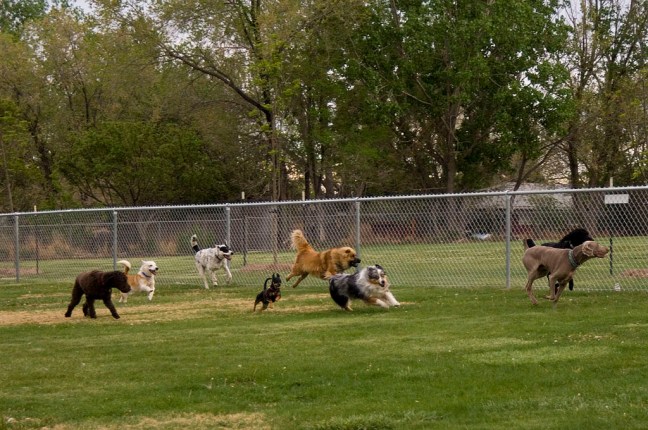
Whenever we take Tiger to the dog park, I like to step back and observe the interactions of the dogs and the owners. On the best days, all are relaxed and a singular, calm and happy energy flows through the park. On other days, the energy is divisive rather than unifying, a sense of unbalance and unease transmitted from creature to creature within the fence. It only takes one anxious and unstable dog (or more often, owner) to create the seeds of chaos.

When an unbalanced dog enters the arena, the other canines are quick to assess. Most of them will seek to avoid the negative energy. While others try to correct or eradicate it through physical means, usually growls and nips. This is when the observations really get interesting. Much of the time I see the owner of the unstable dog step in to rescue his or her dog from the perceived attack followed by a coddling session. This affection given while the dog is anxious only seeks to reinforce the behavior. It is teaching the dog to be a victim. It is also preventing the dog from learning how to solve its own problems as it comes to rely on its owner stepping in and white knighting the situation.

In more successful outcomes, the owners of the involved dogs will watch the interactions, looking carefully for a potentially dangerous situation that requires intervention but remaining hands off as much as possible. When this happens, the unstable dog tends to a minor beating but it also learns. It learns where it stands in the pack, it learns how and when to fight back and stand up for itself and it learns that it can solve its own problems. After a few moments of rough and tumble and vocalizations, all involved usually trot off happily and the energy balance is restored. The instability has been corrected.

Now humans are obviously not dogs. We don’t live in hierarchical packs and we don’t usually teach through teeth and growls. And luckily, our greetings do not usually involve butts and/or noses. But we can learn from observing our canine friends, whose lessons come from a much simpler world than ours.

People perceived as victims in our society tend to face one of two reactions – blame or enable, neither of which help to change the energy balance in the interaction.

I’ve written before about the danger of victim blaming. This perspective is used to justify the attack on the victim, shifting all of the responsibility onto the damaged party. Most recognize the fallacy in this thinking and reject the idea.

But we are much more willing to accept imbalance in the other direction. When the victim is enabled, it nurtures unstable behavior. It shifts all of the responsibility to the other party. It tells the victim that he/she does not have learn how to solve his/her own problems; someone will step in for the rescue. In essence, we are like the dog owner swooping in to pick up the anxious dog before the lesson is learned.

Whatever you nurture, grows.

When we enable victims, we cultivate victims.

So, then, what do we do? How can we support victims while encouraging them to no longer be victims?

Watch Before Intervention

Just like the informed owners at the dog park, watch the interaction before donning your Superman costume. Be ready to intervene if the situation becomes dangerous but give the participants a chance to work it out for themselves first.

Support Rather Than Nurture

When interacting with the victim, especially if he/she is anxious or unstable, provide support and reassurance but do not nurture the anxiety. When someone is anxious, it is better to be clinically kind (think good bedside manner) than motherly.

Encourage Growth and Stability

When the victim is not in crisis, help him/her address the underlying issues. Teach them how to remain calm. Show them how to be centered and in control of themselves. Encourage them to take responsibility for their choices and reactions.

Empower the Person, Not the Behavior

When working with someone who has been victimized, be careful not to permit the behaviors that accompany the victim state as that serves to sanction that behavior. Rather, seek to empower the person behind the behavior so that they can learn to emancipate themselves from victimhood.

Blaming and enabling only serve to create more victims as the power is held unevenly and instability is rewarded. Whereas, if we can learn to cultivate anti-victims through support and encouragement, the great dog park of our lives can be filled with more wagging tails and fewer growls.

This post is Tiger approved.

photo