An Open Letter to Extroverts: What the Introverts in Your Life Want You to Know

introvert

I’m not an extrovert, but I play one in real life.

Most people would probably be shocked to discover than I am a true introvert – that  social situations and crowds exhaust me and I seek balance by being alone. After all, I have chosen to be a teacher. I am outspoken in meetings and not shy to speak in front of a group. On top of that, I have intentionally cultivated a large group of friends and I enjoy spending time with them and having them in my space. I have developed countless online relationships and enjoy time with my online family. Surprisingly, I can be loud. I rarely slow down. And I once rocked a shirt that said, “Sweet Talker in Action” as a kid because I never shut up.

photo-42

But behind all of that is a woman who feels most at home in her office, a “safe” space of solitude. A woman who would be more comfortable in solitary confinement than in a cell with multiple roommates (not that I ever intend to try out either!). I need my alone time in order to be the public me. In a way, I put on an act every day. It’s still me, but it’s the “on” me. It’s the real me with a booster rocket of extroversion. And if I play the role too long, the tank runs dry.

I was looking for a concise article that would explain characteristics of introverts for my very extroverted husband after feeling overwhelmed by the demands of the beginning of the school year.

I drew a blank.

So I decided to write it instead.

Not all of these characteristics will apply to every introvert. After all, that is simply one label and we are all represented by more than a single word. But I think many introverts will recognize themselves here and I hope that extroverts will find some compassion and understanding for their more reserved brethren.

Dear Extroverts,

I envy you sometimes. The way you seem at ease in a crowd. How you seem to know how to initiate and carry on a conversation with no apparent effort. When I’m at the periphery of a crowd, I see you in its center, pulling energy from those around you, like some kind of emotional fusion reactor. And I’m jealous as I feel my own energy waning as the event progresses.

But then, when I’m tucked away in a quiet nook or nose-deep in my latest book, I’m at ease with myself and pleased with my nature. You see, it’s not always easy living as an introvert in an extrovert’s world. We must learn to adapt. To play-act. Or run the risk of being overlooked.

There are more of us out here then you may imagine (usually thought to be somewhere between 25-33% of the population). Some, at the extreme, are obvious – they rarely talk, have a few select friends and work at jobs where the interactions are minimal. But the rest of us? We can be found anywhere – in classrooms and boardrooms, in media and marketing and even in your own home. You see, we’re good at blending in. But sometimes we pay a price.

The following characteristics can help you identify and support the introverts in your life:

1) Shyness and Introversion Are Not the Same

I used to be shy. Painfully so. But that’s a learned response and can be changed. Introversion is a character trait found in shy and more outgoing people. You can learn to work with it but it is a fundamental piece of who you are. Many introverts have no problem approaching new people. And then they will retreat to recharge.

2) Introverts Are Not Always Quiet

The stereotypical introvert is quiet. Bookish. Reserved. Yes, that person is probably an introvert but they are not the only ones. Although I prefer to express my ideas in writing, I frequently find I am the leader and spokesperson for groups. I talk fast and often. I gravitate towards heavy metal and intensity in my activities. Only those close to me know about my need for quiet and solitude. Introversion isn’t worn on my sleeve; it’s carried inside.
Continue to read the rest.

Calisthenics For the Soul

Fortitude.

Grit.

Resilience.

Or, as my husband calls it, an extra gear.


It doesn’t matter what you call it, it is a trait we admire in others and desire in ourselves.

We often observe the strength in others when they face adversity and claim that we are not made of the same fiber. That we would not be able to handle the same.

The truth?


You never know how strong you are until being strong is your only choice.


But what if you could build up your inner strength? Develop your mental toughness before it’s thrown into the ring against the lions?

What if you could do calisthenics for your soul?


You can.


You can build that extra gear, develop that thicker skin that resists every arrow and train for adversity.

And you can do it all while remaining true to yourself and leading with compassion.


Life can be tough.

Learn to be tougher.


Here’s your training manual. 


Do Something With a Finish Line

I was a late-in-life runner. In fact, I never managed to run a mile until after my 30th birthday. And even that took most of a month to work up to. Over the next couple years, I became a frequent (although still struggling) runner. I maxed out around 5 miles and would frequently compare myself negatively to the other (real) runners on the trails.

And then my world collapsed.

For months, I avoided the trails, afraid of passing out in the middle of the woods from lack of sleep and nutrition. Instead, I took to the treadmill, where I figured at least there would be people to attend to me if I suddenly lost consciousness. I had to start over again – my first treadmill runs were well under a mile. But still, it felt good to move even in a limited manner.

Just a few short weeks after the tsunami, a friend at work mentioned a half marathon that October (less three months away). I had never run more than 5 miles and that was several weeks prior. And I have never even considered a race of any duration. I was still in shock from the trauma of the abandonment and I was still extremely weak from the twenty pounds I shed in the those first few days.

I had no business running 13.1 miles.

And so I signed up.


One of the most frequent pieces of advice I give to people that are in the middle of a major life transition is to sign up for something with a finish line. It can be running. Or walking. Or biking. Or swimming. It doesn’t even necessarily have to be a physical endeavor, just something with a defined end.


Why do I advise adding one more challenge to an already challenging time?

Here’s why.

– Life’s transitions are messy. The end may be undefined and vague. It may be months or even years in the future. While that goal may feel impossible, a literal finish line does not. It exists at a known time and place. You can train for it. You can cross it.

– Training provides structure at a time when all you want to to is hide under the covers and disappear. It gives you a reason to get up and a reason to get out.

Exercise is as good for the mind as it is for the body.

– The preparation and the even can be social or allow time for solitude. Both are needed in times of life stress.

– Training teaches you to become comfortable with discomfort. It has an end yet requires that you learn to accept the process.

– Challenges provide opportunity to practice tempering expectations. No matter how much you train, you cannot control the outcome. It’s a lesson in acceptance.

– Confidence comes from achievement. When you cross that finish line, you’ll have the courage and conviction to keep aiming for the finish line of your life transition.


I ran that half marathon on a cold, rainy day. It wasn’t fast and it wasn’t pretty. But it was perfect. Tears mixed with rain as I ran the last hundred yards to the finish line.

I still didn’t know when the finish line of my divorce would be.

But after that day, I trusted that I could make it.

Edit Your Personal Narrative

Did you ever have one of your English papers passed back filled with red marks; edits and deletions shaping your original script into something more cohesive and descriptive? If you’re at all like me, you first reacted with a bit of defensiveness tinged with embarrassment – “I thought the paper was good.” But then, upon reading the revised essay, you begrudging admit that the revised version is better. Maybe even much better.

The external hand wielding the marking pen gives you the gift of perspective, allowing you to see the patterns in your writing and the fall-back phrases that are too often used.  The editing process removes what doesn’t better the whole and selects the best choice of similar words to express an idea.


Have you ever paid attention to your internal narrative, the story you tell to and about yourself? Have you ever noticed a pattern in the words you select and the phrases you repeat?

Often we unwittingly craft a negative internal narrative, repeating past injuries and berating ourselves. Spinning yarns into straightjackets that keep us bound and gagged, prisoners of ours pasts and our beliefs. We excuse others while we abuse ourselves, framing our choices as worse than they are.


The words we choose to say to others have influence.

The words we choose to say to ourselves have power.


When we repeatedly hear the same words about ourselves, we begin to believe them. Even if they aren’t true.

Pay attention to the words you use to describe yourself. Are you selecting the best term? For example, feel the difference between “depressed” and “sad.” Sure, they are technically synonyms but the connotation is vastly different. Depressed is heavy, permanent. A condition. Whereas sad says, “I feel badly right now.” It’s a mood. Ephemeral. Even if you are depressed, try renaming it as sadness in your script. Keep repeating it and you’ll start to believe it.


Look to see what other words or phrases you can replace –

I shouldn’t feel that way” becomes “I feel this way right now and that’s okay.”

“I’m lonely” turns into “I’m feeling separated from others right now.”

“I’m stupid” is replaced with “I made the best decision I could in the moment and I’m learning.”

“I’m rehashing” is exchanged for “I’m processing.”

“I’m broke” is retired and “That doesn’t fit in to my personal wealth goal” is brought in to fill its place.

“I’ll never find love again” is crossed out and “I am open to receiving love again” is written in above.

“My life sucks” is modified with the phrase “right now.”


Edit your personal narrative to create a story of compassion. A script of forgiveness and learning and hope.

The words you choose have power.

Use that power to shape the life you want.

You’re worth it.


Progressive Resistance

On your first day stepping foot in a gym, you’re probably not going to try to pick up these.


dumbells4-294x300


More likely, you assess your starting point and gravitate towards some weights that will challenge you a little.

But not too much.

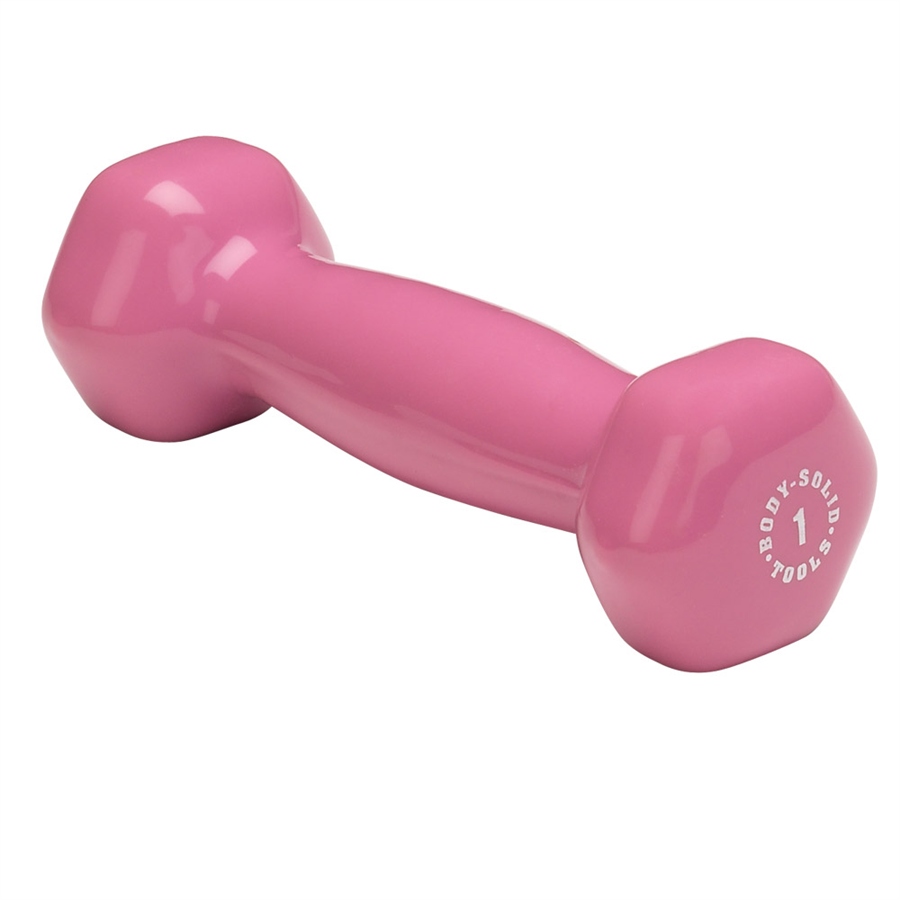
Maybe something like this:)

pink-dumbbell

As time progresses and you become stronger, those little weights begin to feel puny. They are no longer a struggle as you become stronger.

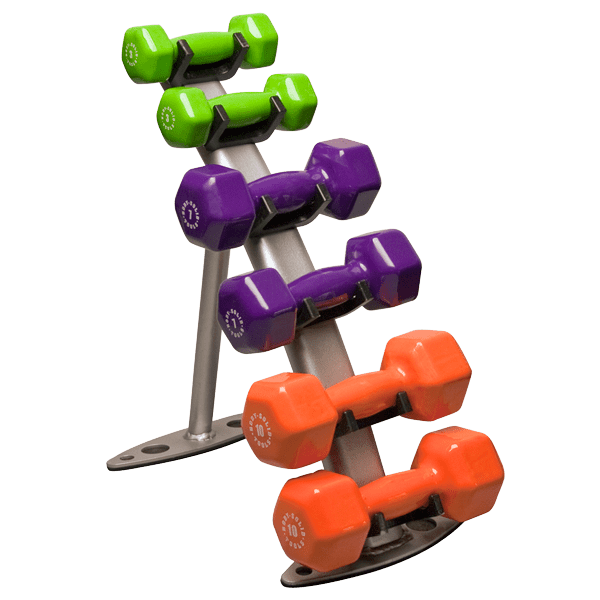
So, you apply the theory of progressive resistance, trading in your little weights for some that are just a little bigger still.

body-solid-GDR10-dumbbell-rack

And a strange thing happens as you progress to heavier and heavier weight.

If you do it right, the resistance always feels about the same.

Not because the weights aren’t changing,

But because you are.


It would be nice if life progressed like sessions at the gym.

But that’s rarely the case.

Often, you’re humming along, happily curling your 1 pound weights when life suddenly drops this in your lap-

dumbells4-294x300

And expects you to lift it.


Life’s challenges rarely come with a warm-up.

We usually don’t have the prior warning to begin training for the challenge.

The trial simply appears. And we either have to figure out how to lift it.

Or we end up crushed.


You can wail it’s not fair.

Or complain that it’s impossible.

Or you can get to work.


Take it apart. Break it down into manageable pieces. You can lift anything if you make it small enough.

Enlist a buddy. Ask for help. A load is lightened by many hands.

View your challenge compared to others. It may not be as heavy as it looks. Perspective has a way of making mountains into molehills. 

Tackle your trials a little at a time. Each experience will make you stronger for the next. Celebrate your growth.

Ignore the impossible for a time and build yourself. Get better, get stronger and then come back and show it who’s boss.

Seek out the experts. Learn how to lift and how to breathe. A little guidance can go a long way.


Progressive resistance teaches us that it’s okay to get there in baby steps.

That struggle is rewarded with strength.

And that there is no burden we cannot lift given enough time and enough effort.


So when life throws these at you,

dumbells4-294x300


get busy training.

body-solid-GDR10-dumbbell-rack