Bracing For Impact

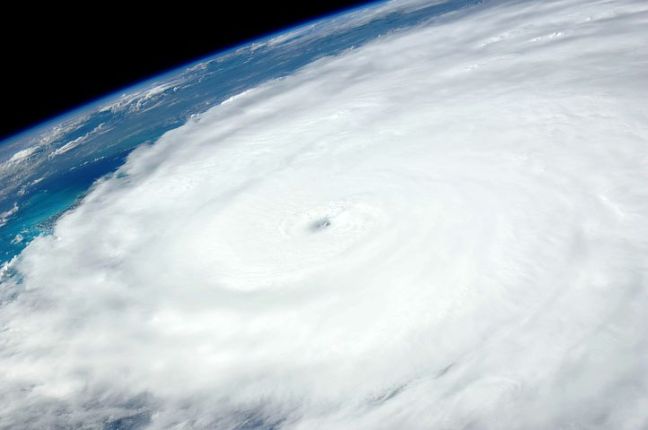
As I write this, it’s a beautiful afternoon in Atlanta – sunny skies, unseasonably cool and dry with a lovely breeze. Against this backdrop of serenity, people are beginning to panic. Evidence of the those escaping the hurricane fills the roadways and the hotels and even my yoga class this morning. The locals, concerned about the predicted path through north Georgia, have emptied the store shelves of water and are quickly depleting gasoline stores.

It’s difficult to know what to do. On the one hand, those in the Atlanta area who have filled their cars with distilled water seem to be over-prepared. And then I know people who have elected to stay in their coastal Florida homes, confident that they will be okay. And only time will tell who is making the right call.

No matter the circumstances, it’s hard to know the blow is coming and to feel powerless about its arrival. Preparation has both a practical application as well a psychological one – it feels better to do something rather than to simply wait for it happen to you. I’m grateful for the technology that gives people advanced warning so that they have the opportunity to decisions and to prepare.

This feeling, of bracing for impact, is familiar to me. The antsy, nervous energy that fills my body today is not unlike that of the final years of my first marriage. I was steeling myself for the catastrophic, even though I had no hard data that it was coming. It’s a familiar feeling, yet not a welcome one.

As I recovered from the marital blow that did eventually arrive, I came across a study that analyzed injuries in drunk driving accidents. In a cruel twist, the drunk drivers usually sustained far fewer injuries than the victims of their crimes. The reason? They were relaxed while the sober drivers, upon realizing what was about to happen, tensed their bodies in preparation for the impact.

I try to remember that lesson. We can and should prepare. Yet at some point, too much anticipation causes us to lock up and freeze. Too much energy spent trying to control outcomes that cannot be predicted makes us crazy in the moment.

These moments of dreading what’s coming are a given in life. Whether it be the arrival of a storm that has the potential to devastate an entire region or the apprehension that comes before a doctor’s appointment, we all have times when we need to prepare ourselves for what’s coming.

And as you do, take a lesson from the car accident study – prepare and then keep breathing as you wait for impact.

My thoughts are with all of those impacted by the events of late – Harvey, the earthquake in Mexico, the floods in South Asia and this most recent chain of hurricanes. Even as we face the worst of times, may it reveal the best in people.



Is the Time Spent In a “Failed” Married Wasted?

failed

When my math students first start to tackle more difficult algebra problems, they retain their elementary focus on determining the single correct answer. While this difficult work is still relatively new to them, they have a tendency to completely erase or even tear up an entire page of work that led to this incorrect value of “x.”

One of my goals during this time is to help the students focus on the process. Once they recreate the steps that led to the wrong answer that made them quit in frustration, I’m able to show them that, more often than not, they completed every step correctly with one simple mistake that led to the wrong answer. I point out the correct reasoning that I see in their work and also highlight the errors that led them astray.

They learn that it’s not only about the end goal; it’s also about the process. And by analyzing their work that led them to the wrong answer, they learn how to recreate what they did well and how to avoid the mistakes.

I see marriage as much the same.

It’s easy to see a “failed” end as a sign that all the years invested were wasted. It’s easy to get frustrated and to want to erase all of the memories or tear it up in anger. It’s easy to focus on the mistakes and neglect to see all of things that went right.


Here’s how I learned how to reframe the sixteen years spent in my failed marriage as a lesson rather than a waste.

The Importance of Finding Your Truth After Gaslighting

gaslighting

It all hit me when I saw the bank statement.

For the prior thirty hours that had elapsed after my former husband disappeared with a text, I was still making excuses for him. He must be depressed. Or acting impulsively. He’ll come to his senses soon and we’ll discuss what’s going on. I still believed in him.

And then I saw the bank statement.

Days before, I was with my dad and his wife almost 3,000 miles away from my home when my debit card was declined at lunch. Shocked and concerned, since my calculations had the balance well into the black, I texted my husband. He seemed to as surprised as I was and told me he was pulling up the account on his computer as we talked since my flip phone wasn’t up to the task.

“Oh, crap,” he grumbled, “Southeast Toyota did it again.” Only there were a few more expletives involved. He went on to explain that they had pulled his car payment out of the account four times that day, an apparent glitch in the automatic payment system. “Let me call you right back.”

Twenty minutes later, he phoned and related the news that Toyota would fix the error and return the funds but that it would be three business days before they were available.

It just so happened that my husband disappeared three days later.

After making my way back across the country and into the shell of my marital home, I pulled up the joint checking account (after resetting the password that he had apparently changed).

Southeast Toyota had never made an error. My husband had made a choice.

My card was declined because my recent paycheck went towards buying another woman’s engagement ring.

And that’s when it hit me.

Anything that I thought was real through my husband’s words or actions was suddenly suspect.

And somehow in the midst of his fiction, I needed to find my own truth.


Gaslighting surrounds you with lies, trapping you in web of deception and clouding your vision of your own reality. Make no mistake, even with no iron bars and no locks on the doors, gaslighting is a trap. The prison is initially woven from the words of another, yet it eventually keeps bound by your own beliefs.

And that’s the true danger of gaslighting. Because even if the one responsible is removed,  the web remains. And that’s when the work of clearing away the debris and finding your own truth begins.

After gaslighting, your vision of your world and even yourself is clouded and distorted. Over time, you have begun to rely less on your own senses and beliefs and more on those of another. You doubt yourself, question yourself. Do I believe this because it’s real or because I’ve been told that it’s real?

Removing the gaslighter from your life is only the first step in recovering from this type of emotional abuse. The next step is evicting them from your head. Only then can you begin the process of rediscovering and trusting your own truth. Here are five empowering ways to begin this journey. 


How Will Your Divorce Change You?

When I was dealing with the aftermath of my divorce, I was reminded of the PlayDoh extruder toy I had as a child. I would marvel at the smooth, even shiny, surface of the dough when it was first removed from the canister. Then, I would feed the material through the extruder where it was split and molded into a variety of forms. When it was time to clean up, I always tried to recreate the same smooth cylinder of clay as I started with.

It never worked. Because even though all the raw material was still there, it had been shaped and pressed to such an extent that it could never be the way it was before.

And that’s how the divorce felt. It was one of those life experiences where, even as you’re going through it, you know it will become a dividing line between the “before” and the “after.”

Because divorce changes you. That you cannot control.

But maybe you can influence just how it will change you. Read how here.


So Your Ex Wants to Be Friends?

I am in complete and total awe and amazement of those who manage to be friends with their exes after divorce. I feel like I’m doing well to be able to speak his name (rarely) without vomiting.

Yet some make it work. Sometimes they discover they get along as long as they’re not married. Or they rediscover a friendship after the animosity of the divorce has faded. The truly heroic manage to create families that blend the old and the new.

But for every pair that has a mutually agreeable relationship after divorce, there seems to be a couple dozen that don’t. Some are at perpetual war, either of the cold or hot variety. Others maintain a civil discourse or avoid contact all together.

And then there’s this situation, where one person wants the ex at arm’s length (at least) and then the ex implores, “Can we please be friends?”

Here are ten questions to ask yourself before you answer this question.