Labels

In the early months of the divorce, I was obsessed with labels. I needed to be able to classify everything, to make sense of the nonsensical.  It reminded me of a time when I was a kid.  My parents bought this little label maker that would print out stickers of what you typed.  I spent a day labeling everything in sight before the cost of the sticky paper brought my challenge to an end.

An electronic label maker, depicting buttons, ...
Image via Wikipedia

Most of my labeling energies went towards my ex.  Was he a narcissist, indifferent to those around him, viewing me as merely an object.  Was he an addict, as we found out after he left that he had been hiding alcohol consumption.  Perhaps he could be a sociopath, devoid of any sense of right or wrong.  Maybe he was depressive, and unable to make clear decisions. Of course,  he could just be a jerk.  Each of these labels had evidence to support their application, but there was also evidence against it.  I went round and round, sure that if I just knew what to call it, I would find understanding.

I fought against the labels that may have been applied to me by my psychiatrist.  Each visit, biweekly at first, she would ask me if I was suicidal.  I bristled at the thought that she contemplated applying that label to me.  Each visit, I denied it vehemently, hoping that my insistence would keep that word from my file.

Even the divorce itself had labels.  I was the one to file, as he just planned to run away.  Originally, I was going to do a divorce by publication, as we did not know where he was.  That progressed to a no-fault divorce once I found him, but before we knew of the bigamy.  The bigamy changed the label again to a fault divorce.

None of these labels mattered.  My ex is who he is, regardless of what I call him.  My psychiatrist supported me with the medication I needed no matter the words she wrote on my file.  And divorce is horrendous, despite the category it falls under.  Just like those sticky labels I applied as a kid, labels can be applied, removed, and reapplied without changing the object beneath.  Apart from a little residue, that is.
Trust Fund

English: The door to the walk-in vault in the ...
Image via Wikipedia
I had the utmost trust in my ex-husband.  Even thought we were very young when we began dating, I did not give up my trust easily; he earned it over years of proving himself reliable, dependable, and honest.  Each time he followed through or stepped up, another deposit was made into the trust fund.  I was hyper-vigilant about the fund in its early stages, carefully monitoring each deposit and looking for unexpected withdrawals.  As time passed and the minimum account balance was ancient history, I began to relax.
And then, the unthinkable happened.  The trust fund was emptied fully in one violent sweep as I learned of his years of lies and deceptions.  It made me question the veracity of the sixteen years of deposits: were they forgeries?  Fraud?  Or, were they real enough and simply there for the taking?
I felt violated.  Raped.  Robbed.  I trusted him to protect me from others and it turns out I needed protection from him.

It was an inside job.


I was left without a husband, bit even more concerning, I was left with a damaged trust safe, its integrity damaged by the robbery.  It was no longer able to contain any deposits of trust.  And I was afraid that it could not be repaired.
I began to work to repair the damage, patch the holes.  I explored, finding and patching the weak areas.  I tested its integrity by tentatively placing trust in others, yet ensuring that, if they were to fail to follow through, I would not be too badly compromised.
Time passed.  The trust fund slipped from the forefront of my mind.  I suppose I began to trust that it could contain wealth again, if it were to come my way.
And wealth did come; I am now in a new relationship and the trust fund has been rebuilt.  It’s a little different now; the security is a little tighter and I am more aware of the deposits, but the fund is full and I am relaxed.
Thank you to my dad and his wife for inspiring this post.

Mindset : Experience Life Magazine

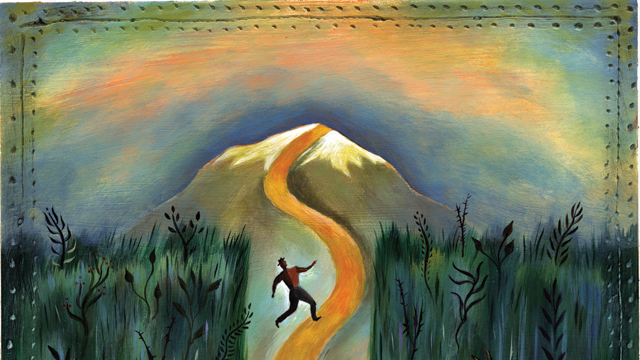
How do you see yourself: do you have a set amount of gifts that you were given or can you improve upon your innate talents?  If you see yourself as a passive participant in life, you may let opportunities for growth pass by.  On the other hand, if you view yourself as an active participant, you are more likely to capitalize on experiences that allow for growth and improvement.

Mindset : Experience Life Magazine.


Mindset at the Outset

There are some days where I should have a great run: my legs are fresh, I’m rested, my breathing is clear, and the weather is perfect.  Yet, on some of these days, each step is a supreme effort and my body, which was feeling powerful moments before, feels like a car with no power steering.

There are some days where I should have a tough run; my legs are fatigued, I’m tired, I’m wheezy or congested, and the weather is either freezing and windy or hot, humid and still.  Yet, on some of these days, I fly through the run, aware of my body executing each step almost effortlessly.

The determining factor in the run is not the physical (rest, fatigue) nor the external (weather).  The critical component is my mindset at the outset.  If I begin with the thought that the run is something to get through or the fear that I may not make my distance and/or time goal for the day, I struggle with the effort.  However, if I go into the run accepting the current state of things and just looking to explore what I am capable of, I often surprise myself with what I can accomplish.

Think about how you approach different challenges or even each day in your life.  Are you “getting through” or “exploring what can be”?  What is your mindset at the outset?

Wellness Newsletter March 5