I’m Still Learning

When I first started writing, I elected to be anonymous. Tasked with selecting a screen name that was both descriptive and inclusive, I settled on stilllearning2b.

And these past few weeks have been a (often painful) reminder that I am indeed still learning.

I am still learning to be in the moment and not to let my mental demons hijack a runaway train into an imagined future.

I am still learning to listen with curiosity rather than fear and to silence the self-induced panic.

I am still learning how to differentiate between spilled milk and an oncoming milk truck.

I am still learning how to develop a teflon skin that sloughs off perceived insults rather than soaking them up.

I am still learning how to separate what I provide to others from my worth to others.

I am still learning how to face disagreements without defensiveness or retreat.

I am still learning that it is not my job to ensure that others are happy.

I am still learning not to internalize every word and action around me.

I am still learning how to recognize and bleed my excess anxiety.

I am still learning to trust myself.

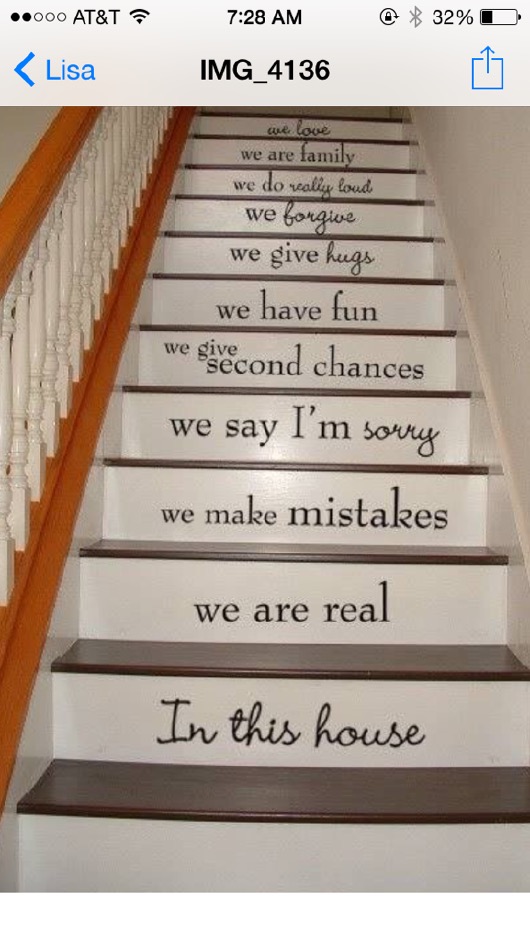
And I’m amazingly grateful that I have a husband that never fails to remind me of our household motto:

IMG_4661


How To Cultivate Gratitude When Life Bombards You With Lemons

Some gratitude comes easily. A beautiful day. A smile in response to a kind word. A tax refund. The Netflix release of the latest season of your favorite series.

But life isn’t always about easy. That beautiful day can be followed by a tumultuous storm, washing away everything you cherish. The person who uttered the kind word may never speak again. That tax refund may abruptly transition from fun money to survival funds when the layoffs occur. And the latest season of your favorite series may mark the end of the show.

Usually, we are grateful for the good days and endure the bad, putting gratitude on hold until things look better and the assault ends.

But that’s not the only way.

In fact, gratitude cultivated during the rough parts is paramount for thriving regardless of what life has to offer.

Gratitude is the sugar that turns those sour lemons into lemonade.

Maintain a Smile File

On those really tough days in the classroom with the kids, I have a certain strategy that I like to employ. I stop the lesson, sometimes mid-sentence, walk to file cabinet and pull out a tattered manila envelope with a crudely-drawn smiley face on its exterior.

Without a word, I sit at my desk (something I never do while teaching) and begin to read the contents of the envelope silently. Without fail, the kids fall quiet and stare at me curiously until one pipes up, “What are you doing?”

“Reminding myself why I still teach.”

smiley-1039937_1920

That envelope is filled with all of the thank you letters and cards I have received from students and parents over the years. It’s a powerful reminder that although that day in the classroom may suck, that day is not the entire picture.

A smile file is a way of collecting and storing life’s good moments to help in the bad ones, much like food is gathered and stored to prepare for the winter ahead.

Apply Gratitude to Wounds Immediately

Gratitude works best when it occurs immediately after (or even during) a bad moment. It not only changes the face of the situation by offering perspective, it also helps to derail the cycle of negativity.

doctor-1015626_1920

While I was making large monthly payments on the totally unfair and utterly sucky debt my ex left me with, I started a coinciding gratitude list. As soon as I would click “Make Payment” on the website, I would pick up my pen and add one item from my current life that I wouldn’t have if it wasn’t for the former life ending in a violent explosion. It changed my thinking. Instead of viewing those installments as bloodletting, I saw them as a down payment on a better life.

Be careful with this strategy, the knee-jerk reaction to rapidly apply gratitude can become habit-forming. While I was weeding the other day, the thorns from a nearby rosebush drew blood as they raked across my exposed side. And after my initial PG13 utterance from the surprise and the pain, I found myself saying thank you for the opportunity to see the final blooms of the season held just above the offending spikes.

Choose Your Words Carefully

I’m bad at this one. When life gets overwhelming with its demands, I have a bad habit of moaning about being too busy. Or too stressed. Or anxious. I’m working on changing the words I choose to assign to these moments.

scrabble-925520_1920

“I’m lucky to have a life filled with so much.”

“I’m grateful to have the opportunity to do so many things.”

“I’m excited to see what this time might offer.”

The words we say to others have influence. The words we say to ourselves have power.

You cannot change what happens to you, but you can certainly adjust how you label it.

Start by refraining from calling a situation “good” or “bad.” Because good and bad always coexist.

Craft a Gratitude List

Simple enough. Write down what you’re thankful for. It can take the form of a daily gratitude journal, a “top ten” list posted on your bathroom mirror or the screen saver on your computer.

As long as you follow two simple guidelines – write it down and put it where you see it.

Bonus points if you tackle this radical gratitude challenge.

Take a Media Fast

The constant bombardment of media can be detrimental to your well-being. Pintrest reminds us that no amount of hot glue or eyeliner will ever make our lives photo shoot worthy. The news breaks us down with images and stories of suffering while fertilizing our minds with fear. And Facebook encourages comparisons, wondering why our lives always seem to fall short.

switch-949109_1920

So turn it off. Listen to yourself and those immediately around you. Recenter.

And find gratitude for what remains.

Celebrate the Small Victories

Sometimes gratitude is found in the big picture and sometimes it is found within the small moments of hope and joy in a bleaker terrain.

When you’re in the middle of one of those “growth experiences” that life loves to test us with, make the effort to celebrate every little shining moment. Each is a victory worthy of notice.

kuwait-252613_1920

Pass It Along

When you can’t find anything in your life to be grateful for, give somebody else something to be thankful for. You’ll both feel better.


Still struggling to cultivate gratitude?

Here are some ideas to get you started:

I am grateful for the reminder about what is really important in life.

I am grateful to be forced to slow down.

I am grateful for the opportunity to find out how strong I really am.

I am grateful to discover who my true friends really are.

I am grateful to have been blessed with people in my life whom I miss.

I am grateful that this experience has made me more compassionate towards others who are suffering.

I am grateful for the chance to adapt and transform through change.

I am grateful for what I have learned through this experience.

I am grateful that my eyes opened this morning and that I have the opportunity to be grateful today.

And I am grateful that I can choose to take those lemons and …


“I’m Fine.” (But What Are You Really?)

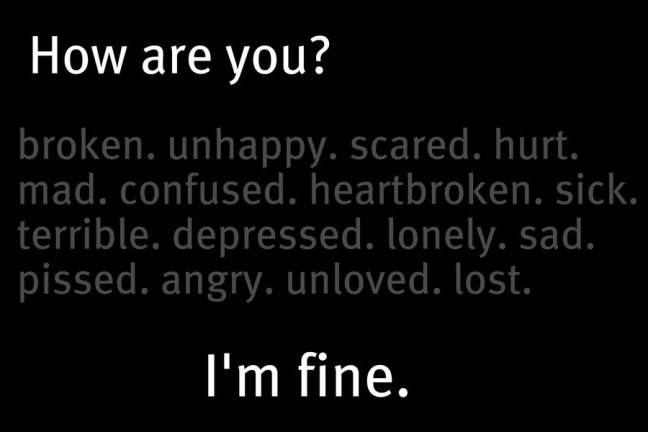
I'm fine

“I’m fine.”

How many times have you declared those words?

Hundreds?

Thousands?

Maybe more?

And how many times were those utterances accurate, describing your well-being as exceptional? Thriving? Or, in the more modern use of the term, simply satisfactory?

And how many times were they offered in reflex, in deflection or even as an outright lie?

__________

Here are some of the true feelings that can hide behind “I’m fine.” Do you relate to any of them?

“I’m afraid that if I start talking, I’ll start crying.”

My world is a mess right now and I’m trying to just get through. I may look okay, but I’m really just going through the motions.

“I’m trying very hard to pretend that I’m fine. Please don’t intrude on my delusion.”

If I really paid attention to my intuition, I would probably know that something is not right. But I’m not ready to face it yet so I’m going along with the idea that I’m fine.

“I’m not fine, but I don’t feel safe sharing that with you.”

Things are really hard right now and I wish I could talk about it but I’m afraid that you’ll ridicule me or somehow add to the pain. So I’d rather play it safe and keep my feelings tucked inside.

“I don’t know how I’m doing, to be quite honest with you. I don’t really give it much thought.”

I haven’t allowed myself to slow down enough to be aware of how I’m doing. I stay busy and pretend that as long as I’m doing, I am fine.

“I’m afraid that if I admit to not being fine, you’ll see me as weak.”

I know you see me as the strong one. The one that holds it all together. And I don’t want to be seen as weak or have you think that I can’t be counted on.

“I’m not fine and that’s my problem.”

I don’t want to burden you with my troubles. You have enough on your plate.

“I believe that I should be fine, so I play the part to the world.”

It’s been a long time since the event. I have so much going for me. I have nothing to complain about. I feel guilty for not feeling fine when so many others have it much worse.

“I don’t have the energy to explain my not-fineness to you.”

I’m tired. Defeated. And even just the thought of trying to explain how I feel is exhausting. So I give you the two syllables needed to stop you from probing further.

“I’m frustrated or upset with you, but I don’t want to rock the boat.”

I’m not fine, but I’m afraid that if I tell you how I feel, you’ll be angry or disappointed. And my fear of your reaction is greater than the pain of holding back. For now.

“I was taught that my feelings aren’t valid. So I suppress them.”

My parents taught me that feelings were stupid. I learned that nobody will listen or respect my emotions. So they stay hidden. Even from me.

“I want to be left alone.”

I really just want to crawl into bed and hide under the covers until this fades. Please don’t come in after me.

“I need time to process my feelings and put words to them.”

I want to open up, but I need to do it at my own pace once I wrap my brain around what I’m feeling.

“I need someone who will just listen. Not try to fix things.”

I’m not fine. But I’m also not helpless. I want to be able to share my feelings without you trying to step in and fix everything.

__________

I’m not suggesting that the next time the cashier at the grocery store asks you how you’re doing, you should respond with a truthful unloading of your current worries. Unless you want to be the one they all try to avoid when you walk through the door, that is.

After all, many of our daily interactions are superficial and that’s okay.

But not all of them are.

And when “I’m fine” becomes a habit, a reflex, that we apply to our friends, family, therapists, doctors and even ourselves?

We’re robbing ourselves and our relationships of the vulnerability and connection that comes from the courage to respond with authenticity.

So next time somebody asks how you’re doing, respond consciously.

Here are some words to choose from:

sad  nervous  excited  anxious  lonely  energized  confused  frazzled  aroused  irritated  content  elated  angry  lost  melancholy  fatigued  overwhelmed  engaged  hurt  fabulous  frightened  playful  relieved  embarrassed  awed  vulnerable  relaxed  jealous  unsure  apathetic  curious  grief-stricken  grateful       rough around the edges   better every day      making progress     happy to be here

Or even just fine.

How Do You Know When You’ve Moved On After Divorce?

move on

Some milestones in divorce are clear – the day the decree is final, the day you establish your own home and the day you go on your first date.

But the most important milestone? The one that anyone who has ever been through divorce eagerly awaits?

That one is more subtle.

So how do you know when you have moved on after your divorce?

The Memories Lack Emotional Punch

When I first used to share with others that I had been left by my partner of sixteen years, I felt as though I had come down with some super-bug. My limbs would shake, my temperature would rise and I felt as though my stomach was trying to run away (perhaps to catch my runaway husband).

Over time, these physical symptoms dissipated – the stomach would twinge rather than threaten to expel its contents, the shaking was reduced to a slight tremble in the hands and the internal thermostat was regulated.

And then one day, when I had to tell my story, I realized I had no physical – and no emotional – reaction. It just was. The events had become fact. Not feeling.

When you can remember bits of your past and share your story without feeling like you’ve been punched in the gut, it’s a sign you’ve moved on.

Memories Do Not Have to Equal Suffering

photo-256889_1920

The Divorce Is Not Used As An Excuse

“I can’t afford that.” “I’m not ready for a relationship.” “I’m afraid to open up and be hurt again.”

I said it all.

And as long as I said it (and acted upon it), I was allowing the divorce to hold me back. Decide what I could and couldn’t do.

And that was a clear sign that I hadn’t moved on.

And now?

Yeah, it’s not always easy.

So what?

I’ll be damned if I let it hold me back.

When you can accept that the divorce may have set your floor but that it doesn’t dictate your ceiling, it’s a sign that you’ve moved on.

18 Steps to Financial Independence During and After Divorce

chain-690088_1920

You Can Appreciate the Good In the Marriage

In the beginning, I could not accept any good in my former marriage or my former husband. I had to make it all-bad so that I could make it all-okay. Because when an unwanted divorce arrives on your doorstep, the best way to accept it is to pretend that you wanted it.

In time, good memories starting sneaking in through the cracks in my hastily-built wall. I remembered the goofy, gangly kid that I fell in love with, the unsure but determined young man that accepted a move across the country and a chance at a real career and the confident (seeming, at least) guy that accepted accolades in his work. The moments we shared started to bubble up to the surface and with them, smiles.

The beginning and the middle became separate from the end. And I grew to appreciate what was good without either overanalyzing it looking for cracks or following the tracks to its demise.

When you can treasure what was good in your marriage without dwelling on why it is gone, it is a sign that you have moved on.

Finding Happiness After an Unwanted Divorce

camera-820414_1920


Continue to read the rest.

One Event Does Not Define You

It was parent conference week at my school this past week. It’s a week I always look forward to (even while I dread the long hours required). I love getting a chance to talk with the parents after I have been able to see their child’s strengths, weaknesses, celebrations and struggles. Most of the conversations and strategies are pretty run-of-the-mill. Helping middle schoolers learn to prioritize, time-manage and organize is an on-going and ever-present task.

But every year since my first in the classroom, I have had a handful of conferences that are anything but run-of-the-mill. Some of the kids that come through my classroom have been through tragedy. Loss. Trauma. And as the teachers sit around the table and learn the information, the missing assignments suddenly become less important than the missing childhood. The focus shifts from succeeding in school to creating a support system to help the child succeed in living.

Once I learn of the background, there is one talk I always make sure to have with any student that went through too much far too soon.

I call it my “defining speech.” And it goes something like this:

———-

“Make a line through this point,” I ask, drawing a dark mark in the center of a blank white sheet of paper.

point“Where should I make the line?,” some students inquire, while others simply follow my command and draw a line on the paper. The perfectionists make themselves known by insisting upon a ruler.

line

“Is that the only line you can make through that point?” I ask.

“Well, no. I could make a bunch of different lines.” I gesture for them to show me.

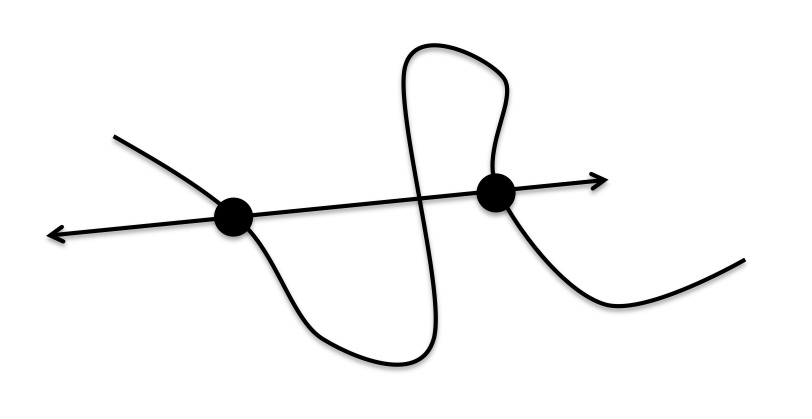
linesssI then turn the paper over and draw two points.

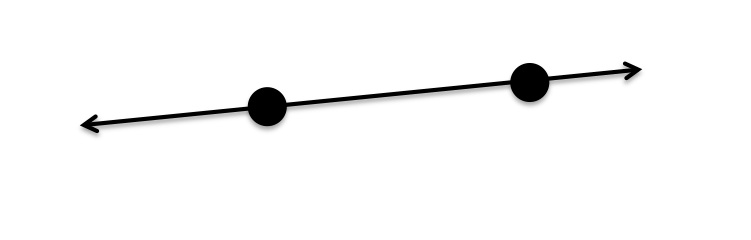
pointsss“Make a line through these.”

line2“Is that the only line you can make through these two points?”

I usually get a “Is my teacher crazy?” look at about this point.

“Well, yeah? I mean, two points make a line, right?”

“True. If it’s straight,” I say with a slight smile. “Try connecting them with something that isn’t linear.”

This is where I can tell who is willing to take risks. But they all manage to create some sort of nonlinear path through the two points.

curve“Is that the only curve you can make that can connect these two points?” I continue.

“No. Do you want me to draw more? I mean, there are infinite ways!”

“No, it’s okay. I just want you to see that there are multiple paths to get from one of those points to the next.”

The shoulders relax as the brow rises, wondering about the point of this exercise.

“Almost done. I just have one more for you.”

scatter“Connect ALL of these points any way you want to.” If I do this after our lessons on scatter plots, it drives them crazy not to simply draw a line of best fit 🙂

Once they’ve completed the task, I bring the point home. Yes, pun intended.

“I want you to think of these points as events that happen in life. When you have a single point or event, it does not define your path. There were many routes you could take. When there were two points, there was only one way if you chose to see it that way. If you were more creative, you could find many more. But life doesn’t consist of just one or two events, even though certain ones may stand out more than others. Life is a series of events. And it is your choice how you move through them. Look at how you connected your points here on your last picture. You had to include the outliers, but it didn’t completely change the general shape of the graph.”

“I know you’ve had some stuff in your past that makes you feel like you’re stuck on a predetermined path. But you’re not. You had to walk through that point. That event or series of events. And now you decide what direction you go.”

“One event does not define you. YOU define you by the choices you make and the path you choose.”

Okay, class dismissed 🙂