5 Reasons You’re Still Thinking About Your Ex (and What You Can Do About It)

lever-3090764__480-2

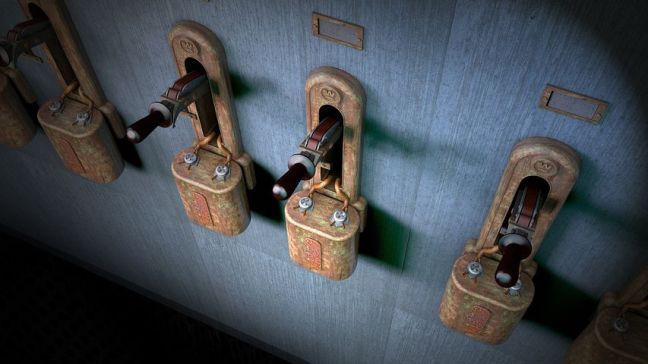
I have this image of the brain after a breakup. It’s laid out like the room that manages all of the electricity for a large building. Huge levers line the walls where the power can be controlled to each section of the building. One by one, you shut down each breaker that sends energy to any thoughts about your ex until your mind is dark and peaceful.

Of course, it’s not really that simple.

No matter how much we try, thoughts of our exes find their way in, both through brute force and devious sneakery. The thoughts can range from disturbing to amusing, but no matter their particular flavor, they are often unwanted, displacing more welcome thoughts and dreams.

So why is it that even though they are out of our lives, they refuse to vacate our minds?


You’re Wanting Things to Be Different

Maybe you’re berating yourself for mistakes you made that led to the demise of the marriage. Thinking that if you only did or said something differently, that you would still be together. Or maybe you’re holding onto the idea that you can still become the person your ex wants and you’re entertaining the illusion that somehow you can still be together.

This desire keeps your ex in the forefront of your mind because you’re turning your thoughts around like puzzle pieces, trying to get them just so in the hopes of bringing everything together. And just like a puzzle, it’s hard to walk away when it feels unfinished.

What you can do…

This is a time for some tough self-love. What you’re doing is a type of magical thinking. Wanting something to be true is not enough to make it true. You cannot change the past no matter how much you allow it to occupy your present. Pay attention to when your thoughts venture into this territory and repeatedly remind yourself, “That is past. I cannot change it.”

These thoughts are often at their most intrusive when we are dissatisfied with our present lives. Are there areas in your life that need filling? Turn your attentions that way.

fullsizeoutput_1747.jpeg


You Miss Them (or You Miss the Idea of Them)

Obviously, at some point, you were attracted to your ex. You liked them as a person and found them interesting and desirable. And then as the relationship grew, their presence in your life grew as well until they occupied one of the more prominent positions. So it’s no wonder that you miss them. That the bed feels empty and you find yourself seeking out their smell or the particular sound their footsteps made on the stairs when they came home.

And of course, when you miss them, you’re thinking about them. And probably with rose-colored glasses too. You’re remembering the person you fell in love with, not the person you divorced.

What you can do…

This can be a time to counteract each of those positive memories with a negative fact. Although this isn’t a great strategy for the long term, it can help when you’re struggling to let go. If you need more ideas, read about how to fall out of love.


You’re Feeling Lonely

I equate a breakup with the cold void felt by the remaining person in a bathtub when the other person steps out. There seems to be too much time and too much emptiness, and that’s a difficult combination. It’s natural to want to fill that void with thoughts of the last person to occupy it. You equate their absence with your loneliness and so you fill your loneliness with their imagined presence.

The problem is that believing what loneliness tells you is a bit like trusting yourself to make wise decisions when you show up to the grocery store starving. Until you address the loneliness, your brain will be feeding you nonsense.

fullsizeoutput_117b.jpeg

What you can do…

Keep busy. Nurture connections with other people. Engage in meaningful work. Give back. Need more ideas? Read 52 Things to Do When You’re Feeling Lonely.


It Hurts to Think of Them Moving On

There’s a reason that the most common search that leads to my site is some version of, “My ex is getting married and it hurts.”

Because it does.

No matter how much we like to deny it, it can be painful to see them moving on, especially when we still feel flattened by the divorce. We wonder if they’re happy. Happier, even. We compare ourselves to their new partner and we judge our life by their curated one.

What you can do…

Block them on all social media. You do not need to see the pictures of them with their new partner. You crave the information, yet at the same time, you feel worse whenever you consume. So go cold turkey. Need more? This video offers more support and points to think about.


You’re Curious

You used to know almost everything about them. And now they’re almost a stranger. It starts innocuously enough, “I wonder if…” But then it spirals as you keep wondering.

Even though this reason doesn’t carry the weight of the others, taken too far, it can still interfere with your ability to move on.

What you can do…

The brain abhors a vacuum. If you don’t know something, the mind will fixate until it has answers. So give it answers. Not by social media stalking or constantly asking your kids, but by telling yourself some version of, “Their life is no longer part of mine. I don’t need to know what they are doing because it does not impact me.” If you have no contact, it’s okay to tell yourself a story (ideally a boring one) about what they have going on. And then go get your drama elsewhere.


Snip20190907_12


The Cornerstone of Divorce Recovery

“But how did you do it?” I was recently asked in regards to my divorce recovery.

“I had no real choice in the matter,” I replied, “I absolutely refused to give him any more. He had taken enough.”

But that reply, of which I’ve given some version of probably hundreds of times over the past decade, didn’t really answer the question.

I could list the strategies that I implemented, as I have done numerous times before. But even those wouldn’t address the heart of the question.

Because what this person was really asking was how did I get myself up out of bed every morning when the sheets were still wet from the tears that flowed throughout the night? They wanted to know how I kept my hopes up for the future when all I could see was darkness. In witnessing the dichotomy between my now happy and smiling face and the brutality of the story I told, they were struggling to understand how happiness could survive such despair.

Faith played a big role – belief in the possibility of recovery, confidence in the strength of the human spirit and trust in the inherent kindness of most people.

But even faith isn’t enough to force you out of bed on those mornings when the weight of the world feels as though it will crush you before noon.

That requires something else entirely.

Discipline.


Discipline is one those traits that we explicitly try to build in our children. We train them with chore charts, sign them up for martial arts and require that they eat their vegetables before their sweets.

Yet the role of discipline doesn’t fade as we age. In fact, the stakes become larger. Because without discipline, we can have all of the faith and hope and desire in the world, and we still won’t make any progress.

(Related: 6 Reasons You’re Not Seeing the Results You Expected)

At its core, discipline is about doing things that you don’t want to do. It’s about enduring discomfort, working towards a goal and, at least some of the time, putting the “have to’s” in front of the “want to’s.”

And most of us are pretty good at this. We pay our mortgage before we buy the ticket to Paris. When the alarm sounds on Monday morning, we manage to make it into work on time even though we’d rather sleep in and have UberEats bring us pancakes.

But something often shifts when it comes to divorce. Whether from the sheer enormity of the emotional turmoil, a case of the “why me’s?” stopping your momentum or the utter exhaustion of a major transition, discipline often flags after divorce.

Which is a shame because the swift kick in the butt provided by discipline is exactly what we need to get us back up on our feet again.

Without discipline, I would probably still be Googling my ex and his other wife. Discipline is what allowed me to get my finances back in order after my ex confused me for a line of credit. And discipline is what led me to face those triggering events that, on my own, I would have preferred to avoid.


The good news? There are strategies that you can use to get yourself moving while your discipline is still lagging behind:


Rely on External Supports

When you’re feeling weak, it’s perfectly acceptable to use external supports to buttress you from the outside. This can take the form of a therapist or coach that provides you with accountability. Alternately, you may benefit from a structured program (divorce related or even something completely different) that guides you with instructions on what to do and when to it. If you gravitate this direction, make sure that you select a group that both pushes you and offers a hand of encouragement. Or maybe you simply need a living space that is devoid of your favored form of distraction.

I knew that I would have a tendency to withdraw into myself during divorce. So to combat that, I lived with a generous friend and her family for a year. I let my teammates at work fuss over me and encourage me to eat. And I reached out to doctors to help manage my physical and mental ailments that arose from the situation at hand.

So often we refrain from asking for help out of a fear of looking inadequate. Yet admitting weakness is a great sign of strength.


Set Tangible Goals

Discipline operates best when the goals are clearly laid out and achievable. It’s easier to motivate yourself to do those not-always-pleasant things when you understand why you’re doing them.

Divorce is a time of immense change and overwhelming, and often impossible-seeming, goals. So break it down. What is one small way you want your life to look different next month? What steps can you start taking right now that will get you there?

Next, record those necessary steps on your phone’s calendar and/or set reminders to get them done. Finally, when that reminder pops up, do the thing.

I posted a list of 12 goals that I wanted to reach that first year. It was in a highly visible place and I made notes on it as I made progress towards my intentions. There were days that those 12 bullet points kept me going.


Try Gamification

Thanks to the neurotransmitter dopamine, our brains thrive on intermittent rewards. The concept of gamification capitalizes on this fact, tying game theory into everything from learning a new language to meditation.

Many lifestyle and wellness apps now apply this theory with opportunities to “level up” or unlock new content. Alternately, you can set challenges for yourself or commit to a streak of a certain behavior or action (or non-action in the case of trying to stop social media stalking your ex).

I used gamification during divorce when it came to paying off the debt he incurred. Every time I paid off another $1,000, I would grant myself a small guilt-free activity or purchase. It was my way of leveling up.


Practice Habit-Building

Discipline is not infinite. Several studies have demonstrated that decision fatigue is a real thing (interestingly, this is most true for the people that believe that their willpower will fade). There are a couple ways to combat this lack of willpower. The first is to force yourself to begin. Because once you have taken your first step, the resistance to the subsequent ones is lower.

The other is to cultivate habit. Within the last 6 months, my mom changed her entire way of eating. At first, food choices required an extreme amount of conscious awareness for her. It was new and nothing was automatic. That is the most difficult period, as the brain wants to go back to the easy comfort of the known pathways. But over several weeks, the new foods simply became, “The way I eat,” and no longer required so much mental energy and discipline. (An aside, I am super proud of her for making – and maintaining – these changes! Go mom!)

The more you can move into habit, the less discipline you’ll need.


Start Small and Gradually Expand

You don’t have to do it all at once. Hell, you can’t do it all at once.

But you have to start somewhere.

And you have to start sometime.

Why not here and why not now?


Five Vows to Make With Yourself After Divorce

When I received the unexpected text that ended my marriage, I collapsed along with my entire world. In those moments, I had no answers, no solutions and little hope.

I felt gutted, a dry husk discarded after the honeyed insides have been consumed. And then, while my body still remained a quivering mass upon the floor, I felt an unexpected fire begin to burn deep within. In that moment, I made the rough drafts of the following five promises to myself.

It took months for these vows to fully develop and years for them to be fulfilled. Yet all along, these five covenants with myself became the guiding principles towards a new – and happy – life after divorce.

I refuse to let my ex take my future.

At first, I was completely focused on what I had lost. I felt like sixteen years of my life had been stolen while my back was turned. I became obsessed with figuring out the “whys” and the “hows,” spending more time in my head than in my life.

I spent months looking for an apology, an acceptance of responsibility or at least some evidence of karma paying a visit. Yet I was continually disappointed. I made deals with myself, “I’ll let this go after he …” Yet he never did.

I blamed him, not only for what he had done, but also for what was continuing to happen. Resentment filled me as I continued to wear the guise of a victim. After all, I wouldn’t be in this situation if it wasn’t for his actions.

And then, it slowly began to dawn on me that I was the one who was allowing myself to continue to have my expectations dashed. was the one who was more focused on what was lost than on what remained. was the one willingly handing control over my life and my happiness to this person who didn’t exactly have a great track record of looking after me.

I couldn’t alter the past. I had no control over his actions (or inactions). But I could put my foot down. I could draw a line in the sand. I could refuse to allow him (or my feelings about him) to steer my future.

He had taken enough. I wasn’t going to allow him to take any more.


I will not allow this experience to define me.

I remember the first time I had to check the “divorced” box on an informational form. I felt a sudden, and surprising, flush of shame rise through my body. “How did I end up here?” I wondered. “What’s wrong with me?” I questioned, feeling like a failure.

For much of that first year, I was my divorce. It was the first things friends asked me about and the first thing on my mind every morning. It stained every area of my life, a scarlet towel thrown into a load of white laundry. I contributed to this attention through my need to obsessively talk about the situation with anybody and everybody. I needed to vent, to process, and wasn’t yet able to control the verbal emissions.

I became curious about dating, but was also hesitant that I would perpetually be viewed as damaged goods. After all, if one man deemed me as disposable, why would another view me any differently? When one man at the gym, with whom I had only exchanged the requisite exercise-related small talk, expressed his interest, I was stunned. It was the first inkling I had of a future that wasn’t stipulated by divorce.

I may have been divorced, but I was more than just my marital status. That experience and designation would always be a part of my story, but I didn’t have to allow it to define my entire life.


I refuse to allow one person to determine my worth.

In communications with his attorney, his other wife (yes, he followed the leaving-via-text with bigamy) and my mother, my ex made some outrageous – and outrageously awful – claims about me. When I first heard these assertions, I was horrified. And also terrified. After all, what if they were true?

After so many years with my ex-husband, I had learned to value – and even absorb – his opinion. He expressed his hatred of mums every fall when the flowers began to dominate the displays and I soon decided that I didn’t like them either. He conveyed full confidence in his ability to build his own design company and I allowed my faith to follow.

And so when he decided that I was a terrible, no-good, very bad person, I went along with it. Until eventually I realized that, if my ex was simply a stranger that I had a brief encounter with, I would not respect or value his opinions based upon his decisions and demeanor. So why should I listen to his views at all?

I made the decision to allow the preponderance of evidence to reflect my character, rather than the perspective of a single – and deeply flawed – person.


I haven’t come this far to only come this far. 

This vow was my carrot when I was feeling hopeless and my stick whenever motivation waned. When I started to feel like it was all-too-much and I simply couldn’t take another step, I would take a moment to assess the progress that I had made thus far.

I may not have been able to sleep through the night unaided by medication, but at least I was no longer as plagued by nightmares. I may not have been able to think about my financial future without an emotional reaction, but at least I could find comfort in the fact that I was granted Innocent Spouse Relief by the IRS.

As I reflected on these baby steps and the enormous effort required to make them, I became determined to not call it quits only partway up the mountain.


I will find a way to see the good in this situation.

This was the only one of those rough-draft vows that I verbally expressed when I was lying prone on the floor. And it was also the hardest promise to myself to keep as the bad news continually threated to overwhelm and drown out any attempts at gratitude.

At first, like with many things, I placed the burden of an agreeable outcome on external factors. I would feel vindicated if the courts came through and justice as I saw it was served. I could be happy if someone would swoop in and rescue me from this mess. I was hopeful that I would be free if I somehow found financial success through the situation.

Yet, as is always the case when relaying on outside circumstances to provide satisfaction, I was disappointed. And so I began to look inward for the gifts hidden beneath the tragedy. I started to list the positive outcomes that only occurred because of the divorce: I found who my true friends were and discovered just how amazing they were, I felt a sense of peace and power after surviving the worst that could happen, and I was given an opportunity to learn from this experience and to share my lessons with others.

Marriage begins with your vow to another.

When marriage ends, it is a time for promises to be made with yourself –

I vow to live the life I have, not the life I lost.

I vow to allow my character to shine despite my experiences.

I vow to see the value I provide to others and demonstrate kindness towards myself.

I vow to recognize my accomplishments and also demonstrate perseverance in the face of adversity.

I vow to always strive to the see the sun behind the clouds and to express gratitude for every gift.

How to Rewrite Your Divorce Story

With personal life events, the facts matter less than your interpretation of them.

I wish I had known that in the year following my own divorce. Instead, I chased down the facts like a terrier after a rat, convinced that as soon as I had assembled all the particulars and made sense of the information, I would find peace.

The exercise was one of futility and failure. No matter how much I questioned or how hard I looked, there were certain things that would remain unknowable. My need to comprehend became obsessive, consuming my thoughts and breaking me down in the process.

In my unease with those voids, I filled them with my assumptions and reactions, feelings acting as the mortar between the bricks of what happened. And I assumed the worst, as we often do. I believed that my ex acted out of deliberate malice with a personal and directed attack. I eagerly assigned him the label of “sociopath” in an attempt to understand his actions. And I held tight to the facts I did know, using them as an excuse both inwardly and outwardly for my response.

And instead of finding relief, I only felt worse.

Time moved on and with it, the clarity of some of details faded. The facts muddied as they tumbled through my thoughts with my perceptions, like whites thrown into the wash along the darks. As first I panicked, afraid that I would forget the reality of what happened. I went through old emails, pulled out worn files in an effort to remind myself of the facts.

I was startled to realize that they no longer mattered. And even more importantly, I realized that the emotional stories that I told myself to fill in the missing information had more staying power and influence than the facts themselves.

On that day, I made a decision to actively reframe all of my earlier assumptions and conclusions surrounding the known facts of my divorce. Instead of believing that my ex acted out of malevolence, I decided to believe that he was scared and seeking to alleviate his own pain. I replaced “sociopath” with “depressed” and “addict,” both of which elicited empathy more than hatred. I reframed his ongoing lies as desperate measures in an effort to regain control of a life spinning out of hand.

I actively worked to excise the emotion of my earlier reactions. With each remaining fact and facet, I made the effort to assume the best possible motivation and intention. The mental exercise was like pouring Tide into the tumbler along with the facts, brightening the facts and softening the harsh edges.

And I found relief.

Those facts are still stored in my brain and on some hard days, one will rise to the surface and cause my breath to catch in my throat with the intensity of the memory. But for the most part, when I think about my own experience, I see it through the lens I crafted. The reworking of the facts that allows me to feel empathy instead of rage, peace instead of rejection and pity instead of betrayal.

Because when it comes to personal life events, the facts matter less than your interpretation of them.

If you want to rewrite your own divorce story, these are the steps you need to take:

  • Recognize your assumptions. We all have a tendency to take people’s words and actions personally when it is often not about us. Strip away all of your beliefs about why something was said or why a certain behavior occurred.
  • Write the facts and only the facts. Keep it simple and keep it brief. There is no need to focus on the nuance; you only need to capture the broad strokes.
  • Pretend these same facts were presented about somebody you feel kindly towards or written about a positive character in a book. What conclusions might you reach about why these things happened?
  • Shift those beliefs to your own situation. Be persistent – your earlier and more emotional reactions will fight you for dominance.
  • Notice how you feel as those positively-spun stories start to resonate. Are you breathing a little easier? Feeling a little lighter?

Your divorce and perhaps your ex have already hurt you enough. There is no reason for you to allow your thoughts to hurt you even more.

10 Things People Who Thrive After Divorce DON’T Do!

We’re accustomed to hearing information and advice about what we should do after divorce. But what about those things that are better avoided if we want to eventually find or create a better life after divorce? Here are ten things that people that thrive don’tdo:

1 – People who thrive after divorce refuse to pretend they’re okay.


It’s partly a knee-jerk reaction and partly an effort to present our best selves to the world when we respond to “How are you?” with “Fine.” Sometimes, perhaps most of the time, this response is sufficient and mostly accurate. Divorce is not one of those times.

During divorce, most of us experience the extremes of emotions all tumbling within our bruised hearts at any given moment. And it’s easier to say, “Fine.” than to admit to the paralyzing fear that we will never find love again. It’s less scary to pretend to be okay than to confront the fear that we’re really not coping very well. In a time when our esteem has already taken a beating, we want to appear as confident and capable. Even if it’s just an illusion.

Pretending to be okay often feels like you’re doing others a favor. Yet you’re protecting them at the expense of yourself. The problem with pretending to be okay is that it prevents you from receiving the help you may need and the limited vulnerability promotes loneliness as you avoid true intimacy with others.

Those who thrive will admit to themselves and others when they’re not okay. They will give themselves the time and space to heal and they will accept assistance from others. Becoming okay often begins by accepting when you’re not.

Playing Make-Believe With Your Healing Progress


2 – People who thrive after divorce don’t take themselves too seriously.


Divorce is serious business. It has a significant and powerful effect on those affected, from a loss of vitality and financial security to difficulty functioning and the stress of major loss and transition. It requires consistent effort and attention and money to survive the shift from married to single.  And it’s easy to become overburdened with the responsibilities or to become consumed with the impact the split will have on the children.

Those who thrive after divorce don’t neglect their duties or minimize the consequences of the end of the marriage, yet they also manage to find the comedy within the tragedy. Whether by taking advantage of a lighthearted moment or using dark humor to poke fun at a horrific situation, they allow the smiles to shine alongside their tears.

Humor not only allows for play and respite, refraining from taking yourself too seriously also helps you to forgive yourself for your stumbles and missteps as you’re learning how to be in this new and topsy-turvy world. When you can laugh at yourself, it’s a great reminder that you have the power to interpret what happens to you.


3 – People who thrive after divorce don’t follow rigid rules.


“Don’t date for at least a year after divorce.”

“You should always try for mediation instead of going to court.”

“Never talk about your divorce at work.”

It seems the rules for how we are “supposed” to manage life after divorce are endless. There are rigid social guidelines for everything from how to leave your spouse to how (and when) to meet the next one. Some of the advice is good, some of it excellent. Much of it comes from years of experience and even research.

Yet none of that matters if the advice isn’t right for you.

Many of us seek guidance after divorce. Lost, confused and overwhelmed, we’re looking for somebody to tell us exactly what to do and what steps to take to make it through. It’s great to learn from others and gain from the shared wisdom of experience. And it’s even better when you process that advice through your own beliefs and needs and shape it into something that makes sense for you.

Those that thrive after divorce are open to counsel, yet they refuse to follow rules just for the sake of following rules. They listen, they learn, they reflect and then they do what feels right for them.


4 – People who thrive after divorce refrain from becoming bound by their revenge fantasies.


Some ex-spouses are pretty terrible people or at least they behave in some terrible ways before, during and after divorce. And when we’re hurt, it’s tempting to strike back in anger and frustration. The mind becomes a fertile playground for revenge fantasies suitable for a Hollywood script.

The mental vengeance can feel purgative and empowering, restoring a sense of balance and fairness while releasing some of the vitriol. We want the ex to suffer so that they can know the pain they inflicted on us. We want them to be miserable because it seems a fitting consequence for their malevolence. We scan their pictures with their new partner looking for signs of unhappiness or carefully dissect their words looking for cracks in the happy façade.

Those who thrive after divorce are certainly no saints. Their minds still entertain these dark and vindictive thoughts. Yet they refrain from getting too caught up in their need for revenge or their desire to see consequences fall upon their ex.

The thrivers understand that by giving too space to these negative thoughts, they are preventing themselves from moving forward. Instead of worrying about what their ex is doing, they strive to turn their energy towards creating a life that they enjoy.

How to Move Forward When You Still Want Revenge


5- People who thrive after divorce avoid leaving their divorce unframed.


When divorce happens, it often feels messy and unrestrained. It presents as the disruption of everything normal and a destroyer of lives. It may have felt inevitable like a slowly rising tide or it may have presented as a tsunami, wiping out your life in a single catastrophic event.

Regardless of the presentation, your early efforts are focused on survival. On simply making it through the one day and onto the next. It’s tempting to refrain from looking back upon the destruction of the divorce.

Yet that’s exactly what those who thrive do. After they’ve made it through the survival stage, the thrivers consider the entire divorce experience and decide what purpose it will serve in their lives. They take that catastrophe and they frame it as an experience that has allowed them to learn, to grow or to help others. They find the purpose within the pain and surround their experience with gratitude for its unexpected gifts.


6 – People who thrive after divorce refuse to turn their narrative into a reality show.


In the world of television drama, conflict is celebrated, everyone is forced into a narrow mold of “hero” or “villain” and stories follow predictable arcs towards resolution.

Life is not television.

We have become so accustomed to fictional and manipulated narratives that we often expect our lives to follow a similar path. We focus on the sordid details, welcoming the excitement and drama even as we realize that it makes us feel ill in the process. We all-too-easily cast our exes (and maybe their new partners) as narcissists or monsters. And we expect that life should be a series of events worthy of airtime.

Instead of seeking drama, those that thrive after divorce avoid the secret thrill that comes from digging into the dirt because they are well-aware of the negative aftereffects. They recognize that their ex is human and fallible and so are they. Resolution is viewed less as, “The end” and more as “The next step.” In place of stirring up drama, they strive to find a place of detached compassion.


7 – People who thrive after divorce don’t treat their children as pawns or victims.


It can be tempting to use the children as an implement of control or power when your ex is being difficult or unreasonable. Within the court system, the kids are often treated like the fake rabbits used in dog racing, so that the parents keep shoveling money into their respective attorney’s pockets. In the worst of cases, one parent badmouths the other in front of the kids in an attempt to win favor and turn the children against their parent.

On the other end of the spectrum, some families focus so much on the effect that the divorce has on the children that they unintentionally promote a feeling of victimhood in their offspring. The kids begin to feel as though they are broken and need to be protected. The parents, feeling guilty, overindulge and overprotect their kids.

In thriving families, the impact on the kids is mitigated wherever possible and it is also not magnified. The children are allowed to express their feelings and are also encouraged to not be limited by them. Those that thrive help their kids without enabling them and they accept the impact of the divorce without marinating in guilt.


8 – People who thrive after divorce abstain from catastrophizing a bad day.


During divorce, we are often living on the razor edge of a breakdown and it doesn’t take much to push us off the narrow edge of getting by and being okay-ish. Those are the bad days, when the brunt of responsibility collides with a lack of rest and the seemingly insurmountable weight of grief.

Those who thrive experience those bad days just as frequently as anyone else. They have those moments when it all feels impossible and nothing seems like it’s working in their favor. The difference is in the narrative surrounding the misery. People who are struggling often generalize their unhappiness, allowing a “bad day” to become a “bad life” like a newly-dyed burgundy sheet transferring its pigment to the rest of the laundry.

In contrast, those who thrive create boundaries around the terrible times. They may whither under the gloom of a bad day, but they also know that tomorrow may again bring the sun. They use language to communicate these walls, avoiding all-encompassing words such as “always” and “never” and clarifying that the current misery, no matter how bad, is always transitory.


9 – People who thrive after divorce refrain from making the divorce the most important thing in their life.


The stress of divorce is ranked as higher than that of imprisonment, major injury and even the loss of a family member. There is no doubt that divorce is a major event in one’s life, a dividing line between “before” and “after.”

Divorce changes you. Its tears wash away any remaining naiveté you carried into adulthood. It forces you to summon courage you never knew you had and to face fears that always seemed too big to name. It allows doubt to creep in and makes you accept the harder truths of life and its inevitable loss.

Without a doubt, divorce has a major influence on you.

Yet it does not have to define you.

Those that thrive see their divorces as one of a series of events that have shaped them, helped them grow. They acknowledge its impact. Yet they also refuse to build a shrine around it, elevating its importance.

The thrivers live with their eulogies in mind – focusing more on their life purpose and their lasting impact than on the series of milestones they have moved through.


10 – People who thrive after divorce don’t give up.


Even those that thrive don’t thrive every day.

They just refuse to give up.

Not Every Day is a Good Day. Show Up Anyway. 

Are you struggling to thrive after divorce?

Check out my comprehensive Thriving After Divorce course on Udemy. 

See what others are saying about the course:

Give yourself the gift of moving on. You’re worth it!