The text from my ex husband read, “I’m sorry to be such a coward leaving you this way.”
That sentence contained the only truth he uttered.
He was a coward, choosing to hide his actions behind lies and then disappear without a conversation.
He was a coward, letting his fears keep him from asking for help or revealing his thoughts.
He was a coward.
But you know what?
So was I.
I never lied.
I never hid my actions.
But I still listened to fear and let it wrap me in its binds.
I was afraid of confrontation. In fact, one of the aspects of my first marriage that I enjoyed is that we rarely ever had confrontation. No wonder. He would lie and I would avoid.
I preferred to avoid anything ugly rather than face it head on. This made me all-too-willing to believe what he told me (Although, in my defense, nobody else knew he was lying either. He was damn good.).
I was so afraid of losing him that I was too cowardly to even consider it becoming a reality.
As though by not looking under the bed, the monster didn’t exist.
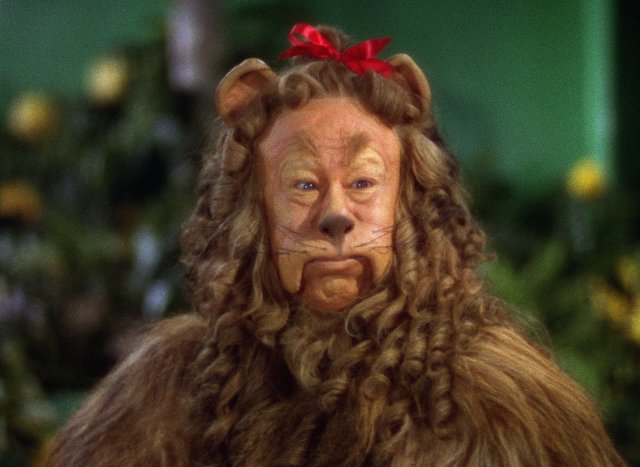
Perhaps the greatest gift I received from the end of the marriage was the gift of courage. It wasn’t unlike the journey the lion took to the great wizard of Oz. The cowardly one learned the wizard was an illusion but that courage could be built from within (with a little help from a liquid placebo). And that simply by tackling the journey (with the help of a few friends, of course), he found the bravery he always had and learned that it was characterized by action even in the face of fear.
Courage doesn’t mean you don’t hear fear. It means you don’t listen to everything it was to say.
Courage doesn’t mean that you’re immune to fear. It means it doesn’t paralyze you.
Courage doesn’t mean that you never doubt. It means that you trust yourself enough to make it through.
There were obviously many characteristics I considered critical in a second husband.
But one of the most important qualities I looked for was courage.
I needed to know that he would face any potential problems rather than hide.
I needed to know that he would speak the truth even if it was difficult.
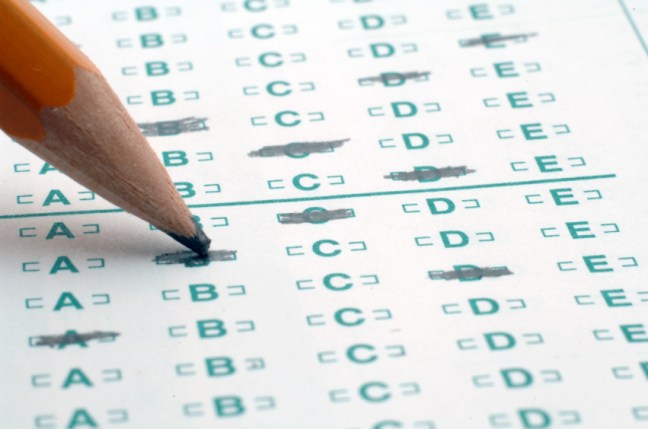
I have an image of myself as a good student, built up over a lifetime’s worth of data points. I generally do well at school, scoring at the top in my class and passing tests with near perfect scores. It’s not as good as it sounds. Yes, that ability makes school easy, but I don’t always do so well with the real life application where success is more about taking risks than memorizing facts. In other words, you want me on your team for Trivial Pursuit but you may not want me by your side if we have to build a survival shelter.
Regardless, I felt comfortable going into the final exam. I was consistently making high As on my practice tests and knew the material in the textbook. I was nervous, sure, but I just reminded myself of all of the times I was nervous before a test and walked out smiling.
I turned on my computer and my volunteer proctor opened the exam file for me. The first few questions were easy. They were either exactly the same as some of the course and test preparation material or closely related.
And then came number 7. A few short sentences that failed to trigger any recognition in my brain. I searched my memory files frantically, looking for any clues that could help me with this question. There were none.
By the end of the 150 question exam, I estimated that a full third of the questions were not addressed in the textbook or highlighted in the course materials. I was nervous.
Steeling myself, I clicked submit.
The little wheel seemed to turn endlessly. Finally,
“Congratulations. You passed.”
“Score: 77%”
My first thought? Relief. That hoop was successfully jumped.
My second thought? 77?? I haven’t scored that low on any exam since algebra II in 10th grade (yes, and now I teach math. I know!).
If that was the end of it, I would be okay. After all, in the real world, scores don’t matter. Just the end result.
But it’s not the end of it.
Now, I have to take the state exam.
Normally, I would just see it as another hoop.
But now my confidence is shaken. My internal narrative that paints myself as a good student and test taker is being questioned due to that single data point.
It’s interesting how much we struggle when our self-image is called into question. When I fell repeatedly while skiing this winter, it didn’t cause my confidence to stumble because I have never formed a picture of myself as a skier. Yet one metaphorical fall on a test, and everything is called into question.
The state exam is in three weeks. I borrowed an additional book to help me prepare. I have scheduled study times on certain days leading up to the exam. I have the website of a cram course cued in case of emergency. I’ve verified the suitability of my calculator and checked to see what forms of identification are required.
Everything is in place to make sure I know the material and can meet the testing requirements.
But I’m still shaken.To those around me, I’ve laughed it off. Pretended it didn’t bother me.
When we were house hunting last summer, Brock expressed his lifelong dream of converting a basement into a theater. I responded with my not-a-lifelong fear of basements.
As the house hunt became a home reality, this became a source of tension as he was responding with excitement about the proposed entertainment room and I was countering with trepidation.
That damned basement in my old life has almost a personified flavor of evil in my mind. It contained the molted skins of the man I loved as he morphed into some dark creature. It hid his secrets. It protected him as he carried out his nefarious deeds. It swallowed him for ever increasing hours as the marriage sped towards its inevitable and spectacular end. I was living atop a portal to hell.
And I was afraid that another basement might also serve as a conduit of corruption. That my new husband might also fall sway to whatever whispers arise from the blackness beyond the concrete walls. That he would be swallowed and return changed. That a new portal hell would be opened and new demons welcomed in.
But I was wrong.
Completely and spectacularly wrong.
He was largely on his own on this project due to my schedule and my general hesitancy about the undertaking.
And he has done a great job, turning a half-finished grubby former office into a slick and comfortable theater.
A theater for us.
For our friends.
It is not a place to hide.
It is a place to connect.
In fact, even with my stupidly early bedtimes, he rarely goes down there alone.
It wants to keep it special.
And it is.
I was wrong.
Very wrong.
And I couldn’t be happier.
The only demons in this space are imagined on the screen. And those can only hurt me if I allow them to.
One of the worst car accidents I’ve ever seen happened on black ice. It was several years ago, in front of the school where I used to work. It was a cold morning, well below freezing, but there had been no precipitation for days and so there was no expectation of ice. It turned out that an in ground sprinkler system at the front of a neighborhood had ruptured, spilling water out onto the road in the predawn hours. The water soon froze in the frigid air, becoming an unseen sheet of ice under the shadow of trees. The location was particularly treacherous, as it was not only on a hill, but also an area where people braked hard to turn into the school.
From my vantage point at a red light a block away, I saw one car after another cross the slick terrain, lose control and barrel into oncoming traffic. The engines were revving faster than reaction times so the ping-pong actions of the cars went through several iterations before traffic came to a standstill. Thankfully, on the morning in question, there were no serious injuries, yet the damage was severe. Dozens of cars were totaled. A power line was down. An overturned milk truck’s spilled contents added to the icy mess. And the road was blocked for hours.
Yet nobody involved left their house that morning afraid of the roads. No one took precautions for potential ice. It was business as usual. Until it wasn’t.
I just returned from a walk around my area of iced-locked Atlanta. The roads are still covered in 1/4″ thick sheets of glassy ice, their sides (and sometimes centers) littered with abandoned cars and even school buses. But there is some traffic moving today, the cars carefully maintaining a steady speed and avoiding sudden turns. The folks out today knew to be cautious, the ice is a known danger and they are implementing proper precautions. There are certainly accidents occurring, but few of the severity of the one I witnessed years ago.
Life’s challenges often have this distinction. Some are unanticipated and unforeseeable while others are more easily anticipated. We often berate ourselves when faced with a challenge we did not forecast. I know I did that with my divorce, wasted energy wishing that I had seen it coming so that I could prepare my bug-out bag.
But would it really have been better if I had anticipated it?
Sometimes, even when we know a challenge is coming, we can not prevent it or, like the politicians in Atlanta this week, we take a gamble and choose to not implement those preventative measures. Just the knowledge that my marriage was ending may not have been enough to change the outcome. Or, perhaps I would have gambled on things working out and chosen not to prepare.
Regardless, like the drivers on the roads today, I would have been scared, aware of the potential dangers around every bend. I would have been wary of every step, armed with the knowledge that each one taken could be one that sweeps out my life from under me. Hell, let’s be honest. If I had known that the end of the marriage was in sight, I probably would have been so scared that I would have been frozen in place. Iced in.
Black ice is treacherous because of its ability to hide. Yet its rarity means that we don’t walk around fearing its danger.
It’s funny. I used to view the tsunami nature of the end as one of the worst parts. Now? I’m thankful for it. It was a helluva wreck, but at least I wasn’t scared to drive. And even though the damages were great, there were no fatalities.
Thankful to be warm and home after an adventurous trek home from work yesterday that included a three hour drive followed by a three hour hike (and an awesome husband that met me halfway on my walk with hiking boots and hot coffee!). Many in the metro were not so lucky and spent the night in stranded cars, schools or in emergency shelters. Even though the surrounding cities screwed this up, the stories of the individuals stepping up to help others is amazing. Challenges are so much easier when we have help.
In residential real estate, the value of a property is often found through market comps, the comparison of the property in question to other, nearby residences that are similar. Of course, no property is identical to any other, so adjustments are made to the sales prices of the comps to arrive at a value for a given property. It’s as much art as science, learning the values of the various adjustments, adding here and subtracting there in order to create a level playing field.
I like this strategy – using comparisons yet also recognizing individual character and worth. In fact, it’s not a bad game plan in other areas as well, as I discovered this past week.
We just returned from our second (hopefully) annual ski trip. Last year, it was just Brock and I. This was perfect, as I was very nervous about tackling the sport. For some reason, going downhill is panic-inducing for me. Like, limbic system lockdown panic. This only happens when I am the one in control of steering and slowing – rollerblades, bikes, running and even driving. Roller coasters and sitting in a passenger seat on a fast descent are no problem – in fact, I love them.
A huge improvement over last year’s newborn giraffe posture! 🙂
It would be easiest for me to avoid those situations that require me to trust my ability to control my speed and direction. Easiest, but also limiting. And, if there is one takeaway lesson from my divorce, it is not let fear ever limit me again.
Last year’s trip was the first time I ever really tackled this fear of the downhill head-on. And it was quite a meeting. Seriously, check it out, if only to laugh at the pictures of me looking like a newborn giraffe attempting to take its first steps:)
This time was a little different. I knew a little more what to expect, which tempered some fear but also provided scaffolding for expectations, which I had avoided year one. Furthermore, we were not alone this time; we were joined by three friends, two who as accomplished skiers and one who was brand new to the sport.
On the first day, I went with Brock straight to the easiest green run that I had skied last year. I was nervous as the lift neared the top, wondering if the feeling of my skis on the hill would be familiar or if my body would remember how to move. It wasn’t bad. I bailed soon after my skis hit the snow, which I also did every time last year. Once I stood up and took a few deep breaths, I was ready to tackle the slope. I never fell, but I sat down (my reaction when panic set in either due to excessive speed or fear that I couldn’t steer around someone) several times. I went down that same slope several more times that afternoon, each run a bit better than the previous.
Yup, that is a hill.
But I still hadn’t mastered my nemesis. That run has a short, steeper portion about halfway down. It’s a bit tricky, not only due to the increased decline, but also due to the curve, steep, treed drop-off and the heaps of other beginners who didn’t make it down in one attempt. Each time, I would stop at the top of the hill and wait for a clear (or at least clearer) path. Each time, I would make it about halfway down the slope before panicking and bailing. As the attempts went on, I grew more and more frustrated with myself.
It didn’t help that this time, I was also comparing myself to another – the brand new skier in our group. By about run number three, he was able to make it down that entire green slope without falling. I saw him, another novice, as comparable to myself. So when I fell short, I felt defeated.
I carried that feeling into day two. That, plus a serious sleep shortage and a not-too-happy belly, led to a limited day. But it still had its bright spots.
In the morning, I again did “my” run, this time with one of our friends who is an excellent skier. He was trying to encourage me to give up on the snow plow method of braking (which is what I was taught the previous year) and instead use turns to control my speed. By the end of the run, I was starting to pick up his suggestions and become comfortable in their application.
Brock then joined me on my next run. I had two firsts – I made it off the lift without bailing and I made it down my nemesis without ever touching the ground (which my bruised butt appreciated!). Once I realized I made it down intact, I was distracted and fell soon after. I was surprised to feel tears on my cheeks as I stood up. Tears not from pain, but from the satisfaction of facing and conquering a fear. Not unlike the tears that fell during the marathon.
At that moment, it didn’t matter that there are many that could ski that hill backwards and blindfolded. It didn’t matter that our novice friend mastered faster than me. All that mattered was that I faced my fear, stayed with it and learned to trust my ability to make it through. I had been using comps to judge myself, but I had failed to make adjustments. Unlike our friend, I had some repair work to do before I was ready enough to gain confidence on the slopes. Once I allowed time for those restorations, I was right on track.
By midday, I had graduated to a more difficult and longer beginner’s run. I again made it off the lift (this time one with a VERY steep ramp at the offload) without bailing. And, although I fell several times, I handled each hill better than the last and allowed my speed to pick up more and more. At one point, alone on a lift, I thought of the trust fall activity where one person with eyes covered, falls backwards, counting on a partner to break the fall. Until that day, I hadn’t been letting myself fall. On that day, I learned that I could let go and trust myself to get back up.
By the third morning, I approached the slopes with confidence rather than trepidation. I made it through six beginner runs without falling or bailing (yes, including my nemesis!). My legs were giving out but I could feel that it was no longer as taxing on my mind. I was no longer facing a fear, the hills had become known. Maybe not allies yet, but no longer adversaries.
During the entire trip, Brock had been pushing me to try an intermediate blue slope. I kept pushing back, convinced I was not ready. I think I surprised him when I met him at the bottom of the slope and asked him to run a blue with me. I knew I was ready yet I also knew it would be a challenge. It didn’t let me down. Well, actually, I guess it did, as my flawless beginner runs gave way to multiple tumbles (including a spectacular face plant).
But you know what? I never panicked on that run. I never got frustrated. I didn’t compare myself to the other newbie who had been skiing blues for two days by that point. All I thought about was the progress that I had made.
Because regardless of the comparisons we make to others, we are all unique properties with our own areas of strength and weakness. Rather than trying to compare yourself to the others, work on your own renovations, making yourself the best you can.
As for me, I may never be the best skier around, but I am the best skier I can be. At least until next year, when I plan on mastering those intermediate slopes:)



 Lessons From the End of a Marriage