Why A Prenup May Increase the Chances of Divorce

We often make decisions based upon anticipated results.

And these decisions often have unintended consequences.

We often act to limit risk.

And sometimes these actions actually increase what we’re trying to avoid.

———-

As the awareness of the long-term impact of head injuries on mental and brain health has increased, there has been a corresponding increase in the amount of padding and protection surrounding the head of football players. On the surface, it makes sense.

Damage due to excessive forces on the skull that are transferred to the brain? Simply pad the skull and brain better so that the forces are transferred elsewhere and the damage is mitigated.

But that’s not what seems to be happening. Even as the equipment improves, the incidence and severity of head injuries in football remains high.

And some people are responding by calling for additional safety equipment.

But others are taking the opposite stance and advocating for the removal of the helmets, at least during practice.

They point to the disparity in head injuries between the NFL (where players are shielded behind lots of protection) and rugby (just as brutal yet with minimal protection). And it turns out that those vulnerable-seeming rugby players have fewer and less severe head injuries.

Because when we feel invulnerable, we change our behavior.

The NFL players, feeling safe and feeling no pain behind their layers of padding and shielding, show little hesitancy to lead with their heads. Over time, they develop a confidence in their helmets and no longer engage in instinctive self-protective behaviors meant to guard the vulnerable brain.

In contrast, the relatively exposed rugby players never feel safe. They never grow complacent upon their safety gear. When they use too much force, they feel it, getting the immediate feedback that tells them to let up or suffer the consequences. And they learn if they want to keep their head safe, they better keep it out of the way. Some studies are currently being carried out on HS football players in the U.S. and preliminary results are indicating that students that refrain from wearing helmets in practices suffer fewer and less severe head injuries in play.

This unanticipated change in behavior doesn’t only occur on the football field. As cars have become safer and more automated, people take more risks on the road because of a perceived sense of safety. The increased padding in running shoes encourages a new runner to tackle more miles than he or she is ready for as the discomfort to the feet is lessened. Even credit lines that promise no interest for a period of time encourage people to take more risks because the impact occurs at a later time.

Because when we feel invulnerable, we change our behavior.

———-

So what do padded helmets on football players, airbags in cars and credit card offers have to do with prenups and divorce?

A prenuptial agreement is essentially a piece of safety equipment secured to a marriage. It gives a sense of security. Of invulnerability.

And when people feel invulnerable, they change their behavior.

Risks that were once deemed too risky now seem perfectly acceptable.

And when we’re assured we’re safe, we no longer worry about protection. 

There is a benefit to feeling and fearing the pain of impact. To carefully weighing risks and rewards. And when that impact of an action is softened, the actions may only become even more intense.

In other words, if you believe that your prenup will protect you from the fallout of divorce, you may not act to protect the marriage from divorce.

By no means am I advocating that you refrain from seeking a prenuptial agreement.

Only that you realize its limitations.

And the potential unintended consequences.

Because even though it may help to protect your bank account from the impact of divorce, it cannot soften the other effects.

And they are often much more damaging in the long run.

The Proliferation of Narc Abuse

narc abuse

In some ways, I wish my divorce was happening today. All I would need to do is supply the word “narcissist” or “narcissist abuse” to my attorneys, my psychiatrist and pretty much anyone else I had to deal with and they would instantly gain insight into the insane world I was attempting to navigate in order to sever ties with my ex.

The use of the label, “narcissist,” in regard to my ex-husband would alert others to following:

-He will not behave according to the standard laws of human decency and interaction. He will lie, project and manipulate anyone who stands in the way of what he wants.

-He will be very charming in person. His intellect will shine through and he will display his expertise at making others feel good about themselves.

-He will make promises. They mean nothing.

-He will concoct elaborate stories that shift the onus of the financial and relationship situation onto me. They will seem plausible. Because he’s good. Very good.

-He will use others for his own gain and then discard them. This extends to his lawyer. Even before payment has been made.

-He was gaslighting me for many years. And it takes time for clarity to return.

But at the time of my divorce in early 2010, the term “narcissist” had not yet left the DSM and entered the common vernacular. There were no templates available for the lawyers and the judge to understand how to handle someone that will manipulate the rules of the game even as they pretend to play. There was precedence for the judge to believe that he would simply ignore her orders, continuing to march to the beat of his own drum. And there was no help for me to start to understand the covert abuse I endured; I still believed that abuse always came with obvious cruelty.

If my divorce happened today, I believe that it would be handled differently. The attorneys would be a bit more aggressive in their demands and less willing to delay based on his excuses. His lawyer would likely have demanded payment up front, not trusting that “the check is in the mail.” The judge may have changed the verbiage in the decree, making the consequences for noncompliance more severe. And I may have received more understanding for the Alice-In-Wonderland-effect of prolonged gaslighting.

Because the proliferation of a label helps to increase public consciousness and understanding of an issue. The more we talk about it, the more we see the common threads and realize we are not alone. The more stories we hear, the more insight we gain into our own experiences as the collective wisdom is cultivated and disseminated.

The popularity of a label can certainly benefit those who fall under its umbrella.

But there is another side to a label becoming in-vogue.

A darker side.

———-

I first went gluten free in 2007 after suffering from gastrointestinal symptoms for several months after recovering from food poisoning. At that point, I had only a vague notion of what gluten was and I had never heard of celiac disease or gluten intolerance.

I only knew that I was hurting. (Along with other things, of which I’ll spare you the details).

Thinking that I may have IBS, I looked online to find the recommended diet and I stumbled across a chart which listed the symptoms of IBS (I had two) and the symptoms of gluten intolerance (I had them all). I immediately pared down my diet to fruits, vegetables and dairy.

And within three days, my bloating and pain were gone.

Each day after the first two weeks, I reintroduced a food. During week four, I got sick again. I looked at the label of the tea I consumed that morning. Third ingredient? Barley. I was further convinced when the ingestion of my multi-vitamin (gluten? really?) brought me back to misery.

In those days, gluten free was anything but trendy. It was unheard of. I had only a small selection of GF products available at the health food store or via mail order that were priced insanely high and tasted insanely bad. I had to forgo eating anything of substance in restaurants and prepare my own food at home using naturally gluten free ingredients.

And in some ways, I wish that my gluten sensitivity had manifested later in life. Because now I can obtain GF pizza, cupcakes and even grilled cheese all within a short drive of my home. It’s a world I dreamed of back in 2007.

But even though I enjoy my GF goodies, it’s not all good.

Because with the popularity of the label comes a cheapening. A watering down.

It’s assumed that I avoid gluten because it’s the “in thing.”

That I wanted to be part of the crowd.

When the reality is that I could not care less about the crowd. I’m doing what I need to for my own well-being.

———-

The increase of the use of the term “narcissist” is much the same. It’s a helpful label for those who are attempting to disentangle their lives from a manipulative and deceptive person. It has brought needed awareness to the fact that some people won’t play by society’s rules. It’s a reminder that sometimes wolves walk around in sheep’s clothing and that not everybody who appears trustworthy is. And, most importantly in my view, it has brought awareness to the fact that abuse can occur quietly and softly behind the scenes.

But as the label is applied generously to everybody who acts selfishly, there is a cheapening of the term. A watering down.

It seems as though everyone’s ex is a narcissist.

At which point, the term becomes useless.

Labels are designed to be a shorthand for understanding. A starting point for awareness. Not an endpoint for assumptions. Or a focal point for your life.

If you identify your ex with the characteristics of a narcissist, then use that collective wisdom to help you understand his or her motivations and actions. Listen to the stories of others and find comfort in the fact that you are not alone. Allow the characteristics of a narcissist to help you separate what was done to you to what happened because of you. Let the label work for you.

And then let it go.

Because at the end of the day, it doesn’t matter if your ex is a narcissist. (And, if they are, the fact that you are keeping your attention on them simply feeds their desires.)

What matters is what you do now.

A Day-By-Day Survival Guide to Get You Through the First Month of an Unwanted Divorce, Part 3

Survival Guide for Days 1-10

Survival Guide for Days 11-20

Day Twenty-One

Divorce, especially if it involved infidelity or abandonment, does quite a number on your confidence. It’s so easy to internalize any messages of rejection.

Today, commit to trying any one of these 21 ideas to help you boost your confidence after divorce.

And, if you’re starting to doubt that you’re strong enough to handle all that is coming your way, read this.

You’re awesome. Never let somebody tell you otherwise.

courage

Day Twenty-Two

Sometimes you simply can’t be the bigger person. Sometimes you just have to let it all out – complaints, frustrations, snark and all. Some of this is purgative and some is ego-saving. And the rest is just the temper tantrum of a hurting heart.

It’s okay to vent.

Be careful who receives your unloading and don’t abuse their willingness to listen. And when you have their ear, don’t hold back.

Day Twenty-Three

It’s easy to become overwhelmed with the emotional impact of divorce and neglect the practical matters. Set aside an hour to create a short-term budget based upon your current and foreseeable situation. It doesn’t need to be perfect and don’t expect it to be permanent. It’s just to ensure that you have an idea of what is coming in and what is going out.

Day Twenty-Four

Take a baby step towards better.

The first month is spent dealing, not healing. Yet even though you’re having to expend your energy on the inevitable crises and changes and even though the tears are still a daily companion, you can start to take the first, small steps to your new life by memory layering.

Think of one event or location that reminds you of your why-aren’t-they-ex-yet?. Take a deep breath and visit that place with somebody(ies) else. Memories of your ex will surface. Let them. But also strive to intentionally start to create some new memories associated with that place. As the layers build over time, the memories of the ex will slowly be replaced with newer recollections.

suffering

Day Twenty-Five

Scream.

Yell.

It’s not fair.

You don’t deserve this.

You didn’t plan for this.

Divorce sucks.

I’m sorry.

Day Twenty-Six

Hope is powerful. If you know how to use it.

Find a physical representation of what you want your new life to be like. Your seed. You don’t have to plant it yet. Or water it.

Just know that it is there when you are ready.

The Gift

Day Twenty-Seven

Start to identify your purpose. Your identity.

You were more than your marriage and you are more than your divorce.

Find yourself again.

Begin to craft your life mission statement.

Don’t stress – it’s just a rough draft.

In fact, the editing process may never end. And that’s okay.

Day Twenty-Eight

Write your goals for the next year. Let some be small and easily attainable. Allow others to be dreams that seem to grand to achieve. Don’t censor yourself; let the ideas flow.

Remember that gratitude list? Post your goals next to it.

It’s a reminder to be okay with where you are at the same time to want to be better tomorrow than today.

IMG_6052

Day Twenty-Nine

Celebrate your progress. What have you accomplished in the past four weeks that you thought you couldn’t? In what way(s) have you progressed? It’s okay if it’s small – a full night’s rest, a day at work without tears. Every improvement is a victory. Treat it as such.

If you have been journaling, this is a great time to look back at your first entries to see your progress in black and white. You may find that you don’t even recognize that earlier version anymore.

Day Thirty

One month. You’ve made it.

You’re further along than you were 30 days ago.

And yet you’re still at the beginning.

Divorce is a marathon. Not a sprint. And you have to learn how to run the mile you’re in.

Every person is different. Every divorce is different.

And every timeline to healing is different. But here’s an idea of what you may expect.

And even though it doesn’t necessarily get easier.

You get stronger.

And one day, you’ll realize that your divorce has made you even better than before.

story

A Day-By-Day Survival Guide to Get You Through the First Month of an Unwanted Divorce, Part 2

Click here to read how to get through days 1-10!

Day Eleven

Breathe. In times of trauma and transition, it’s all-too-easy to limit the breath. Set aside some time, sit or lie down in a safe and comfortable space and invite the breath in. Put one hand on your belly and one hand on your chest and feel them expand.

BreatheYou are learning to breathe again.

Day Twelve

Watch your words.

Be careful what you say to others. Once it is uttered, it cannot be unsaid. Speak what you feel. Give voice to your fears. Try not to lash out in blame.

Be mindful of what you say to yourself. The words we say to others have influence. The words we say to ourselves have power. To thine own self be kind.

And when you slip up (and you WILL slip up), be gentle with yourself. And vow to keep working at getting better.

Day Thirteen

Take note of your support system. Who and what do you have in place to help you through the next several months? Are there any gaps? Brainstorm how to fill them in.

Compose a message to your primary supporters. Let them know specifically what they can do to help and also communicate anything you don’t want from them.

Day Fourteen

Get outside. You’ve spent two weeks feeling like your world is over. Get into the environment (I don’t care if it’s too hot/ too cold/ too wet – just do it!) and observe the natural cycles and the grand scale of life.

Your life isn’t over. It’s a season change. A painful and sudden one. But a change, not an end.

IMG_5948

Day Fifteen

Give yourself permission to grieve. You may feel as though you don’t have the right to mourn because everyone involved is still alive. You may feel as though you have not earned the right to be sad because you were somehow not enough. You may feel pressure and blame from others for “failing” at marriage.

That’s all bullocks.

Divorce is a loss not only of the past but of the imagined future. And it hurts like hell.

Life Sucks

Day Sixteen

Lose yourself. Allow yourself to be fully consumed by something – a book, a movie, a Netflix binge, a birthday party, a day at the zoo with the kids.

For a few hours, set aside reality and just be in the moment. When the intrusive thoughts come, gently push them away with a promise to attend to them later. If you’re afraid they’ll ruin the day, set aside some time before the escape to cry yourself dry. I promise, it helps.

Day Seventeen

Tackle the task you’ve been putting off. Maybe this is starting to pack some items. Maybe it’s telling the kids. Or maybe it’s some paperwork the lawyer has asked you to assemble.

Divorce is full of unsavory assignments. And as with anything, procrastination only prolongs the dread. Striking that one thing off you to-do list will help you feel a little lighter. A little more hopeful.

Day Eighteen

Move. Whether you’re vibrating with anxious energy or you feel drained of all vitality, exercise will help you feel better. This doesn’t need to be anything fancy. You’re not looking to win any awards or even to commit to a program. Just move.

Go for a walk, take a yoga or Zumba class, or even just spend some intentional time stretching your body. When we’re stressed, the mind and the body disconnect. Make the intention of the day to begin to reconnect your mind and your body.

presentlife

Day Nineteen

You don’t have to wait until you are healed to begin living. There are smiles to be found amongst the tears.

So today, find your smile again. You may have to hunt for it. The effort is worth it.

Day Twenty

You have lost so much. You are hurting and scared. Lost and lonely.

But that is not all you are and all you have.

Write a gratitude list (nothing radical yet, that comes much later), enumerating all that you currently have in your life to be thankful for.

Post the list where you see every morning. And read it as you begin each day.

There is beauty still in your life. Embrace it.

okay

Click here for days 21-30!

A Day-By-Day Survival Guide to Get You Through the First Month of an Unwanted Divorce, Part 1

survival guide

Imagine a world where whenever you find yourself in over your head, an emergency survival guide for your immediate situation would suddenly appear. It would be succinct and on-point, telling you exactly what you need to know to make it through to the next day and only what you need to know to make it to the next day. The guide would be responsive, changing suggestions and recommendations based upon your current circumstances.

This is the day-by-day guide I wish I had to get me through the first month of a sudden and unwanted divorce.

Day One

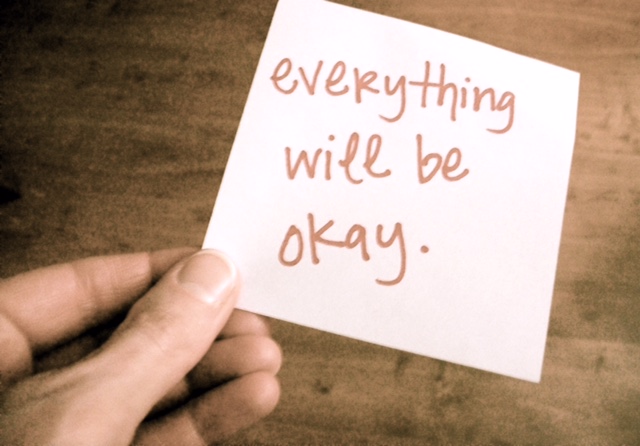
Change the wallpaper on your phone and computer to the following message (or something similar):

IMG_6042

You may also want to post it around your house. You don’t have to believe it yet. Just post it.

And make sure you can see it when you start calling attorneys.

Day Two

Tell somebody.

Maybe you feel ashamed or guilty. Maybe you want to protect those around you from the situation. Maybe you’re afraid of appearing weak or vulnerable.

Get over it.

You can’t do this alone. Tell a trusted friend or family member what is happening. The trusted part is important. You need an ally, not a saboteur.

Day Three

Find your cry space. Maybe it’s your car in an empty parking lot, the sanctuary in the church across from your office or in the pool, where the water washes the tears away. It only needs to be a place where you feel safe letting down the walls.

Consider journaling. The paper absorbs the tears.

12 Reasons to Journal After Your Divorce

Day Four

Don’t try to pretend that everything is normal. It’s not. Take some time off work. Call in a family member to help care for the children. Let the laundry slide and allow somebody else to head the upcoming presentation.

Allow yourself to not live up to your everyday expectations of yourself. This isn’t everyday.

And beating yourself up won’t help you get any better. So be kind to yourself instead.

7 Areas to Downsize During Divorce

Day Five

Develop your elevator speech. At this point, people around you are going to sense that something is going on, even if they do not know the particulars. And perhaps you don’t want them to know the particulars. Or, even if you’re okay sharing, you’re afraid that the floodgates may open at the wrong time.

Write a one-sentence explanation to give to people. Keep it simple and rehearse it until you can say it without tears or elaboration.

Feel free to steal the one I used after a friend gave it to me – “I’m in the middle of a major life renovation.”

Day Six

Enlist a publicity specialist. Not a professional one, unless you happen to be famous enough that your divorce is in the tabloids, but an informal one. The elevator speech is useful for relative strangers or people on the outside of your circle, but those closer to you will need more information. And if you don’t act proactively, they will either push you to talk before you’re ready or the rumor mill will be activated.

So enlist somebody to deliver the news to those who need to be in the know. Tell them what information you want delivered and what you want to keep private for now.

Day Seven

Check your sleep. At this point, the initial shock has faded into a zombie-like approach to daily life. You are preparing for a marathon, not a sprint. And you need to be rested. If you’re not sleeping, get help. You may need medication. It’s okay. There’s no shame in asking for help.

accept help

Sleeping too much is also a sign you may need help. If you’re struggling to simply get out of bed after the first week, it’s time to check in with a doctor or therapist. It’s okay. There’s no shame in asking for help.

Day Eight

Complete a social media and phone purge. Unfriend those who don’t bring you up. Or maybe decide to take a break from social media entirely for a time. Clean out your phone of photos you don’t want to stumble across or texts that bring tears. You don’t have to delete anything right now, just perform the digital equivalent of taking the photos off the wall.

One suggestion I read for those of you that have children – change your soon-to-be-ex’s name on your phone to “co parent.” It’s a powerful reminder of what is most important in a divorce with children involved.

And while you’re at your purge, examine your physical space as well. Sleeping alone but your sheets still carry the scent of the-one-who-is-now-gone? Wash them. A special gift taunting you from its resting spot? Put it away for now. Your brain will bring up enough painful memories on its own. No reason to help it along.

Day Nine

Nurture yourself today. Get a massage. Go to a nice restaurant and savor the service. Sleep in. Whatever sends the message to you that you are valuable and special. Do it. Feel it.

Don’t let one person decide your worth.

Day Ten

Buy a belt.

I bet by now your weight is starting to change. Either you respond to stress by refusing to eat or you use food to soothe the void in your heart. Either way, after several days, the effects will show. Don’t worry about them yet. Just make sure that your pants aren’t falling off.

Days 11-20 are in in Part Two of the Day-By-Day Survival Guide.