9 Reasons to Jump Back Into Dating After Divorce (And 9 Reasons to Take it Slow)

“Are you dating yet? I might know someone…” asks your coworker as you share the elevator on Monday morning.

“You’re dating already! Are you sure you’re ready?” questions your friend after hearing your breathless tale of the other night.

“You know,” announces your mom on your weekly phone call, “It’s not too late for you to find someone new. You’ve got to get back out there.”

“You don’t want to rush into anything,” cautions your therapist when you mention that you signed up for a dating site.

The messages we get about when to start dating again after divorce are confusing and often conflicting. And that friction doesn’t only come from outside voices, it also comes from within as we question ourselves and our motivations.

The decision about when to start dating again is a personal one. You can listen to your coworkers, your friends, your family and your professional support system, but ultimately the choice is yours to make.

Here’s what you need to consider before making that choice.

A Vegetarian and a Meat-Eater Walk Into a Coffee Shop

It’s quite comical in retrospect.

On our first date, my now-husband expressed some hesitancy and concern about me.

And not because I was yet to be legally divorced.

Or because I was engaged in a confusing and overwhelming legal battle with a criminal ex.

Or even (okay, especially) because I was still an emotional wreck trying to learn to walk again on my own.

No, none of that (at least from what was divulged that afternoon over coffee) scared him.

What made him dubious was an off-handed comment I made when he tried to get me to order food.

“No thanks,” I said. “I’m kind of a pain to feed since I’m vegetarian and gluten and I don’t get along. Don’t worry about me,” I said with a smile as I accepted my welcomed coffee.

It was only years later that I learned that he was concerned that our dietary differences, specifically in regards to my avoidance of meat,  would be insurmountable. I was surprised, to say the least. And relieved that he took the leap regardless and that we’ve negotiated a respectful relationship around food.

I love to see the ecstasy on his face when he enjoys a good crab cake more that I dislike the smell. In fact, I even made them from scratch for him as a birthday present. With the house wide open. In the middle of an early freeze. He’s understanding of my inability to buy raw meat and courteous to air out the house when he cooks it. When we are traveling, I frequently offer to forgo restaurants that work better for me so that he can partake of the regional carnivorous delights. Besides, salads only have so much variation:)

Last week, I realized how far he’s come from being afraid of our differing diets. We bought a grill – our first together – both for ourselves and for a party we just had yesterday. When we ended up selecting one too small for a “veggie only” patch of real estate, he immediately went over to the accessory section to find a dish that can be placed on the grill to keep any veggies (or tofu!) safe from any offending meat grease. When I labeled one of two spatulas “VEG,” he commented that it was a great idea. And then last night, he suggested I hide my spatula to keep it from inadvertantly being chicken-christened by an uninformed guest.

He doesn’t understand my revulsion around meat, but yet he respects it. I don’t understand his desire to eat flesh, yet I honor it. We both come from a place that the other person is more important than what is on their plate. After all, it’s not really the differences that divide a couple; it’s the reaction to them.

Little did he know years ago that one day he would actually be protective of my eating habits and that he would still be putting up with some of my occassional emotional wreckedness.

It reminds me of that quote often misattributed to Twain –

I’ve had a lot of worries in my life. Most of which never happened.

How true.


Fixer-Upper Relationships – What You Need to Know!

What area do you want to live?

How much do you want to spend?

And how much work are you willing to do?

Those are usually the first three questions a real estate agent asks a person in the market for a new house. And perhaps the response to the last is the most telling.

Some people look at house that has some functional deficits or is in need of a complete overhaul as chance to create what they what. A challenge, yes. But also an opportunity.

Others want to move into a ready-made house. Open door, insert family. Perhaps because of limitations of time, money or skill, they are reticent to consider a property in need of renovation to bring it up to their expectations.

Those in the second group usually get their wish at first. They find something brand new and stylish or luck into finding and falling in love with the renovations that previous tenants have undertaken.They quickly add the finishing touches that make the house a home and settle in. And for a time, all is well.

It happens gradually. The AC goes on the fritz. The paint colors no longer inspire. The wood floors start to show some wear and practically beg to be refinished. A passing storm pummels the roof, leaving tears in the once tightly-locked shingles. Or maybe it’s less the structure and more the space. That inconsequential guest bathroom is no longer large enough once the kids arrive. You find yourself cursing that awkward corner in the kitchen.

The house that was once move-in ready has started to demand attention.

To need fixing.

For those that truly fear repair, they may use this as an opportunity to leave the old house and find a new and perfect one.

For those that fear change, they may simply turn a blind eye to the house and ignore its needs (as well as their own).

And the others? They begin to see that at some point and in some ways, every house is a fixer-upper. And that rather than trying to find the perfect house, it’s more about finding the house whose quirks are permissible and putting in some elbow grease to make the rest shine.

Those same contrasting viewpoints follow into the dating world.

—–

Some people are looking for that perfect person with an expectation that if it’s right, it will just work. No effort required. Any sign of cracks or peeling paint is seen as a problem and may result in a new search or a blind eye turned.

I had that view the first time around. And it made any discord or disagreement a very scary thing. A potentially fatal flaw in the foundation. While dating, I first looked for move-in ready men, those that seemed to have all their cobwebs dusted and scuff marks polished.

They never lasted.

What I only realized later is that every single relationship falls into the fixer-upper category.

That’s right. There is no such thing as a move-in ready relationship.

Because even those people that appear perfect on the surface have flaws just below. Every person has areas where you will be easily compatible and those where you will have to figure some things out. Just like how you figured out how to finally utilize that awkward corner in the kitchen. Every person brings their own childhood issues to the table and sometimes they will come to the forefront.

We are all fixer-uppers.

We are always fixer-uppers.

That’s not a flaw; it’s an opportunity.

And the opportunities are multiplied when those two fixer-uppers move in together.

Every relationship will face wear and tear and require some elbow grease. Every partnership will be tested and may require occasional reinforcement. There will be times when you feel hemmed in by the walls and other times when they feel comfortable and cozy and welcoming.

It’s about choosing the one whose flaws you can live with and learning how to make the rest shine. It’s about going in with realistic expectations that everything changes over time. It’s about maintaining perspective during those stints when everything seems to be breaking down and expressing appreciation when it goes well. It’s about learning together, trying and trying something new when that doesn’t work.  It’s about learning to tell the difference between do-it-yourself repairs, those that require a professional and those that signal that it should be condemned.

And it’s about choosing every day to put in the effort. To build. And rebuild.


Understanding This Strange Truth About Rejection Lessens Its Sting

I am a complete failure when it comes to softball.

As a kid, whenever I was forced into playing, I moved my (inevitable) outfielder position to inside the tree line that surrounded the field. I figured this way I was safe from being hit from any rocketed balls and my inability to cover the territory would be obvious to the other outfielders so that they could strategize how to adjust for my ineptitude.

IMG_4941

And playing defense was actually my stronger suit. There were a few ground balls that I was able to deliver to a base. Always too late. But better late than never, right?

At bat, I have never ever even hit the ball. No balls. No fouls. No contact.

Like I said, a complete and utter failure.

And that never bothered me. Unlike academics, softball was never something I cared about or wanted to be good at. It just wasn’t for me and that was okay.

IMG_4938

Except when it meant I was rejected.

Every time the team-picking commenced, I felt discarded as my name was inevitably the last one spoken. I didn’t want my name called yet at the same time, the fact that the team didn’t want to call my name had an edge to it.

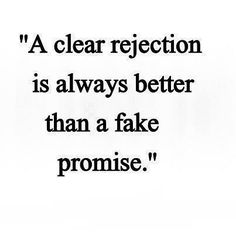
Because here’s the strange truth about rejection – It stings even when we’re turned down for something we don’t want.

IMG_4937

Think about that for a moment. Part of the pain of rejection comes from a general desire to be desired and a need to be the one to control the outcome.

I don’t really want it but I want to be the one to make the decision not to have it.

Just because rejection hurts, does not mean that you’re being turned away from something you wanted. We confuse that sometimes, linking the pain to the loss and assuming that the loss is the sole cause of the pain.

IMG_4934

My classmates were thinking rationally when picking teams, calling names based upon a mutually beneficial relationship. When I was feeling rejected, I was responding emotionally, allowing my feelings to assign more importance to the rebuffing than it deserved.

Sometimes rejection is simply a sign that it wasn’t the right fit. And the other person has reached that awareness before you.

IMG_4933

That’s how I now see the end of my first marriage. It was actually something that was no longer good for either one of us. I just didn’t know it yet.

The rejection hurt like hell (especially with the manner that it was delivered – like a baseball torpedoed to the heart), but it was ultimately a gift.

“You’ll be happier,” he typed in the letter that was left behind, “You’ll bounce back and live a happier and more honest life than I could ever give you.”

And ultimately, he was right. Not so much about the bouncing – that was more of a long, hard climb up a muddy slope – but about the happier.

IMG_4942


From Divorce to Happiness: March Reading List

Spring is finally here in the south. The flowers are blooming (yea!) and the pollen is coating (yuck!). Highs in the 80s are followed by frost warnings as a reminder that no transition is ever smooth.

The following articles have graced my feed recently and they all worthy of reading and sharing. Enjoy!

How Divorce Exacerbates the Retirement Process

This is a sobering account of the impact that divorce (especially later in life) has on retirement (especially for women). It makes me very grateful that I had my own pension and makes me very sad for people who weren’t as fortunate. Check it out here.

Divorce Is a Good Thing

Okay, so I can’t say that I see divorce as a good thing. But sometimes it is a necessary thing, the best answer to a tough situation. This piece addresses the increasing stigma and judgment about divorce and how that shaming only serves to hurt those who are already hurt. Read it here.

Are You Falling For the Same Type of Mate You Gladly Left Behind?

It’s easier than you think. This article, written by an attorney, presents five warning signs that your selection process may be setting you up for another divorce. Read it with an open mind. You may be surprised at what you’re unintentionally drawn towards. See the five danger signs here.

How to Be Happy: 5 Secrets Backed By Research

Because, after all, isn’t happiness what we all want? 🙂 See how to get it here.