How to Remove the Emotion When Dealing With a Difficult Ex

Some people end up friends with their exes.

Some people are able to successfully navigate their way into a companionate coparenting or business relationship with their spouse.

And others have an ex from you-know-where that continues to cause pain and wreak havoc long after the divorce.

Sometimes you can go no-contact and excise the malignancy.

But what can you do if you can’t remove your ex from your life but you still want to remove the emotions from the interactions? You may be stuck with them, but you don’t have to be stuck with how they make you feel.  Here are 11 ways that you can find emotional distance from a difficult ex.


(function (v,i) {
var scp = v.createElement(“script”),
config = {
ChannelID: ’59c4d02d28a06117d405b228′,
AdUnitType: ‘2’,
PublisherID: ‘254863889856617’,
PlacementID: ‘pltcqFJsrTEyaQkNyOJ’,
DivID: ”,
IAB_Category: ‘IAB14-2’,
Keywords: ‘divorce’,
Language: ‘en-us’,
BG_Color: ”,
Text_Color: ”,
Font: ”,
FontSize: ”,
};
scp.src=’https://s.vi-serve.com/tagLoader.js’;
scp.type = “text/javascript”;
scp.onload = function() {
i[btoa(‘video intelligence start’)].init(config);
};
(v.getElementsByTagName(‘head’)[0] || v.documentElement.appendChild(v.createElement(‘head’))).appendChild(scp);
})(document, window);


How to Take the Emotion Out of Dealing With a Difficult Ex


Even though my ex husband left my life, he left his impact behind in the form of tens of thousands of dollars of debt that fell on me to repay. Every month when I had to make those payments, I felt like all of the emotional progress I had made was washed away. I would grow angry, fearful and despondent all over again as I was forced to face the ugly reality. It wasn’t physical contact with him, but it was a monthly appointment with his presence that I was required to keep.

It’s one of the more common dilemmas faced by my coaching clients: “I’m doing great and then I have to see my ex and I feel like I’m back to square one.” Some are like me and have been left cleaning up the mess their exes left behind. They have to find a way to balance their responsibilities with their emotional wellbeing. For others, they have children and regular contact is required for the sake of establishing some sort of co-parenting relationship. So for them, the question becomes one of maintaining the children’s relationship with the other parent without sacrificing yourself in the process.


Rename and Reframe

When you see your ex, your brain floods with memories of who they were to you. Perhaps you remember the halcyon early days or the pain you felt when you discovered that they had been unfaithful. You’re viewing them through the lens of a spouse, a partner, and remembering the ways that they failed you in that role.

Those memories carry a powerful emotional punch. A punch that leaves you winded and spinning. So take a step back. That person on your doorstep is no longer the one who held you and then hurt you; they are simply your children’s other parent.  You can even label them this way in your phone’s contact list.


Pay Attention to Your Physical Sensations

Does your breath become more rapid and shallow when you hear your ex’s car pull into the driveway? Maybe you can feel the prickle of rage run down your back when you see their name show up on your phone. For me, any reminder of the financial mess caused a physical sensation of nausea and panic.

Simply by being attuned to these sensations helps to keep them from running amok. Be aware of how your body responds even if you feel like you can’t alter it at this point. Label the sensations with non-judgment – “Oh, my hands are sweaty and trembling.”


Ask Yourself, “Why Does This Still Bother Me?”

Name your feelings and trace their roots. You are no longer married to this person, so why are their words and behaviors still able to trigger you? You may be dealing with some unresolved pain from the divorce. Or maybe this activated some long-buried childhood wound. And sometimes the response is merely one of habit, reacting in the way to which you have become accustomed.

Regardless of the reasons, one of the best ways to deactivate a trigger is to dig into it to remove its power source. Spend some time with a therapist, your journal or a trusted companion and explore why you’re still responding so strongly.


Bookend the Contact With Positive Activity

Contact with the ex has the potential to ruin several days if you allow it. There’s the building anxiety leading up to the contact, the actual confrontation and then the recovery period.

In order to limit the effects to the actual contact, bookend the encounter with positive and engrossing activity to help distract you before and shift you out after. Limit the amount of time and energy available for anxiety and rumination.


Practice Mindfulness

Begin some sort of mindfulness training to help you find your inner calm regardless of what is happening in your world. Meditation often talks about learning to view the storm through the window instead of being in the storm. You cannot control the rain, but you can learn to find some distance from its impact.

Mindfulness is also powerful because it trains you to accept what you cannot control and teaches you how to have mastery over your breath and to some extent, your thoughts.


Rehearse Your Responses

If your ex has a tendency to push your buttons in search of a response, take some time to rehearse what you are going to say ahead of time. Practice this with somebody else or in front of a mirror. Repeat it until it becomes rote, devoid of emotion.

You cannot keep them from poking at you, but you can refuse to engage. Having a pat, non-emotional response is a great first step.


Don’t Be Their “Person”

Some exes still look to their former spouses to have their emotional needs met. I even know of people who turn to their ex partner when they are having difficulties with the person they left the marriage for! It can be difficult after divorce to transition into the new, more distant, roles after years of being a team.

If your former spouse is turning to you for emotional support and advice, inform them that you cannot fulfill that role anymore. It is no longer your responsibility to be their shoulder to cry on or their sympathetic ear.


Temporary Outsourcing

There are times when any contact is simply too painful to contemplate. Be creative – are you able to outsource any of this to automation or to a third party? Be aware that this approach is a bandaid, a temporary breather so that you have the time and space needed to create the necessary emotional distance.


Don’t Take Their Behavior Personally 

Whether your ex is a malignant narcissist seeking their own gains without consideration or a lost and wounded soul who can’t seem to get themselves together, their actions say way more about them then they indicate about you. So don’t take their words or behaviors personally.

If they are generally a bad person, remind yourself that this is simply their approach to everyone. If they are struggling, find a place of detached empathy for them and seek to understand the motivations behind their words or actions.


Gratitude 

This was my greatest tool in the years I was a prisoner to the debt my ex left behind. After every check written, every bill paid, every debt collector spoken to, I would add an item to a list of something that I was grateful for that I would not have had without the divorce.

It’s easy to focus solely on the bad in the situation, to allow the negativity to flood out your senses. By taking the time to force yourself to list the positive effects, you’re expanding your perspective and training your brain to look for the sun behind the clouds.


Find Your Power

In high school, I picked up the sport of fencing. At the beginning, I excelled in the drills but fell apart in the bouts when my opponents actually had the audacity to attack me.

“You know what they’re going to do,” my coach hollered at me one day from the sideline, “So why do keep reacting the same way that allows them to score a point?”

And he was right. I knew the moves my opponent was going to attempt. I had no control over their attacks. But I could lunge out of the path of their blade or parry differently so that they lost their opportunity.

It changed my view of the bouts. I was no longer focused on what my opponent was going to do to me. Instead, I learned and practiced how to responds differently so that their attacks landed less frequently and with less force.

One of the hardest parts of divorce is the overwhelming feeling of powerlessness that comes with it. And when you’re allowing your ex to dictate your moods and responses, you’re giving your power away.

Take back your power. Take back your life.


How to Remove the Emotion When Dealing With a Difficult Ex

Some people end up friends with their exes.

Some people are able to successfully navigate their way into a companionate coparenting or business relationship with their spouse.

And others have an ex from you-know-where that continues to cause pain and wreak havoc long after the divorce.

Sometimes you can go no-contact and excise the malignancy.

But what can you do if you can’t remove your ex from your life but you still want to remove the emotions from the interactions? You may be stuck with them, but you don’t have to be stuck with how they make you feel.  Here are 11 ways that you can find emotional distance from a difficult ex.

Reframing Fair

Life’s not fair.

You probably first heard those words back in elementary school when a classmate’s misdeeds resulted in mass discipline or some slight against you went unpunished. If you’re anything like me, those words only served to salt the wound, as the brain kicked up reasons that this was different. That this time, the scales of justice must find balance.

As we grow, we read and watch stories that have an inherent fairness to them, the good guy usually gets the girl and the bad guy has to face the consequences of his actions. There is certainly suffering, but agony is tempered with some sort of retribution. We find comfort in that cause and effect. It seems right, somehow, that if you do good, you get good and if you propagate bad, it boomerangs as well.

As we grow, we also get better at weaving stories, tales told with ourselves as the good guy at the center. We use our inherent sense of fairness and the stories we learn from books and movies to craft these narratives. We strive to find greater purpose and balance, even if we have to build it from scratch. We have learned that the bad guy will be punished before the end. And so we seek that justice for the wrongs in our own lives before we are ready to turn the page on that chapter.

But those are just stories, narratives with black and white, good and bad. We’re not that simple and life is not that fair.

And sometimes fair doesn’t exist at all.

I think one of the reasons that divorce is so devastating is that it destroys our narrative of ourselves. We, the good guy in the story of course, get the girl. But then at some point, the girl wasn’t as expected and, in some cases, turns out to be the bad guy, pulling off the mask like a character in Scooby Doo. Our brains stutter to correct this wrong; they want justice for the perceived misdeeds, both to reestablish fair and the secure one’s own position in the good guy role.

So, we turn to the divorce courts with much the same intent as a child tattling on a classmate that threw a surreptitious blow.

But the divorce courts aren’t set up to punish individual misdeeds. They punish the entire class.

I, like many others, approached court looking for justice. I carefully spelled out his wrongdoings. I gathered evidence that secured my role as the good guy and painted him as the bad. I was hurt and anger and confused by his choices. They were painful. And I wanted him punished.

And the system was only too happy to play along.

Requests for information traveled back and forth through emails. Thick stacks of legal papers filled my mailbox, seemingly alternating with thinner, but more pointed envelopes containing bills for legal fees. Every step of the process felt like wading through chest-deep mud. The only lifeline keeping me from sinking was the vision of the court ordered consequences.

The system also used fear as a trap. In my case, it was fear for my financial future. I had understood that I needed this process and documentation to try to avoid some of his financial infidelities. In many other cases, the fear is tied to the children, the preferred pawn of the courts. The system uses children like dog racing uses a fake rabbit lure to entice the dogs to run. When you’re chasing something, you’re too focused to see the bigger picture.

We come to family court with our emotions raw, sick and sad with the loss of the marriage and the future we evisioned.

We come to family court angry that we have been wronged and wanting to lash out.

We come to family court confused at where we are, convinced that our life story has been misread.

We come to family court scared, clinging on to anything after experiencing the pain of losing everything.

We come to family court desperate, looking for something, anything, to make it okay.

We want it to be fair.

But that’s not what the courts are about.


My new husband asked me if I wish I had done my divorce differently. I thought back to the months filled with unanswered depositions, false and outlandish claims and sick days taken to talk to lawyers. I thought back to the three foot stack of files that had been paid for with over half my annual salary. I thought back to the day in court where, instead of taking the stand and being able to tell my side of the story, I sat alone in a hallway awaiting the decisions of the attorneys and the judge. I thought back to the decree, my relief when I saw justice in black and white and my despair when soon after, I learned that it wasn’t really enforceable.

My eventual response was that I didn’t know if I could have done it any differently. At least not at the time.

The thing about divorce court is that you only know how the game is played after the cards have been put away.

My now-husband probed further, asking what I got out of the divorce. That answer was easier. I got a divorce. The rest – the hours on the phone, the piles of paper, the carefully worded questions and allegations – were just noise.


I went into the divorce process looking for the system to establish fairness. I had convinced myself that I needed that judgement in order to heal and move on. I gave the courts the power to determine if I was going to be okay.

But the courts punish everybody involved.

My $30,000 divorce decree was ultimately only good for changing my name.

It was up to me to change my life.


I found a way to turn the pain and anger into something positive, using my story and my writing to help others through the desolate wastelands of the end of a marriage. I found justice, not by punishing his misdeeds, but by taking ownership of my own life and striving to do better. I worked to find acceptance and peace despite the perceived lack of consequences.


So I learned to reframe fair.

Divorce is not fair.

Looking for fairness within the system is a snipe hunt, with frustration and disappointment the only outcomes.

But justice can come from within.

You can balance the scales in your own life so that you can find peace.

You can choose to let go of what is causing you suffering.

You can find acceptance rather than struggle.

That’s fair.

And no lawyers are needed.


Divorce Corp, a movie about the  $50 billion a year divorce industry, is opening in select cities this weekend. The goal of the filmmakers is to expose and then reform the divorce process so that individuals and families can make the best decisions possible through a difficult time. Check here to see when it will be showing near you.

And then let your voice be heard.


Daddy Issues

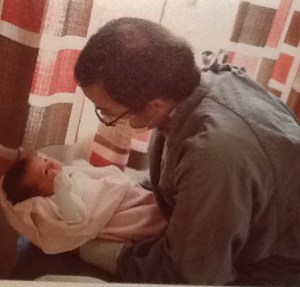
newborn

My father is a great man but he has not always been a great father.

Like millions of others of my generation, my parents divorced when I was a kid. As in many cases, their separation also impacted my relationship with my father.

I remember feeling close to my dad when I was quite young. I remember the way he gently combed my long, tangled hair being ever so careful not to pull. I remember him being so patient trying to teach me how to ride a bike. I remember his smell when he returned from a long bike ride or came in from mowing the lawn. I remember going with him to work and riding in his office chair while sucking on watermelon candies from the office snack area. I remember the endless sounds of his recorder echoing down the hallway as he practiced for upcoming performances. I remember all of this so clearly. And then the memories fade.

He was so good at doing the "girly" things with me. He even let me subject him to the My Little Pony 2 hour movie! Now, that's love:)
He was so good at doing the “girly” things with me. He even let me subject him to the My Little Pony 2 hour movie! Now, that’s love:)

The crystal clear memories of him from early childhood are replaced by a fuzzy impression, periodically stamped with flashes of clarity that lasts from the age of  6 or so until around the age of 9. I don’t know if I didn’t see him as much or if it’s just that I don’t remember. Or, maybe I was too busy practicing how to say, “Vanilla, Please.” 🙂

My parent’s split surprised me. I never saw them fight and was not aware that anything was wrong. My dad was the one to break the news to me. It was the first time I ever saw him cry. He moved out days later.

I may stink at bike riding, but at least I could manage 3 wheels:)

For the last couple years of elementary school, I spent Tuesday and Thursday nights at my dad’s apartment and the rest of the time with my mom. I was an only child, so I was alone in this shuffle. I had a routine. I would bake refrigerated biscuits (the kind that come in a tube) in his toaster oven and eat them for dinner with grape jelly and a tall glass of orange juice. (Obviously, I had not yet discovered the joys of kale and tofu.) We would watch a half hour of Headline News and then watch some Nick At Night (Night Court was our favorite) until I fell asleep on my pallet on the living room floor. I had started reading adult books by that age (this was before Harry Potter and the like existed) and my dad’s books (adventure, historical fiction, thrillers) held a much greater appeal than my mom’s (counseling, self help, “Hallmark movie”) and so many nights found me soaking in the bathtub for hours while I  was transported by some wonderful tale. On special nights, we would borrow a movie from the apartment company’s selection and settle in for the show. I saw my first ever PG-13 movie in that apartment – Alien – on a night when I came home sick with strep. I thought the monsters were pretty cool.

My dad has always had a special touch with animals.

Even though I saw my dad twice a week, he had started to become a stranger to me over those years. Some of it was the divorce; he and my mom were both trying to recover. Part of it was my age; I was reaching puberty (with hormones galore) and was no longer a little girl. Regardless of the reasons, we no longer really knew how to relate to each other.

Months after my 11th birthday, my dad moved across the country for work. Our twice weekly visits turned into annual trips with only sporadic conversations and letters peppered throughout the school years. I would talk about my friends or boyfriends, but they were strangers to him. I would try to tell him about school but would soon become overwhelmed with the amount of backstory needed to get the narrative through. There were times I was upset and he wasn’t there or wasn’t able to say the right thing. I became used to him not being there. Over time, I began to pull away. It was less painful to be the one who chose to turn away rather than be the one left behind.

hold

I know that some of my drive to always do more and achieve more comes from that time. I wanted him to be proud of me. I wanted him to want me in his life. I felt like I disappointed him by not being good at the things at which he excelled: music, biking and math (okay, so at least I’ve mastered one of those now!). I never doubted that my father loved me yet somehow I didn’t often feel loved. He didn’t know how to express it and I didn’t know how to receive it. We communicated through dog pictures and humor. We shared activities (the tandem recumbent bike was pretty cool!) but not a deep connection. He was never a deadbeat dad, he was just a distant dad.

After a rafting trip in Oregon. I was around 13.

When I started dating in high school, I luckily had enough sense not to seek out the missing male attention from boys. That doesn’t mean that my dad was far from my mind, however. I intentionally sought out guys that were different than him. I wanted someone demonstrative in their affections. I looked for extroverts that didn’t have too much “engineer” in them. When one guy I dated started to remind me of my dad, I ran the other way. When I chose the man who would become my husband, I selected someone who didn’t remind me of my father at all.

My the time I got married, I was no longer angry at him for leaving. I wasn’t disappointed that he wasn’t there. I had reached a place of accepting our relationship for what it was.

And then he surprised me. First, at my wedding reception, he stood up to make a toast. I froze. I was expecting him to make a joke or some silly comment. Instead, he said some very heartfelt words and I saw him tear up for the second time ever. Then, months later, my husband and I lost our earnest money when a house we had under contract fell through due to the seller. I was devastated. That loss meant that we would have to delay purchasing a house for several more months. I’m not sure why, but I chose to call my dad, rather than my mom, for comfort and advice when I hung up with the realtor. Days later, an unexpected check came in the mail from my dad for the exact amount of the lost earnest money. I remember standing in the living room of my apartment, holding the check and the sweet card that came with with it. I had tears pouring down my face that time. I turned to my new husband and said, “I have a father.”

Our patterns still didn’t change much during my marriage. We spoke occasionally and saw each other even less frequently. That continued until his father became ill. I don’t know if it was the harsh reality of mortality facing my dad or that he reflected upon his role as a father, but he started to open up. He came for a visit around that time and it was the first encounter in many years where I felt comfortable around him again. We both teared up when we embraced at the airport at the conclusion of the trip.

We were both still holding back, however. Our stoic natures and analytical minds kept us at a safe distance. I think we were both afraid of being rejected. And we may have stayed that way if it wasn’t for the text. He was there when I received the news that my marriage was over. He held me as I lay collapsed on the floor. He gripped my hand on the flight back to Atlanta. He sat next to me as I discovered the extent of the betrayals. He made the phone calls that I could not. He was exactly the father that I needed him to be. The shock and trauma washed away all hesitation and all of the insecurities we had with each other.

At the end of his week here, my father gave me the best gift ever. At a restaurant, over dinner, he talked. For the first time ever, I heard his story about my parent’s divorce. I learned how he felt above moving. The words just flowed, accompanied by tears. He said he had been wanting to have that conversation with me for twenty years.

It was well worth the wait.

As I’ve said before, I lost a husband but I gained a father. That conversation set the stage for my healing. I softened that day. I knew at that moment that I had a father. Not just that night, but always. I may have been abandoned by my husband, but I knew then that I wasn’t abandoned by my dad. And since that week, he has been there for me at every turn, from horrible calls from the lawyers during the divorce to the news that I was getting married again, and all of the minutiae in between, he has been there.

I started to get to know my dad. We discovered how much we have in common (now I know who to blame for my short femurs!). It was amazing to discover how many topics we had the same opinion on, even though we never discussed them. We both became more comfortable expressing emotions. I’m sure he would still think it was pretty cool if I could actually ride a bike worth a damn or play more than Heart and Soul on the piano, but now I know that he is proud of me regardless.

My dad and Tiger. I think they get along:)

It’s also interesting that when I approached dating again post-divorce that I sought out men that had traits that reminded me of my father. And, this time, when I chose the man who will be my husband, I found one that reminds me of my dad in some ways. Because, it turns out that my dad is a pretty awesome guy:)

A related post – You Win Some When You Lose Some: A Father’s Day Tribute