Gravity

Like many other kids, I entertained the notion of becoming an astronaut. On family camping trips, I would gaze up at the stars and imagine what it would be like to travel between them. I thrilled in the images of astronauts unbound by the limits of gravity, every small action becoming a dance through space. The life of a star-walker seemed so free. So captivating. So inviting.

But I didn’t see the big picture yet.

Like many other kids of the 80s, my school went positively hog-wild for the Challenger expedition. We wrote letters to Christa McAuliffe. We carefully selected payloads and supplies from lists, balancing needs against weights, preparing on paper for a trip we hoped we would one day make. We watched videos of the crew aimed at schoolchildren and we learned lessons recommended by NASA. The inflatable planetarium paid a visit and we were taught rudimentary celestial navigation. Our school even built a mock-up of the cockpit of the shuttle out of cardboard and foil where we would take turns running pretend missions.

By the time the actual launch date arrived, there was a thrum of energy vibrating through the school. All of our pseudo-preparations led  us to feel like we were a part of that mission, an integral as the commander. That morning was endless as we waited for the lunch-time launch. TVs were located and rabbit ears adjusted to tune-in to the launch. Regular programming, both on TV and in the school, was suspended for the mission.

I remember the gasp more than the explosion. My teacher’s sharp intake of breath followed shortly by the news anchor’s wail. The kids needed another moment to reach understanding and then our cries began. For most of us, this was the first tragedy on a grand scale that we had ever experienced.

Interestingly, the disaster itself did not dull the allure of space for me. Instead, it drove me to understand more. As I sought out my own information, I realized that the videos and lessons presented to us were sanitized for our protection. We weren’t taught the realities of space travel; we were presented with the shiny happy Disney version.

One picture in one book rendered me speechless. It was an image of the command capsule from a pre-shuttle program splashdown. One astronaut was already on board the rescue boat, collapsed under his own weight. Another was being hauled from the hatch, his muscles unable to provide much assistance. On the next page, was the image that was always presented to the public – the entire crew standing together after the mission with smiles on their faces and hands waving in the air.

Just to take that picture, that little piece of fiction, in the days after landing would have exhausted the crew. Despite their healthy appearances, they could hardly walk. In the absence of gravity, their muscles atrophied. They became weak and unable to meet the demands of their own world.


A life of little resistance seems so tempting. The thought of floating through without struggle and being untethered to any ballast is appealing.

But the reality is not so attractive.

We need resistance to grow sturdy.

We need struggle to become strong.


During my divorce, I felt like I was trying to walk on Jupiter, my 120 lbs magnified by the gaseous giant to a staggering 283 lbs. Every action required immense effort as I struggled to complete even the most arbitrary tasks against the pull of the pain.

But each day, I grew a little stronger. More adapted to my new environment. I became less aware of the increased resistance as I became tougher.

And when it was time for my return to earth, I felt like I was floating.

The strength built for struggle filled normal life with ease.

Star walking on earth.
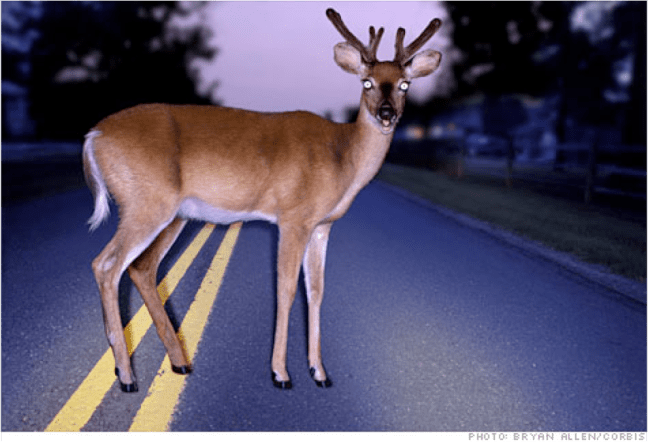


Fear in the Headlights

I have two friends – sisters – who sadly lost their mom to cancer when they were teenagers. At some point, they decided to celebrate Mother’s Day with an annual trip to an amusement park. It turns out that this is one of the least-busy days of the year at the park; I guess most families don’t celebrate maternal love and care with adrenaline rushes.

Several years ago, the roller coaster sisters decided to invite a mutual friend of ours, also motherless, to join them. It wasn’t a successful partnership as it turns out that this friend had an aversion to heights which is certainly a liability for an amusement park.

So, the next year, they invited me. I’m not motherless, but I am devoid of local matriarchal connections. Oh, and I love adrenaline and I’m not overly afraid of heights. It’s been an awesome tradition in which to be included. We’ve gone down to Florida, up to North Carolina and sometimes stayed put at Six Flags in Atlanta.

Regardless of location, we ride coasters. And then more coasters.

And, without fail, there is anxiety built before the first ride of the day. There is uncertainty, especially if it is to be a virgin ride with unknown drops and loops. One of the sisters always comes close to backing out and regrets not throwing in the towel as the ride clacks to the top.

And then, without fail, our delighted screams fill the air. And the sister that was the most hesitant becomes the most excited to run to the next ride.

Throughout the day, the supply of adrenaline is literally exhausted; the short lines do not allow ample time for the body to replenish its stores. By mid-afternoon, we can be seen completely relaxed on even the most terrifying ride.

Fear thrives in the unknown.

The sisters proposed a new adventure this year- zip-lining. I was by far the most experienced yesterday. Although this was my first visit to this establishment, it was my 5th time zip-lining. It was a known for me.

zippity-do-da!
zippity-do-da!

But it was unknown to the sisters.

The first challenge was to cross a 50 foot bridge that was built from widely separated (and swinging) boards. The bridge started at an elevation of around 25 feet and climbed to 40 feet where it ended at a small platform surrounding a large pine tree. The bridge felt unstable. The planks moved and the gaps between them were easily large enough to swallow even the largest man in our group and the holes drew the eye down – way down – to the ground below. The cables that acted as handrails were anything but solid. Even the anchor point of the tree swayed.

I can do this with my eyes closed. Not!

But all that was an illusion. We were each tethered to a cable running above the bridge with heavy ropes and clips. If we should fall and lack the strength to hoist ourselves back onto the bridge, three guides stood at the ready to lift us back to the planks. They even carried pulleys, ropes and bandages in their packs.

We were completely safe.

But one of the sisters didn’t believe it.

Or, more accurately, her primal brain hijacked her rational one and the former was screaming out the dangers on the bridge.

It was wild to watch. I crossed the bridge first. After clipping myself safely to the pine tree on the far side, I turned to look at the progress behind me. The sister, calm and confident moments before, was frozen a few steps onto the bridge. She knew she was safe. But her brain convinced her she was not. And her body listened. No amount of encouragement could convince her to complete that walk. She finally unlocked enough to back off the bridge and back to the known of the solid ground below.

Zipline Georgia

Fear believes illusions.

Fear was not my companion yesterday. It was a comfortable environment for me and I knew the illusion of danger was just noise. But that’s not to say I’m not more than familiar with that powerless and incapacitated feeling when fear moves in. I’ve written about learning how to ski and overcome my apprehension of downhills. I’ve had similar experiences with biking (go ahead and laugh – I can zip line without a problem but a 3% downhill grade on a bike makes me nauseous!).

This was actually fun! Promise:)

But I’m mainly familiar with the mental origins of fear. The psychological equivalent of the swinging planks and depths below. Those times when we have the safety systems we need, but we worry anyways. Where the body may continue forward but the mind freezes in place, unable to trust in the journey forward. It’s a place of internal lock-down. No amount of encouragement will release the mind from its hold.

But it doesn’t have to be permanent. We don’t have to live suspended on that bridge between where we are and where we want to be.

The view from my favorite zipline:)

Begin by breathing. It’s a whisper to the body that it is okay. Safe.

Be gentle with yourself. Self-flagellation may alleviate guilt, but it is a horrible tool against fear.

If the unknown has you frightened, make an effort to learn. Information is soothing.

When you’re frozen in fear, back off. It’s not a time to be a bull.

Distract the brain. Take a break in your comfort zone. It builds your confidence.

Recall times you were fearful and preserved. It builds your confidence even more.

Wait until the fear has subsided.

And then try to approach again.

That’s exactly what the one sister did yesterday. When we arrived back at the lodge, we were thrilled to hear that she had elected to take part in a later tour. And she came back smiling.

The unknown had become known.

And the illusions of fear had been revealed.

Leaving behind a sense of accomplishment and confidence.

Zipline Georgia


Mommies Are…

I test drove motherhood this week.

I was one of 18 chaperones on a three-day trip to Savannah with over 200 8th graders.

I love these trips, but they are such a shock to my system as I go from no kids to being completely responsible for a group of 16 and sharing responsibility for the others.

My days started with me trying to grab sips of coffee while I made the rounds, making sure students were awake and appropriately dressed, administering medication and giving sage advice to address the issues that arise overnight when you stick four teenage girls in a room together.

Breakfast, usually my peaceful time in front of the computer, was taken standing up in the lobby of the hotel so that I could direct the girls and strive to keep their voices at a semi-reasonable level. I think I managed two bites of hot oatmeal before it congealed.

Through the day, I lugged a large backpack filled with their medications and the day’s schedule. I was nurse, tour guide and counselor in one. I made sure that sunscreen and bug spray were applied. And then reapplied. I cautioned them about the effects of the overconsumption of sugar and the need to bring a jacket. I even found myself repeating the dreaded mom words, “Just try,” at the limited bathroom opportunities.

I swear the girls knew the moment I stepped into the shower at the end of the long days as the phone would start to ring as soon as I applied the shampoo to my hair – the hotel equivalent of calling “Mom” across the house.

By the time all of the girls were settled in their rooms, I would collapse, exhausted.

Yet unable to sleep.

The details of the days are tiring, but it is nothing compared to the weight of responsibility that motherhood, even of the three-day variety, holds. I saw potential dangers lurking around previously harmless corners. Every stranger was a threat, every body of water a potential drowning and every curb provided an opportunity to fall. At night, I found that I could not enter deep sleep, as I was constantly listening for the kids.


When I was a kid, the pastor at my church would call all of the children up to the steps in front of the pulpit for a brief children’s message embedded within the larger sermon. One year when I was about four, the pastor celebrated Mother’s Day by beginning with the prompt, “Mommies are” and then holding out the microphone for the kids to complete the sentence.

The first few shares were your standard:

“Mommies are nice.”

“Mommies are pretty.”

“Mommies are gentle.”

And then the microphone was put in front of me. My contribution on that Mother’s Day?

“Mommies are tired.”


Yes, they are. Motherhood is a job with the biggest responsibilities possible and no time off. Motherhood is a job that, just when you think you have it figured out, your kid enters a new phase; you’re in perpetual training. Motherhood is a job that requires that your own needs are neglected so that your offspring’s needs are met.

It is tiring.

But is also rewarding beyond belief, as reflected in the faces of the moms as they reunited with their kids at the end of the trip. I’m sure they enjoyed their three days of peace and quiet but they were thrilled to see their kids (even stinky, cranky, hopped-up-on-sugar kids:) )again.

As for me, I enjoyed the test drive but this particular model is not for me. I’ll stick with teaching!

Happy Mother’s Day to all you tired mommies. I am in awe of what you do every day.

Scared of Love? You’re Not Alone

I hear so many people proclaim that they never want to remarry. Or even to fall in love again. They’ve been bitten and now they’re shy.

Or, more accurately, scared of being hurt again.

I get it. It’s certainly safer to build those walls and live within.

Safer. But also limiting.

A life in a cage.

And I believe we’re meant to fly.

Even though we may fall sometimes.

This article on reasons why people are afraid of love came across my feed today. Read it. I related; I bet you will too.

And then let your fears be the beginning rather than the end.

Forest Fire

Smokey the Bear tells us that only we can prevent forest fires.

But that’s not really true.

I mean we can avoid throwing lit cigarettes on top of dry pine needles and we can faithfully cover our campfires with dirt before retiring for the night. But those measures won’t stop the errant spark from catching a ride on a gust of wind. They won’t redirect the lightening’s path away from the dead wood that riddles a mature forest. Even the professionals, with their fire breaks and controlled burns can’t really stop forest fires. They can only hope to mitigate their damage.

Because forest fires are an inevitable part of nature and nature always has its way.

We tend to focus on the destructive properties of the fire. And certainly, when fire and civilization intersect, the results can be devastating. The loss is apparent in every charred stump, the once verdant forest transformed into an alien wasteland.

We focus on the loss because it is what we feel acutely. It is sudden and catastrophic. We cannot help but contrast the blackened skeletons with their once proud and rich forms.

But the fire is more than an ending. It is a beginning.

The conflagration clears away the dead and dying trees, making room for the seeds protected just below the soil to begin their journey to the sun. The blackened trunks enrich the soil, replacing nutrients that had been leached for centuries. Any illness that may have gripped the forest is extinguished with the flames, allowing an opportunity for new and healthy growth to emerge.

I’ve begun to see my divorce as a forest fire. Devastating. Destructive. Inevitable. Yet also cleansing, burning away all that was dead or dying or diseased. Leaving behind richer soil and brighter sun to nourish even better growth. And I’ve now gone from wandering lost through the charred stumps of the old growth to reveling in the beauty of the new.

So even though Smokey is wrong and we cannot prevent every forest fire, we can do our part and when they do happen, we can strive to see the potential hidden just beneath the newly exposed earth.

grow