Bookends

I rarely think or write about my parent’s divorce. It feels like ancient history and, for the most part, I never viewed it as a defining moment in my life.

But I may have been wrong.

As I dig down into the roots of some of my thought patterns, it seems like the fallout from their divorce is the soil from which they sprouted.

Damn.

My parents, at least from my perspective, had a good divorce. Or at least as good as a divorce can be. I was insulated from as much of it as possible. There were no court battles, custody and child support agreements were made and followed. They both refrained from talking badly about the other and both made huge efforts to put my needs first.

They did pretty much everything right. Which is probably why I handled the transition well and don’t recall feeling undue stress.

But even when done well, change changes you.

We soon went from a family of three to a mom-daughter pair. I knew she was stressed and I didn’t want to add to that burden. I knew money was limited and I didn’t want to spend. I knew she had an abundance of responsibility and I didn’t want to contribute to the load.

Additionally, their divorce left me a bit like a chick pushed out of the nest a little too soon. And even though they picked me right back up, the knowledge of that unforgiving ground was impossible to forget.

Some kids go a little wild when their parents split, looking for attention and release.

I went the other way.

I became responsible.

I became perfectionistic.

I became self-reliant.

I took it upon myself to become my own parent. I watched my grades carefully and gave myself talks when I didn’t perform up to my potential. I carefully considered consequences and often held back for fear of negative outcomes.

I assumed the role of clock-watcher. Drill sergeant. Task master. If you wanted it done, I was your gal.

I took “I can do it myself” to whole new levels.

This was not an assigned role; it was self-appointed. It was my way of feeling like I had some control in my life.

Taking responsibility is a good thing. But I took it too far, assuming other’s burdens as well as my own.

Self-reliance is a positive trait. But I used it as a way to avoid feeling vulnerable.

It was my armor. My shield. My assurance.

And it was never really tested until my divorce.

And that was the first time I couldn’t do it myself.

I had to learn to release control. I had to learn how to accept help.

And I had no choice but to be vulnerable.

It’s wild – I learned self-reliance from my parent’s divorce and how to accept help from my own split.

It’s amazing how often life’s experiences will circle around again, healing old wounds and reteaching lessons. Each parallel event offering wisdom and yet threatening wounds. It can be tempting to desire a life without these difficult episodes, to dream of smooth days and comfortable nights. But I see these events differently. They are what bring meaning and purpose and perspective to our lives. They challenge us and teach us. They shape us.

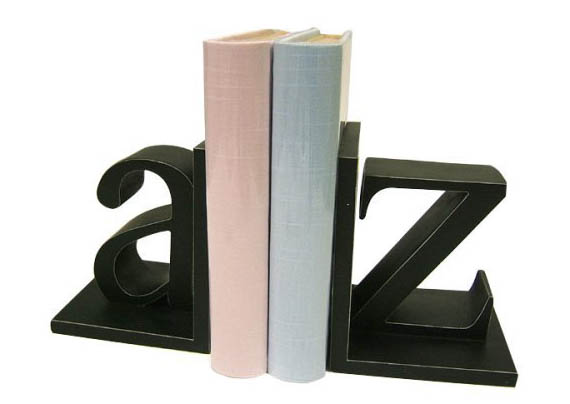
Bookended tutorials supporting the life in between.

I wonder what lesson will circle around next? I just hope this one doesn’t come with a side of divorce. I’ve had enough of that!:)


Reframing Fair

Life’s not fair.

You probably first heard those words back in elementary school when a classmate’s misdeeds resulted in mass discipline or some slight against you went unpunished. If you’re anything like me, those words only served to salt the wound, as the brain kicked up reasons that this was different. That this time, the scales of justice must find balance.

As we grow, we read and watch stories that have an inherent fairness to them, the good guy usually gets the girl and the bad guy has to face the consequences of his actions. There is certainly suffering, but agony is tempered with some sort of retribution. We find comfort in that cause and effect. It seems right, somehow, that if you do good, you get good and if you propagate bad, it boomerangs as well.

As we grow, we also get better at weaving stories, tales told with ourselves as the good guy at the center. We use our inherent sense of fairness and the stories we learn from books and movies to craft these narratives. We strive to find greater purpose and balance, even if we have to build it from scratch. We have learned that the bad guy will be punished before the end. And so we seek that justice for the wrongs in our own lives before we are ready to turn the page on that chapter.

But those are just stories, narratives with black and white, good and bad. We’re not that simple and life is not that fair.

And sometimes fair doesn’t exist at all.

I think one of the reasons that divorce is so devastating is that it destroys our narrative of ourselves. We, the good guy in the story of course, get the girl. But then at some point, the girl wasn’t as expected and, in some cases, turns out to be the bad guy, pulling off the mask like a character in Scooby Doo. Our brains stutter to correct this wrong; they want justice for the perceived misdeeds, both to reestablish fair and the secure one’s own position in the good guy role.

So, we turn to the divorce courts with much the same intent as a child tattling on a classmate that threw a surreptitious blow.

But the divorce courts aren’t set up to punish individual misdeeds. They punish the entire class.

I, like many others, approached court looking for justice. I carefully spelled out his wrongdoings. I gathered evidence that secured my role as the good guy and painted him as the bad. I was hurt and anger and confused by his choices. They were painful. And I wanted him punished.

And the system was only too happy to play along.

Requests for information traveled back and forth through emails. Thick stacks of legal papers filled my mailbox, seemingly alternating with thinner, but more pointed envelopes containing bills for legal fees. Every step of the process felt like wading through chest-deep mud. The only lifeline keeping me from sinking was the vision of the court ordered consequences.

The system also used fear as a trap. In my case, it was fear for my financial future. I had understood that I needed this process and documentation to try to avoid some of his financial infidelities. In many other cases, the fear is tied to the children, the preferred pawn of the courts. The system uses children like dog racing uses a fake rabbit lure to entice the dogs to run. When you’re chasing something, you’re too focused to see the bigger picture.

We come to family court with our emotions raw, sick and sad with the loss of the marriage and the future we evisioned.

We come to family court angry that we have been wronged and wanting to lash out.

We come to family court confused at where we are, convinced that our life story has been misread.

We come to family court scared, clinging on to anything after experiencing the pain of losing everything.

We come to family court desperate, looking for something, anything, to make it okay.

We want it to be fair.

But that’s not what the courts are about.


My new husband asked me if I wish I had done my divorce differently. I thought back to the months filled with unanswered depositions, false and outlandish claims and sick days taken to talk to lawyers. I thought back to the three foot stack of files that had been paid for with over half my annual salary. I thought back to the day in court where, instead of taking the stand and being able to tell my side of the story, I sat alone in a hallway awaiting the decisions of the attorneys and the judge. I thought back to the decree, my relief when I saw justice in black and white and my despair when soon after, I learned that it wasn’t really enforceable.

My eventual response was that I didn’t know if I could have done it any differently. At least not at the time.

The thing about divorce court is that you only know how the game is played after the cards have been put away.

My now-husband probed further, asking what I got out of the divorce. That answer was easier. I got a divorce. The rest – the hours on the phone, the piles of paper, the carefully worded questions and allegations – were just noise.


I went into the divorce process looking for the system to establish fairness. I had convinced myself that I needed that judgement in order to heal and move on. I gave the courts the power to determine if I was going to be okay.

But the courts punish everybody involved.

My $30,000 divorce decree was ultimately only good for changing my name.

It was up to me to change my life.


I found a way to turn the pain and anger into something positive, using my story and my writing to help others through the desolate wastelands of the end of a marriage. I found justice, not by punishing his misdeeds, but by taking ownership of my own life and striving to do better. I worked to find acceptance and peace despite the perceived lack of consequences.


So I learned to reframe fair.

Divorce is not fair.

Looking for fairness within the system is a snipe hunt, with frustration and disappointment the only outcomes.

But justice can come from within.

You can balance the scales in your own life so that you can find peace.

You can choose to let go of what is causing you suffering.

You can find acceptance rather than struggle.

That’s fair.

And no lawyers are needed.


Divorce Corp, a movie about the  $50 billion a year divorce industry, is opening in select cities this weekend. The goal of the filmmakers is to expose and then reform the divorce process so that individuals and families can make the best decisions possible through a difficult time. Check here to see when it will be showing near you.

And then let your voice be heard.


Imperfection

imperfections

Nature

nature nurture

Lost and Found

Something about the new year puts me (and I’m sure many others) in a reflective mood. Four years ago, I was just starting to awaken from the life-of-the-living-dead state that was my norm during the divorce. At that time, I was feeling the great losses in my life and I had not yet truly begun to build my new life. Now, I can see the bigger picture of what was lost and now has been found.

Lost – My Memory

The divorce was a blow to my synapses. I was shocked to find that my usual sharp memory was faded and fuzzy, even about recent events. I struggled to remember facts from the months before the divorce and I found that I had difficulty forming new memories. I misplaced things, couldn’t keep students straight and didn’t retain books or movies. As a corollary, I suddenly found that I stumbled my way through more difficult math problems that used to be simple.

Found – Patience and Empathy

I’ve never been one known for patience, especially when I have to repeat myself. When my memory was faulty, I gained more empathy and patience for others around me who also had trouble remembering things, regardless of the cause. Even now that my memory is pretty much back to normal (except for a few months that are still a mixture of hyper-real flashes and vague confusion), I still remember what it was like to be confused and unable to retain information.

Lost – My Sense of Security

I lost my security in a literal sense; I had less than nothing to my name once he left. But, even worse, I lost the feeling of security. I had been living with a man that I thought had my back, financially and otherwise. All of a sudden, that backup was gone and I felt very vulnerable and scared, often a paycheck away from disaster.

Found – Confidence in My Earning Potential

In my former life, I used to bring in extra money through tutoring and through selling lesson plans. I did okay, but there was a definite ceiling to those activities. After he left, I had to revise my view of myself and I learned that those limits were self-imposed. I’m still working on building my nest egg, but I am much more confident in my ability to make it happen.

Lost – My Hair

I faced the trifecta of tress troubles with the divorce. I first noticed that my hair was falling out in handfuls. For the first time, I had to buy a hair trap for the shower drain. To make matters worse, my hair pretty much stopped growing. In fact, it only started again about two years ago, which means I now have a bunch of 2″-3″ long pieces interspersed with the longer strands. And then, just to be extra cruel, my first gray hairs appeared within weeks of him leaving. Could be a coincidence, especially because supposedly stress does not cause gray hair, but I’m not so sure.

Found – Peace in Aging

I may not allow the gray to show, but having my hair defy me at 32 actually gave me some peace with the whole aging process. I developed a relaxed attitude about the whole thing. And now, when the wrinkles are showing or the gray is peeking out around the temples, I just see it as a sign of a life lived.

Lost – My Appetite

Some people overeat when they are stressed. I’ve always been the opposite; my digestive tract shuts down completely. As a result, I lost over 20 lbs in those first few weeks, which led to a cardiac arrhythmia and came close to putting me in the hospital. I lived with my friend and her sick and premature infant that year. We joked that her job was to fatten up both of us. It took a couple years, but I finally put the pounds back on.

Found – An Appreciation For Food

I used to see food only as a neccessity. Now, I see it as nourishment on many levels. I had many people help me to eat that first year and now I like to feed others. I have come to enjoy the ritual and symbolism of food as well as the preparation and nutrition.

Lost – My Sex Drive

My body felt leaden, dead and my mind was completely oblivious to members of the opposite sex. I remember being scared that it was gone for good, as though it was something I could only feel with my ex. It seemed like a cruel joke to be single and have no interest in mingling. Luckily, as I eventually learned, that was not the case.

Found – Comfort in Being

Without the distraction of men those first several months, I spent a lot of time alone. I learned to be comfortable with myself, by myself. I discovered that I didn’t always have to be doing something; I could simply be.

Lost – My Home

We had a home that we had purchased ten years prior. We had spent countless hours creating the home we wanted, from a new kitchen to a dream deck. In addition, I had a one acre garden that was my passion.

Found – Peace With Imperfection

I used to be a classic perfectionist, always wanting things to be just so. With the loss of the home and my nomadic and limited living quarters for the next few years, I learned to give up on the idea that things need to be perfect. Now, I can find perfection in a chipped plate:)

This list could continue forever. I lost so many things, from my husband, to my home and even my beloved dogs. My possessions were gone. My iTunes library was erased. I lost the family I had with my in laws and the shared history with my ex.

I lost so much, but I found even more. I credit that with two things that I refused to lose in the divorce – my sense of humor and my hope that things could get better. And with those two things, anything is possible:)