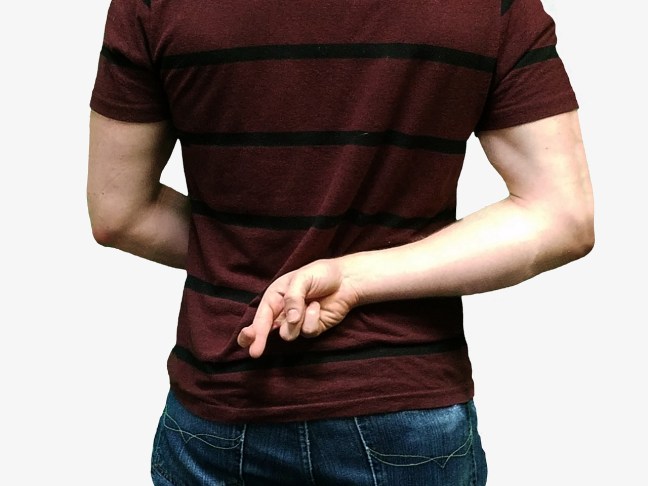
Seven Strategies a Covert Abuser Uses to Create Convincing Lies

covert abuser

Unless you’ve been there, you simply cannot understand how well a covert abuser can lie. The stories are so cunningly crafted and so expertly delivered that even the professionals can be fooled. It’s one of the harder – and more frustrating – parts of emerging from this type of relationship, as you feel like nobody else gets what you went through or even believes what you are saying.

These manipulators all seem to follow common scripts and utilize similar tactics. These are the ones that I repeatedly see:


1 – They Choose Someone With Integrity

My ex knew from the beginning that I’m terrible at lying. In fact, I’m so bad at it that I would make him say “no” to an invite that we weren’t interested in and it was his role to return items to the store because I was too uncomfortable to say that it didn’t fit instead of, “It’s ugly.”

Covert abusers seek out honest people. They look for those with loyalty and integrity. Those positive traits are exactly what the abuser needs because those people will believe the best about their partners and don’t readily assume deceit.


2 – They Stay Close to the Truth

When my ex was in Brazil on his honeymoon, he claimed that he was working a car show. The exact same show that he worked the previous year. It was only later that I discovered that this particular dealer was no longer even a client of his. But I no reason to doubt his claim at the time, as it fit neatly into my expectations.

The best liars stay close to the truth. Not only does this make their stories more plausible, it also makes it more difficult for them to get their storylines mixed up. They may give you partial truths, leaving out critical information. Or they may replace certain facts while keeping the basic tale consistent.


3 – They Provide Plentiful Details

My ex walked into the kitchen with a MacBook box under his arm. And apparently with a story under his belt. For the next thirty minutes, he detailed how there was a raffle at the job fair (yes, he was unemployed) for a computer. He initially didn’t want to enter, because he didn’t think he’d win and he didn’t want to receive the endless ads that accompany such events. Finally, he said, he decided to throw his card in before he left. He was already in his car, three intersections away, when his phone rang and he learned he won. Except, years later, I found the charge for that very computer on a credit card statement.

Good fabricators use details to make their stories more believable and to distract from any implausibility. They use their words to paint a picture and to envelope you in its imagery.


4 – They Elicit Your Sympathy 

On that same Brazil trip, I received a short voicemail where my husband told me he had been stricken by food poisoning. He sounded terrible and, even more worrying to me, he sounded concerned about his situation. Unable to get through to him, I began to panic. For the next two days, I was so consumed with worry for him that I hardly thought of anything else.

Covert abusers like to make you feel sorry for them. Because as long as you’re sympathetic, you’re not suspicious. Additionally, these manipulators really do often see themselves as the victim and believe that life has not been fair to them.


5 – They Utilize Supporting Evidence

After my ex’s arrest for bigamy, I found a copy of his car insurance card in the center console of his vehicle. There was only one problem. The space where my name was on the electronic copy of the PDF, was blank on his card. He had Photoshopped my name off my card so as not to arouse the suspicions of his other wife.

Good manipulators do not only rely on words. They will use evidence, either gathered or fabricated, to support their claims. They understand that a little goes a long way here. If you have “proof” of one piece, you’re more likely to go along with the rest.


6 – They Employ Distractions

When interest rates dropped in the mid 2000s, we had agreed to refinance the house. He brought the paperwork to my work and had somebody cover my class so that I could sign the papers. All the while I was signing, he was trying to engage me in a conversation he was having with one of my coworkers. I was so distracted by the environment and the circumstances, that I never realized that the paperwork didn’t specify the terms that we had previously discussed.

It’s an old trick, but an effective one. When you’re busy looking at one thing, you can’t focus on another. Deceivers are experts at this technique and they make sure that you’re always looking exactly where they want you to. And then they take advantage while you’re gaze is turned elsewhere.


7 – They Use Gaslighting 


Once my ex was arrested, he turned the gaslighting up to “high,” claiming that we had been divorced for years and that I was just having trouble accepting it. He painted me as vindictive and greedy and “impossible to live with.” In other words, he tried to make me look crazy in an attempt to escape from his lies.

Covert abusers are experts at, “You didn’t see that” and “I never said that.” By making you question yourself, you get so lost that you refrain from questioning them. And even when they are caught, they will continue to lie and deny. After all, at some point it became their most fluent language.


Five Empowering Ways to recover From Gaslighting

Gaslighting – The Flame That Refuses To Be Stamped Out

Just when I think I’m healed…

I’m having a big old trigger attack today. My heart is racing. My gut, nauseous. My brain is split between two years – 2009 and today.

And all because I bought a computer.

This one’s going to require a little back story.

In the suicide note (He’s still alive, as far as I know. Go here to learn more) that my ex left to his other wife and my mother, he described how I always needed the latest and the greatest. He painted me as needy, whiney and horrible with money.

That statement was far from true. Not only was it gaslighting, it was projection. My ex bought an iPhone months after they were first released. Had a first generation Kindle. And always had multiple Apple computers, each one the top of the line at the time.

He always justified the computers by saying they were for work. In the final few years, he was supposedly using them for graphic design. Although since I learned that most of his “income” came from credit cards (including ones in my name), I now doubt that the machines did much more than run World of Warcraft.

When he left, I gathered up a few belongings and escaped to my friend’s house. One of my excerpts from my old life was a tired MacBook Pro that my ex had deemed too slow for his purposes. This machine held me until 2012 (even though I wanted to vomit every time I saw his name as the computer’s “owner”).

At that time, I was writing and needed a basic machine for that and for school purposes. I bought the cheapest Mac I could find – a two-year-old refurbished 11″ Air. And it felt good. I paid cash and I had a machine that was all mine. And it didn’t trigger me because the old one was really quite dead and the new one was bargain basement.

But now is different.

My little MacBook Air is still chugging along for writing. But as my eyes get worse and my writing and curriculum projects more numerous, the small screen has become a challenge. The memory struggles to manage working with images or even MathType (not good for a math teacher). And the clincher? iMovie won’t even pretend to function anymore.

I knew it was time for an upgrade. I looked at my budget and made a conservative plan to purchase a desktop this winter once I could save up enough to pay cash.

But then this morning, frustrated with a movie idea I couldn’t act upon and dreading the final edit of my book on a minuscule screen, I decided to see if I could act early.

I logged on to the Apple page, navigated to the educator section (woo hoo for teacher discounts!) and selected the machine I wanted for my purposes. I then clicked on “special financing” and noted that, if approved, I could get 18 months with no interest. And the monthly payment would be well within reach.

I called my husband to talk through the idea of buying now. He was wonderfully supportive, both emotionally and financially.

I decided to pull the trigger.

And now I feel sick.

In my head, I hear my ex’s voice whining about I always need the lastest and the greatest. And this time, I didn’t buy used or the cheapest model. Although it’s still FAR from the top of the line.

When my parents both noted that I am a writer and that a computer is a key tool of my trade, I hear my ex’s excuses that he “needed” his computers for work. And I think about how I could continue to scrape by with the old one.

With another credit card in my name (and ONLY my name), I’m reminded again of all the debt my ex racked up and left me with.

I know this is different than his spending. I CAN afford this. I’m NOT hiding the purchase. I WILL pay this off before the grace period ends. And I DO need this (and no, not for shooting warlocks).

Yet the damn gaslighting is still doing a number on me. Between trying to prove his stupid voice wrong and having to live so lean while I paid off his debt, I have a really hard time spending money. Especially on technology. And even more so on a Mac.

It just feels too close to what he claimed I was. And I feel like I have to climb my way out of his mind games yet again. And added to it now is the fact that I’m angry at myself for reacting this way. I should be happy I can do this. I should be excited for the new machine. I should be past this shit already.

For tonight, hot yoga. There will most likely be tears. Of anger. Of confusion. Of gratitude. Of relief.

And tomorrow, when that box shows up at my door, I hope that I can be excited for today and leave yesterday in the past.


Why I Refuse to Call My Ex Husband a Covert Narcissist

covert narcissist


If anyone has the right to call her ex a covert narcissist, it’s me. While on the surface, he was a giving and caring man everyone loved, the man behind the curtain was another story entirely. He crafted false financial documents and insurance forms to support his lies as he bled our accounts dry. He wooed women, eventually wedding one without attending to the detail of obtaining a divorce from me first. He neglected the requirements of the criminal court system, earning a felony warrant. Even the judge in the divorce case asked my ex’s attorney if his client was “psycho.”

And maybe he is. Not a psycho necessarily, but a narcissist.

But, despite all of the evidence, I intentionally choose to not label my ex as a narcissist.

It seems like “narcissist ex” is the gluten-free of the relationship world – all of a sudden, it’s everywhere. But is it really that pervasive or are we just using the label too recklessly?

Just over 6% of the population has Narcissistic Personality Disorder (NPD) based upon the criteria set forth in the DSM-5: seeking approval from others, viewing oneself as exceptional, blaming setbacks on others, inability to identify with others’ needs and/or feelings and superficial relationships based upon manipulation.

Even though my former husband’s actions seem to check every box, I am bucking the “my ex is a narcissist” trend. Here’s why:


If He’s the “Attacker,” Then I’m the Victim

This was certainly my mindset early on – I viewed him as some Machiavellian perpetrator, deviously plotting ways to hurt me from his basement lair, cleverly disguised as an innocent office. In some ways, it was a comforting mindset as it pardoned me from any culpability. But it was also limiting.

Because if I was a victim, I was powerless.

In order to claim responsibility for my own well-being and create a sense of possibility for the future, I disarmed his memory. He’s no longer my attacker; he’s just the man I used to love who traveled down a dark path.

Preservation of Memory

By the time he sent the text that ended the marriage, my ex and I had spent sixteen years together. It was a lot to lose. If I accepted the proposal offered forth by many who dealt with him in the months to come that he was, in fact, a narcissist, it essentially would discount the thousands of positive memories I had of our time together.

From what I knew, we did have a good marriage with so many happy memories. I decided that those moments were real enough to me at the time and I chose to allow them to remain (as much as possible) unsullied by the idea that they were all orchestrated for some great plot.

It Ignores the Unknowns

 Even the DSM-5 offers the disclaimer that a personality disorder cannot be diagnosed in the presence of addiction or physical illness, as both can mimic the mental condition. My ex admitted to a drinking problem after he left and he was suffering from some pretty substantial medical complaints for the last year or so of the marriage.

It is impossible for anyone, especially a layperson, to diagnose someone with a personality disorder without all of the information (much less the presence of the actual individual in question). Just because a person exhibits certain behaviors does mean that they automatically deserve a diagnosis.

We Are All More Than a Label

Calling someone a narcissist is reductionistic; it distills them down into a list of traits and ignores the complete person. Yes, my ex-husband lied, cheated and stole. But he also showed me (and others) great kindness and tenderness. He was the man that cried at our wedding and nursed our dogs back to health.

By not assigning him a label, I am able to remember the whole man – from loving husband to cruel persecutor and everything in between.

Peace is More Important Than a Reason

In the beginning, I struggled to understand why my husband acted that way and how he could be so cold and calculating. I assumed that once I had a reason, I would be able to move on. I tested out many possible labels (narcissist among them), but none managed to make the pain okay.

Finally, I decided to view him as lost. Hurting. Desperate and in pain. And with that shift, I found compassion, which led to being able to release the anger that held me back. So rather than see him as the evil antagonist in some twisted plot, I try to see him as human. Imperfect rather than malevolent. Not for his benefit, but for mine.

Labels, such as narcissist, have their place in public discourse. They help to provide a framework for understanding and a shared language to discuss important issues. It’s shorthand for a list of common experiences and emotions. I know when I read posts from people that use the term “narcissistic ex,” I will relate to stories of manipulation, gas lighting and projection. I can expect to see similarities between their stories and mine. In fact, I found books about narcissists and sociopaths helpful during the healing journey to provide information and perspective that helped me make sense of my own situation.

Labels are like Cliff Notes. We use them as shortcuts as we develop our own understanding or to help someone else develop theirs. Just like Cliff Notes, they are not the entire story, full of detail and nuance. If we stop at labels, we are limiting ourselves and others. We may be blinded by assumptions as we fill in the gaps in our knowledge automatically.

So your ex may be a narcissist, but that’s not the entire story. Don’t let the label limit you; it’s just the beginning.

Why I Refuse to Call My Ex Husband a Narcissist

covert narcissist

If anyone has the right to call her ex a narcissist, it’s me. While on the surface, he was a giving and caring man everyone loved, the man behind the curtain was another story entirely. He crafted false financial documents and insurance forms to support his lies as he bled our accounts dry. He wooed women, eventually wedding one without attending to the detail of obtaining a divorce from me first. He neglected the requirements of the criminal court system, earning a felony warrant. Even the judge in the divorce case asked my ex’s attorney if his client was “psycho.”

And maybe he is. Not a psycho necessarily, but a narcissist.

But, despite all of the evidence, I intentionally choose to not label my ex as a narcissist.

It seems like “narcissist ex” is the gluten-free of the relationship world – all of a sudden, it’s everywhere. But is it really that pervasive or are we just using the label too recklessly?

Just over 6% of the population has Narcissistic Personality Disorder (NPD) based upon the criteria set forth in the DSM-5: seeking approval from others, viewing oneself as exceptional, blaming setbacks on others, inability to identify with others’ needs and/or feelings and superficial relationships based upon manipulation.

Even though my former husband’s actions seem to check every box, I am bucking the “my ex is a narcissist” trend. Here’s why:


If He’s the “Attacker,” Then I’m the Victim

This was certainly my mindset early on – I viewed him as some Machiavellian perpetrator, deviously plotting ways to hurt me from his basement lair, cleverly disguised as an innocent office. In some ways, it was a comforting mindset as it pardoned me from any culpability. But it was also limiting.

Because if I was a victim, I was powerless.

In order to claim responsibility for my own well-being and create a sense of possibility for the future, I disarmed his memory. He’s no longer my attacker; he’s just the man I used to love who traveled down a dark path.

Preservation of Memory

By the time he sent the text that ended the marriage, my ex and I had spent sixteen years together. It was a lot to lose. If I accepted the proposal offered forth by many who dealt with him in the months to come that he was, in fact, a narcissist, it essentially would discount the thousands of positive memories I had of our time together.

From what I knew, we did have a good marriage with so many happy memories. I decided that those moments were real enough to me at the time and I chose to allow them to remain (as much as possible) unsullied by the idea that they were all orchestrated for some great plot.

It Ignores the Unknowns


Even the DSM-5 offers the disclaimer that a personality disorder cannot be diagnosed in the presence of addiction or physical illness, as both can mimic the mental condition. My ex admitted to a drinking problem after he left and he was suffering from some pretty substantial medical complaints for the last year or so of the marriage.

It is impossible for anyone, especially a layperson, to diagnose someone with a personality disorder without all of the information (much less the presence of the actual individual in question). Just because a person exhibits certain behaviors does mean that they automatically deserve a diagnosis.

We Are All More Than a Label


Calling someone a narcissist is reductionistic; it distills them down into a list of traits and ignores the complete person. Yes, my ex-husband lied, cheated and stole. But he also showed me (and others) great kindness and tenderness. He was the man that cried at our wedding and nursed our dogs back to health.

By not assigning him a label, I am able to remember the whole man – from loving husband to cruel persecutor and everything in between.

Peace is More Important Than a Reason

In the beginning, I struggled to understand why my husband acted that way and how he could be so cold and calculating. I assumed that once I had a reason, I would be able to move on. I tested out many possible labels (narcissist among them), but none managed to make the pain okay.

Finally, I decided to view him as lost. Hurting. Desperate and in pain. And with that shift, I found compassion, which led to being able to release the anger that held me back. So rather than see him as the evil antagonist in some twisted plot, I try to see him as human. Imperfect rather than malevolent. Not for his benefit, but for mine.

Labels, such as narcissist, have their place in public discourse. They help to provide a framework for understanding and a shared language to discuss important issues. It’s shorthand for a list of common experiences and emotions. I know when I read posts from people that use the term “narcissistic ex,” I will relate to stories of manipulation, gas lighting and projection. I can expect to see similarities between their stories and mine. In fact, I found books about narcissists and sociopaths helpful during the healing journey to provide information and perspective that helped me make sense of my own situation.

Labels are like Cliff Notes. We use them as shortcuts as we develop our own understanding or to help someone else develop theirs. Just like Cliff Notes, they are not the entire story, full of detail and nuance. If we stop at labels, we are limiting ourselves and others. We may be blinded by assumptions as we fill in the gaps in our knowledge automatically.

So your ex may be a narcissist, but that’s not the entire story. Don’t let the label limit you; it’s just the beginning.