10 Ironclad Rules for Living After Divorce

rules

While I was in life limbo post-divorce, I crafted 10 rules for myself to follow. These were rules born partly of pragmatism, partly of fear and anger and mostly of determination. The rules were written in the relative vacuum of the weeks following a divorce. Easy to craft. They’ve proven harder to follow.

So here they are, my 10 promises to myself. Maybe you’ll decide to make them too.

1 – Never Give in Expectation of Reward

I played by life’s rules. Played it safe. It was a barter of sorts – I’ll sacrifice now and you’ll spare me later. But life didn’t play by those rules. And I grew angry. I felt betrayed not only by my husband, but also by life. I did everything right, so why was I being punished? I promised myself to give up on the idea of sacrifice. To instead give or abstain when I wanted to with no expectation of any reward or pardon.

2 – Never Treat Life As a Waiting Room

I just need to get through this month and then I’ll relax.  Money is tight right now, but we just need to make it through until next year when business should pick up. I know I haven’t seen much of my friends lately. I’ll remedy that as soon as the summer starts. Yeah, I was a pro at justifying this delayed gratification. And the problem? Some of those expected events never did occur and more reasons to wait did. I promised myself to live every day, no matter what better days seemed to lie around the next corner.

3 – Never Be a Guest in Your Life

When you’re a guest, you try to occupy the smallest footprint possible. To not make waves. And that’s no way to live for long. It was shocking to me when I moved in with my friend and her family after my husband exited stage left – I realized I had been feeling more like a guest in my home (and marriage) of 10 years then I did with her. I promised myself that I would never allow myself to be a guest in my life again; I was going to occupy my life fully.

4 – Never Let Fear Hold Your Head in the Sand

I’ve never been good at confronting my fears. I basically took the “mosters under the bed” theory way too far – as long as I didn’t look, they weren’t real. Right? 🙂 Not so much. I started by facing the easier fears – going downhill, sharing my emotions publically and leaving to-dos undone. Those proved scarier when avoided than confronted. Then came the harder ones – vulnerability and trust. Still scary. I promised myself that I woud face those things that made my heart race and trust that I can handle them.

 

Continue to read the rest.

How to Accept the Apology You Never Received

apology never received

In an ideal world, everyone that causes harm to another, either intentionally or unintentionally, would immediately offer up a genuine apology: accepting responsibility, acknowledging the pain, express empathy and remorse, immediately changing behavior and, if appropriate, making amends for the damage caused. But we know that rarely happens. And it never happens as quickly as we would like.

Instead, we receive a “sorry” tossed out with little thought and nothing to back it up. We hear, “I’ll do better” and better never comes. We may find that in place of an apology, we instead receive blame and misplaced anger as defensiveness leads instead of empathy. The apology may be discounted by the excuses that accompany it. We may see an utter lack of comprehension at the pain that was inflicted. Or we may just be listening to radio silence, waiting for an apology that never comes.

An apology that maybe we don’t even need.

fullsizeoutput_1699

Why do we want apologies?

Children are taught almost as soon as they can talk to say “Please” when they want something, “Thank you” when they receive something and “I’m sorry” when they hurt someone. At the most surface level, we view an apology as a basic ritual of societal order that preserves a sense of fairness and responsibility.

Apologizing has become almost a knee-jerk reaction for many. How often have you bumped into somebody or inadvertently cut someone off with your grocery cart and had the word, “Sorry” out of your mouth without thinking? Even in such a minor interaction without much empathy or remorse behind the word, the apology still carries importance. When it is uttered, it acknowledges the infraction and its impact on the other person. When nothing is said, the other person feels invisible and insignificant.

At its most basic, an apology says, “I see you.”

And a lack of an apology is a passive rejection.

CA1038EE-7DC2-4D0E-985E-0C40AA405ED7

What do we expect from apologies?

Pain wants to be heard; the need for our suffering to be acknowledged drives our need for an apology. And the greater the perceived damage, the greater the perceived need for an apology. We all have an inherent sense of fairness, a balance of how things “should” be. When someone harms us, that balance is disrupted and we presume that an apology will make strides towards correcting that imbalance and restoring a sense of fairness.

We often see an acknowledgement of the slight and remorse for the actions as the keystone in the bridge to healing. As though once that apology is received, the remainder of the recovery follows. And so we wait.

Because we want to be heard. Understood. And the pain keeps screaming until it is recognized.

fullsizeoutput_16fb

What are the limitations of apologies?

Apologies can never undo what was done. They are not a magical eraser than removes any harsh words or caustic actions. When we imbue them with these special powers, we increase our expectations to a level that can never be reached.

No apology will ever be good enough to abolish the pain and reverse the damage. Just as you cannot control somebody else’s apology, they cannot mitigate your suffering.

You can’t outsource healing. You have to do it yourself.

m3kdqp1baos21.jpg

Do we need apologies?

An apology or a lack thereof is a reflection of the other person’s character, not your worth.

When somebody causes harm and refuses to accept responsibility, they are telling you who they are, not who you are.

When someone is too cowardly to admit fault, they are showing you their shortcomings, not yours.

And just because somebody displays an utter lack of empathy, it does not mean your pain is not real and valid.

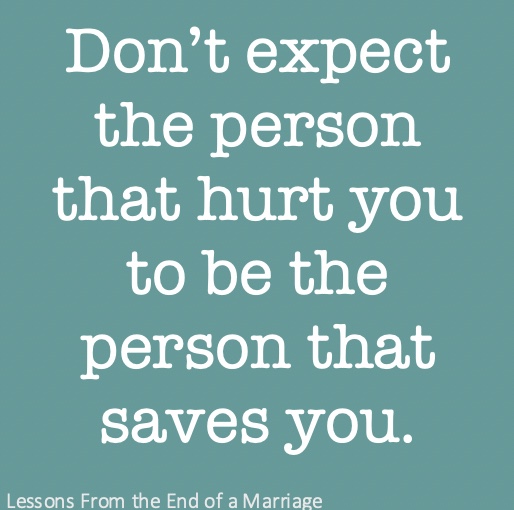
When you wait for an apology, you are allowing the person who harmed you to continue to harm you. You’re letting them decide if you get to be okay again.

And is that really a decision you want to place in the hands of someone who lacks empathy and courage?

If this person is still involved in your life and they are unable or unwilling to authentically apologize, take a good look at your boundaries. Is this someone that you want to remain in your life?

How can you accept the apology you never received?

The most critical component of accepting an apology you never received is to eliminate any magical thinking you have about apologies. They are no holy grail of healing. They do not have the power to erase what has happened. Once you realize that, it becomes easier to let go of the driving need for acknowledgement and amends. An apology is only required if you give it that power.

Your well-being should not hinge on somebody else’s shortcomings.

Their inability to accept responsibility is their problem.

Not yours.

Your healing is your responsibility.

Accept it.

If you’re having trouble accepting an apology you’ve never received, this can help.

fullsizeoutput_16ca