Divorce Insurance

My mom recently bought a new car which seemed to come with a seemingly endless stream of extended warranty offers and additional insurance opportunities. Insurance is an industry that capitalizes on our fears, offering reassurances in exchange for money and promising certainty rather than risk.

Insurance plays tricks on our brains. We somehow think that because we are aware of the risk and we addressed it up front, that the particular calamity will not strike. We unconsciously see our payout as a bit of a bargain with fate – if I pay now, you won’t make me pay later.

We want reassurances that everything will be okay and that disaster will not follow us home. And while some insurance is certainly a wise choice, it can be easy to allow the cost of fear to drain you.

Risk is a part of life.

And no insurance company can alleviate all loss and some pain and suffering is resistant to even the most generous sums.


As I was talking to my mom about her options, I wondered if anyone had ever tried to sell divorce insurance. It turns out that someone has.  The policy costs $15.99 per unit per month and matures after 48 months, whereupon it pays out $1,250 per unit purchased. If only protection against divorce were that easy.

From what I can tell, the company is not currently offering new policies. I guess the underwriting proved too complicated even though the actuarial numbers support a hefty profit. Plus, the money only helps to pay for the divorce and rebuilding expenses; it does not provide a happy marriage.

Maybe I can suggest another type of marriage guarantee – the extended warranty. It should be a more sure investment since the warranty is designed to expire before most marriages break down. Here’s what I envision:


marriage warranty


Of course it’s not possible to limit marital risk in such a way. Perhaps instead of insurance, we would be better served by developing our own life assurance policies. 


A Compilation of Lessons

It’s often amazing what we can learn simply by being observant and curious. Here is a compilation of some of my best lessons from some of the most unlikely of sources.

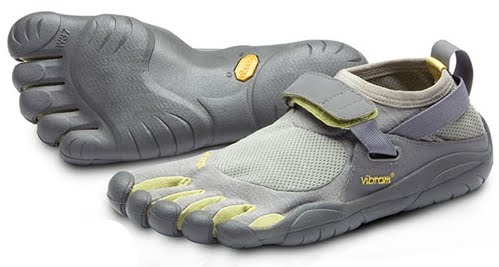
From my Vibram 5 Finger Running Shoes:

It’s Better to Feel What is Around You

In regular running shoes, the thick outer sole prevents any contact between your foot and the ground; you are barely even aware of the different environments underfoot.  In Vibrams, the thick sole allows you to discern the difference between soil and sand, asphalt and rock.  It makes for a more  fulfilling run, as you connect with the earth underfoot.  Likewise, allowing yourself to feel in a relationship makes the experience richer and more vibrant.  Be aware of what is around you, tune in to yourself and your partner, expose the soul. Read the rest of the post.
vibram-fivefingers-running-random-thoughts-from-a-part-time-vff-runner-3


From Selling Shampoo to Naked People:

Lesson: Acceptance

Teacher: Selling shampoo to naked people

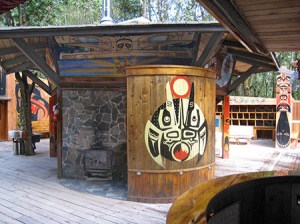
How it went down: I grew up in an environment where nudity was acceptable. From a young age, I learned that the human body, in all its variations, was natural. I was taught that nudity could exist apart from sexuality and that an unclothed body was not a source of shame or embarrassment. I first appreciated this lesson one summer in early high school when I spent a few days selling shampoo to patrons at a nude sauna at the Oregon Country Fair. I was at the height of teenage insecurity about my appearance and my body. Yet, when standing alongside hundreds of other exposed bodies, my anxieties about my own form dissipated. I realized that I had been accepting others yet judging myself. I have generally had a positive relationship with my body and my weight and I believe that it is because of my early experiences with nudity. On a side note, somehow people wearing nothing but socks appear to be even more naked than those entirely in their birthday suits:) Read the rest of the post.
FacilitiesDiamondSaunafront


From Georgia’s “Little Grand Canyon:”

Big things can have small beginnings.

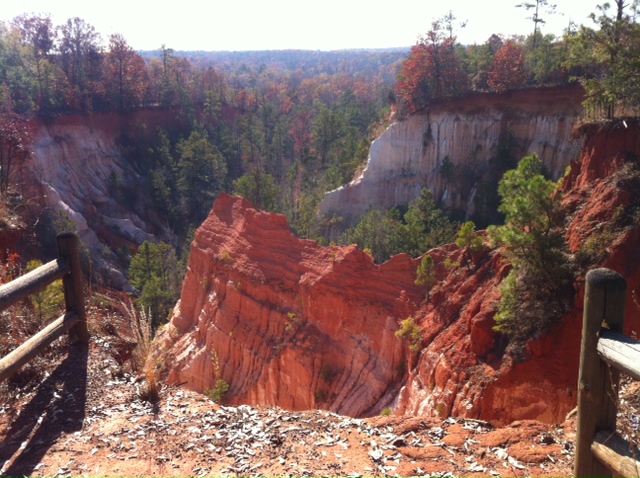
The canyon is not a natural formation, rather it was formed due to poor farming practices in the early to mid 19th century. The land originally consisted of gently rolling wooded hills. The early cotton farmers cleared the land of all existing vegetation and dug shallow furrows into the soil every planting season. Erosion took care of the rest. Now, almost 200 years later, the canyons are 150 feet deep and growing wider by 3-5 feet each year. Read the rest of the post.

photo-145


From The Dog Whisperer:

Work With Nature

According to Cesar, dogs process the world through their noses first, followed by their ears and eyes.  Obviously, we tend to use those senses in reverse and we all too often expect that from out pets.  Cesar advocated working with the nature of the animal so that you get the results you are looking for with the least amount of resistance.  Look around you.  Not everyone perceives the world the way you do.  Do you expect them to conform to you, or do you allow them to use their nature? Read the rest of the post.


From the Campgrounds:

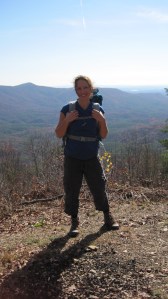
It Takes Effort to Gain Perspective

Our campsite was located at the base of Table Rock Mountain, its visage towering over us in all its granite splendor.  Our first day was spent preparing the campground, we were in our little insular world.  The next afternoon after a long, uphill climb, we reached elevation where we could see our campsite and how it related to the larger landscape.  We tend to live life in its details and forget to look at the big picture.  It takes effort to gain perspective, but a climb to the top gives valuable information.  It’s worth checking out now and then. Read the rest of the post.
dec-2011-028


From the wake:

Accept Your Weaknesses

My primary excuse for avoiding water skiing over the years was my fear of losing my (very expensive and very necessary) contact lenses. On this day, I brought a pair of swim goggles. Rather than allow a weakness to hold you back, find a way to work around it. Read the rest of the post.
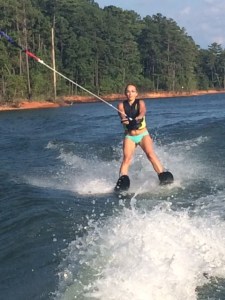
photo-62

From a Mechanical Bull:

Look Forward

The launched riders had a tendency to leave their gaze where they had been rather than look ahead. The talented guy kept his eyes looking straight ahead, even though straight ahead kept changing. Read the rest of the post.


From the Fencing Strip:

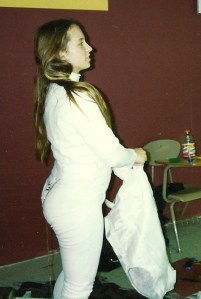
If you’re in a battle, it is a battle against yourself

Fencing is a bit deceptive.  You face off across a thin strip, mano y mano, waving swords in each other’s faces.  It would seem clear that your opponent is the masked person on the other end of the strip.  I soon learned that my true opponent was myself.  Each bout I strove to be better than I was before, regardless of who held the other weapon.  They were almost inconsequential.

The true battle was in my mind.  Against my own fears.  My own voice telling me I couldn’t do it.  I discovered that if I worked to win the battle in my head, the one on the strip usually worked out in my favor. Read the rest of the post.
fencinglisa


Free Webinar – How to Survive the Holidays While You’re Surviving Divorce

My friends over at Midlife Divorce Recovery have a free webinar on Monday with tips on how to survive the upcoming holiday season. Sometimes it’s nice to know you’re not alone.

Here’s the info:

Whether you’re just thinking about divorce, currently separated, filing, recently divorced or several years into your divorce journey, you can learn how to simplify the season, be patient with yourself, be kind to others, and simply survive these next few months with fewer tears and more joy.

This online event is designed to help you take extraneous things off your to do list, develop strategies to reduce the overwhelm, keep you focused on what’s important, and find little ways to experience the joy of the holidays. Whether you believe that right now or not. There is joy to be found!

Here are 3 compelling reasons you should sign up to watch How to Survive the Holidays While You’re Surviving Divorce

#1. It’s Fully Online

No travel required! We know you’re busy and time is crazy valuable right now. Simply find a computer and watch from anywhere.

#2. It’s Free

The event is completely free. You’ll have access to this great content without having to spend a single penny.

#3. Tales From the Trenches

You’ll hear stories and strategies from women who’ve been exactly where you are now. How they struggled but found things to celebrate and grabbed joy out of the tornado that surrounded them.

See you there!

Suzy Brown

Portage

I’ve spent a good amount of time on rivers. As a kid growing up in South Texas, tubing down the Frio or Guadalupe rivers was an essential part of every summer. I went whitewater rafting with friends and continued the tradition with my dad out West. When I moved to Georgia, I again spent time on the river, especially now with the Chattahoochee just down the road.

Rivers teach us about change. Unlike trails on land that stay static for months or even years on end, rivers swell and retreat seemingly with a mind of their own. Smooth waters are replaced with raging froth as boulders or logs divert the flow. Formerly deep wells become shallow graves lined with smooth stone when rainfall fails to meet the river’s demands. No matter how many times you have traveled those waters, they can still catch you by surprise.

A lesson I learned one summer rafting with a friend and her family on a river north of San Antonio. It was a stretch I had done before. In fact, I had even rafted it with her family on the previous summer. But this year was different. The usual drought had been relieved by drenching rains the week before and the river was full. Very full.

For the first part of the trip, we welcomed the swollen waters. You see, rafting (or even tubing) in Texas is usually broken up with intervals of walking the flotation device for a spell when the river becomes too shallow to support its draft. We used to joke about it being a sort of Texas portage. A normal portage is performed when the waters are too treacherous to approach and the craft is carried over land. In a Texas portage, the flotation device is simply carried over the small trickle of water while carefully stepping around the smooth stones that line the river bed until the water is again deep enough to support a craft.

So on this particular day on the river, we were simply happy that no Texas portages (portagii?) were necessary; the river was more than capable of carrying the raft with my friend and I, her parents and her brother. We were laughing and joking, eating soggy Pringles and drinking warm Cokes when we started to hear the noise. It started out as a dull roar, almost like bad reception on the car radio. But soon the noise was unmistakable. Water. Whitewater.

The recent rains had turned an upcoming portion of the river into a raging torment, made even more unpredictable by the damns created by debris moving down the river. Throwing the Pringles down, we scooped up the inadequate paddles and frantically rowed the boat ashore, narrowly escaping the tumultuous waters and our increasing panic. Where we carried the raft through the brush and bramble of the shore until we could safely place it back onto the water where we continued the remainder of the trip without incident.

That was my first real portage.

It wouldn’t be my last.


Our success on a challenge is greatly influenced by our view of the trial. If we see every section of impassable whitewater as an insurmountable obstacle, we will either remain stuck above the falls or find ourselves dashed on the rocks below.

But if we realize that the perceived obstacle is simply a detour in our plans, we will gather up the necessities and portage until it is safe.

Like the river, our lives often change without warning, causing us to leave the flow and construct a new path. Portage is not a sign of failure; it is a sign of acceptance and faith in the journey.

Sometimes you have to leave where you are to get where you are supposed to be.

When To Throw in the Towel on Your Relationship

In my opinion, one of the best parts of being abandoned is never having to wrestle with the thought of, “Should I stay or should I go?” Or even, “Will he or she stay?” There is no decision to be made about throwing in the towel. Instead, one day, you blindly reach your arm out of the shower only to learn that the towel has been removed while you were busy trying to rinse shampoo out of your eyes.

Read about the other benefits of abandonment.

Ending a relationship is rarely a clear-cut decision. There’s the matter of time invested. And hope for change. And usually the bad parts are at least somewhat offset with some good.

But sometimes a relationship needs to end. It’s a personal choice; one no one else can make for you. I’ve read many lists of when to stick it out and when to call it quits, but I think this one is probably one of the best I’ve come across. Clear and direct for when your thoughts are anything but.

It’s a good guide to help you decide if you should throw in the towel or maybe just add a little more fabric softener next time you throw it in the wash.