17 Things I’m Looking Forward To In 2017

1 – I planted a bunch of daffodil bulbs along my driveway last month. I’m looking forward to seeing their cheerful yellow heads welcome me home each day in late February.

2 –  I found a new (and amazing) yoga studio several weeks ago. I love the teachers, the space and the energy. I look forward to deepening my practice and taking more classes.

3  – The final surgery on my legs should be in a couple months. I’m looking forward to being pain-free and able to run and move as I want.

4 – I’m looking forward to finishing this intense school year and being able to use what I’ve created next school year.

5 – I’m planning a road trip through eastern Canada the northern part of the U.S. with a childhood friend. I’m looking forward to reconnecting and exploring.

6 – I’m looking forward to a deeper connection in my marriage. To getting to know my husband even better and being willing to open up even more.

7 – I’m looking forward to turning 40. And having a mid-life amplification. It sounds much better than a crisis.

8 – I recommitted to my meditation practice a few months ago. I look forward to continuing that in the coming months.

9 – I look forward to my friend bringing home her new baby and to spending time with her daughter.

10 – As I find my groove at work, I look forward to having more time to get to know my new coworkers. They’re some awesome people.

11 – I just created a budget to pay off the last of my student loans within the year. I look forward to being one step closer to debt free.

12 – I look forward to trying new things in 2017. Acro yoga is on the list. I need to add more.

13 – I have so many blog ideas in reserve from the past 6 months. I’m looking forward to having the time to write them.

14 – I’m looking forward to my husband getting his blackbelt in BJJ. I’m so proud of his dedication and persistence. He truly is a bada$$.

15 – I’m looking forward to receiving notes from both former students and readers and hearing about their accomplishments.

16 – A new Braves stadium opens in a few months closer to my home. I’m looking forward to experiencing games in the new facility.

17 – I’m looking forward to leaning more, doing more and being more grateful.

How about you – What are you looking forward to in 2017?

Top Ten ‘Lessons From the End of a Marriage’ Posts of 2016

hand-1105331_1920

2016 was filled with questions about how to deal with narcissists (and other difficult people), how to create emotional distance from your ex (especially when they have the audacity to remarry) and how to take control of your own life and happiness. All important questions.

Did you miss any of these popular reads?

 7 Reasons Discovering Your Ex is Getting Married is the Worst (and 7 Reasons It’s Not)  Because even though we may not want them anymore, it’s still hard to realize they’re moving on.

Finding Happiness After An Unwanted Divorce It begins with an awful realization – that your marriage is ending and you cannot stop it. Where do you go from there?

How to Accept the Apology You Never Received Often times the people that harm us the worst are the same ones who refuse to apologize for their transgressions. Let that be their problem, not yours.

How to Fall Out of Love Sometimes the relationship ends before your love does. And it’s painful to still love someone who no longer loves you. Here’s how to let go.

Subtle Signs You’re Being Manipulated by a Covert Abuser I felt weird writing this post, expecting people to belittle the signs I saw in my ex. Instead, I was surprised to find that many people experienced similar wolves in sheep’s clothing.

Why “How Could You Do This to Me?” Is the Wrong Question to Ask This piece was inspired by one of The Four Agreements – “never take it personally.” It’s amazing what happens when we can separate someone’s actions from ourselves.

Five Empowering Ways to Recover From Gaslighting Because gaslighting is the worst. Learn how to find your own truth again.

8 Reasons Relationships Move Too Fast (and Why You Should Slow it Down) A lot of people find themselves in a runaway relationship train. This post will help you understand why that happens and give you ideas to regain some control.

Is It Love? The False Dawn of a Rebound Relationship The first relationship after divorce can be powerfully intoxicating. It can also be incredibly damaging. Learn the difference.

Phases of Moving On After Divorce Apparently, I’m not the only one who experiences impatience:) Moving on can’t be rushed and certain things have to happen before other steps can be taken.


A Misunderstanding

A misunderstanding.

Tinged perhaps with my own poorly expressed sense of disappointment.

Hurt feelings and a perception of being unrecognized.

Is there any worse feeling than that of letting down someone you love?

Beating myself up right now.

And always trying to do better.

What Happens When You Confuse Desire With Belief?

How long did you believe in Santa? Before you finally accepted the truth, did you have that one year where questions started to arise but you so desperately yearned for the big jolly man to be real that you convinced yourself that he was the one leaving the gifts under the tree?


It’s so difficult for me now to understand how I could have been in the dark about my ex husband’s hidden life. It all seems so obvious to me now, clarity arising from the passage time and the draining of emotion.

But back then? I was in the dark.

Completely and utterly blind.

I remember the fury that would arise in me when others postulated that I must have known something was going on, that I must have had at least some suspicion.

I didn’t blame them for their assumptions (I would have thought the same at that time, had the roles been reversed). Yet their questions angered me beyond my ability to feign politeness. I would retort with a laundry list of the lies he told and the clever acts he committed to hide his deceptions.

But I never told them about me. About my own part in my blindness.

About how I confused desire with belief.

And how wanting something to be true made me convinced that it was.


There are a variety of motivations behind our desperate desires.

That child, grasping onto Santa, is reluctant to release the idea that magic is real and that their parents are not some bastions of truth. That the world is both more and less mysterious than the storybooks would have us believe.

And then that child grows older. Falls in love. Becomes convinced that the emotions must be both stronger and truer than those felt by others. The desire for that love to be true love results in a sloughing off of any niggling doubts, arising both from others and from some protected recesses of their own mind. That dream for perfect love is strong.

Decisions are made. Paths are chosen. Desires are expressed and forgotten as alternate paths fade into the background. A need emerges, rooted in fear, to believe that the chosen path was the right one. Judgement may further obfuscate other options in an attempt to keep questioning at bay.

Desire confused with belief.

A wish mistaken for truth.


That child, upon the realization of santa’s fictional status, may be devastated. There may be anger directed at those that maintained the fantasy. After all, when belief is shattered with truth, there are always cuts. But later, with growth and reflection, that same child may well realize that parents who cared enough to nurture and protect a child’s fantasy are more important than a rotund man with a penchant for red velvet.

The one who loved so deeply, upon experiencing heartbreak for the first time, will learn that love may not be as simple and pure as fiction would have us believe, but that it can be even more powerful. And that love is more about what it asks from us than what it gives to us.

And when one is able to look back at life’s decisions with an open mind, an acceptance of paths chosen while also admitting that they may have been made in error, there is opportunity. A chance for clarity.

Belief recognized as desire.


Like many (if not most) people, I entered into my first marriage with a strong desire to be accepted and protected. I wanted security and I thought that he provided it. I wanted a promise on companionship and I was under the impression that he would furnish it. I wished for a lifetime of marriage and I expected we would have it.

I wanted these things so badly that I believed that I had them. When small questions started to bubble up in my marriage like the first signs of a pancake ready to turn, I quickly popped them and carefully avoided looking underneath. On some level, convinced that if I wanted it badly enough to be true, it would be my reality.

My belief held strong, fortified by fear, until it was torn away in one bloody swipe. My hopes, my dreams shattered.

It was only later, fortified with time and distance, that I realized that those desires posing as belief had held me back. Kept me quiet. Resulted in opportunities lost and risks never taken.

Made me blinded with fear.

And I made a decision to never again close my eyes and make a wish.

But instead to keep my eyes open and never again to confuse desire with belief.


How Long Should You Wait For Promised Change?

“He promised he would change. But he’s still the same. I can’t go on like this.”

“She said she was going to be different, but it hasn’t happened yet. How long do I wait?”

One of the harder places to be in any relationship is waiting for the other person to follow through with promised change. I am often asked how long one should wait for the agreed upon changes to occur – what’s too long and what’s not long enough?

It’s never a pat answer. There is no magic formula, no rule that states how many weeks, or months or years have to pass while you wait powerlessly for the promise to be kept.

If you find yourself in this unenviable position, here are some of the things to consider as you ask yourself how long you should wait:

Who initiated the idea of change?

If you are the one who brought up the desired alterations, it’s time for a pause. You cannot change another person, no matter how much you want to. Even if it was agreed upon, if you initiated the idea, there’s a very good chance it will not come to fruition on your timeline (or at all). The question then becomes are you willing to wait for them to internally motivated to change or not?

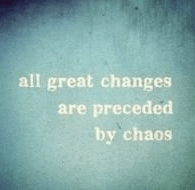
Here’s a difficult truth – people never change for another. They change for themselves.

Are you hung up on potential?

The quickest way to anger a teenager is to bring up the fact that they have potential. They’ll immediately shut down, feeling simultaneously judged and unappreciated. Adults are no different. Yes, it’s difficult to see what somebody can become while, from your perspective, they’re squandering some of their gifts. And it’s easy to fall in love with somebody’s promise. But that’s no guarantee they’ll ever reach that ideal that you’ve pictured.

We are all always changing. They may move towards their potential and they may not. All you have to go on is who they are right. this. moment. How do you feel about that person?
snip20161218_24

Are there actions alongside the words of promise?

It’s one thing to claim an intention to change. It’s another to take steps. In these cases, the words tend be grandiose, full of promise and potential. They can distract and cloak reality. In contrast, actions, real actions towards meaningful change tend to be quiet, easily overlooked. Yet these are where you attention should focus.

Understand that change is hard and rarely linear.

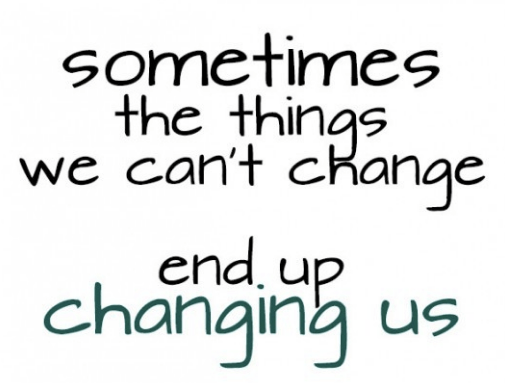
As long as actions towards the goal are occurring, be patient and compassionate. Change is scary and often way more difficult that we anticipate. Be supportive. Be an a$$kicker and a cheerleader. When there are signs of progress, give the benefit of the doubt.
snip20161218_23

Set ultimatums with yourself and boundaries with the other person.

You need to decide exactly what you’ll tolerate. Think through those “if…thens…” and make firm decisions on your responses. Communicate these to the other person, not in the form of ultimatums, but in the form of boundaries – what you are and are not willing to put up with.

Ultimatums can be manipulative, seeking to control another’s response (which never goes over well). Instead, make your own decisions about you and communicate them clearly. Then allow the other to make their choices and follow through on what you promised yourself. That last part is important.

Accept that you may have to step back with the hope of one day stepping back in.

It may be that you cannot tolerate the situation unless and until the change has occurred. Or maybe the nature of relationship is in opposition to the change occurring while a certain level of contact is maintained. Distance can be helpful if it does without manipulative intentions and without the expectation of a guarantee.


Be honest about the limitations of change.

Behaviors can be learned or unlearned. Habits can be developed. Personal challenges can be managed. But ultimately, this person is who they are. Is that enough for you? If you are waiting for a total transformation, you’re not being fair to either one of you.

snip20161218_25

When you’re frustrated, change your approach or your response.

After all, it’s what you can control. And you may be surprised just how powerful that can be.


Is addiction a part of the story?

Addicts are extremely skilled at doling out promises of change (peppered with just enough evidence) to keep you waiting. If there is addiction (or the suspicion of) in the mix, you’re going to have to practice some tough love. Check out Al-Anon for help and support here.

Attend to yourself.

Sometimes we get so caught up in somebody else’s issues that we forget to take care of our own. And sometimes we use somebody else’s problems as an excuse to ignore our own. Make sure to attend to yourself.

And most importantly –

Although you may be waiting on change, refuse to wait to live.