


I had two choices for my morning run today – the relative comfort of a treadmill in my dry and air-conditioned gym or the muddy trails of a nearby park in the rain and oppressive mugginess that blankets the east coast in the warm months.
I debated for a few moments, considered how miserable I would likely be on an outdoor run as I struggled to breathe in air that was more water than oxygen and how tempting it was to remain in the manufactured comfort of air-conditioned space.
After swallowing the last of my coffee, I went downstairs and selected my trail-running shoes, opting for the less comfortable option. At the beginning of the trail, I questioned my choice. The sweat was already soaking through my shirt, my lungs were threatening to wheeze and a strange guy on the relatively empty trail caused me to grip the mace I carry just a little tighter.
But then after the first mile, I began to find my stride. The moisture in the air became less noticeable, my breathing began to acclimate and the weird guy stayed weird, but also stayed back. And by the time I made it back to my car, looking like I had just completed a mud run complete with a culminating dunk in a body of water, I was happy that I chose the less comfortable route.
Which are you more likely to regret – the step that takes you out of your comfort zone or the inaction that keeps you there?
We all like to be comfortable. All of us fear the unknown and to some extent, shudder at the thought of potential failure. We shy away from experiencing any sensation that could be labeled as unpleasant. All of us have become experts at crafting and disseminating excuses that give us permission to maintain the status quo, telling ourselves stories to justify our inaction and our conclusions.

Life – real life – happens outside your comfort zone.
When we take steps outside our comfort zone, we are granted permission to fail.
Once you’ve been labeled “good” at something, you are expected to perform at a certain level every single time. In contrast, when something is brand new to you, any failure is somehow less personal and more situational. That makes it much easier to face.
When we take steps outside our comfort zone, we are allowed to be unsure.
I don’t know about you, but I always feel pressure to appear confident about my decisions and my actions. I feel like this is one of the great lies of adulting. When we were little, we assumed that adults knew what they were doing. Only now, we’re the grown ones and we’re just faking it. When you’re doing something new, you’re allowed to reveal that insecurity.

When we take steps outside our comfort zone, small achievements are recognized and celebrated.
When you were a baby, your every “first” was marked and even memorialized. That recognition of small successes often fades as we age. When you’re outside your comfort zone, you are far more aware of those “firsts” and mark them of signs of growth.
When we take steps outside our comfort zone, we have fewer expectations from ourselves or from others.
Expectations can be powerful limiters. Just look at those studies where teachers of completely average classes were either told that their children were brilliant or behind. The children performed not based on their ability, but according to their teacher’s expectations. And in our day-to-day lives, we are just as likely to limit ourselves with claims of, “I can’t.” When we take that step outside of our comfort zone, we are instead asking, “But what if I can…?”
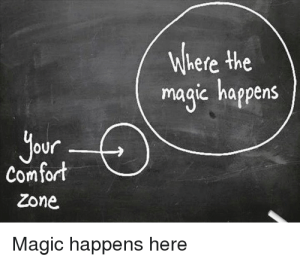
When we take steps outside our comfort zone, assumptions – and beliefs – are challenged and often adjusted.
WE often reach conclusions based on what we experience. So the more limited your experiences, the less-informed and potentially more biased your assumptions will be. When we meet new people and experience new ways of seeing the world, we are forced to re-examine and maybe even readjust our beliefs.
When we take steps outside our comfort zone, learning combats frustration born of stagnation.
Humans get bored. Just watch a modern queue and take notice of how many people are engaged in their phones to avoid a few minutes of idle and purposeless time. The same thing happens on a larger scale. We thrive on novelty, on challenge. When there is nothing left to learn, we become stagnant and then frustrated. The space outside a comfort zone offers unlimited opportunities for learning.

When we take steps outside our comfort zone, curiosity dominates and inspires wonder.
Have you ever watched a kid in a new environment? A place that is known to you suddenly becomes alive with possibility when seen through their eyes. Our brains have literally evolved to disregard that which is too ordinary. And when your life is spent entirely within a comfort zone, you risk having your brain ignore it all. Newness encourages our brains to wake up and pay attention, bringing with it a childish sense of exploration and wonder.
When we take steps outside our comfort zone, we allow space for authenticity and purpose.
We all-too-often become our labels – mother, father, caretaker, employee, etc. We forget who we really are and what really inspires us and drives us. When we leave our comfort zone, we often discard those labels for a period of time, allowing us the the opportunity to discover what is really important to us.

 Lessons From the End of a Marriage