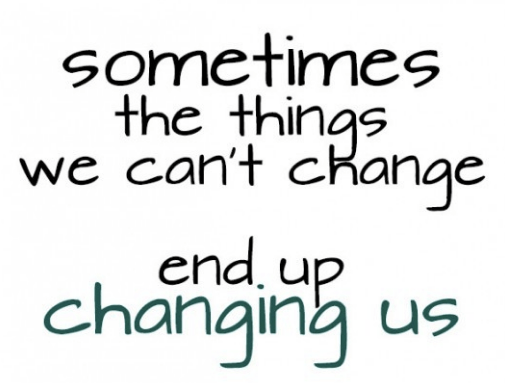
Does Time Heal All Wounds?

When people contact me early in their divorce experience, the edges still rough and the emotions raw, I often find myself saying, “It’s early still. Give it some time.” It’s counsel I hate to give because it suggests that the pain has to be endured before it can be erased. Yet it’s also truth; there are some parts of healing that can only be addressed through the passage of time.

Time is a critical component of healing from loss. Yet it is no panacea, containing all of the answers.

What time does…

Time Softens I like to think of time as flowing like a river. When you first experience loss, it is a rough and jagged stone, thrust suddenly into the stream. At first, the river is diverted, pausing as it navigates this alien and unwanted intruder. In time, the river wears away at the rock, softening its edges and incorporating it into its topography. The loss is still there, but the serrated edges that sawed through your heart are worn into a blunt edge that provides a constant, yet bearable, pressure.

Time Muddies Memories At first, memories come in great waves, slamming into your gut without notice and stealing your breath away. The images play across your brain in high definition and the current reality pushes in with its ugly disparity. As the calendar advances, these memories lose some of their clarity, the details fading like linen left in the sun.

Time Permits Acclimation When you first experience loss, it’s like the gaping hole left behind by a missing tooth. It demands your attention. You worry at it. Obsess about it. Over a period of weeks and months, the shock and novelty fade. The need to talk about your situation will become less pressing and your mind will begin to make space for other things again.

Time Provides Experience The first time through any difficult experience is always the hardest, as the coping mechanisms and strategies have yet to be developed and you are not sure what to expect. Time gives you ample opportunity to practice breaking down and making it through. Each time you feel the pain, you get a little better at being with it and moving through it.

Time Allows For Opportunity Time supplies you with opportunities to implement the modalities that help with healing – counseling, journaling, mindfulness, movement. All of those strategies require time and repetition in order to be effective. Time also allows for new experiences, reminders that even though you’ve experienced loss, you’re still living and there are smiles to be found amongst the tears. Those moments of respite give you hope that things can be better.


What time does not…

Time Doesn’t Mean You Forget You will never forget. Time does not erase all memories, delete all pain. It’s still there, but there is also space for you to live alongside of it.

Provide Automatic Processing Time doesn’t do the healing. You do. If all you do is wait, you’ll feel much the same, only with more wrinkles. Time simply gives you the space and opportunity to work through it.

Time Doesn’t Provide Understanding Time won’t answer the “why” question for you. It won’t reveal why life is harder for some of us than others and why bad things can happen to good people. What time does give you is some perspective that suggests that maybe understanding why isn’t really that important.


Time may not heal all wounds, but it helps to cushion you from the emotional wound, becoming a sort of insulating layer. And with that distance, you have to space to breathe, to process and to live again.
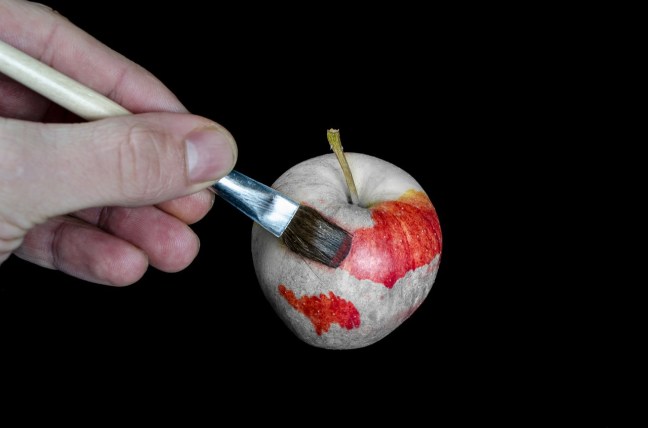


How Long Should You Wait For Promised Change?

“He promised he would change. But he’s still the same. I can’t go on like this.”

“She said she was going to be different, but it hasn’t happened yet. How long do I wait?”

One of the harder places to be in any relationship is waiting for the other person to follow through with promised change. I am often asked how long one should wait for the agreed upon changes to occur – what’s too long and what’s not long enough?

It’s never a pat answer. There is no magic formula, no rule that states how many weeks, or months or years have to pass while you wait powerlessly for the promise to be kept.

If you find yourself in this unenviable position, here are some of the things to consider as you ask yourself how long you should wait:

Who initiated the idea of change?

If you are the one who brought up the desired alterations, it’s time for a pause. You cannot change another person, no matter how much you want to. Even if it was agreed upon, if you initiated the idea, there’s a very good chance it will not come to fruition on your timeline (or at all). The question then becomes are you willing to wait for them to internally motivated to change or not?

Here’s a difficult truth – people never change for another. They change for themselves.

Are you hung up on potential?

The quickest way to anger a teenager is to bring up the fact that they have potential. They’ll immediately shut down, feeling simultaneously judged and unappreciated. Adults are no different. Yes, it’s difficult to see what somebody can become while, from your perspective, they’re squandering some of their gifts. And it’s easy to fall in love with somebody’s promise. But that’s no guarantee they’ll ever reach that ideal that you’ve pictured.

We are all always changing. They may move towards their potential and they may not. All you have to go on is who they are right. this. moment. How do you feel about that person?

snip20161218_24

Are there actions alongside the words of promise?

It’s one thing to claim an intention to change. It’s another to take steps. In these cases, the words tend be grandiose, full of promise and potential. They can distract and cloak reality. In contrast, actions, real actions towards meaningful change tend to be quiet, easily overlooked. Yet these are where you attention should focus.

Understand that change is hard and rarely linear.

As long as actions towards the goal are occurring, be patient and compassionate. Change is scary and often way more difficult that we anticipate. Be supportive. Be an a$$kicker and a cheerleader. When there are signs of progress, give the benefit of the doubt.

snip20161218_23

Set ultimatums with yourself and boundaries with the other person.

You need to decide exactly what you’ll tolerate. Think through those “if…thens…” and make firm decisions on your responses. Communicate these to the other person, not in the form of ultimatums, but in the form of boundaries – what you are and are not willing to put up with.

Ultimatums can be manipulative, seeking to control another’s response (which never goes over well). Instead, make your own decisions about you and communicate them clearly. Then allow the other to make their choices and follow through on what you promised yourself. That last part is important.

Accept that you may have to step back with the hope of one day stepping back in.

It may be that you cannot tolerate the situation unless and until the change has occurred. Or maybe the nature of relationship is in opposition to the change occurring while a certain level of contact is maintained. Distance can be helpful if it does without manipulative intentions and without the expectation of a guarantee.


Be honest about the limitations of change.

Behaviors can be learned or unlearned. Habits can be developed. Personal challenges can be managed. But ultimately, this person is who they are. Is that enough for you? If you are waiting for a total transformation, you’re not being fair to either one of you.

snip20161218_25

When you’re frustrated, change your approach or your response.

After all, it’s what you can control. And you may be surprised just how powerful that can be.


Is addiction a part of the story?

Addicts are extremely skilled at doling out promises of change (peppered with just enough evidence) to keep you waiting. If there is addiction (or the suspicion of) in the mix, you’re going to have to practice some tough love. Check out Al-Anon for help and support here.

Attend to yourself.

Sometimes we get so caught up in somebody else’s issues that we forget to take care of our own. And sometimes we use somebody else’s problems as an excuse to ignore our own. Make sure to attend to yourself.

And most importantly –

Although you may be waiting on change, refuse to wait to live.