Ten Easy Communication Hacks For Your Marriage

Scan any list about the most important elements of a happy marriage and effective communication will be somewhere between “shared values” and “physical intimacy.” Its ubiquitous inclusion is not because relationship writers are lazy. It’s because communication truly is key in any relationship. Especially one where you face each other every day prior to morning coffee, tackle everything from kitchen remodels to retirement plans and expose your greatest vulnerabilities and dreams.

The reason that communication can become a point of contention in a relationship is that while talking is easy,

Listening is hard.

And taking responsibility for our own emotions and responses is harder still.

But that doesn’t mean that everything to do with improving your communication has to be hard. Here are ten easy hacks to start improving the communication in your marriage beginning today:

Use Figurative Language

Feeling misunderstood is extremely frustrating. And it’s easy to get caught up in blaming your partner for refusing to listen. But maybe they’re listening and simply not relating. Not because they don’t want to. But because they don’t have anything to latch on to.

So instead of getting irritated, try getting creative. Reach back in your mental archives and pull up those metaphors and similes from your school days. Instead of explaining what it is, try painting a picture of what it’s like. You’re not trying to replicate every detail or match every trait. You’re just working to establish an anchor point for understanding. You can fill in the gaps later.

Follow the Percent Rule

I am a huge fan of the 80/20 rule – do the “right” thing 80% of the time and cut yourself some slack the other 20% of the time. Although this is most often applied to nutrition, it works with communication as well.

Share 80% of the positive thoughts you have about your partner or your relationship. (Yes, it would be nice to aim for 100%, but life, you know? So strive for 80%.) This means every time you admire your partner’s butt as he or she walks away, each time you notice that the garbage has been taken out and whenever you see him or her tackle something with ease, you speak up. Or write a note. Or send a text.

And the 20%? Share only 20% of your negative thoughts. This means you may have to choose them wisely. Don’t waste those words on a gripe about the scattered socks unless that’s really something that you to express and you want addressed. These words should be reserved for problems that can be solved together, not complaints for the sake of grumbling.

Pay Attention to Physical Comfort

One of the worst grades I ever made on a college exam was on a chemistry test that was administered in a frigid room while I sat on a cold, unforgiving metal stool. My body was in such discomfort that my mind wasn’t operating anywhere near its best.

Conversations operate the same way. There’s a hierarchy of needs and a full stomach, a rested body and an acceptable environment come before listening and responding effectively.

So by all means, go to bed angry if you need to. Staying up and staying engaged in the discussion will only backfire.

Ask More Questions

Do you find yourself responding defensively or getting angry after a statement by your partner? The instinct is to respond with a sledgehammer, shutting down that line of discussion completely and utterly.

Instead of smashing the claim (and you partner) into smithereens, try increasing the amount of questions that you’re asking. This strategy has a two-pronged benefit – it helps give you added information to aid in your understanding and it validates to your partner that you’re listening to them.

Use a Candle

Do you or your spouse have trouble initiating difficult or complex conversations? Try this simple idea.

Tell Stories of Your Shared Past

One of the ways that researchers are able to predict divorce in a couple is the relationship origination story that they tell. Happy couple tell happy stories, making light of or brushing over any rough patches on the way to the alter. Do they tell happy stories because they are happy or does the mere retelling of a happy story cultivate additional happiness?

I would wager it goes both ways.

Make a habit of telling favorable tales about your shared relationship history. You’re making deposits in the marital bank and reinforcing your bond.

Write It Out Before Talking It Out

Have you ever uttered, “You make me feel…?” No shame. I’m guilty too. We say that because it’s easy, skimming the surface – you did this, I felt this – instead of digging deeper – you did this, it reminded me of that, and I felt this.

One of the biggest things you owe your spouse is to take responsibility for your own stuff. And that starts by being aware of your stuff. The connections between your present and the luggage you brought with you from your past.

So talk to your journal before you talk to your partner.

Because writing your thoughts is a great way for you to see those connections between what was done and how you feel. Because nobody else can make you feel a certain way.

Engage In a Shared Task

The body tells our minds how to feel. If you clench your fists, you will respond more aggressively in conversation. If you roll your shoulders back, you not only appear more confident, you speak more confidently.

So when you want to communicate to establish a connection, begin with a physical association through a shared activity. This doesn’t need to be complicated – washing the dishes, taking a walk, shopping for groceries all count as joint tasks.

Just another reminder that you’re in this thing together.

Use Texting Wisely

In a marriage, texting should only have two uses: 1) Planning or 2) Play.

Logistics comprise a significant portion of any relationship. And texting is a great way to work out the details of shared lives in real time.

But a marriage that only shares plans isn’t much of a marriage.

And phones are great for sharing more than just reminders and schedules.

Flirt. Seduce. Banter. Joke. Play.

And ban anything negative or complicated from your texting vocabulary. Some things are better addressed in person.

And the number one hack you can utilize to improve your communication?

Release Expectations

So often the reason that a conversation heads south is that we react to what we expect to hear instead of what is said. We construct a response before we even hear our partner out.

In other words, the battle is really within ourselves.

The single most important change you can make in your communication is to approach with curiosity instead of conclusions.

Listen.

And you just might learn something new about your partner.

Or even yourself.

Innocent Spouse Relief

innocent spouse relief

I’ve been receiving more questions about this program offered by the IRS, so I figured it was time to dedicate an entire post to the subject. Please note that I am not a tax expert (nor do I want to be!!!). I am simply sharing my experience, summarizing the information from the IRS and pointing you in the right direction for further resources.

From my book:

I received a notice that I had a certified letter ready for pick-up. My stomach dropped, as I had been conditioned to certified letters signaling more money owed or another bomb ready to drop. When the postmistress placed the stocky envelope in my hands, she uttered an apology.

“Sorry. It’s from the IRS. Nobody likes to get those.”

I thanked her and moved to the side of the room bracing myself against the green tiled wall as I slid my finger under to the flap to break the seal.

“We have determined that you are eligible for Innocent Spouse Relief.”

I let out a sharp cry as I slid to the floor, grasping the stapled pages in both hands. The tears began, falling from my eyes that tracked that single line again and again. The postmistress looked up, concerned. Leaving her current customer, she lifted the hinged counter section, kneeled next me, and inquired about my well-being.

“I’m great,” I said through the sobs. “I got Innocent Spouse Relief. The IRS gave me the justice the courts never did.”

“That’s great, honey,” she replied, looking equal parts relieved and confused.

Hours went by before I was able to read more than that single sentence. There was a 90-day waiting period where Timothy would have a chance to contest before they would issue a check. I did not care. I was fixated on that single word, “Innocent.” After enduring the months of attacks by Timothy and his attorney, and internalizing some his lies, I felt such relief at the conclusion reached by a third party.

I had long since given up my faith in labels, but that simple declaration from the IRS freed me from bonds I was not aware ensnared me, releasing me in the way that I expected from the court ruling.

My tax problem was one of several bombs in those first few days. My first indication of a problem came in a thick envelope just days after I received the text. The letter was very threatening in tone and it was clear it was not the first notice. It was simply the first notice that he couldn’t intercept. This one stated that we owed almost $3,000 for taxes from 2007. $3,000 that I didn’t have. And, to make matters worse, he had taken all of the financial files with him as well as the computer that was used to prepare the taxes. I had to order my own tax returns from the IRS to try to figure out what happened.

I had neither the constitution nor resources to go to battle with the IRS at that point. I was simply struggling to survive. So, using money gifted from family, I sent them a check. Over the next few months, two more letters came in about two different years. I cut two more checks.

I was furious. At this point, I had received the returns and discovered that he made false deductions. $10,000 to charity??? I probably dropped some stuff off at Goodwill but I don’t think my old jeans and some video tapes were worth quite that much. He had always been the one to prepare our taxes (yes, I trusted him completely) and, with electronic filing, I didn’t even have to sign in the later years.

I looked at the thousands I sent to IRS up as simply more money he stole from me. I lived in fear of another audit and more money owed. I tried to find comfort in the fact that the legal divorce at lease promised me that there would be no new tax problems cropping up.

Months after the divorce was final, my dad called me with some news.

“I just heard about a program with the IRS, innocent spouse relief, that I think may help you. I’ll send you the link.”

I remember clicking that link, skimming the fact page it led me to and starting to shake. It felt too good to be true. At that point, I had lost all faith in the system. My ex never followed the divorce decree, leaving me with a house entering foreclosure. He was already showing signs of failing to meet the requirements of his felony charge for bigamy (there’s currently a warrant for him). And, finally, it looked like the IRS could possibly, maybe provide some justice. It was a long shot; the majority of applicants for relief are turned down. But I was going to give it my best shot.

I printed out Form 8857, Request for Innocent Spouse Relief.  I had to chuckle when they asked me for his current location and contact information; he could have been anywhere from Georgia to hell – I had no idea and didn’t want to know. I completed the form as best I could. But I didn’t stop there. The form only provided a laughable three lines to explain the circumstances. I attached around forty additional pages of background story. Essentially, I was trying to get them to see the whole picture.

I assembled anything I could to help them understand what happened. I included the papers about his felony charge, emails from him that ensnared him in lies, reports from the police, the divorce decree (which indicated his liability to assume the tax debt) and evidence of his lack of participation in its demands. I even threw in his mug shot for a little flavor. I felt like an attorney assembling a case. Which I pretty much was. By the end, I complied a 4″ stack which I sent to the IRS in a box.

And then I waited. Periodically, I would receive letters that they were considering the case. Then, about six months later, I received the letter that stated relief would be granted. He had 90 days to contest it and he never did. I don’t even know if they ever found him. Over the next few months, I received checks refunding the extra tax that I had paid and now the debt is firmly on his shoulders.

A side note: Georgia also has a state income tax. The process with them – from the initial letter demanding payment to the final granting of relief – has run about two years behind the federal case. Luckily, I did not have to mail a box to the state; they simply required the letters of relief from the IRS. I’m not sure how the other states handle this, but I would expect it is much the same.

From the IRS website, you are eligible for innocent spouse relief if you meet all of the following conditions:

  • You must have filed a joint return which has an understatement of tax;
  • The understatement of tax must be due to erroneous items of your spouse;
  • You must establish that at the time you signed the joint return, you did not know, and had no reason to know, that there was an understatement of tax;
  • Taking into account all of the facts and circumstances, it would be unfair to hold you liable for the understatement of tax

Here’s the IRS list (with all of the if-thens that make you feel like you’re reading code!) that helps you determine your eligibility. Just reading it makes my head hurt.

You must also file within certain time limits (this used to be two years but has since been lengthened and made more variable depending upon type of relief requested. The IRS considers many factors in deciding whether to award relief. From what I call tell, they are looking for evidence that the petitioning spouse had no knowledge of the erroneous information, has made changes to remove themselves from the situation and was a victim in some way or incapacitated during the marriage.

Here are the factors that I believe helped my case:

  • The divorce decree stated that he held the tax liability.
  • He was charged with a felony (unrelated to taxes, but still indicative of fraud and deception).
  • He demonstrated a history of deception, financial and otherwise.
  • He removed the financial files from the house.
  • I immediately paid the monies owed as soon as I found out about them.
  • He prepared the taxes.
  • I documented the emotional and financial impact that the divorce and associated problems had on me.
  • I provided the IRS with multiple pieces of evidence for each claim as well as a thorough description of the situation.
  • He failed to uphold the conditions of the divorce decree or the diversion granted in the criminal bigamy case.

Innocent spouse relief is not easy to obtain. Like anything with the IRS, there are confusing forms and rules that seem to be an endless shifting target. There are tax attorneys that feed on this and offer their services – at a steep price of course – to help you with your case. I never had that option nor do I expect most people requesting relief have those kinds of resources idly sitting around.

My suggestion? If you think you qualify, set aside a weekend to print the form and assemble your case. It may be time well spent. And, if you’re like me, receiving an official document that names you an “innocent spouse” can be worth more than the checks that follow.

To contact the Innocent Spouse Relief department:

1-855-851-2009

IRS

Innocent Spouse

Stop 840-F

PO Box 120053

Covington, KY 41012

Related:

The First Tears of the New Year

An Open Letter to the IRS

Marital Fraud: Questions Answered

Adventures in Publishing, Part II

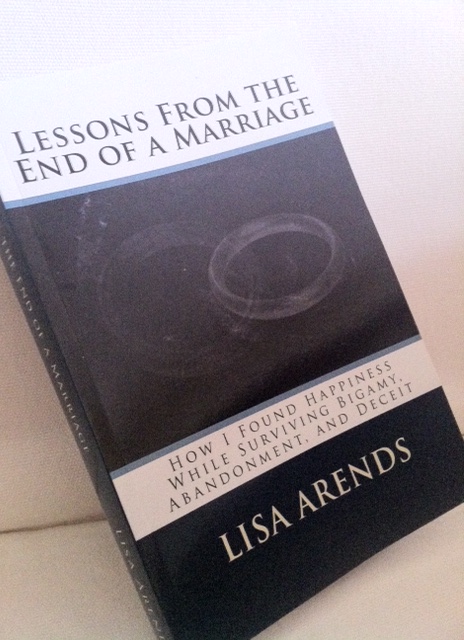
The proof copy of the book came in the mail today! 🙂


It’s a bit strange. I’ve gone from being completely ignorant about self-publishing to being to go-to person amongst my friends in the span of two months. I’ve already explored the early stages of the process here and now I will share some of the other hits, suggestions, frustrations and random thoughts about the process now that I am a whole month wiser (I need a sarcasm font!) and I have a couple more iterations of my book under my belt.

Because endless formatting and the start of the school year have left me unable to assemble sentences coherently, I’m going to present this in a series of rambling bullet points.

First, a primer. I published using three platforms: Kindle Direct Publishing (ebook, Amazon), PubIt! (ebook, Nook), and CreateSpace (print, Amazon) in that order.

– ebooks are da bomb! Both programs were easy to work with and the formatting took a minimum of hassle. After I got my head around how certain styles and formatting options looked in html (the file type used for e-readers), it was pretty simple. The main difference between the two programs is that Kindle wants page breaks and PubIt! want section breaks (the latter is also used in CreateSpace so starting from a PubIt! formatted file saves some time).

-For the initial digital cover, I first tried using Fiverr, but I wasn’t happy with what came back. I ended up using Clipart (the online library is pretty good these days) to create my own image in the specified dimensions, saved it as a PDF, and then converted it into a JPEG. It was pretty simple. The main criteria to keep in mind is that the cover needs to look good as a thumbnail.

-I’m not sure about PubIt!, but Kindle offers formatting for a fee (under $100) if you don’t want to tackle it yourself. Otherwise, it’s free. Honestly, it was simple enough, I wouldn’t pay for this service.

-Another benefit of the ebook format is that you can update your file at any time.  The turnaround seems to be a few days for the old file to be replaced with the new.

-I was planning on delaying the release of the print book for several months, mainly to give myself a break and to allow time to collapse after the early days of the school year. Alas, it was not to be:) I was surprised how many people not only preferred tangible books, but did not have access to an e-reader, smart phone, or iPad. So, I quickly got to work reformatting.

-Print books are another animal entirely. With an e-reader, you don’t have to worry about where the text breaks because it is different on every device and changes with the user settings. A paperback is static. You have to get that spacing right. CreateSpace walks you through the process. After I selected my book size (6″x9″), I downloaded a free MS Word template in which to paste my text. This is where I made mistake #1. I assumed that the template was already sized for the format I selected since it came after I was prompted to choose a size. Wrong. The template was for a standard size page. So, I formatted (and numbered!) the whole thing incorrectly on the first pass. Grrr. Unlike me, you should change the paper size (under page formatting) first. The template is a bit strange to get used to – it looks like an open book but the odd pages are on the left, not the right as it will be in print. Have fun with that one.

-I decided to purchase an ISBN number ($99) through Bowker so that I have options regarding distribution. CreateSpace gives you information on all of your options. As a side note, if you purchase your own ISBN, you are technically opening your own publishing house. I’m having fun with that one.

“What did you do this summer?”

“Oh, I just wrote a book and opened my own publishing house.”

Giggle:) I don’t tell them it was as easy as providing my address and credit card number.

-Next, set your margins. For most books, set the outer margins to .50 and the inner to .75. If your book ends up greater than 400 pages, your gutter will need to be increased.

-At this point, I recommend uploading your file to CreateSpace so that it can scan for errors and you can view the document in their mock-up program. This way you can fix any margin or gutter issues before you spend time on fonts and spacing. And, yes, this would be mistake #2. You can upload Word or PDF files. I had better luck with PDF holding true to format.

-Now it’s time to start working with the text. Make sure all of the text is the font and size you desire. I’m not going into all of that here – Google it for more information on fonts than you ever wanted to know. Size everything the way you want it before you begin monkeying around with spacing. Yup, you guessed it. That was my mistake #3.

-Okay, you’re margined and sized? Now you have the delightful task of playing with spacing and section breaks. If you need to change entire paragraphs, select the entire document and play around with Word’s paragraph settings. You can specify where they break, if words are hyphened, and the amount of space between paragraphs. Once the basic settings are where you want, go page by page and make sure that paragraphs are where you want. Remember that new chapters should always begin on odd numbered pages (left side in the template). If you need to add a blank page to make that happen, use a section break. One quirk to be aware of – you are not allowed more than three blanks in a row, including at the beginning and end of the book.

-A brief interlude: Save multiple copies of your file as you move through the process. My file became corrupted as I was putting on the finishing touches. I had been saving versions of it at various points, which ended up saving me. I still had to redo all of the formatting, but I could dig through several versions to find the most recent, yet uncorrupted, file.

-The final step is to insert headers (usually title or title/author) and footers (page numbers). I used the directions on this site. Once you get the hang of it, the page numbers aren’t too bad. Until you get the hang of it, you want to throw your computer out the window.

-Speaking of computers…I have a cute little 11″ MacBook Air. I love the thing. It’s small enough to slip into my purse or a backpack and take to the park or a coffee shop. The battery lasts long enough that I rarely have to worry about bringing along a charger. During the formatting process, however, my computer was not my friend. Its screen was simply too small to be efficient. If you have access to a large monitor, use it for this process!

-I thought I was home free after I finished the interior of the book. I was planning on using the image from my thumbnail in the cover template from CreateSpace. Yeah, not so much. First, the cover creator in CreateSpace is pretty (read: very) limited. There are only a handful of templates to choose from and they offer little in terms of customization. After discovering that the pixel count wasn’t high enough in my original image (they suggest 300 dpi), I had to start over from scratch. I was frustrated with the lack of choice, but I didn’t want to spend the time or money to create a cover (much harder to do for a physical book) without the template. If you use their program, try to enter the process with only a general idea of what you want so that you are not frustrated with their (lack of) options. If you’re still counting, I would call that mistake #4.

-As with Kindle, you can pay CreateSpace (around $300) to do the formatting for you. This may be worth it, especially if you have images or other elements that make it difficult to format.

Overall, self-publishing is relatively easy and can be done for little to no money. It is a great option to get your book out to the world without relying on the whims of agents and publishers. So, what are you waiting for? Finish that book you’re always talking about writing!