Growing Older, Growing Wiser…IF You Keep This in Mind

Have you noticed that some people seem to find their inner zen and worldly wisdom as they age while others only seem to settle into negativity and bitterness?

Have you ever wondered why that is?

As we get older, there are two opposing forces that can impact our general happiness and outlook. Two divergent agencies both raising their voices to be heard.

Which one will you listen to?

The Voice of Life Lost

When I look around me, I see some people who have made it beyond middle age without suffering any major setbacks or losses. But only a few. I’m convinced that wrinkles are only partially due to thinning collagen and the relentless pull of gravity. I think wrinkles are the visible signs of the emotional scars we carry in ever-increasing numbers.

And as those hurts and losses begin to compound, it’s easy to become buried. Become embittered. It may seem that there is more lost than has ever been gained and the thought of trying again feels insurmountable. With so many difficult life experiences, everything can become tainted, turning the once-innocuous into a potential trigger.

Some people let this toxicity build like an algal bloom on a once-clear lake, blocking out all of the light and choking out all of the life. Their lives become a tally of what has happened and how they’ve been targeted by misfortune.

As they grow older, they become more agitated, more pessimistic and often as a result, more alone.

The Voice of Life Lived

And then there are those who listen to the other voice. These souls are no more fortunate, no less likely to have experienced hardship. They simply hear a different message.

They look back at their long lives with its many struggles with the gift of perspective. Perhaps they are able to see how something that was devastating at the time became a gift, even though it was unwanted and a great price, after the passage of the seasons. They view their myriad losses at part of the signs of a life spent giving and loving rather than focusing on what is no longer present.

Instead of questioning why things happened to them, they are able to look back with a sense of quiet pride that they made it through so many trials. And that confidence gives them the optimism that they’ll make it through the next one as well. With time and practice, coping skills and strategies have been perfected and practiced, using the difficult times as opportunities to become better.

Instead of focusing on what they don’t have with bitterness, they view what they do have with gratitude.

Thankful for every moment and every breath.

We all have both voices speaking to us, the proverbial devil and angel perched upon our shoulders. Which voice will you listen to – the one who counsels misery or the one that brings you inner peace and wisdom?


Lightbulb Moment: Why I Now See My Husband Differently

“I’m going to get this done for you today,” my husband said after asking me to mix the epoxy that would soon coat the garage floor.

“What do you mean, ‘for me?’ I really don’t care much at all about the garage or the shed, so it confuses me when you say you’re doing them for me. Those are the things that you care about.”

He thought a moment before responding.

“I want you to have a house you love. That you feel proud of. Everything I do around here is ultimately for us. For you. It’s like planting is for you. You do it because you enjoy the process and the result, but you also do it to make this home better for both of us.”

I thought back to my efforts to paint the living room before he returned home, my search for the “perfect” end tables to complement the new sofa and my carefully arranged and found frames on the new picture ledges. In each of those cases, I was thinking of what he would like. Because even though none of those details are ones that are particularly important to Brock, he enjoys and benefits from me tackling those areas that he would likely ignore if left to his own devices.

Yet, when he was engaged in similar projects, I tended towards annoyance at being interrupted for help (his projects always seem to happen when I’m in the midst of my own thing) and an utter lack of comprehension at his motivation.

Lightbulb moment.

What I sometimes perceive as a self-serving undertaking is often initiated as an act of service.

And now every time I pull my car over that newly epoxied garage floor, I whisper a quiet, “Thank you.”


How To Cultivate Gratitude When Life Bombards You With Lemons

Some gratitude comes easily. A beautiful day. A smile in response to a kind word. A tax refund. The Netflix release of the latest season of your favorite series.

But life isn’t always about easy. That beautiful day can be followed by a tumultuous storm, washing away everything you cherish. The person who uttered the kind word may never speak again. That tax refund may abruptly transition from fun money to survival funds when the layoffs occur. And the latest season of your favorite series may mark the end of the show.

Usually, we are grateful for the good days and endure the bad, putting gratitude on hold until things look better and the assault ends.

But that’s not the only way.

In fact, gratitude cultivated during the rough parts is paramount for thriving regardless of what life has to offer.

Gratitude is the sugar that turns those sour lemons into lemonade.

Maintain a Smile File

On those really tough days in the classroom with the kids, I have a certain strategy that I like to employ. I stop the lesson, sometimes mid-sentence, walk to file cabinet and pull out a tattered manila envelope with a crudely-drawn smiley face on its exterior.

Without a word, I sit at my desk (something I never do while teaching) and begin to read the contents of the envelope silently. Without fail, the kids fall quiet and stare at me curiously until one pipes up, “What are you doing?”

“Reminding myself why I still teach.”

smiley-1039937_1920

That envelope is filled with all of the thank you letters and cards I have received from students and parents over the years. It’s a powerful reminder that although that day in the classroom may suck, that day is not the entire picture.

A smile file is a way of collecting and storing life’s good moments to help in the bad ones, much like food is gathered and stored to prepare for the winter ahead.

Apply Gratitude to Wounds Immediately

Gratitude works best when it occurs immediately after (or even during) a bad moment. It not only changes the face of the situation by offering perspective, it also helps to derail the cycle of negativity.

doctor-1015626_1920

While I was making large monthly payments on the totally unfair and utterly sucky debt my ex left me with, I started a coinciding gratitude list. As soon as I would click “Make Payment” on the website, I would pick up my pen and add one item from my current life that I wouldn’t have if it wasn’t for the former life ending in a violent explosion. It changed my thinking. Instead of viewing those installments as bloodletting, I saw them as a down payment on a better life.

Be careful with this strategy, the knee-jerk reaction to rapidly apply gratitude can become habit-forming. While I was weeding the other day, the thorns from a nearby rosebush drew blood as they raked across my exposed side. And after my initial PG13 utterance from the surprise and the pain, I found myself saying thank you for the opportunity to see the final blooms of the season held just above the offending spikes.

Choose Your Words Carefully

I’m bad at this one. When life gets overwhelming with its demands, I have a bad habit of moaning about being too busy. Or too stressed. Or anxious. I’m working on changing the words I choose to assign to these moments.

scrabble-925520_1920

“I’m lucky to have a life filled with so much.”

“I’m grateful to have the opportunity to do so many things.”

“I’m excited to see what this time might offer.”

The words we say to others have influence. The words we say to ourselves have power.

You cannot change what happens to you, but you can certainly adjust how you label it.

Start by refraining from calling a situation “good” or “bad.” Because good and bad always coexist.

Craft a Gratitude List

Simple enough. Write down what you’re thankful for. It can take the form of a daily gratitude journal, a “top ten” list posted on your bathroom mirror or the screen saver on your computer.

As long as you follow two simple guidelines – write it down and put it where you see it.

Bonus points if you tackle this radical gratitude challenge.

Take a Media Fast

The constant bombardment of media can be detrimental to your well-being. Pintrest reminds us that no amount of hot glue or eyeliner will ever make our lives photo shoot worthy. The news breaks us down with images and stories of suffering while fertilizing our minds with fear. And Facebook encourages comparisons, wondering why our lives always seem to fall short.

switch-949109_1920

So turn it off. Listen to yourself and those immediately around you. Recenter.

And find gratitude for what remains.

Celebrate the Small Victories

Sometimes gratitude is found in the big picture and sometimes it is found within the small moments of hope and joy in a bleaker terrain.

When you’re in the middle of one of those “growth experiences” that life loves to test us with, make the effort to celebrate every little shining moment. Each is a victory worthy of notice.

kuwait-252613_1920

Pass It Along

When you can’t find anything in your life to be grateful for, give somebody else something to be thankful for. You’ll both feel better.


Still struggling to cultivate gratitude?

Here are some ideas to get you started:

I am grateful for the reminder about what is really important in life.

I am grateful to be forced to slow down.

I am grateful for the opportunity to find out how strong I really am.

I am grateful to discover who my true friends really are.

I am grateful to have been blessed with people in my life whom I miss.

I am grateful that this experience has made me more compassionate towards others who are suffering.

I am grateful for the chance to adapt and transform through change.

I am grateful for what I have learned through this experience.

I am grateful that my eyes opened this morning and that I have the opportunity to be grateful today.

And I am grateful that I can choose to take those lemons and …


The Birchbox Effect

I did something a bit out of character yesterday.

I sought out a website, entered my credit card information and hit “subscribe” for something that is far from a necessity.

At least not in the strictest sense.

I certainly do not need a monthly box of beauty samples.

But things are often more than skin deep.

And that is the case here.

I somehow doubt that I am a typical customer for Birchbox. I never feel more insecure than when I enter a cosmetic store or hair salon. I have to remind myself to throw away eye makeup before it goes bad and the four bottles of nail polish I’ve owned for the last several years probably have gone bad. My hair dryer is rarely used and my shampoo is of the knock-off variety. I can get ready in the same amount of time as my husband. Or even less.

In other words, I rarely put time, money or energy into skin care, hair or makeup.

Yet, in those rare moments where I do spend a little extra on typically feminine pursuits, I feel good. I get a little thrill out of trying a new product or a new color. I find that playing with makeup can make me feel a little playful (as well as a little anxious!). Additionally, I enjoy surprises and trying something new.

I’ve also been neglecting myself a bit lately. I’ve been doing the necessities, but falling into the trap of everything being another item on the to-do list.

So the monthly Birchbox is a gift to myself. A small smile to look forward to every month. A reminder to stop and smell the rose-scented lotion. A tap on the shoulder telling me to embrace my femininity and to take the time away from the lists to take care of myself. And practice approaching that which makes me anxious with a sense of curiosity rather than unease.

I’m dubbing it the “Birchbox Effect,” a recurring reminder to appreciate the small gifts in life.

What’s your Birchbox Effect?

What You See Is What You Get

So I woke up feeling better this morning.

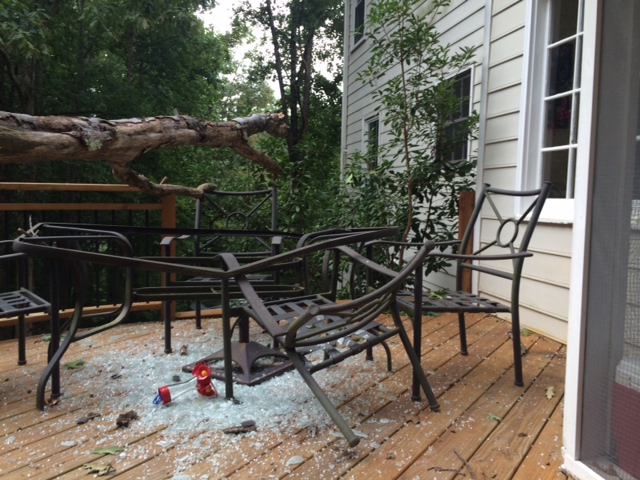
Better, that is, until this happened.

photo-43


I was standing at the large window by the table and my husband was in the driveway beyond the deck when the tree gave up and came crashing down. We were lucky. Everyone, including Tiger, was safe. The damage only to wood and metal, not flesh and bone.

I’m not gonna lie. I’m still a bit shaken up. It’s scary when glass explodes in front of your face and wood screams as it splinters. It’s frightening and disorienting when your house trembles under a cloudless sky. My breathing is still a little shallow. My heart a little rapid.

But more than anything, I’m thankful. Thankful that everyone is okay and that the damage can be repaired by carpenters rather than surgeons.


As with anything in life, what you see is what you get. If you look at a situation and see only the negative, that is what will stand out. If, however, you are able to see the blessings and potential within, the entire situation feels more positive. More doable.

The video below is one of the most inspiring examples I have ever seen of someone seeing and maximizing potential rather than focusing on the limitations.

Watch.

Be inspired.

And bring some tissues.


Now look around your life. What you see is what you get. What will you see today?