
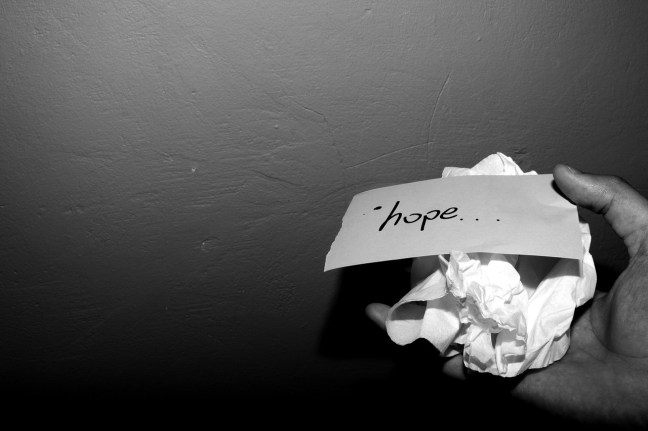
When my math students first start to tackle more difficult algebra problems, they retain their elementary focus on determining the single correct answer. While this difficult work is still relatively new to them, they have a tendency to completely erase or even tear up an entire page of work that led to this incorrect value of “x.”
One of my goals during this time is to help the students focus on the process. Once they recreate the steps that led to the wrong answer that made them quit in frustration, I’m able to show them that, more often than not, they completed every step correctly with one simple mistake that led to the wrong answer. I point out the correct reasoning that I see in their work and also highlight the errors that led them astray.
They learn that it’s not only about the end goal; it’s also about the process. And by analyzing their work that led them to the wrong answer, they learn how to recreate what they did well and how to avoid the mistakes.
I see marriage as much the same.
It’s easy to see a “failed” end as a sign that all the years invested were wasted. It’s easy to get frustrated and to want to erase all of the memories or tear it up in anger. It’s easy to focus on the mistakes and neglect to see all of things that went right.
Is the Time Spent in a “Failed” Marriage Wasted?
“I’ve wasted half my life,” I wailed to my friend from my spot curled up against the doorframe on her checkered kitchen floor.
She turned from loading the dishwasher, “Don’t ever say that. Nothing is ever a waste.”
At that time, I certainly didn’t agree with her. After all, I had just realized that some or all of the past sixteen years had been a lie. I learned that the man I pledged my life to had been manipulating and conning me. I was in the process of losing everything I worked so hard for – from the house to the savings to even the dogs.
I felt defeated.
It was not unlike spending money and time anticipating a lavish vacation only to come down with the stomach flu upon arrival. Only this vacation spanned the better part of two decades and wiped out more than just my appetite.
I wondered how I would ever come to terms with squandering sixteen years. After all, I could rebuild my finances, find a new home and even a new husband, but time was one thing I could never get back.
I was angry at myself for what I viewed as a bad investment.
I gave most of my teenage years and all of my twenties to this man.
Years that now felt wasted. Opportunities passed by and paths never taken.
I felt like I had been led blindly down a dead-end road. A worthless journey to nowhere. And it was an expensive trip.
I grew angry, blaming him for stealing my years. My youth. My potential.
I was angry at him. But even more, I was angry at myself for investing my time and energy into a relationship that didn’t survive. I felt stupid as I thought back to the decisions that I had made with the assumption that he would remain my husband. Decisions that I had been at peace with became regrettable as soon as soon as the marriage ended.
Thinking back to the Choose Your Own Adventure books of my youth, I wished that I could somehow go back and do things differently. Remake those decisions for meand not for the sake of compromise or for the marriage.
But as far as I know, time travel is an impossibility. And I realized that by ruminating on what I could have, should have done differently in the past, I was wasting my days in the present.
I had to begin by forgiving myself for making the choices I did with the information that I had at the time. It may have been a bad investment, but at least it was made in good faith.
I reframed the “bad investment” as a nonrefundable deposit.
The time was spent and could not be unspent. Instead of viewing it as an unwise investment in a failing endeavor, I decided to define it as a deposit on a better life.
Since the price was steep, it was up to me to make sure that the deposit wasn’t wasted. And so I got busy building the best life I could possibly create.
I started by addressing all of those assumptions I had reached about myself over the years, all of those things I grew convinced that I could not do. Additionally, I considered all of the feats I had always wanted to do, but never seemed to make time for. And one by one, I crossed them off the list. With each new adventure, I focused less on the time “wasted” and more on the challenges met.
Next, I tackled the gaslighting, the false words my ex-husband spoke about me. And as part of finding my truth again, I worked to refute each negative claim in kind. Not through words, but through actions. In doing so, I started to break free from the emotional abuse and come back to myself.
I found love again and, even though the journey back to trust was a rough one, I am beyond grateful that my serpentine path led me to this place.
And finally, I sought ways to use the experience to help others. To transform the negative into a positive. And with each person I reached, the time invested became a worthwhile contribution.
Each of these endeavors reduced the resentment for the price I paid and replaced it with gratitude that I had the opportunity to live a better life.
I remembered and appreciated the good times.
When my resentment for the time invested in my first marriage was at its worst, I was focusing on the horrific end to the relationship and the financial and emotional fallout. It was no wonder then that the time felt wasted – I was basically seeing the exchange as sixteen years of my life traded in for $80,000 of my ex’s debt, an inevitable foreclosure, having to rehome three dogs and months of medication to function. It’s not a trade I would recommend to anyone.
But that analysis wasn’t really accurate. Because the marriage was more than just its ending. As I started to allow myself to remember the good times we shared, I no longer felt so cheated out of those years.
In fact, whenever the feeling of bitterness over the trajectory of my life would rise to the surface, I would tamp it back down with good memories of the past and gratitude for the opportunity to live through it.
I vowed to learn from the time spent in the relationship.
When I started dating again, I defined a “successful” date as one in which I learned something – about the man, about myself or about life in general. By that metric, every single date (even if I was stood up!) was a success.
And that’s how I decided to frame the years in my marriage as well. In those sixteen years I shared with my ex (reframed from my initial response that I “gave” him those years), I learned everything from how to be an adult to how to veneer MDF. And I took all of those lessons with me.
Those years spent in a “failed” marriage are simply a part of my story.
Because nothing is ever wasted if we enjoyed it in the moment.
Nothing is ever wasted if we learn and grow from the experience.
And nothing is wasted because it helps shape who we are today.
To see those years as wasted was really a reflection of how I saw myself after the piercing pain of rejection.
But those years weren’t worthless and neither was I.
Those moments may not have been deposited into the life I expected, but they turned out to be an investment into an even better future.
Choosing to see those years as anything-but-wasted was a gift of forgiveness to myself. I made the best choices I could have at the time. And now I know better and I choose better.
And I choose to make sure to live a life that I will never feel is wasted.
Wondering why I choose to put “failed” in quotes? It’s because I don’t see divorce as a failure. Learn why.


 Lessons From the End of a Marriage