It took a few days for the realization to dawn on me.
“I need to make a doctor’s appointment,” I muttered half to myself and half to my mom, who was helping me sift through the rubble of my life. “I need to make sure that on top of everything else, he didn’t infect me with anything.”
The thought was horrifying. Mortifying. Infuriating.
I had only been with one man my entire life. This was not something I ever thought I would have to face.
Yet there I was.
Two weeks after the collapse, I walked into my doctor’s office. I was lucky. My provider, technically a nurse-midwife, had taken care of my annual visits for years. She knew me and I felt comfortable with her. It helped a little to counteract the immense humiliation I was feeling at being thrown into this situation without my knowledge or permission.
When she saw my drawn face, my trembling limbs and my emaciated figure, her mothering instinct took over. “Oh Lisa,” she sighed, pulling me in for a hug. Then, mother to mother, she hugged my mom, who (by my request) had accompanied me to a pelvic exam for the first time since middle school.
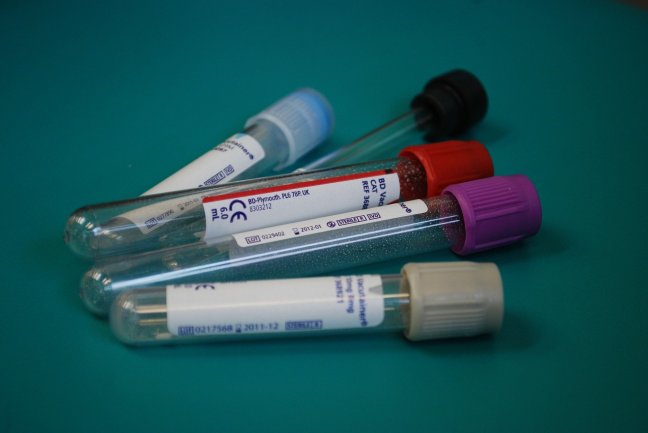
While my parts were checked and my blood was drawn, my provider kept talking to me in a soothing voice and kept a comforting hand on my arm or hand the entire time.
And then the waiting game really began. And along with it, the anger. Because it was easier to feel than the fear. Finally, I got the call.
“Everything looks good,” she said.
I felt relieved. At least my body would be okay. If only my heart could be cleared so quickly.
The dreaded doctor’s appointment is one more thing in an endless list of what is unfair about being cheated on. It’s yet one more way that we are left to clean up the mess they made.
The emotions involved run the gamut from confused (after all, if you’ve been monogamous for awhile, you tend to lose touch with what diseases are out there and what the implications are) to anger (how could they act with such reckless abandon when it comes to my health?!?). In between are often shame (because for some reason, we feel humiliated by their actions even when they don’t) and fear (are they going to curse me with a lasting physical reminder on top of everything else?). I know I also felt violated. This was not something I had consented to.
It’s a lonely feeling. An isolating one.
Yet it’s familiar to everyone who has ever discovered an unfaithful spouse.
It’s not fair. But it’s a necessary step.
Even though your partner didn’t take care of you, YOU need to take care of you.
I hope that your medical providers are as compassionate as mine were.
I saw a question posed on Twitter yesterday asking if anyone had written to the affair partner and, if so, what the outcome was.
The responses were interesting and quite diverse. It soon became clear that the type of communication (not to mention its aftereffects) with the affair partner were very much dependent on the relationship that person had to the wayward spouse prior to the affair and their role in the infidelity.
The Relationship of the Affair Partner Prior to the Infidelity
The Stranger
This is definitely the easiest of the horrible options to stomach. When the affair partner is a stranger, they become a blank canvas where you can easily project your own insecurities. However, there is little betrayal felt from them; after all, you’re a stranger to them as well. Additionally, if there is an attempt to salvage the marriage, this is the easiest relationship to cease all contact with and there are not likely many ties that make the disentanglement difficult.
The Acquaintance
We’re venturing into more difficult territory here. You’re likely to replay countless encounters with this person, wondering what was simmering beneath the surface that you failed to notice. There is probably an additional level of betrayal since this person knows who you are and knows who they were hurting in the process. As an acquaintance, it’s more likely that you’ll run into them and there may be mutual connections that lead to difficult or awkward situations.
The Coworker
This relationship is especially difficult if you’re trying to save the marriage. After all, your spouse can go “no contact” with a former friend, but generally bosses don’t look too kindly on that. They have to navigate the transition back to a professional relationship (which may be next-to-impossible if the affair partner has other ideas) and you have to fight the feelings of panic every day when they begin their morning commute.
The Friend
Your spouse and your confidant have been playing you. What a devastating discovery that throws your whole world into question. Who can you trust? The fractures caused by this type of infidelity travel far and wide, splintering friend groups and causing people to take sides. If you decide to try to salvage one or both relationships, building trust again will be especially difficult because everybody seems like a potential threat.
The Family Member
It doesn’t get any worse. We expect that family will always be there for us. And so the betrayal by a family member is equal to or even greater than the betrayal by a partner. You may be facing divorce and family estrangement at the same time, leaving you feeling orphaned and adrift.
The Role of the Affair Partner in the Infidelity
The Victim
They didn’t know that they were having an affair. They were told their partner was single, divorced or in the process of divorcing. Although they may not have been married, they are feeling betrayed as well once they learned that you were still very much in the picture.
The Willing Participant
This affair partner knows about your marriage, although they may have been incorrectly informed that your marriage is awful and that a divorce is inevitable. They may be married themselves or they may be attracted to those that cannot fully commit. In order to justify the affair, they may downplay its importance, minimize the marriage or compartmentalize the areas of their life.
The Instigator
This person set their sights on your spouse and then deliberately set out to win their attentions. They were not afraid to manipulate or lie in order to get what they want. If your spouse tried to set boundaries, this affair partner would attempt to bulldoze them over. They are unlikely to end the affair themselves and may make it difficult for your spouse to end it as well.
The Saboteur
Have you received disturbing messages from the affair partner? If so, this may be what you’re dealing with. These are the people that will not rest until they have left a path of destruction in their wake.
So What Does This Mean?
No matter the role of the affair partner, it’s natural to want to reach out – either to scream or to question. Or perhaps both. You want your pain to be heard and you want your questions answered.
Keep in mind who you’re dealing with. You can have a conversation with a victim, but not with a saboteur. The questions you’re going to pose to a stranger are very different than those you may ask a friend.
In my case, the affair partner was a stranger and a victim. I spoke to her on the phone for several hours while my (actually, our) husband was in jail. I wanted to warn her, protect her. She was never somebody that I had ill will towards. In fact, I desperately hope that she is okay. However, if she had been in a different role, I cannot promise that I would feel the same.
If you do attempt contact, wait until your emotional state is out of the red zone. By all means, scream or write those words you need to release, but release them into a safe space that will not have repercussions. Also, be aware of your expectations going into the contact. You most likely will not receive the response or answers you crave. There is no magic balm that comes from confrontation. No answers that illuminate everything. You’re not going to find healing from them.
So have your say. Ask your questions. Set your boundaries. And then let it go.
In the beginning, I was all-rage. It was black and white in my eyes and he was the monster that swallowed all the light.
Then some things shifted. The anger softened. I started to think a little more and feel a little less.
Cheating is wrong. That is clear. It is never acceptable to betray someone (especially the one you promised to love and care for) in order to have your own wants (because let’s be honest, these are not needs) met. It is a selfish choice. The lies and manipulations that the cheater uses to hide their activities are often cruel. It’s a decision that has horrific and lasting effects on the one betrayed as they struggle to regain their confidence and ability to trust.
Yet as I gained a little more distance from my own experience being betrayed, I came to some startling – and difficult – realizations. I struggle with these still. On some days, I want to shuttle all of the cheaters to Greenland and leave them stranded with nothing but a pair of shorts. And then on other days, I respond more compassionately, seeing them as emotionally stunted, immature and blatantly self-unaware.
Difficult Realization #1
You Know – and Probably Like – People That Have Cheated
After my ordeal, I had several people in my life open up to me. And I learned that there were people that I liked, cared for and even respected that had been unfaithful at some point in their past. Since I wasn’t the one betrayed in these cases, my response didn’t have the same emotional intensity as it did with my ex.
I considered these people. The entirety of them. Learning that one fact about them was upsetting and unsettling, but it also didn’t erase the rest of the person that I had known for some time. Also, and this is key, all of them had taken responsibility for their actions and had made significant changes since the time they were unfaithful.
They hide in plain sight. It’s not like most people go around and brag about their infidelity and many people that have been betrayed choose to stay quiet. Simply based on probability, you have family members that have cheated and some of your friends and coworkers have betrayed their spouses.
People are complicated. You can have great people that do shitty things and shitty people that do a great job at pretending to be great. Betrayal is certainly a shitty action, but does automatically flush away the entire person?
Difficult Realization #2
Cheating is Common
I get frustrated sometimes with the assumption that cheater = narcissist. Considering that the prevalence of Narcissistic Personality Disorder is around 1% of the population and it’s estimated that somewhere between 25-50% of people have cheated at some point, there are far more people cheating without that diagnosis (or there’s a handful of narcissists that have been VERY busy).
To me, the fact that it is common is evidence that it’s not only monsters that make this decision. Instead, it’s evidence that humans can do dumb things, act without consideration for others and engage in extreme cover-ups to avoid getting caught or having to face the truth themselves.
Part of accepting its prevalence is coming to terms with the fact that there is no such thing as an affair-proof relationship. You can choose wisely, pay attention to your partner and the marriage, and still end up finding that awful text message on their phone. And, especially after going through betrayal, that’s a tough pill to swallow.
Difficult Realization #3
Cheaters Are Not All Alike
Some cheaters are just plain terrible people. They continually act without regard for others, endanger their partner with their actions and refuse to accept any responsibility for their choices (often gaslighting and projecting in an attempt to blame their spouse for their wandering genitalia). These people suck and I would love to crowdfund a one-way ticket to Greenland for the lot of them.
But that’s not all of them. Some (often dubbed “unicorns” in affair-recovery circles) do everything right once the affair is revealed. They own up and do the work. Others may get there eventually, but it takes them more time. And then some are just plain clueless.
The motivation for the affair is also important. Some are truly in loveless marriages (although they all claim that, don’t they?) while others betray a loving spouse in the most brutal ways. There are cheaters who battle addiction – sexual or otherwise – that complicates their decision-making. And as difficult as it is to accept, sometimes they do fall in love with somebody else (although the way they handled it is far-from-okay).
Cheaters form a very diverse group. It doesn’t do anyone any favors to lump them all in together.
Difficult Realization #4
“I Would Never…” is a Dangerous Road
I have never cheated. I have never come close to cheating. I cannot imagine cheating. Yet at the same time, I’m careful to not say that I would never cheat.
Because that cocky certainty can easily lead to making some bad choices that would send me to a slippery slope. In fact, that assuredness is one of the common ways that emotional affairs begin.
I don’t believe we all have the capacity to act like terrible people described above. That takes a special kind of suckitude. Yet we all can do some pretty crappy things. We all can make choices that hurt our partners. And we all can struggle with facing hard truths.
When we say, “I would never…,” we’re opening the door.
Personally, I choose to say, “I never want to cheat” and then I make sure that my choices and actions are in alignment with that statement.
These Realizations Don’t Dictate Your Response
No matter how many people you like that have cheated in their pasts, no matter how common infidelity is and no matter what degree of suckitude your cheating partner reached, you can set your own boundaries for what you will tolerate.
The pain from betrayal is brutal. Learning that the person who vowed to protect you has instead been eating cake while slipping you poison is earth-shattering. The aftershocks last for years and the loss of blind trust lasts a lifetime. Infidelity is theft. And you have a right to all of the emotions that it brings up in you.
When it comes down to it, the collective nature of cheaters doesn’t matter.
Only your situation does.
And if you do decide to send them on that one-way trip to Greenland, don’t forget the polar bear bait:)
Looking back now, some of my ex’s false stories are absurd. One of my favorite has to do the phone line. Apparently, we were beginning to receive calls from creditors since he had decided that funding a second life was more important than paying the bills. And it wouldn’t do to have me inadvertently pick up one of these calls and learn the truth about our finances.
So he cut the phone line.
But it didn’t end there. Because of course, he couldn’t admit that he disconnected the service (which by the way, also meant the alarm system didn’t work while I was home alone when he was traveling), so he feigned surprise that the phone no longer worked. We went to radio Shack, where he bought a device that is used to diagnose issues in phone lines ($25) and pretended to try to find the problem for the remainder of that afternoon. Now that’s commitment.
My gut said something was off about the entire situation. After all, I had never had a phone line just suddenly stop working. And my ex never followed through with contacting the phone company, which seemed like a logical next step. His reaction was a combination of an initial flurry of action and then…well, nothing.
But I didn’t listen to my gut. I listened to him.
So why do we believe their lies?
The Truth is Too Scary to Face
If I saw the truth about the phone line, it would mean that I would have to face the reality that everything I thought I knew was a lie. It would mean that my husband was not my protector, that instead he had become my tormentor. That every ounce of security that I thought I had (financial, emotional, etc.) had evaporated and nothing could be trusted.
It was like a domino effect; if I saw through one lie, they all would tumble and reveal the hellish truth behind their facade. And I wasn’t ready to see that.
We believe the lies because we so desperately need them to be true. Because reality is too scary to comprehend.
We Don’t Want to Admit We Were Wrong About Them
I thought my ex husband was a good man. A generous man. An honest man. And to admit otherwise meant that I would also have to cop to my own shortcomings in selecting him and then for keeping him on a pedestal.
By the time my spidey-sense was trying to get my attention to tell me something was wrong, he had been lying undetected for years. So to see one lie in the present meant that I had to admit to not seeing all of those in the past. It was easier to simply stay in the dark and pretend that everything was okay.
We believe the lies because it’s embarrassing, shameful even, to reveal that we have been fooled. We want to think that we’re smarter than that.
We Want to Believe the Best About Them
In many of my ex’s stories, he painted himself as the victim of some unfortunate circumstance. He was the underdog, just trying to do the right thing in a world that seemed to be stacked against him. And since I loved him, I wanted to believe him. I wanted to believe IN him.
We believe the lies because we take the side of the one we love and it’s easier to see them as the victim than the perpetrator.
We’ve Learned to Doubt Ourselves
Like many cheaters and addicts, my ex used gaslighting to keep me confused. He would outright deny something that I remembered happening and he would create documents that conflicted with the real ones that I had already seen. All of this uncertainty meant that I always questioned my own perceptions, often even more than I did his excuses.
We believe the lies because we have been conditioned to no longer believe ourselves.
And that’s exactly where healing begins – in learning to trust our own perceptions and instincts again and in believing that we ARE strong enough to handle the truth no matter what it holds.
“If somebody cheated on me, I’d be out of there in a heartbeat.”
I get it. In fact, I even said it long before I ever had the opportunity to put it in practice. But it’s also a naive statement.
After all, it’s easy to proclaim certainty when you’re engaged in a purely hypothetical mental exercise.
And it’s very different when it’s your actual life and the consequences of your decision may have serious impact. That decision that once seemed so black and white has now grown muddied and vague as the one whom you love is the same one to cause your pain.
Society has a tendency to blame those that are victims of an affair. They are portrayed as blind or cold, nagging or repressed. And this judgment is only amplified when the betrayed makes the decision to stay with their spouse despite the knowledge of the infidelity. They face double the shame – first for being cheated on and then for allowing their partner to “get away with it.”
Often that criticism is welded by those that (to their knowledge) have never been cheated on. They feel superior in their belief that infidelity only happens to those that are somehow lacking and that if you eliminate the cheater, you fix the problem. Their words are dictated by fear; by speaking with certainty, they are able to believe they are safe.
Other times, the judgment comes from people like me, those that have been betrayed and were not given the option to stay. Instead of fear, this condemnation is rooted in jealousy that some people are presented with this opportunity. This can be intensified by the mental gymnastics that often occur after abandonment where the one who is discarded convinces themselves that it was what they really wanted anyway.
An affair is a wake-up call. Don’t sleep through it.
And it’s true – sometimes those who choose to stay with an unfaithful partner are being foolish. Maybe they are being willfully blind and stupidly hopeful. Perhaps they are so afraid of being alone that they prefer the devil they know. Or their self worth has been so damaged that they believe that they deserve a philandering spouse.
But that is not always the case. There are some who have been betrayed who make a very deliberate and conscious decision to stay, a choice born from facing hard truths instead of denying them and the willingness of the cheating spouse to work to heal the marriage.
The harsh light of truth is now shining on their marriage and they are making their choice with their eyes wide open.
They Accept That Risk is an Inherent Part of Marriage
If I could invent a way to ensure an affair-proof relationship, I’d be rich. While it is certainly true that some people are far more likely to cheat than others, it is a fallacy that you can guarantee that cheating won’t occur simply because you choose someone who seems to operate from an ethical and honest place.
It is tempting to think that you can remove infidelity from your life simply by removing the perpetrator.
But it’s not that simple.
Especially because the pain and emotional wounds will follow you. And left unaddressed, they will fester even with a new partner. No matter what, you have to do the work to heal.
Those that make the decision to stay are able to separate the person they love from the pain that they caused. Weighing the options, they decide that they would rather work to mend what they have instead of taking similar risks with someone new. They accept that risk is the price of love. And they’re willing to chance that the investment they have made in their marriage will pay off in the long run.
Their Partner and Their Marriage Have Transformed
Regardless of the outcome, an affair profoundly changes everyone within its sphere of influence. And some people use this as an opportunity to renegotiate the terms and agreements within their marriage.
In relationships of any duration, roles, responsibilities and reactions become more habit than intentional. The earthquake of an affair shakes up the status quo and provides an opening for more deliberate choices that meet the needs of today instead of those formed years ago.
Sometimes this transformation is more visible in one partner – the quiet, more reserved spouse decides to be more assertive with their needs and wants or the more controlling partner makes the decision to take a step back. They use this crisis as a springboard for positive change. In fact, some of the best couples I know have been through infidelity in their past. Not that I’d recommend it as an alternative to marriage counseling!
Other couples may change the structure of their marriage, choosing to engage in consensual non-monogamy. Again, an affair is NOT the preferred way to initiate this conversation, but it can be the factor that gets the ball rolling.
They Are Choosing to Make Sacrifices For Their Greater Good
And then there are those that decide that the marriage is more important than their feelings for their partner. They intentionally decide to ignore the infidelity so that the marriage can continue.
Sometimes this decision is made for the sake of the children, believing that a two-parent household is preferable if the affair is kept discrete. Others may be in the public eye and decide that the risk of revealing the truth comes at too great a cost. And some may simply determine that they come out on top when weighing their partner’s assets against their betrayals.
Staying is not a sign of weakness. Strength is shown when you make the decision that is right for you regardless of the opinion of others.
Ultimately, it is not my place (nor anyone else’s who is standing outside the relationship) to decide if somebody should give their partner a second chance after an affair. That is an extremely personal and difficult decision that each person needs to make with their own interest in mind. Make the choice that is right for you and give others the space to make the decision that is right for them.



 Lessons From the End of a Marriage