Is It Better to Know the Pain Is Coming?

I have a rerun of a medical procedure scheduled for next week. The first time I had it done, the medical professions assured me ahead of time that it would be no big deal and so that’s what I planned for. I went to the doctor’s after work (even though it meant seeing someone other than my usual provider). I planned to go to the gym after (What? They said it was no big deal!) and I had not arranged for a sub the next day at work.

Except it was a big deal. I didn’t get back home until late. Not because of the gym, but because I had to keep pulling over to vomit from the pain. I ended up teaching from a rolling chair for the next week, kicking myself every day for not arranging a sub the night before. I was still on the meds prescribed to me post-divorce, but even those weren’t enough to provide decent slumber for a few nights.

It was a terrible few days.

I learned from that experience (especially after reading that it’s a common one). This time is different. I will take Advil before the appointment. I couldn’t secure a ride, but the office is now closer to home and I’ll make sure my stomach is empty. I have already arranged for a sub on the next day and I have a few pain pills left over just in case.

So, I’m ready. But I’m also anxious.

The first time, all of the agony was on the back-end once the pain hit.

This time, I’ve transferred the agony to the front-end. Which means I’m ready. But I may be stressing over pain that won’t be as bad as I fear.

So is it better to know the pain is coming so that you can prepare even though the anticipation of the pain is often worse that the pain itself?

Or is it better to be blindsided, caught unprepared and bowled over by the pain yet blissfully unaware before?

I’m not sure about the answer. But right now, in the pre-anxiety, I’d happily trade for happily ignorant.

Related:
I Was Lucky

Pros and Cons of a Disappearing Act

A Picture Is Worth…

I’ve been collecting some random pictures recently that I was hoping to spin into full-fledged blog entries. But the pictures seem to be piling up and the posts don’t seem to be happening. So I decided to let the pictures (pretty much) speak for themselves.

photo 2-111At the dog park, Tiger’s favorite activity is to hang out in the baby pool and attempt to drown a tennis ball. Be like the tennis ball, no matter how frequently life pushes you down, refuse to stay under for long.

photo-142I look at this picture sometimes as a reminder that slow and steady can still get the job done.

photo-143I had these sweatpants for 16 years. I finally trashed them and replaced them (for a whole $5). How often do we hold onto things long past their usefulness?

photo-144I’m officially an Atlantan now that I’ve made it to the Margaret Mitchell house. I learned that the manuscript for Gone With the Wind was on unnumbered pages stuffed into separate envelopes that had to be edited and sorted. I need to shut up about being overwhelmed.

photo-141When we have assumptions, we don’t allow things to unfold in their own way and time. Stand back and be surprised.

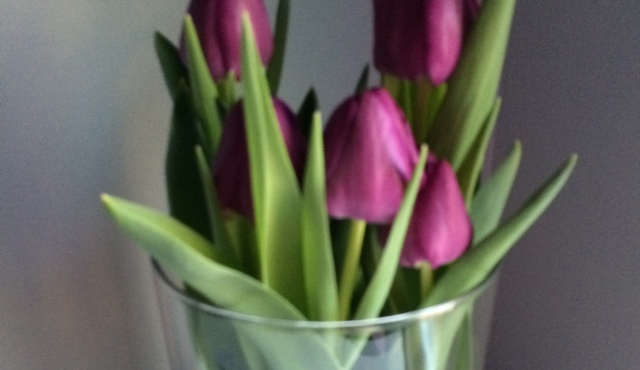
photo-145I started treating myself to blooming bulbs next to my computer during the month of February. It’s a beautiful reminder that spring follows every winter.

Opinion

I realized something last night.

Brock asked for my opinion. It was about something where I have no expertise and that ultimately comes down to his personal decision.

But he still asked for and valued my opinion.

He does this frequently. In fact, often enough that I sometimes get annoyed.

“Why do you want to know what I think? It’s your decision. It comes down to what you want.”

But last night, I realized something.

That him asking for my opinion (even and maybe especially in areas where I have no particular insight) is a sign of respect. Of openness. Of equality.

And the reason that I get annoyed is that I’m not used to that from my husband. At least not the first one.

There were decisions we made together – options that impacted us both. And then there were decisions he made on his own. And he never wanted my input on those one way or another.

I was used to that independent streak, especially because I carry quite a strong one myself. When we weren’t involved in a joint venture (which was often, including the weekly grocery trip), we were usually operating solo.

So that means when I hear, “Lisa, can you come give me your opinion on something?” when I’m in the middle of my own project, I can get a little irritated at the interruption.

Until last night’s realization.

He’s not asking me because he really needs my input; he’s perfectly capable of making decisions on his own (and often better than I am in the midst of a crisis).

He’s not interrupting me because he either doesn’t value my current project or with any intention of annoying (not even remotely part of his character).

He’s asking for my opinion because he cares about my opinion. Even when it’s about something that is his own decision to make.

And that’s worth an interruption any day.

On a related note, I called my mom for her opinion about a project I am working on. She was thrilled:)

The Two Words You Should Never Say

We often utter these two words under the guise of empathy and compassion.

We say them almost automatically when something said triggers a memory in ourselves.

But when we say these words, we are not being empathetic. Or compassionate.

We are being egotistical and worst and narrow-minded at best.

Assuming that we know more and that others’ experiences parallel our own.

“I understand.”

Those two words are dismissive and minimizing.

Rather than provide comfort, they lend an air of superiority that leaves the “understood” one feeling invisible rather than appreciated as it reduces an entire lifetime of experiences and reactions to a mere sketch comprised of conjecture.

“I understand” is built upon a foundation of assumptions.

It assumes that everyone perceives as you do.

Feels as you do.

Responds as you do.

But they don’t.

You can relate. You can identify.

And you can certainly empathize.

But you will never understand.

It’s worse than simply putting words into someone’s mouth.

It’s also putting thoughts into their heads.

And feelings into their hearts.

We feel understood when somebody listens to us, not when they talk at us.

We feel understood when somebody accepts our perceptions rather than when they try to convince us of their own.

We feel understood when somebody honors and respects our differences instead of trying to reduce us to a common denominator.

And paradoxically, we often feel the most understood when somebody admits that they do not understand. And instead of offering words, they give the gifts of presence and kindness.

Because we don’t ever understand what somebody else is experiencing. But we all know what it’s like to be scared or hurting or confused. And we all know how important it is to feel understood and accepted.

So rather than saying you understand their situation, demonstrate that you understand that you cannot fully comprehend their pain yet you can support them just the same.

Be receptive rather than prescriptive.

Ask instead of tell.

And listen more than you speak.

For more on the idea of assuming understanding, read this post on The Good Men Project.

Are You a Reliable Witness?

When I was in 5th grade, I was in a gifted pull-out program. Two days a week, I got to miss my afternoon classes in order to tackle challenges and puzzles that were outside the state-mandated curriculum.

One afternoon, we were all working hard at our tables on a set of brain teasers we had been given. We barely glanced up as a woman entered the classroom, spoke with our teacher for a few moments and then left.

It just didn’t seem important. After all, our task was to complete the puzzles.

Except it wasn’t.

Twenty minutes later, our teacher revealed the true purpose of the day’s lesson. She admitted the brain teasers had merely been a diversion as she handed out a sheet of paper with, what seemed at first glance, deceptively easy questions.

We worked independently to complete the page, answering questions about the woman who entered our room less than an hour prior: What was she wearing? What did her hair look like? What was she carrying?

As I glanced around the room, I noticed that all the students (myself included) seemed confident in their answers. After all, how hard is it to describe someone you just saw?

Pretty hard, as it turns out.

We came together to share our answers. It got rather heated.

“She had brown, curly hair.”

“No, it was blond.”

“It was brown, but it was straight.”

“Her hands were empty.”

“She was carrying books.”

As we continued to debate, some started to doubt their memories and allowed their minds to shift.

“I thought her shirt was red but, now that you mention it, I think it was yellow.”

The more we analyzed our memories, the more they changed.

The closer we looked, the more blurred the focus.

The woman had gone from inconsequential to significant as we all clambered to be right.

Finally, our teacher turned to the classroom door, opened it and welcomed the woman back in.

None of us had described her correctly.

We went on to discuss the use of witnesses in criminal trials and debated the ethics of sentences being handed down based upon the recollection of a bystander.

And I went on to always remember that lesson. To understand that we really aren’t as aware as we think we are and that when we’re called to remember, we fill in the gaps unconsciously.

And many years later, I found comfort in that lesson. I realized that my painful memories were malleable. That I could consciously fill in the gaps between remembrances to find meaning and purpose.

That at some point, memories fail to be an accurate representation of the past because they are always filtered through the knowledge of the present.

That it’s important to keep your mind open to the perceptions of others.

And that none of us are reliable witnesses to the past.

But it doesn’t matter.

Because it’s more important to be mindful and here in your now.

So that you are a reliable witness to your present.