
The View From Midlife

Midlife is a strange place.

Many of my students still seem to think I’m in my 20s, yet I haven’t been carded in over a year.

I had to stop to buy face wash for acne-prone skin on the way home from my mammogram.

Even as I am seen as a source of advice from my coworkers, I still question myself every day.

I can still run and lift and make it through a power yoga class without pause, yet I can also manage to hurt myself simply while sleeping.

It’s a strange place. Not yet old yet no longer young.  Occupying a body that reminds me it’s aging while my brain still feels like it’s learning to walk.

And I still find myself wondering what I’m going to be when I grow up.

Yeah, it’s a weird place.

As the middle of things often are.

I see many of my friends struggle with the pressures of simultaneously caring for children and aging parents. They are navigating the separation stage of parenting while coming to terms with the increased dependence of the elder generation.

Many of the decisions that make a life have already been made and regrets about some of them may seep in as it begins to feel too late to make a course adjustment.

The mental space that used to be dedicated to caring about what others think and wanting to fit it with the crowd is opening up as a, “This is me, take it or leave it” attitude settles in. Yet, underneath it all, some of the core insecurities still remain.

Friendships have come and gone and returned again. The ones that last have to learn how to fit in around the demands of work and home and general life pressures.

Mortality becomes a constant hum as loss visits more frequently. The illusion of control that helped us power through the life-building years starts to be replaced with a budding acceptance.

And through it all, we contrast how we feel about our accomplishments with where we imagined we would be at this point in life. And reality can never compete with dreams, especially the dreams of the young.

It’s a juncture that calls for pause. For reflection.

I can see how these years can lead to a midlife crisis. A desire to wipe the slate clean and start over, only this time with wisdom gained from decades of living. The urge to undo mistakes from the past now that we have enough information to know that they were mistakes. It’s a time when it’s easy to wonder about the roads not taken, envisioning an alternate life and different outcomes. Outcomes that in our imagination, never seem to have any pain or loss.

Midlife is also a period classified by being needed. We are both the mentors and the caretakers. We pay the mortgage and also feel the pressure to spend on others. In we’re in a relationship, we are acutely aware of our part in the equation now that the naiveté of youth has been washed away. And being needed can become exhausting. It’s no wonder that some decide to run away from all of those responsibilities (even though once the dust has settled, you’re generally back in the same place you started in).

Yet midlife is also an opportunity. It’s a union of wisdom and time. Neither are absolute, yet both are still in abundance. It’s not too late to make changes. There are still opportunities to explore new pathways. And instead of looking at your past decisions with regret, you can instead see them as curriculum that has provided you with the knowledge you have today.
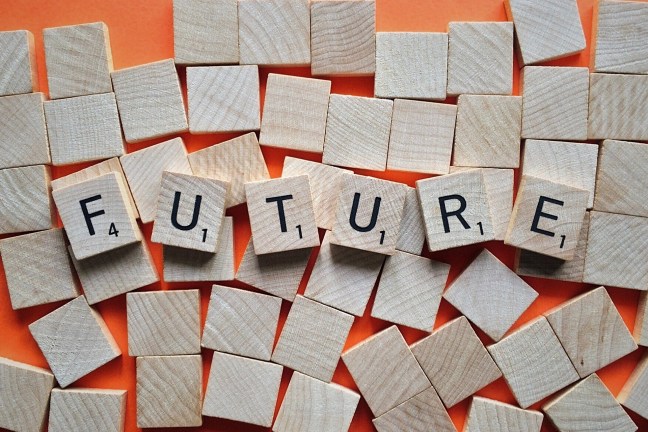


Fear of the Future

My many years of teaching 8th grade has offered a unique perspective. The entire year is a crossroads, a place where childhood and independence meet and often vie for dominance. The kids are excited for their increased freedoms and new opportunities.

But they’re also scared.

They seem to recognize that the life, the relationships and the security that they have known has a deadline.

And that soon, they will have to face a future that they worry they’re not prepared for.

As adults, we watch them grapple with these realizations and we offer words of advice and comfort that come from our additional years of living and navigating change. We smile at their naiveté and their assurances that they will manage to control all elements of their life path.

And yet even while we offer them guidance, we often struggle with similar fears.

Because, let’s face it.

The future, with its infinite possibilities and endless opportunities for challenges, can be downright terrifying. And just like with my students, these fears are at their most vocal during times of transition.

There are five primary fears that can contribute to an apprehension about the future:


1 – “I don’t know what’s coming.”

There’s a reason we often talk through what’s going to happen at a doctor’s visit or on Halloween with young children – once we know what’s coming, it loses some of its power to scare us.

We tend to be most afraid of the future when it seems to stretch out into darkness, when we have to summon the faith to take blind steps not knowing what lurks in the shadows. And the problem with an unknown future is that we view it as a threat and so we go in armed, more apt to attack than explore.

We don’t need to have a crystal ball or an approved life script to prepare ourselves for what’s coming. Energy spent planning and preparing can go a long way towards easing your fears, even if those fears never come to fruition.


2 – “I won’t be able to handle it.”

Much like with any new challenge, we are uncertain with our abilities as we learn to adapt to the new demands. And since the future is a challenge we haven’t faced before, we worry that we won’t pass muster and that we will ultimately fail to rise to the test.

And at first, it may feel like it’s too much. Life often has a way of presenting us with a 200-lb barbell when we’re still struggling to lift a 20-lb dumbbell. But then, a little at a time, you get stronger. And what was once impossible is now completely doable.

When we peer off the cliff edge down into the unknown future, we’re picturing the person we are today trying to handle the challenges of tomorrow. What we often fail to appreciate is the wisdom, strength and training that we gain along the way.


3 – “The future won’t be as good as what I have known.”

The only thing certain is the past. So if you want certainty, that’s where you’ll have set up camp.

We have this way of rose-tinting the past and coal-smudging a future that we fear. And we know what we have treasured in our lives. Those memories gain prominence and importance over the years, developing a shine as we take them out and run over them again. Any grit that accompanied those memories has been worn away in time.

And the future, with its jagged edges, threatens to never be able to compete with those treasured times.

Yet one day, that future that you now fear will provide more memories that you treasure.


4 – “Change means losing what I have.”

We’re hardwired to fear change. We have more aversion to loss than we do anticipation for what might be gained.

And so we often, we freeze. Thinking that if we just stay still, stay quiet, that the status quo will continue. Anticipatory grief and regret keeping us locked in inaction.

Yet the scary – and also freeing – truth is this.

Even if you change nothing, everything will will change.

That’s just how life works.

Some people and things come in and others move out.

Which if you think about it, is as natural as breathing.


5 – “I can’t control the future.”

No, you can’t.

But you do have some say in the control that future has over you.

If you can’t stop what’s coming and you can’t prevent change, why allow a fear of the future to dictate your life now?


What to Focus On After You’ve Been Cheated On

A Tough Pill For a People-Pleaser to Swallow

I don’t like to disappoint people.

I work to not be a bother to others and I like to be liked.

On the surface, these might seem to be good qualities in a wife. I am conscientious and attentive and often put the needs of others above my own.

But there’s a dark side to this tendency in a relationship.

One that I only became aware of after my first marriage ended.

And one that I’ve had to actively work on improving both in my marriage and in my relationships in general.

I focused on my efforts on the following three areas –


1  Be Aware of – and Make Space For – Your Own Feelings and Needs

As a natural people pleaser, I used to respond to other’s requests with a quick, “Sure,” before ever even checking with myself. This wasn’t fair to either one of us. I would easily neglect or un-prioritize my own needs in order to take care of the other person. And eventually, I would become resentful which would then bring an unspoken negative undercurrent to the interactions.

If you’re a people-pleaser, you’re not going to suddenly stop caring about those around you. But you can make the effort to give yourself just as much attention. Your feelings and your needs matter as well. Before agreeing – or volunteering – to do something for someone else, check in with yourself first. Is this an appropriate way to help? Are you in a good place to extend a hand? Is there something between a full “yes” and a total “no” that feels better?

It’s not selfish to take care of yourself. In fact, it’s necessary. If you give everything you have, you have a limited amount to give. If instead, you take the time to care for and replenish yourself, you end up with more to share.


2  Don’t Take Ownership of Other People’s Feelings

I have a tendency to struggle when those I care about are irritable or grumpy. I will take on their mood as my responsibility to somehow diagnose and fix.

Yeah, I know.

Not. My. Job.

People-pleasers want those around them to be happy. And they easily take on the job of trying to make others happy. Yet it’s a job we’re guaranteed to fail. 


3  Actively Practice Disappointing People

This was the hard pill for me to swallow. It’s important to be able to say the hard things even if it disappoints – or even hurts – another person. And like with anything, it takes practice to get better.

Now, I’m not recommending that you start a side hustle as an internet troll, spewing vitriol wherever your fingers take you. What I am suggesting is that you practice speaking your truth. Say “no” to the invitation that you would normally agree to only out of obligation. If you’re not happy about a dynamic within the relationship, speak up. Learn to distinguish between your part – delivering these missives with kindness and clarity – and what is not your responsibility – the other person’s reaction to your words.

In order to be a good wife, I need to be willing and able to disappoint – and even hurt – my husband.

I hate even thinking about that. It’s the last thing I would ever want to do. But I’ve also learned that things left unsaid in an attempt to not cause someone pain only build in intensity until they eventually erupt.


In some ways, I am still a people-pleaser. I have to work to not take social media comments personally (I keep reminding myself that I’m not Burger King- they can’t always have it their way) and I have to be very intentional about the responsibilities I take on at work. But I’ve come a long way, in both awareness and action.

And that makes me happy.


A Guidebook to Handling Your Emotions

We don’t come with emotion-handling software already installed. As young children, we were pure, unrestrained emotion. Any disappointment resulted in a red and tear-stained face and joy over the smallest delight would result in spontaneous and unselfconscious giggles.

And then, over the years, we received guidance on how to handle our emotions. Some of us heard the message that emotions are a sign of weakness and should be avoided at all cost. Others grew up in environments where emotions were a form of currency, used to get what you want from those around you.

Regardless of our particular emotional education, few of us mastered the curriculum by adulthood.

So here’s a little guidebook, a brief refresher on how to handle your emotions. Don’t worry if you still struggle with these reminders. Learning how to be human takes a lifetime.


Do Be Curious…Don’t Judge

It always breaks my heart a little when I hear someone say, “I shouldn’t feel that way.” Because they DO feel that way. And that is entirely okay. Judgment doesn’t make the emotion go away. All it does is frost it with a layer of self-criticism. Instead of judging the emotion, try asking yourself, “I wonder why I’m feeling this way?”


Do Approach…Do Not Attach

We are busy. And with so many tasks and people and apps always demanding our attention, our own internal emotional landscape often takes the back burner. Yet even if we don’t take the time to look, it’s still there, influencing everything that comes into our sphere. Slow down. Take a moment to notice how you’re feeling. Name it. But don’t become too comfortable. Emotions, like clouds, often pass. If you attach too much with a certain feeling, you’re interrupting this natural cycle.

Do Moderate…Don’t Bury

It’s a good thing that most of us have gotten better at handling emotions over time. An entire office building of tantruming workers would be a little awkward. We need to be able to dial down our emotional intensity and filter our emotions through perspective and rationality. Yet sometimes we take this too far, stuffing down our emotions and locking them away. Of course, they are still there. Only now instead of whispering, they’re going to start screaming.


Do Accept…Don’t Enable

You feel the way you feel. That’s okay. What’s NOT okay is to cater to those feelings like they are some sort of monarch. For example, if you feel sad, feel sad. But you don’t need to work to become the best iteration of sadness that ever existed. Instead, feel sad and also hold yourself to your goals. And remember, you are not your feelings.


Do Direct…Don’t Control

Have you ever told a hyper toddler to just sit still in a restaurant? How did that work out for you? Obviously, you can’t just let them unleash the beast within the establishment, but you can take them for a walk around the parking lot before dinner. Our emotions respond in much the same way. If you try to order them to sit and stay, disaster will ensure (and you may be thrown out of the restaurant), but you can channel your emotional energy in acceptable ways.


Do Listen…Don’t Believe Everything They Say

Our emotions are worth listening to. Our rational brains may be smart, but they are also prone to all sorts of fallacies and delusions (confirmation bias, anyone?). Our emotions operate a different level and are often able to pick up on things that our thinking selves are trying to talk us out of seeing. So listen. But also verify. Because much like the dog that sometimes barks at a falling leaf, our emotions sometimes get a little confused about what constitutes an actual threat. Feelings are not facts.


Do Share…Don’t Expect a Certain Response

We are emotional beings. It’s okay to show your feelings. Yet so often when we do share, we do so with an expectation of how the other person will respond. And then if our expectations are unmet, we blame the emotion. When really the fault is with the unrealistic expectations. Emotions are uniquely personal. Although we all feel the same ones, we don’t always feel them in the same way or in response to the same things.