Are You Pot Bound In Your Life?

When I first started gardening, I was timid with my new plants. I would very gently ease them out of their nursery pots, cutting away at any plastic that was bound too tightly. I would carefully tease apart the roots, unwinding them from their circular pot-shaped path and tenderly place the new acquisition in its meticulously prepared hole. Then I would water and wait, assured that the foliage would soon attain the glorious heights featured in the magazines.

Sometimes I lucked out and the plant survived.

But, more often than not, those early attempts at gardening failed. The plants would appear to thrive for a period of time and then they would begin to wither and die.

I didn’t understand. After all, I had selected the right plants for the conditions. I prepared the soil. I watered judiciously. I babied the plant.

I thought I was doing everything right.

But still they failed to thrive.

Throughout this time, I kept trying. New plants. New locations. And finally, a new nursery. I discovered a discount seller that offered small plants at amazing prices. I made a shopping list, covered the interior of my car in blue tarps and came home with over 100 individual plants. It was impossible to baby them all. There was no way I could gently tease the overgrown roots from the plastic pots without damage. My new strategy was to squeeze or thump the pot to release the soil and then to slide the new plant on its side on the bare soil. Then, instead of carefully unwinding the roots, I would use my trowel to quickly make four clean, vertical cuts along the root ball before placing the plant in its new home. The tender loving care was replaced with a quick message that the plant was no longer bound to its pot. The roots were told to spread. To explore. To anchor and find sustenance from the surrounding soil.

I watered and I waited. And the plants grew. And grew. Not one fell victim to the precedent of early growth followed by slow death. Just to be sure that the results were not due to some factor related to the nursery, I applied that same planting technique to plants acquired from other sources and the results were equally as positive.

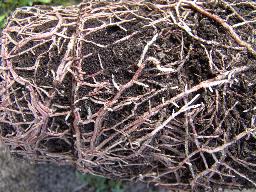
I came to realize that my early attempts were misguided; the gentle unwinding of the roots was not a strong enough message to the plant. When I pulled up the struggling foliage, I found that the roots had resumed their former pot bound growth pattern, becoming a congested gnarled cylindrical knot, incapable of providing the plant with the nourishment it needed. The boundary was no longer present, yet the plants acted as though they were still constrained.

Do you ever feel stuck?

Do you feel constrained by perceived boundaries?

Do you ever feel like you’re growing in circles?

Are you pot bound in your own life?

In retrospect, I can see this pattern in my former marriage. My world became too small, too constrained. I was looking for nourishment and support within a small space. The divorce was more battle axe than trowel upon my exposed roots, but it certainly served to send me the message that it was okay to spread. To grow. To leave the perceived security of the known.

We are only pot bound when we believe that we are limited by our perceptions and beliefs. When we are afraid of growing too far and too fast. Sometimes it takes a strong message to release our roots from their accustomed path. Sometimes it takes some injury and pain to shock the system into a new way of being.

Don’t fear the cut of the trowel; it’s just the universe sending you the message that it’s okay to grow.


The Garden

English: Rhododendron in The Roughs These purp...
Image via Wikipedia

In my old life I had a garden.

When we first moved into our home, the 1 acre yard was a motley medley of scraggly grass and tenacious weeds; too wet to mow and too shady for grass to thrive.  It was a blank canvas.  Slowly, I began to paint, using the medium of small starter plants, tree seedlings obtained from the forestry department, and cuttings and divisions nurtured from friends and neighbors.

I had a vision of a magical woodland retreat, filled with the soft haze of ferns and the subtle flowers of the understory.  For years, this image existed only in my head, the reality of small, young plants planted in a vast, weed-strewn yard looked nothing like a garden.  I spent hours on the weekends and after work attacking weeds and planting replacements.  On days when the weather was prohibitive, I would research plants and growing conditions.  I made annual treks to a budget nursery in a nearby town, filling my car to the bursting points with dreams held in the bright green folds of new growth.

But slowly, it emerged.  I watched 2 foot bald cypress saplings grow to 30 foot trees.  Ferns and hostas spread their roots far and wide under the protective shade of the understory.  Hydrangea proudly held their blooms high, as though no longer ashamed of their companions.  Colors would come and go throughout the weeks: daylilies, Lenten rose, iris, geraniums, azaleas.  Their spectacular shows provided endless variety and interest.

From February through November, I would begin most every day with a walk along the stone path, through the pergolas, and over the boardwalk.  Examining the new growth,watching the wildlife, reveling in the beauty of the plants.  On the weekends, I would bring my papers to grade out to one of the hammocks to enjoy the breezes through the leaves and the interplay of light and shadow.

In my old life I had a garden.

It was painful to walk away from my plants, nurtured for so many years.  I found myself staring at plants around town wistfully, thinking of their counterparts in my yard.  As with much of my transition, it was painful, but also freeing.  I no longer had to worry about the assaults of deer, the dangers of a last freeze, or the effects of a flood.  My weekends were not filled with weeding.  My hands no longer frozen from the cold February soil.

But still, I mourned my plants.  I purchased a pass to the botanical gardens and promised myself a monthly visit.  Now, I walk their perfectly manicured paths and appreciate the beauty created by teams of professionals.  The gardens are stunning, but it’s not the same as one created by my own labor.  My own dreams.

In my old life I had a garden.

The last few years, my nurturing energies have been turned inwards, helping myself to grow and thrive.  I have tried to eliminate the weeds, start new plantings, and encourage growth.  I have become my own garden.

And, now, with home ownership again on the horizon, I look forward to creating a new garden, filled with both familiar and untried plants. A testament to the persistence of life and the beauty of growth.

American Eastern Redbud Tree (Cercis canadensis)
Image via Wikipedia

Grow

The Garden

English: Rhododendron in The Roughs These purp...
Image via Wikipedia

In my old life I had a garden.

When we first moved into our home, the 1 acre yard was a motley medley of scraggly grass and tenacious weeds; too wet to mow and too shady for grass to thrive.  It was a blank canvas.  Slowly, I began to paint, using the medium of small starter plants, tree seedlings obtained from the forestry department, and cuttings and divisions nurtured from friends and neighbors.

I had a vision of a magical woodland retreat, filled with the soft haze of ferns and the subtle flowers of the understory.  For years, this image existed only in my head, the reality of small, young plants planted in a vast, weed-strewn yard looked nothing like a garden.  I spent hours on the weekends and after work attacking weeds and planting replacements.  On days when the weather was prohibitive, I would research plants and growing conditions.  I made annual treks to a budget nursery in a nearby town, filling my car to the bursting points with dreams held in the bright green folds of new growth.

But slowly, it emerged.  I watched 2 foot bald cypress saplings grow to 30 foot trees.  Ferns and hostas spread their roots far and wide under the protective shade of the understory.  Hydrangea proudly held their blooms high, as though no longer ashamed of their companions.  Colors would come and go throughout the weeks: daylilies, Lenten rose, iris, geraniums, azaleas.  Their spectacular shows provided endless variety and interest.

From February through November, I would begin most every day with a walk along the stone path, through the pergolas, and over the boardwalk.  Examining the new growth,watching the wildlife, reveling in the beauty of the plants.  On the weekends, I would bring my papers to grade out to one of the hammocks to enjoy the breezes through the leaves and the interplay of light and shadow.

In my old life I had a garden.

It was painful to walk away from my plants, nurtured for so many years.  I found myself staring at plants around town wistfully, thinking of their counterparts in my yard.  As with much of my transition, it was painful, but also freeing.  I no longer had to worry about the assaults of deer, the dangers of a last freeze, or the effects of a flood.  My weekends were not filled with weeding.  My hands no longer frozen from the cold February soil.

But still, I mourned my plants.  I purchased a pass to the botanical gardens and promised myself a monthly visit.  Now, I walk their perfectly manicured paths and appreciate the beauty created by teams of professionals.  The gardens are stunning, but it’s not the same as one created by my own labor.  My own dreams.

In my old life I had a garden.

The last few years, my nurturing energies have been turned inwards, helping myself to grow and thrive.  I have tried to eliminate the weeds, start new plantings, and encourage growth.  I have become my own garden.

American Eastern Redbud Tree (Cercis canadensis)
Image via Wikipedia

The Garden

English: Rhododendron in The Roughs These purp...
Image via Wikipedia

In my old life I had a garden.

When we first moved into our home, the 1 acre yard was a motley medley of scraggly grass and tenacious weeds; too wet to mow and too shady for grass to thrive.  It was a blank canvas.  Slowly, I began to paint, using the medium of small starter plants, tree seedlings obtained from the forestry department, and cuttings and divisions nurtured from friends and neighbors.

I had a vision of a magical woodland retreat, filled with the soft haze of ferns and the subtle flowers of the understory.  For years, this image existed only in my head, the reality of small, young plants planted in a vast, weed-strewn yard looked nothing like a garden.  I spent hours on the weekends and after work attacking weeds and planting replacements.  On days when the weather was prohibitive, I would research plants and growing conditions.  I made annual treks to a budget nursery in a nearby town, filling my car to the bursting points with dreams held in the bright green folds of new growth.

But slowly, it emerged.  I watched 2 foot bald cypress saplings grow to 30 foot trees.  Ferns and hostas spread their roots far and wide under the protective shade of the understory.  Hydrangea proudly held their blooms high, as though no longer ashamed of their companions.  Colors would come and go throughout the weeks: daylilies, Lenten rose, iris, geraniums, azaleas.  Their spectacular shows provided endless variety and interest.

From February through November, I would begin most every day with a walk along the stone path, through the pergolas, and over the boardwalk.  Examining the new growth,watching the wildlife, reveling in the beauty of the plants.  On the weekends, I would bring my papers to grade out to one of the hammocks to enjoy the breezes through the leaves and the interplay of light and shadow.

In my old life I had a garden.

It was painful to walk away from my plants, nurtured for so many years.  I found myself staring at plants around town wistfully, thinking of their counterparts in my yard.  As with much of my transition, it was painful, but also freeing.  I no longer had to worry about the assaults of deer, the dangers of a last freeze, or the effects of a flood.  My weekends were not filled with weeding.  My hands no longer frozen from the cold February soil.

But still, I mourned my plants.  I purchased a pass to the botanical gardens and promised myself a monthly visit.  Now, I walk their perfectly manicured paths and appreciate the beauty created by teams of professionals.  The gardens are stunning, but it’s not the same as one created by my own labor.  My own dreams.

In my old life I had a garden.

The last few years, my nurturing energies have been turned inwards, helping myself to grow and thrive.  I have tried to eliminate the weeds, start new plantings, and encourage growth.  I have become my own garden.

American Eastern Redbud Tree (Cercis canadensis)
Image via Wikipedia