I Want You to Want Me

My kids this year are great – happy, funny and generous. Unfortunately, they’re also generous with their germs. Thursday night, those lovely little bugs finally got the best of me and led to a feverish Friday on the couch. My mind was too scrambled to focus on a book, so I ended up reading through the thousands of posts backlogged on my Feedly reader. And, as so often happens on the internets, one click led to another and another.

Until I ended up here on Penelope Trunk’s blog (possible trigger warning – domestic violence).

I’ve subscribed to her blog for years through my RSS reader, but only read the occasional post. I thought she was all about business and start-ups.

She’s not.

The post in question made me very uncomfortable. In it, she displays a picture with a bruise on her hip and tells an accompanying story about her husband shoving her into the bedpost. She is writing from a hotel room with her two kids, where she has sought refuge for the night.

But she doesn’t want to leave him. In fact, she claims in another post that domestic violence is a question of boundaries and that the abused can alter the dynamic alone. Like with so many inflammatory statements, there is a sliver of truth. There are patterns that tend to be in play that lead someone into an abusive relationship. And those (usually childhood) issues have to be addressed for that person to be in a healthy relationship. But, and here’s where my view differs, the first boundary that has to be enforced is getting away from the abuser. And then work on yourself. Get safe first (and get your kids safe) and then get healthy.

Her last sentence in the bruise post seemed to explain it all:

“That’s why I can’t leave. I want someone to miss me.”

Ah, now that’s a sentiment I think we all can understand in some form.

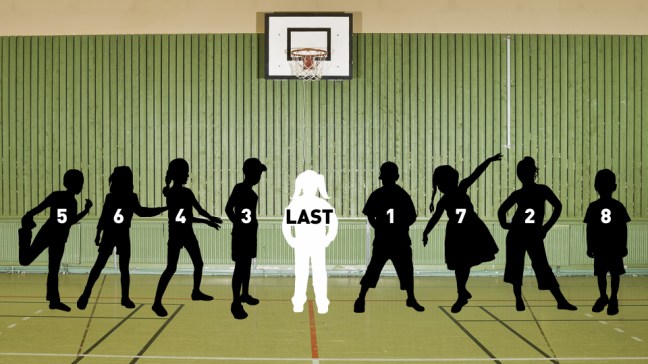
It’s human nature to want to be wanted. From being an early pick for the kickball game in elementary school to being tagged on Facebook from a friend, we all get a little thrill when we are chosen and feel the sting of rejection when we are not.

It’s natural. We’ve evolved to thrive in a community and, at the most basic evolutionary level, those that are not included are less likely to thrive as they struggle alone on the outskirts.

But as is so often the case, a basic drive can also go haywire. We can be so focused on being wanted that we ignore our basic safety and our own boundaries and beliefs. We can twist ourselves into parodies, subvert our true nature or ignore red flags just to save our spot as a chosen one.

The pain of rejection is real. And it is powerful.

But sometimes the pain incurred by avoiding rejection may be even worse.

Especially when you’re rejecting yourself in hopes of being accepted and desired by another.


We all want to be wanted.

But don’t compromise yourself just to be picked.

And make sure you’re wanted for who you are.

Because who you are is enough.

I’d pick you for my team any day:)


Drained

I’ve always known I was introvert.  My “safe” space has always been a quiet nook with a book.  I recharge through time in nature and carefully plan downtimes between social events.

I’ve always known I was an introvert.

But I’ve just now made a connection.


The beginning of the school year is hard on everyone – parents, students and teachers. But I’ve always seemed to find it more difficult than some. Yes, my feet are tired at the end of the long days and my voice cracks from overuse.

But I also inevitably feel drained for the duration of August.

Fragile and bit raw.

Now, sure, I’m not sleeping enough and overwork is a given at the beginning of the year.

But there’s more to it than that.

I have 120 new people that fill my days, filing into my room in groups of 30 every 54 minutes. I have dozens of new coworkers to get to know and hundreds of parents with whom to work. I have no moments of solitude once I enter the school, simply times of noisy and less noisy. In front of the class, I’m animated. Acting a role for the sake of connection and the lesson. In the halls, I act and interact.

I’m good at all of this – the teaching, the managing, the multi-tasking.

But it comes at an expense.

Because for any introvert, being social takes energy.

And navigating new social situations requires even more.


Looking around my classroom on Friday, I could see the effects of the sustained efforts on my students that seem to be of an introverted nature. Like me, they were drained from the energy required to be in an always-on environment. Like me, their nervous systems were on overload and were demanding some quiet and alone time.


I just made this connection between August and exhaustion yesterday while teaching. This morning, I tried (emphasis on tried) to explain it to my very extroverted husband. He just didn’t get it. He wants to be able to fix things and gets frustrated when it’s not an easy fix and, even worse, one he can’t understand.

Like always, I’ll adjust and learn to find the balance in an extroverted world. But for now, I’m just reminding myself that August doesn’t last forever and I will be recharged again soon.

But first, it’s time for some Motley Crue tonight! Hey, no one ever said that introverts can’t be headbangers:)


Calisthenics For the Soul

Fortitude.

Grit.

Resilience.

Or, as my husband calls it, an extra gear.


It doesn’t matter what you call it, it is a trait we admire in others and desire in ourselves.

We often observe the strength in others when they face adversity and claim that we are not made of the same fiber. That we would not be able to handle the same.

The truth?


You never know how strong you are until being strong is your only choice.


But what if you could build up your inner strength? Develop your mental toughness before it’s thrown into the ring against the lions?

What if you could do calisthenics for your soul?


You can.


You can build that extra gear, develop that thicker skin that resists every arrow and train for adversity.

And you can do it all while remaining true to yourself and leading with compassion.


Life can be tough.

Learn to be tougher.


Here’s your training manual. 


Secrets of Happiness

secrets of happiness

Do Something With a Finish Line

I was a late-in-life runner. In fact, I never managed to run a mile until after my 30th birthday. And even that took most of a month to work up to. Over the next couple years, I became a frequent (although still struggling) runner. I maxed out around 5 miles and would frequently compare myself negatively to the other (real) runners on the trails.

And then my world collapsed.

For months, I avoided the trails, afraid of passing out in the middle of the woods from lack of sleep and nutrition. Instead, I took to the treadmill, where I figured at least there would be people to attend to me if I suddenly lost consciousness. I had to start over again – my first treadmill runs were well under a mile. But still, it felt good to move even in a limited manner.

Just a few short weeks after the tsunami, a friend at work mentioned a half marathon that October (less three months away). I had never run more than 5 miles and that was several weeks prior. And I have never even considered a race of any duration. I was still in shock from the trauma of the abandonment and I was still extremely weak from the twenty pounds I shed in the those first few days.

I had no business running 13.1 miles.

And so I signed up.


One of the most frequent pieces of advice I give to people that are in the middle of a major life transition is to sign up for something with a finish line. It can be running. Or walking. Or biking. Or swimming. It doesn’t even necessarily have to be a physical endeavor, just something with a defined end.


Why do I advise adding one more challenge to an already challenging time?

Here’s why.

– Life’s transitions are messy. The end may be undefined and vague. It may be months or even years in the future. While that goal may feel impossible, a literal finish line does not. It exists at a known time and place. You can train for it. You can cross it.

– Training provides structure at a time when all you want to to is hide under the covers and disappear. It gives you a reason to get up and a reason to get out.

Exercise is as good for the mind as it is for the body.

– The preparation and the even can be social or allow time for solitude. Both are needed in times of life stress.

– Training teaches you to become comfortable with discomfort. It has an end yet requires that you learn to accept the process.

– Challenges provide opportunity to practice tempering expectations. No matter how much you train, you cannot control the outcome. It’s a lesson in acceptance.

– Confidence comes from achievement. When you cross that finish line, you’ll have the courage and conviction to keep aiming for the finish line of your life transition.


I ran that half marathon on a cold, rainy day. It wasn’t fast and it wasn’t pretty. But it was perfect. Tears mixed with rain as I ran the last hundred yards to the finish line.

I still didn’t know when the finish line of my divorce would be.

But after that day, I trusted that I could make it.