
Dealing With Anger – You Have to Understand It Before You Release It

It happens every summer without fail.

Once the heat settles in, the corners of the oppressive blanket tucked tightly around the city, the AC that is tasked with cooling the upstairs is simply not up to the task. The thermostat will be asked to lower the temperature to a bearable 75 and, although it tries valiantly to succeed, once the sun has reached its apex it simply cannot lower the mercury below a stifling 78.

Sometimes I have to laugh at my husband. He climbs the stairs to his upper-floor office and, after feeling the airless bear hug of the second floor heat, he lowers the thermostat from its usual 75 to 73.

As though asking the air conditioner, already running non-stop for much of the day, to try harder will somehow influence the ambient air.

Of course, it doesn’t work. The AC is simply doing the best it can in the moment. And once the sun finally nears its finish line for the day and the tall trees filter its last rays, the balance shifts and the illusive 75 is usually reached by the time I go to bed. And, if I so desire, I can even turn down the thermostat and enjoy even cooler air throughout the night.

Sometimes it’s not just about trying harder.

It’s about recognizing when it’s time to try and approaching the problem with the right perspective.

———-

Often when I speak to clients or readers about anger, I find that they are acting like the AC on my second floor in the summer – trying with all their might yet still subject to the intense heat of their rage. The following is a hybrid synopsis of these conversations:

“I can’t seem to let go of my anger.”

I empathize. That was certainly my most difficult and frustrating struggle. Anger has claws. It’s tenacious.

Basically, an inability to release anger means one of two things – 1) You are not ready to let go of the anger yet or 2) You are trying to use the wrong tools to release the anger. Or perhaps you’re dealing with both.

That doesn’t make sense – why would I want to hold onto anger?”

I know. It seems crazy. But that’s because you’re trying to understand a primal and instinctive motivation from a rational place. Initially, anger has a place. It’s a sign that boundaries are being crossed and it serves as a motivator to make changes so that the boundaries are reinstated.

But anger often overstays its welcome. Once the initial threat has been neutralized or left behind, the residual anger has no purpose and even begins to cause harm.
IMG_5921

There are several reasons that people may attach themselves to anger. See which one(s) resonate with you:

It’s all I have left. Sometimes when we have faced great trials, we are left with nothing but whatever residue is carried on our backs. That may be anger. If that is the case, it can be scary releasing the anger because it feels like the only tie to your past and what was lost. Yet it’s a pretty ugly reminder, isn’t it?

I have a right to be angry. Yes, you do. Many of you have every right in the world to be angry. But just because you have the right, doesn’t mean you have to choose to exercise it. Often, this feeling is tied to a belief that by releasing anger, you’re also releasing the person that harmed you from their responsibility. Yet their path is not yours. How do your feelings impact their reality?

Wondering about the role of apologies (or lack thereof)? Read this.

I’d rather be angry than sad or scared. Being sad or scared sucks. But so does being angry. There are times when it may be beneficial to make this trade-off (like when undergoing the early stages of divorce when a little gets you up off the floor and encourages you to make a move). Yet, other times it’s a deal with the devil.

I feel like I need to punish myself.  Anger isn’t always aimed outward. Shame, guilt and rumination are all signs of anger directed at yourself. And you cannot release the anger when you still believe you deserve the punishment. Yet yelling at yourself isn’t the most effective way to create change. Listening is.

Anger keeps me from being or appearing vulnerable. Our society respects anger more than the emotions that are perceived as “weaker.” Anger is often worn a shield, keeping others away and limiting further loss. Yet a life live in anger is eventually a life lived in isolation.

I like the energy of anger.  Anger has a way of making us feel alive as it courses through our body and invigorates our senses (even as it dulls our thoughts). It can be an attractive feeling, especially when compared with the deadening of sadness or the hyperalertness of anxiety. Yet the energy is like the kind from too much Red Bull – it holds for a time and then only makes you feel sick.
IMG_5925

“My anger is directed at the past. How does that hurt me now?”

Because anger is cannibalistic – it feeds upon itself. And the more you provide sustenance, the more it grows. It doesn’t matter where you aim it; it has a wide scatter pattern. If you’re entering into a new relationship, releasing any residual anger is your responsibility. Otherwise, it acts a nuclear seed in the new partnership.

IMG_5924

“How do I know when I’m ready to let go of anger?”

You are ready to release your anger when the cost of holding onto it becomes greater than the hesitancy of of releasing it. You are ready to release your anger when you see the cause of your anger as separate from your emotions about it. You are ready to release your anger when enough time has passed for the intensity of the event to begin to fade (remember my upstairs AC unit?). And you are ready to release the anger when you are open to accepting responsibility – not for what happened, but for how it impacts you.
IMG_5923

“What are some of the tools I can use to let go of my anger?”

One of the reasons that anger is difficult to release is that the tools needed are different for every person and every situation. The following are the general four strategies I recommend in the order that I suggest you try them. For much more specific advice, go here.

Movement I like to relate this to training a puppy. Any dog owner knows that before you attempt to teach the young dog any commands, you have to begin with a walk. A LONG walk. A tired puppy is calm and ready to listen.

Anger is the same. If you try to talk yourself down while your ears are whistling with steam, you will fail. Begin by releasing the physical manifestations of the anger by taking a walk. A LONG one.

Repeat as needed.

Humor Laughter has a way of disarming anger before the anger recognizes the threat and tries to fight back. Start by laughing at things unrelated to the cause of your anger. Then, see if you can even laugh at your situation. Gallows humor doesn’t fuel the fire; it helps to extinguish it.

Compassion  The first step in cultivating compassion is to learn how to separate yourself from what happened to you. To not take it personally. It’s hard, I know. Remember I said you know you’re ready when you’re willing to do the work.

Next, apply empathy and strive for understanding while withholding judgement. If this happened in a fictional book and you were asked to describe the motivations of all of the characters, what could you come up with? Entertain the idea that the assumption that has been fueling your rage may not be the correct one. And even if it is, what is the harm in being open to other explanations?

Remember, compassion has to be accompanied by boundaries. You can allow yourself to feel compassion and still refuse to allow someone to hurt you any further.

And here’s a thought for you – if you’re holding onto anger, are you showing compassion for yourself?

Gratitude  Gratitude and anger are mutually exclusive. If you can identify reasons that you’re grateful for your experience, there is no longer a need for anger. This can be a powerful exercise. I like to call it radical gratitude. It is one of the hardest things you’ll ever do. And one of the most rewarding.
IMG_5922

“Just when I think I’ve released all of the anger, it flares back up.”

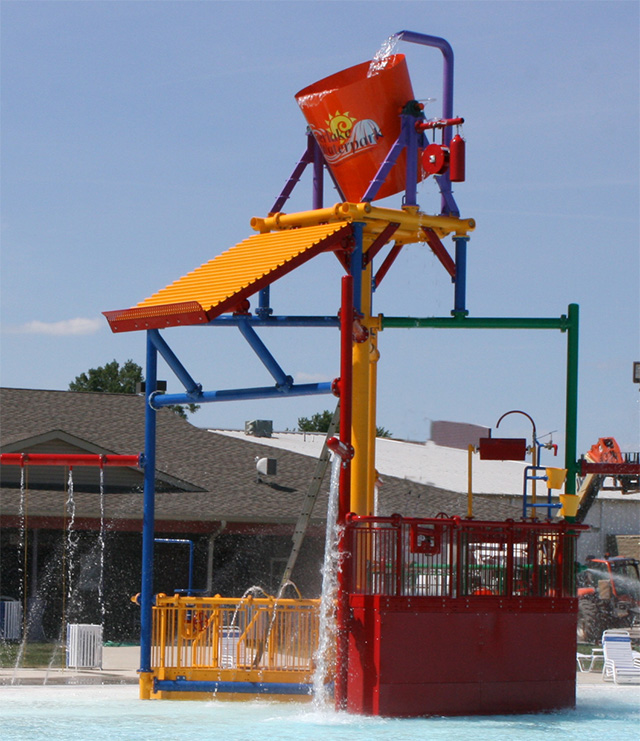
I sometimes think of anger like those huge buckets at children’s water parks that fill with water until they tip over, releasing their cooling load on the squealing children beneath. Of course, once empty, the bucket returns to its original position to refill.
IMG_5920

When you’ve released your anger, you are still vulnerable to refilling with rage if you return to your starting position without any changes. Think of mastering the tools that work to temper your anger like drilling holes in the giant bucket. The events and situations that cause you to become angry will still spill into your life, but the holes will allow it to simply flow through you.

Although the initial release of anger is by far the most challenging, letting go of anger is an ongoing process. It’s intentional. It requires recognizing when you are angry and, rather than allowing it to set up home, working to release it.

———-

Remember the purpose of anger is to motivate change.

Make the change.

And then release the anger.

As for me, I’m going to head downstairs where it’s cooler:)
Hurt People Hurt People and The Seven Keys of Conscious Compassion

hurt

Some of them are hard to love.

They come into my classroom with a scowl upon their face and a dark shadow behind their eyes. They sit slumped and defiant or spend the entire period looking like they’re ready to fight.

Some of them are hard to love.

They respond to a positive word with a curse, cutting others down with their words even as others try to lift them up. They seek out the weak and bully them into bruised submission.

Some of them are hard to love.

They scrawl their writings on the walls and destroy the belongings of others, leaving a path of destruction in their wake.

Some of them are hard to love.

And those are the ones that need love the most.

Because hurt people hurt people.

And we can (and often must) respond punitively, creating consequences for actions and penalizing behaviors. Parents are called. Detentions and suspensions are meted out. Communicating that the behaviors are not permissible and hoping to make the outcome severe enough to shape the choices made in the future.

But when the behaviors come from a place of hurt (as they so often do), simply communicating, “You shouldn’t do that” followed by a repercussion doesn’t halt the behavior. It doesn’t alter the root cause.

IMG_5895

Because hidden behind the unlovable shell is a wounded child. Scared that the family will be evicted from home after overhearing a heated conversation about the ever-tightening finances. Angry at the parent that walked out and moved on to start a new family, discarding the old. Ashamed that he or she did something to invite the unwanted touches that seem to come with increasing frequency. Anxious about being perceived as dumb as the demands of school become overwhelming.

And all of that hurt gets compressed into a dense and potent projectile, aimed and ready to fire at anybody that gets too close. Choosing an offensive strategy in an attempt to feel in control and to limit further pain.

And in some ways, the strategy is effective. People are kept at a distance and connections (that risk pain upon breaking) are not formed. But of course, the pain remains. Not only within, but shared generously with those around.

Hurt people hurt people.

———-

In the beginning of the divorce, I focused on the bad. The malignancies within his character and the implied cruelty in his actions.

Part of that was intentional. A sort of insurance that I would stay safely out of love with him. But much of it was simply inevitable. The shock and awe so bright that it blinded me to any possible good in him.

I was hurt.

And I was determined to hurt him in kind.

For months, I studiously avoided any memories that painted him in a favorable light. Or, if they came despite the lack of an invite, I immediately voided them by deciding that either the memories were false or the man I remembered loving was simply putting on a play for my benefit.

In my mind, he was all monster and no man.

IMG_5892

And that worked for a time. It certainly severed my love swiftly and completely. It ensured that I remained at a safe distance. And it even allowed me to be grateful that he was no longer in my life.

But then at some point, that view no longer served me.

In fact, it held me back.

Dismissing 16 years of wonderful memories as all false was like excising a benign and harmless tumor from my flesh. I knew what he had become but I didn’t have to believe that he was always that way. I couldn’t believe he was always that way. Because I once knew the boy before he became the man. And the monster.

So, I started to allow in the good memories. The smiles. I allowed some of the brutish paint to wash off of him. And I examined what lay beneath.

A wounded soul.

And I cut that rage, that disgust, that fear with equal parts understanding and compassion.

Portrait
Portrait

Not because I approve of his actions.

Not because I wish to excuse him of any consequences.

And not because I intend to allow him to hurt me any more.

But because I remembered of all of the hard-to-love students that I have had move through my classroom over the last many years. And I recalled how once I learned their back stories and understood the root of their pain, I could find compassion for a student that once provoked only rage.

And I reflected on the power of that compassion.

Sometimes, it was enough to wash the bladed armor off the hard-to-love child. Turning a problem into a blossoming to celebrate.

And yes, often it wasn’t enough. Maybe the wounds were too deep to heal properly or the kindness too short-lived or inexpertly applied.

But then I also remembered that I have never once regretted viewing a hard-to-love child with compassion. That I remain hopeful that some seed has been planted that may one day grow. And that I feel more at peace when I lead with empathy rather than anger.

IMG_5891

And so I used that experience to reconsider my view of my ex husband. To allow that maybe, just maybe, his actions were carried out not in a desire to hurt but because he was trying to escape his own hurt.

And like with my hard-to-love students, I felt my anger dissipate and peace flow in its place.

Hurt people hurt people.

And when you allow yourself to see the hurt, you become able to see the person. Not just the ugly mask.

———-

I often face push back for the view I choose to have of my ex. It’s seen as “too soft” or giving in to what the narcissist wants. And it is true that some people see compassion as a weakness and move to take advantage. And it may very well be true that he is not capable of feeling remorse or compassion himself.

It doesn’t matter.

Compassion doesn’t come with qualifiers for use. It’s not meant to only be applied to those with whom we relate and those who elicit feelings of sympathy.

IMG_5887

Because often the ones who are the hardest to love are the ones who need it the most.

So how do you practice compassion in such a way that you do not enable or come to further harm?

Consciously.

Rather than practice knee-jerk kindness, strive to act with conscious compassion.

The Seven Keys of Conscious Compassion

1) Set and maintain boundaries to protect yourself.

2) Allow or provide appropriate consequences.

3) Avoid expectations of behaviors and responses.

4) Do not take the behaviors personally.

5) Seek to identify the root cause of the behavior.

6) Accept that you cannot control the other person’s responses and actions.

7) Apply conscious compassion to everyone, including (perhaps, especially) yourself.

IMG_5888

Here’s how I strive to practice (and yes, it’s always practice, never perfect) conscious compassion in regards to my ex husband:

1) Set and maintain boundaries to protect yourself.

I immediately directed my paycheck into a new account so that he did not have access. Next, I make a commitment to avoid looking him up online after the divorce papers were completed. I am fortunate that he took care of excising himself from my life, but I would enforce a no-contact rule even if he hadn’t. In this case, this is compassion from a distance.

Compassion and boundaries are not mutually exclusive. You can behave compassionately and still refuse to tolerate certain behaviors. You can practice kindness and still remove somebody from your life. In fact, if you practice blind compassion towards others without the boundaries that you need, you are not behaving compassionately towards yourself.

2) Allow or provide appropriate consequences.

Perhaps I went a little overboard with this one in the beginning. I didn’t have to call the police. But the bigamy was a felony:) I no longer attempt to make him face the consequences, but I also refuse to do anything to shield him from their impact. His cause. His effect. Or, as Rush Limbaugh said, “Compassion is no substitute for justice.”

3) Avoid expectations of behaviors and responses.

This is a difficult lesson. Before I returned his car to him (crazy and long story here – read the book), I combed through the items left and I took much of it as evidence (like the wedding vows in his own handwriting to his other wife!). I found two sentimental items in the glove box – a pocket watch that had belonged to his deceased grandfather and a cassette recording of his childhood best friend’s father, a folk musician. I left them on the driver’s seat.

Stupidly, I expected to receive some indication of thanks. Or at least a slackening in the on-going assault against me in the courts.

There was nothing.

But even then, I was still glad that I gave him back those items. And from that experience on, I never again expected anything in return for any kindness. Except the very real fact that just doing it made me feel better.

IMG_5890

4) Do not take the behaviors personally.

From The Four Agreements in Divorce:

I hadn’t read the book yet, but this little acceptance changed my life. When I embraced this message, I began to forgive and to release the anger. Before that point, I saw him as deliberately working to destroy me. On some level, I pictured him plotting in his basement office, stroking the soul patch on his chin,

“Let’s see… I’ve already maxed out this card. Hmmm…I know! I’ll use the one in her name so that she has to deal with it later. Okay, now that the financial ruin has been planned, what else can I do? Well, obviously, an affair would be upsetting. Now, where can I find a willing woman? Oh, and at some point, I’ll have to leave her – yeah, that will really destroy her! What would be the worst? In person? Phone call? Letter? Sticky note? Skywriting? I know! I’ll do it with a text message. She’ll never see that coming!”

Pretty crazy, huh? I was taking it personally. In reality, he was not thinking of my well-being any more than I considered his during the divorce. Once I realized that his decisions and actions were about him, not me, I could stop reacting defensively and start seeing more rationally. He was hurting too.

It is difficult in a divorce to not take things personally. After all, you two were a partnership, a team, and now your partner has been recast as your adversary. It’s a wake-up call to realize how individual we really are. You were married to each other, yet you each experienced the marriage through your own experiences and perceptions. We can have empathy for another yet we have to take responsibility for ourselves.

Our egos take a beating in divorce. They perceive any attack as directed and they try to fight back. Put down the gloves and accept that the ego is simply protesting, much like a child throwing a tantrum. Let it cry. Let it scream. And then wipe its tears.

5. Seek to identify the root cause of the behavior.

This is often tricky because the person who has hurt you is often unable or unwilling to dig that deep into themselves. So you have to be a detective and assemble the clues. In my ex’s case, his parents were both alcoholics and I have a suspicion that there may have been abuse by another adult in his life. I had the benefit of being able to reflect on interactions I had witnessed between the boy and his parents and the childhood home videos that I viewed with his teenage commentary in my ear. I have my guesses as to the root causes. They may not be accurate, but that’s not the important part. Just recognizing the possibility allowed my anger to soften.

6) Accept that you cannot control the other person’s responses and actions.

His choices were/are his choices. His responsibility. I refuse to engage in “what if” thinking, exploring potential differing outcomes based upon what I did or didn’t do. My locus of control only extends to myself. So that’s what I chose to focus on.

7) Apply conscious compassion to everyone, including (perhaps, especially) yourself.

Because inside all of us has been a wounded child. And often that child just wants to know that he or she is seen and the pain is acknowledged.

Hurt people hurt people. And sometimes we turn that around and hurt ourselves. To thine own self be kind.

IMG_5893

———-

Conscious compassion keeps you safe.

But it also gives you freedom.

A way out of the cycle of hurt people hurting people.

The Perils of Magical Thinking

My mom recently attended a conference on emotional manipulators that addressed how to recognize them and how to help their victims recover. Knowing that the topic hit close to home for me, she shared some of the conference literature. As with everything I read about pathological characteristics, some of the points fit my ex like a glove whereas other descriptions fit him as well as two-year-old’s shoe.

But there was one section in particular that resonated, igniting understanding in the dark recesses of my mind – the role of magical thinking in emotional manipulators and in their partners.

I immediately identified several shamanistic thoughts that we both possessed in the latter years of the marriage. I only learned of his magical thoughts in the texts and email he exchanged with my mother after he left. I only became aware of my own thoughts after I obtained some distance and perspective from the end of the marriage.

Because that’s the thing about magical thinking – you don’t realize it’s an illusion until you’ve left the theater.

His Magical Thinking

I’ll Pay It Off

Although he never shed light on what caused the financial problems, he did reveal what his thoughts were about it over the years. Even as the debts continued to grow, he remained convinced that a bonus or a raise or some other financial windfall was just around the corner. And that if he only waited patiently enough, he would be able to pay it all off without my ever learning of the debt. Perhaps this was a rational thought in the beginning. But by the end? It would have required a winning lottery ticket.

This Is the Last Time

Accompanying the thought that a single check would put us back in the black was his belief that he had control of his behavior and that each time would be the last. He only admitted to this thought in regards to spending, but I would wager that it extended to his drinking, his affairs and possibly even the numerous lies and deceptions. This conviction that he could stop at any time (along with the evidence to the contrary) put him on a runaway train towards self-destruction.

The Impact Is Limited

His magical thoughts completely insulated him from the impact of his actions. He typed that I would “bounce back” in the letter he used to exit stage left. He announced in an email to my mom that he hoped she could meet his new wife and that she would just love his new bride. He seemed unaware of the fact that leaving me with no funds left me with no ability to care for our dogs. In his thoughts, he was throwing feathers rather than stones, leaving no ripples.


My Magical Thinking

I Can’t Live Without Him

He came into my life at a time when I felt alone. My relationship with my father, who lived across the country, was strained. I had lost a few friends to death and others to teenage transitions. He stepped in and propped me up in those moments when I wasn’t able to do it alone. At least I thought I couldn’t do it alone. And as the years went by and our connection grew, I could not imagine life without him.

There Is Safety in Years

I believed that because I knew his high school friends, stood by as he put on his last few inches of height and layered pounds on his scrawny boy-body and explored his childhood mementos with his mother, that I knew him. That there was no part of his personality or character that I was unaware of. I saw the years as a type of insurance. As though years in the past guaranteed years in the future.

If I Give Everything, I Will Not Be Left

This is another one anchored in childhood. I developed a fear of abandonment and somehow nurtured the thinking that if I gave everything, was the “perfect” wife, that I was safe from being discarded. As a result, I avoided conflict and refrained from pushing too hard or questioning too much. I gave, often not out of love, but out of fear. And martyrdom isn’t good for anybody involved.

Magical thinking is a form of self deception, stories we tell ourselves to avoid truths we would rather avoid and to create a sense of control in a life rife with insecurity. And once you understand that it is illusion, you can start see the mirrors unclouded by the smoke.

The “F It” Point

f it

I’m not sure the exact moment I reached the “F it” point with my car, but I can easily identify the factors that contributed to the mindset.

I think it started with the broken trunk that refused to open without a complicated and tedious routine that involved simultaneously twisting a key, wiggling a latch and saying a prayer. I would only engage in the routine on those rare occasions when I needed to carry some large object that couldn’t be fed through the doors (okay, or when I “needed” to carry an insanely large amount of plants). It simply became too difficult to open the trunk to clean out errant receipts and other detritus that seems to accumulate in a car.

And then the leather seats (that elicited a disappointed “Oh, Lisa” from my mother upon hearing about my new purchase) started to crack at the point where the seat belt cuts into their previously-oiled hides. And once the orange foam guts started to spill, it seemed superfluous to condition the remaining leather.

The “F it” attitude intensified as my life disintegrated. The car and I were both jettisoned from our safe and secure life, leaving its metal frame exposed to the elements instead of protected in a garage. As the silver skin gained dimples from the repeated assaults launched by storms and the paint faded under the glaring intensity of the sun, I grew to care less about cleaning the exterior.

I realized recently how complete this attitude has become when my neighbor backed into my car, displacing and cracking the bumper, and I honestly replied “Don’t worry about it” when he came to my door to confess.

I knew it was time to break down and buy a new car once the “F it” attitude extended to the mechanical systems. When the needle indicated an overheating engine a few weeks ago, I found it difficult to summon even the small amount of energy and money needed to replace the malfunctioning thermostat.

Today, I’m working on cleaning out and cleaning up my car in preparation to sell it. It’s strange. The motions bring back memories of carefully maintaining the car for the first ten years of its life. Even though I no longer care, I remember when I cared very much. I just can’t summon that feeling any more.

Because that’s the thing with “F it” points. Once they’ve been reached, there is no turning back.

And the only thing you can do is walk away.

The Adventure Bag

As I packed the small backpack for my first ever deep-sea fishing trip, I came across several crumpled receipts crushed in the bottom of the bag. One was for my recent skydiving expedition, another was from a cup of hot chocolate purchased while on a winter ski trip, yet another recorded a solo kayaking journey and a fourth showed proof of purchase at a fall Highland Games.

Now apart from demonstrating that I suck at properly disposing of receipts, these slips of paper are evidence that I am living the life I promised myself after divorce.

During my first marriage, I talked about doing a lot of things. And then I talked myself out of them. The desired activities were always too expensive. Too far away. Too much trouble. I lived as though I was in a waiting room, always delaying happiness until the right moment.

But it was never the right moment.

After the marriage ended, I made a vow to myself to never wait to be happy again. To say “yes” to invitations and opportunities more than replying “no.” To sometimes spend money that I shouldn’t in order to do something that I wanted. And rather than wait for adventure to come to me, to seek it out whenever I could.

One of my early purchases in those dark days was a small backpack, three zippered compartments that fit snugly on my frame. I quickly dubbed the pack, my “adventure bag” and promised myself that I would take it on as many new excursions as possible.

START NOW

On a lark this past week, I decided to try to list all of the new experiences I have enjoyed since the divorce. It was impressive:

Skydiving, water skiing, snow skiing, a trip to Alaska, an NFL game, riding on a motorcycle, running a marathon, tackling the walls at a climbing gym, paddling a dragon boat with breast cancer survivors and supporters, Peachtree Road Race, countless festivals and concerts, riding a jet ski, visiting the Georgia coast (multiple times), sailing on Lake Lanier, camping and hiking all over the Southeast, SCUBA classes, yoga classes, host a camera crew in my living room, completing Warrior Dash and Tough Mudder, watching Harry-Potter themed burlesque, a trip to the Smithsonian museums, solo explorations of Ashville and Birmingham, whale watching, parasailing, stand-up paddleboarding, stand-up paddlebaord yoga, renting a bike and braving the greenway, staying in a hotel room by myself, climbing to the top of the Wisconsin capital, visiting an authentic Korean sauna, shooting targets at a gun range, touching Canadian soil, touring my husband’s childhood stomping grounds in Maryland and South Carolina, going to Savannah (both with and without a gaggle of 8th graders), kayaking and canoeing the Chattahoochee, publishing a book, visiting the Space Needle, touring the expanded Riverwalk, ziplining in the U.S., go to Los Angeles to appear on a television show, exploring the ruins on Cumberland Island, staying at the elite Westin downtown, going on winery and brewery tours, and just a few days ago, going deep-sea fishing.

I find this funny - I was the only vegetarian on the trip and I happened to catch the biggest fish of the day:)
I find this funny – I was the only vegetarian on the trip and I happened to catch the biggest fish of the day:)

All in just six years.

And all because I made fun and adventure a priority.

So here’s my challenge for you – Locate or buy a bag to serve as your adventure bag. And then vow to take it to as many places and expose it to as many opportunities as possible. No excuses. No waiting for the “right time.” Just go have fun and live fully.

Receipt removal is entirely optional.

Where will your adventures take you?