Trust Fund

English: The door to the walk-in vault in the ...
Image via Wikipedia
I had the utmost trust in my ex-husband.  Even thought we were very young when we began dating, I did not give up my trust easily; he earned it over years of proving himself reliable, dependable, and honest.  Each time he followed through or stepped up, another deposit was made into the trust fund.  I was hyper-vigilant about the fund in its early stages, carefully monitoring each deposit and looking for unexpected withdrawals.  As time passed and the minimum account balance was ancient history, I began to relax.
And then, the unthinkable happened.  The trust fund was emptied fully in one violent sweep as I learned of his years of lies and deceptions.  It made me question the veracity of the sixteen years of deposits: were they forgeries?  Fraud?  Or, were they real enough and simply there for the taking?
I felt violated.  Raped.  Robbed.  I trusted him to protect me from others and it turns out I needed protection from him.

It was an inside job.


I was left without a husband, bit even more concerning, I was left with a damaged trust safe, its integrity damaged by the robbery.  It was no longer able to contain any deposits of trust.  And I was afraid that it could not be repaired.
I began to work to repair the damage, patch the holes.  I explored, finding and patching the weak areas.  I tested its integrity by tentatively placing trust in others, yet ensuring that, if they were to fail to follow through, I would not be too badly compromised.
Time passed.  The trust fund slipped from the forefront of my mind.  I suppose I began to trust that it could contain wealth again, if it were to come my way.
And wealth did come; I am now in a new relationship and the trust fund has been rebuilt.  It’s a little different now; the security is a little tighter and I am more aware of the deposits, but the fund is full and I am relaxed.
Thank you to my dad and his wife for inspiring this post.

You Are Not Your Divorce

Our traumas help to form us, but we do have to let them define us.   You are not what happened to you. You are not your suffering.  The first step in healing is taking ownership of your reactions and choosing to respond in a manner which will help you let go of the past.

You will always see the event as a delineation in your memories; there is a “you” before and a different “you” after that has been changed by the trauma. When you become stuck, you view the repercussions of the event as malevolent and place the responsibility for the changed self on the event.

It happened.  It hurt.  It changed you.  By letting it define you, you simply give it more power.  You have the ability to create beauty out of the pain.

One of the most powerful images I held in my mind during my divorce was that of how I handled a fallen tree in my garden.  I had a large tree come down in an area where I had cultivated a beautiful woodland garden.  Those delicate plants were now exposed to the harsh midday sun and would not survive.  I mourned the loss of the area for a day or so and then I went to work.  I dug up and moved all of the shade-lovers and replanted them in new areas that would still give them the shelter they needed.  I then loaded up my car with sun-loving plants from the nursery (yes, this was the fun part!) that I never had space for before. I was able to create a new, different, but even more beautiful garden where the tree had fallen.

Are you letting your divorce define you? Do you give it (or your ex) the power to control your life now?  This is a choice and you can change your mind.

Consciously Choosing to Move Forward.

8 Lessons From the Campground

Mere days before Thanksgiving, my partner and I found out we had to move within 30 days because his house had just sold.  We had been planning a camping trip over the break and our initial reaction was to cancel the trip, so that we could focus on the move.  I am so glad that we decided to continue with the trip.  Not only did we have a good time and enjoyed the time together, but it actually made the move less stressful because we had lessons that we took with us from the campground.
1) Teamwork Required

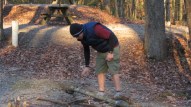
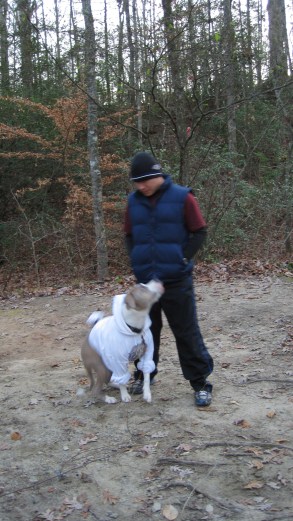
One of the best aspects about camping is that it requires teamwork.  Assembling a large tent is a,most an impossibility single-handedly, but becomes a fun challenge when tackled by two.  We quickly fell into a rhythm, working together, sharing some tasks and dividing others.  He would brave the early morning frost to get the fire started so that we could prepare breakfast.  I faced the frigid waters to clean the dishes of their breakfast remnants.  The dog, well, he just laid there shivering in a sleeping bag looking pitiful. We functioned as a team.


2) Take Pleasure in the Smallest Things

When camping, you certainly have to do without many of life’s modern conveniences.  However, because your expectations are in line with reality, it is not necessary a bad thing to leave that behind.  You learn to appreciate the smallest achievements, the tiniest bit of warmth, a few steps on level ground.  You don’t know when your next bit of pleasure will arrive, so you celebrate each moment of it that comes your way.  And, just so you know, Starbucks VIA works great at a campsite; that first sip of coffee each brisk morning was heaven.
3) Surroundings Don’t Impact You as Much as You Think

I have always been sensitive to my surroundings; I need things “just so” so that I can work or relax.  This can be a problem when moving, because some amount of chaos and disorder is inevitable.  The campground was organized for functionality.  We certainly had beautiful views, but they were not to be had in our immediate surroundings.  But it was okay.  Happiness is not found in a campground that looks beautiful, but is devoid of soul.  I learned to release some of my obsession with my surroundings; they don’t matter as much as I think.

4)Take Breaks

We spent each day on long hikes up nearby mountains.  We had our goal of reaching the tops, of course, but we planned each day with plenty of time to get there.  As a result, we were able to take breaks whenever and wherever we chose.  These are some of my favorite memories of the trip; the times sitting on the side of a mountain, looking out over the vistas, my boys by my side.  Immense pleasure can be found in those moments between activity.


5) Share Burdens

Long day hikes require a decent amount of supplies, especially when your partner insists on bringing survival gear:)  We shared the load, distributing the weight so that no one person had too much to bear.  Even the dog has to carry his part.  There is no reason that any burden has to be carried alone; you can even share the load with your dog if need to.

6)  Uphills are Balanced by Downs

Some of those hikes felt like they were uphill both ways, but any loop or out-and-back will have a net elevation change of zero.  Just like on the trails, we are often more aware of the uphills in life, but remember that they are balanced by the downhills.  Make an effort to notice the times the path is easy.

7) Use Your Resources

This is where my partner really shines.  When we realized that one of the tent stakes had broken when we were assembling the nylon beast, he grabbed some supplies from his pack and some sticks from the woods and quickly fashioned a replacement within minutes.  Before declaring a situation beyond hope, look around you and see what you can utilize to help.

8)  It Takes Effort to Gain Perspective

Our campsite was located at the base of Table Rock Mountain, its visage towering over us in all its granite splendor.  Our first day was spent preparing the campground, we were in our little insular world.  The next afternoon after a long, uphill climb, we reached elevation where we could see our campsite and how it related to the larger landscape.  We tend to live life in its details and forget to look at the big picture.  It takes effort to gain perspective, but a climb to the top gives valuable information.  It’s worth checking out now and then.
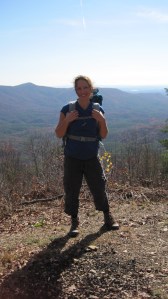
We took those lessons with us into the move and we try to carry them with us all of the time.

If You’re Spewing Poison, It Means You’re Carrying a Reservoir of It

…and is that really what you want to carry?

An Indian cobra in a basket with a snake charm...
Image via Wikipedia

Layering Isn’t Just for Sweaters

English: Icelandic sweater Deutsch: Islandpullover
Image via Wikipedia

One of the most difficult aspects of separation is dealing with the memories.  I remember on my first solo grocery shopping trip, I burst into tears at the sight of the sparkling water my husband used to buy.  If I couldn’t even handle the sight of an innocuous green bottle, how was I ever going to handle the places and objects that sparked real memories?

In the early months, my primary strategy was avoidance as much as possible.  It wasn’t easy, though, as I lived about 6 miles from our former home and I still worked just around the corner.  I secured a P.O. box in the area for that first year and I would take the most circuitous, traffic-laden route to get there so that I didn’t have to drive by my old neighborhood.  Even so, I lived with constant reminders since I was so close to the crime scene.

Even while I tried to practice avoidance with the everyday reminders, I sought to consciously layer memories of the big things, I fought to take back psychic possession of certain locations or activities that he and I had done together.I staked my  claim on those memories I refused to let him have them. By revisited with others and layering memories, I could once again look at those places with fondness.

It was a surreal time.  I dragged city-loving friends on hikes through the mountains.  I faced the place in the airport where I last touched my ex with a  date, on our way to see the Smithsonian.  I went with groups of friends to the restaurant where he and I ate weekly.

At first, this layering was very deliberate, intentional.  Over time, I found that it became second nature, even to the point of applying a second layer without thought.  Much as one does with a sweater when the wind bites a bit too much.