Reaching the Same Age – Adult Impostor Syndrome

Do you remember when you thought adults had it all figured out? When you would look at your parents with envy and awe that they knew everything and they were allowed to stay up past 10 pm?

And then one day you reach the age they were then and you realize that you’re just beginning to figure stuff out.

And that’s on the good days:)

We won’t even talk about the bad days when it seems like you’ll never have your sh*t together.

My parents divorced when they were around the age I am now.

And that’s a strange feeling.

I was young enough at the time that I still thought my parents walked on water. It was impossible to wrap my head around the idea that these two people that seemed to know what they were doing in all other areas couldn’t make marriage work.

Because in eyes of a young child, marriage is pretty simple – I do, you do. Done.

And now that I’ve been through the end of a marriage and I also hear 40 knocking at my door, I see it so differently.

And I see them so differently.

They’re not the people who could do no wrong that I saw as a young child.

And they’re not the people who could do no right that I perceived as a teenager.

They’ve become people that I can now identify with and empathize with, at least as far as that phase of their lives.

I can now understand some of that anxiety my mom felt trying to keep it together when her world fell apart. I can relate to the loss of family my dad must have felt when he moved across the country.

And I’m betting that they were just as full of questions and uncertainty then as I am now (and especially as I was during my own divorce).

Because I’m reaching the conclusion that when it comes to adulthood, we all have at least a touch of impostor syndrome.

A sense that we’re pretending at mastery. Playacting at being grown-up.

But the truth isn’t that you’re faking it now. It’s that image you had of adults when you were young was mistaken.

Adults don’t know it all. Nor should they.

The only way to learn is to experience. Observe. Experiment. Adjust. And reflect.

And that never ends.

No matter your age.


Suggestions Wanted

Today was a day where my expectations ran head-first at a high rate of speed into reality.

Expectations = students will master solving systems of linear equations by substitution

Reality = a steady snowfall all day and kids hopefully anticipating an early release and/or snow day tomorrow

IMG_4755
Here’s the Great Atlanta Blizzard of 2016. Note the grass still clearly poking through.


Consequences = I’m filled with a frazzled energy shaken not stirred with a mixer of frustration

And here’s where I’d love some help –

My usual response when I feel this way is to go for a run (or at the very least, a walk) to burn off the excess energy, bleed the frustration and reset my brain.

IMG_4756
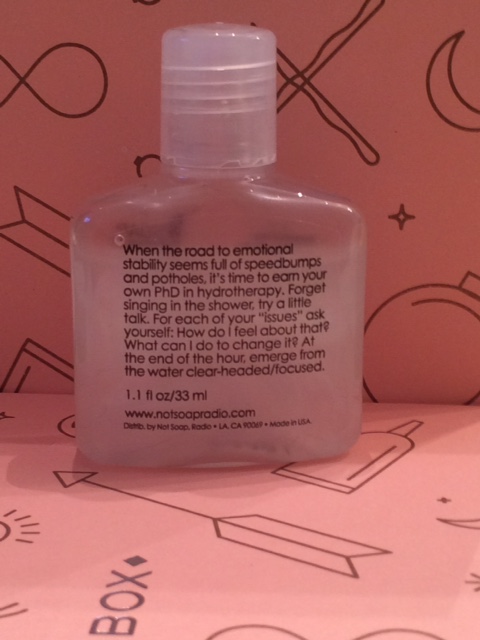
This was in the Birchbox I received today. Timely:)

The problem? I’m recovering from pneumonia right now and even a flight of stairs has me out of breath.

So no running. No walking. And not even really any yoga to speak of.

And I’m out of ideas.

So I’m open to suggestions.

Any thoughts on ways to release energy and frustration that don’t require any physical exertion?

Please, help me out here! 🙂


How Teaching 8th Grade Helped Me Through Divorce

“I don’t get it,” one of my coworkers said to me the other day, “All of a sudden I have a bunch of kids failing that have always been A or B students!”

“That’s normal this time of year,” I explained, “As high school looms ever closer, some of them express their fear through self-sabotage. Others regress and become more immature. Some become clingy, like preschoolers holding tight to a parent’s leg. It’s a big transition and they’re scared. But only a few are ready to articulate it, face it and step up responsibility. It’s our job to help them all get there.”

Teaching 8th grade is like tending to hundreds of metamorphizing pupa. With attitude. Sometimes LOTS of attitude. It can get messy and yet the end results make it all worth it.

The year is all about transition. From child to adult. From parent’s control to self-control. From being told what to do to making decisions. From being shielded to facing consequences. From passing off liability to shouldering responsibility.

And transition is always hard.

Not just for teenagers.

For all of us.

I’ve been in a unique position to observe thousands of young people undergo transitions over my career. It allows me to interpolate trends and analyze patterns.

Patterns that hold true for anyone undergoing transition.

Transition is Messy

I used to have a snake, a small Kenyan sand boa. He was generally docile except when he was preparing to shed his skin to account for his expanding body. For several days a few time a year, he became irritable. Short-tempered. He would demand food and then turn his nose up at the offerings. Once his old skin was peeled off like a soiled tube sock left on the floor, he would again return to his amicable self. Until the next growth spurt.

Transition is messy. Dirty. Often ugly. It’s rarely a smooth process and never a linear one. The movies make it seem like it’s easy to go from ugly duckling to sensational swan in a few challenging moments and a short montage set to great music. The movies lie. The reality is much longer and more difficult than many of us realize.

And those undergoing transition can be difficult to live with (especially if it’s yourself!).

They’re irritable. Short-tempered. Demanding.

But that’s only because they’re confused. Scared. Uncomfortable.

Because transition is hard.

Self-Sabotage

It can be scary to reach for new heights. And sometimes it’s easier to act as though you couldn’t do it rather than try and risk failing. It’s common for people in transition to hamstring themselves, to make decisions and act on impulses that are in opposition to their stated goals. It’s a way of staying comfortable.

It’s the student refusing to turn in assignments. It’s the recovering alcoholic taking a job at a nightclub. The woman trying to save her marriage flirting with her coworker. The newly divorced constantly complaining about the ex. The newly dating turning all of their energy towards work and wondering why new relationships continue to falter.

Grasping

In order to make a life transition, you have to first let go of your former life. It’s an act of great courage and great faith. And before many are ready to take that leap, they respond to the idea of letting go by holding on ever-tighter.

Sometimes the grasping may latch onto something or someone in the present that is a stand-in for something or someone from the past. This can be a flash-in-the-pan rebound relationship or the sudden and overwhelming attachment to a new hobby or habit.

Regression

Periods of growth are often preceded by periods of retraction, as the increased vulnerability of change prompts a desire to be taken care of and protected. Many people who have two or children are familiar with this tendency as they watched their toddler revert to diapers or preschooler beg for the bottle upon the birth of a new baby. It’s a lot of responsibility to be the “big one” and sometimes we all just want somebody to take care of everything.

It’s okay to need and seek extra help during times of transition. In fact, that’s completely normal and healthy. Be careful not to become too dependent for too long; however, or you risk giving up control of your life.

Taking Risks

Transition is a time when you’re neither here nor there. It’s a time of changing boundaries and it’s natural to explore where those boundaries now lie. When nothing is certain, everything feels possible and it’s exciting to explore a world where limitations don’t seem to exist.

Risks still have consequences. It’s great to explore. But please, take your brain with you!

Acceptance of Past

This is one conversation I wish I never had to have with a student again. And yet, every year, I have to have it with several. Some of my kids have had the misfortune to have absent parents. Or abusive ones. Or they’ve just had way too much happen to them at a young age. And I have the frank conversation with those kids that they are coming up on the age where they have to decide if that’s going to hold them back or if they’re going to succeed in spite of it.

And that’s a huge part of transition – accepting the parts you cannot control and taking responsibility for those you can.

Confidence

Transition often starts with “I can’t.” Because you can see where you’ve been and you struggle to imagine where you’re going. But with every step taken with courage and faith, confidence is built.

My favorite part of watching people in transition is seeing the growth in confidence. I love observing “I can’t” morph into “Look what I did!” and “I got this!”

Transition is Temporary

When my former students visit or write and I get to see the results of those difficult days, it makes it all worth it. Transition is temporary. It doesn’t last. You outlast it. Emerging bruised and battered. And also better.


The (Mostly) Unfortunate Side Effects of Being Ghosted

Being ghosted is the relationship equivalent of the missing persons case. Except in this case, the person chose to go missing. Decided to disappear, leaving you abandoned and doubting.

Being ghosted is heartache seasoned with questions. It’s loss co-mingled with rage. It’s hard to know when to stop hoping and when to start grieving. It’s challenging to put down the mystery before the secret’s revealed and instead pick up the self-help and start to apply its principles.

Before you can move on from being ghosted, you have to understand the impact that it’s had on you. The unfortunate side effects of being ghosted:

Your confidence will take a hit as you question why you were unworthy of a conversation.

You will struggle to take others at their word and you will struggle even more with trusting your own perceptions and conclusions.

Balance between naivety and panic will be hard to find as you try to talk yourself off a ledge while at the same time looking up at the sky for the other shoe to slam into your head.

You may begin to grow towards perfectionism like a plant towards light, some inner voice whispering that you were left because you weren’t good enough.

Prior abandonment, through death, divorce or even adoption will be triggered. And the unwanted child within you will cry at night.

Details become everything. Data points to be combed and connected, looking for clues. And this is not only applied to the ghost, but to any new relationship as well.

The ghosting itself becomes a mystery, a rough stone that tumbles endlessly through your mind as you look for cracks that will reveal what happened. It’s easy to become obsessed with why it happened.

You may be swallowed by depression as the anger and blame is turned inward with no outward target in sight.

Trivial things will grow in importance – the last place you saw the person, the last word, the last embrace. They will grow until they almost overshadow the ghost themselves.

Small disappointments have the ability to become catastrophic as the ghosting has kicked one leg out from under you and it doesn’t take much to make you topple to the floor.

You’ll make sure that you can always be independent at the drop of a hat, financially and otherwise.

You become a screenwriter, crafting narratives around what happened and continuing the threads into an imagined future where you try to figure out where your ex is now.

Emotional walls are constructed in an attempt to keep one safe from others prone to disappearance. Walls that don’t discriminate and keep out the helpers as well as the ghosts.

Numbness sets in, spreading out from your frozen and shattered heart. Some days, it almost seems as though you’re outside yourself.

A fear of discord develops. After all, a disagreement can be a reason to leave.

The rituals of coming and going take on a greater importance. Reassurance that the person will return and celebration when they have.

Certain headlines and news stories catch your eye and you always search for their name.

You may fight an urge to be clingy, wrapped so tightly around someone that they cannot easily shake you off.

You scan crowds looking for signs of your ghost. It’s a bit like a horror movie – you don’t want to look, but you’re compelled to.

You respond irrationally to anything that reminds you of the precursors of the ghosting.

Rage will fill you at the unfairness of it all and you will scream at the injustice of having your voice taken away from you.

Mystery is eventually pushed out by clarity as you start to put together the pieces you were unable or unwilling to see before.

You will begin to see a distinction between you and your ghost, who you are will no longer be defined by what happened to you.

With some time and some distance, relief will begin to permeate. Relief that you’re alive. And even relief that they’re gone.

And at some point, the side effects will be gone as well.


For a great piece about the characteristics of ghosters, click here.

And if you want to explore the benefits of being ghosted (no, really), check this out!

The Grandfather Clause In “I Do”

“He drives me so crazy! I want more time with him and yet he only gives me two days a week!”

“Has it always been this way?”

“Well, yes. But I thought he would change after we had been together for awhile.”

—–

“I need her to have more drive. More ambition. She seems to be okay with just staying where she is in life.”

“Has she ever given you any indication that she wanted to work to better her career or herself?”

“Well, no. But I thought she would change her mind at some point.”

—–

We all have traits and habits that can be perceived as negative. We all carry them with us into our relationships and we all have to learn to tolerate them in our partners.

In fact, finding a compatible partner is often more about finding somebody whose negatives you can live with rather than locating all of the positives you desire.

And the time to make that determination is when you are dating.

Because after you are married, they are grandfathered in.

—–

It became apparent early on that Brock had a different toleration level for mess than I do. I distinctly remember our first snow event together. I had my own apartment less than a mile away from his home at that point. My apartment was clean and uncluttered. Almost austere.

For a week, the roads were impassable. I spent most of my days and night with him while hiking through the ice and snow back to my place each afternoon to tend to my cat. And every time I entered my space, I breathed a sigh of release. Not because I was away from Brock, but because I was back in a world of order and arrangement.

I realized that week that I had a decision to make. I knew how Brock lived. And I knew that if I was going to live with him, I would have to make adjustments to my own expectations and approach to home.

He told me who he was.

And I could either accept it or reject it.

And once I made the decision to move forward despite the differences, he was then effectively grandfathered in. It was important for us to learn how to work together to live in harmony (separate bathrooms, my own “safe” space and a cleaner who visits monthly). And it was up to me to work at being accepting of his ways (which I’m usually pretty successful with!).

And it actually turns out that I’m happier living with some mess:) Here’s why!

—–

Most people reveal their negative (from your perspective) traits while you’re dating if you spend enough time together and pay enough attention.

And once you have seen those traits and decided to move forward regardless, it is no longer fair to expect them to change those particular characteristics.

Complaining about irritating traits that have always been present and accounted for is a direct attack on the security of your partner.

It’s changing the rules once the game has already begun.

It’s a bait and switch of acceptance turned into disdain.

When you say “I do,” you’re not only speaking to the characteristics of your spouse that you find endearing, you’re also saying that you accept the rest as well.

—–

Not all behaviors are grandfathered in.

Some begin as mild, so small as to be insignificant in the beginning. And then they grow over time, becoming too big to ignore.

Some may appear for the first time later on in life as a result of experiences, maladaptation or genetics.

Some may have been deliberately hidden from you until it became too late to easily run away. 

And some may be mere annoyances in the beginning but grow into real problems later when children or other responsibilities enter the picture.

Those are the exceptions. And they certainly merit attention.

—–

A grandfather clause is not an excuse for one partner to behave badly. It is a reminder that it is unfair to punish someone for something that was previously communicated to be okay.

And also a good reminder to consider carefully before you leap.