
I couldn’t help it. Giggles burst from my lips like foam spilling out of an over-filled latte.
I had been taking my Yin yoga class seriously up until the point where the instructor, usually calm and serious, mentioned the human nature of moving away from the stretch. I inwardly groaned at the first escape from the discomfort she mentioned – leaning the body over to the right to release some of the tension on the psoas – as I shifted my own weight back to the left to fully face the stretch. But then I had to laugh as she continued to mention two other common ways that practitioners lessen the intensity.
And I was doing both of them.
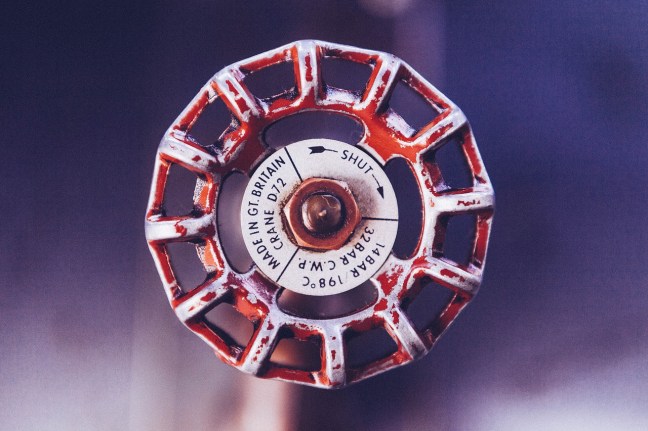
She described this human tendency to avoid discomfort as seeking an escape valve. A way to reduce the pressure and lower the harshness of an experience.
And it really is universal, isn’t it. We try to avoid pain or even unease on the yoga mat. In relationships.
And even in our own minds.
It makes sense. At a basic level, we are programmed to avoid pain in order to protect the body and stay away from dangerous objects and situations. Pain is an important sensation. It tells us to remove our hand from the hot stove or to stay off a broken ankle so as not to cause further damage. Relational pain sometimes informs us that we are in an unhealthy or even dangerous environment and provides the encouragement to leave. Internal pain flares when we neglect our own innate sense of right and wrong and serves as a wake-up call.
Those pains are intense. And the message they send is a critical one – stop what you’re doing now or you will only make it worse.
But often we confuse pain with discomfort. It makes sense to seek to avoid pain.
Yet it frequently it makes sense to embrace discomfort.
On my yoga mat this morning, my breath hitched as I leaned into the stress, shutting off the escape valves. If asked, I would have replied in that moment that I was in pain.
But I really wasn’t. In fact, as I breathed into the psoas and relaxed the surrounding muscles, the position lost its intensity and I was even interested in exploring the pose further. By facing the discomfort, I was able to reduce the discomfort.
Without the instructor’s prompting, I would never have faced the initial discomfort. Unconsciously avoiding even the merest suggestion of pain. And as a result, I would have unwittingly nurtured that area of tightness, allowing it to grow unrestrained.
It doesn’t feel good to feel uncomfortable. But that’s often exactly where we need to be.
———————-
I see the use of escape valves all the time in people facing the end of a relationship –
They decide that they should be over it by now and push it out of their conscious mind. Yet no matter how much you push it down, it always resurfaces until the lessons are released.
They try not to think about their ex or the end because doing so creates pain. Yet trying to avoid the thoughts only makes the thoughts grow more powerful. If they are addressed as they arise, they fail to grow.
They look to distractions to escape the inevitable pain of the end of a relationship. Yet the distractions only work for a time and the pain is patient.
They downplay the impact of the end on their well-being, pretending that it really doesn’t bother them. Only their acting out in other ways belies their assertion.
——————–
The pain at the end of a relationship is more the discomfort from the yoga mat than the agony of a hand on a hot stove. If you face it and work with it, it will begin to release.
Opening an escape valve feels good in the moment. And sometimes, when the pressure is too great to bear, it may be needed. But if you find that you constantly need escape valves, maybe it makes more sense to repair the basic system.
(Note: There is a very important distinction between ruminating and processing. Ruminating would be like taking the yoga pose just to the edge of the pain and then tensing up, holding the breath and staying in pain. Not fun and also not going to get you anywhere. Processing is more like moving through the pain: understanding, exploring, softening, opening and finally releasing.)

 Lessons From the End of a Marriage