One Small Step, But One Giant Leap for Me

In all of my years of dog companionship, I have never once taken a dog to a dog park by myself.

In some ways, it’s been a valid fear. Dog parks are filled with uncertainty, from the untrained dogs who like to provoke the other pups to the distracted humans more focused on their phones than on their dogs. I’m strong, but I’m small and I would have little success attempting to physically break up a scuffle. And one especially horrific dog attack that I witnessed (in my neighborhood, not a dog park, but still…) is forever imprinted in my memory.

In addition, there is my concern about accidental injury. It’s only been a few months since Kazh had a serious broken leg at the dog park (the incident had everything to do with a tennis ball and nothing at all to do with the location, but still…).

But in most ways, it’s been an irrational worry. I’ve been to dog parks hundreds of times with my husband. In those visits, I’ve had the opportunity to watch and learn the specific energy that leads to potential trouble. I’ve corrected dogs that were causing trouble and reminded mine to stay out of the drama. My daily walks with Kazh have been instrumental with his training and helped me to establish trust with him. Kazh has been amazing with every situation that he’s been in and even helped to train (with my husband’s help) a friend’s excited and undisciplined dog.

In other words, I’m ready and Kazh has been ready.

Today I finally took that leap. I loaded the pup in the car, made the short drive and walked into that park with a mixture of false confidence and familiarity.

And it went off without a hitch.

One of my absolutely favorite feelings in the world is being afraid of something and doing it anyways.

This slideshow requires JavaScript.

How to Maintain Your Independence in a Marriage

When I first married at the age of twenty-two, I was happy to trade in my independence for what I thought was a guarantee of partnership and togetherness. By exchanging “me” for “we,” I knew that I was making the promise to consider his opinions and needs when making decisions and that I was committing to putting the marriage before my own desires and dreams. A transaction that seemed completely reasonable at the time.


I didn’t lose my independence all at once.


Its integrity frayed slowly, like fabric subject to excess friction. Sometimes, it simply didn’t feel worth the energy to assert my own opinions. Other times, I found that I too easily adopted his views as my own. He became my primary confidant, my go-to social partner and we undertook most tasks and errands together simply by default.

Some of my actions were driven by consideration and respect – I would notify him if I was running late, consult him before making a major decision and seek his approval before spending a significant sum.

Other behaviors seem more concerning in retrospect. I was always careful to consider his feelings or preferences, yet I often neglected to examine my own.  I looked for his validation when I took up running at the age of thirty. I rarely went to parties or other large-group gatherings without him. And I relied on him to take over tasks that I found difficult instead of pushing myself outside of my comfort zone (the one that stands out the most here is making returns at a store – I HATED doing that to the point of mini anxiety attacks).

On one of my first shopping expeditions after he left, I impulsively grabbed a pack of strawberry-flavored gum at the register. Not because I have a particular fondness for fruit gum, but because he despised it so much that I never chewed the stuff. Not even in the hours I spent away from him each day.

That small act suggested a large step.


It was time to take back my independence and again find the “me” that had been lost in the “we.”


It was strange at first, acting without consulting anybody else. Making decisions on my own (and also facing the consequences of those choices on my own). I felt a little lost, like a kid at their first summer camp, unsure how to act when the accustomed structure was no longer apparent. Then, over time, the independence became comfortable and ultimately, essential. That autonomy that I had so willingly signed away years ago had become imperative to my well-being. Even though I wanted another partnership, I vowed to never again give away my independence.

My marriage now looks very different than my earlier marriage. We came together later in life, with established careers, friendships, bank accounts and habits that we weren’t willing to lose in order to enter into a relationship. Instead of there being an assumption that everything would become shared, we negotiated what elements we would merge and what would stay more autonomous.

I feel that I now truly have the best of both worlds – I know that my husband has my back but I also have my own mind (and vice-versa). There’s a much better balance; whereas my first marriage was dependent, this one is interdependent with a hearty sprinkling of independence.


The fear of losing oneself upon entering a relationship is a commonly cited reason for resisting commitment.


And rightfully so.

It’s easy to get so caught up in your role as wife, husband, mother or father that you no longer have the time or energy to devote to those things that used to bring you joy. You can find yourself slowly losing your desire or even ability to make decisions on your own, deflecting these to your partner and neglecting your thoughts in the process.

Maybe you came out of your previous marriage with the realization that you lost yourself somewhere along the way. Maybe, after years of hard work, you feel like you’ve found yourself again. You like your life. Love your independence and the confidence and freedom that comes with it. And still, you may find that you’re feeling pulled towards partnership. But you know that you don’t want to lose that independence that you’ve fought so hard for.

Good news. You can maintain your independence even within a marriage.


  How to Be Married (and Still Be Yourself)


Choose a Partner With Similar Requirements

There are some people who want to spend all of their time with their spouse. They share email addresses, home offices and friends. Others prefer to have more delineation between mine, yours and ours, creating and maintaining boundaries between areas. Some married couples even agree to live separately and only have the smallest regions of intersection between their lives.

No situation is better than the other and any variation within this continuum is perfectly fine as long as both partners are in agreement with the terms. And since you’re concerned about maintaining your independence, seek out people that are equally dedicated to maintaining their freedoms as well. Those that have full lives are more likely to respect your interests and passions and willing allow you the time to operate solo.

If, like me, you’ve experienced more overlapping lives in your past relationships, be aware that it may take time for you to adjust to this shift in the dynamic. You can’t have it both ways – if you’re going to maintain your independence, you also have to accept that you will receive less attention from your partner because they will also be busy with their own lives.


Distinguish Between Independence and Consideration

When I was single, I could go away for a weekend and not tell anyone as long as I returned in time for work on Monday morning. Now as a married woman, I can still go away by myself for a weekend, but I do have to at least inform my husband first. To leave without the respect of ample notice would be rude and inconsistent with a healthy partnership.

Sometimes, when people say they want to maintain their independence, they really mean that they do not want any responsibility to anybody else. Which is ultimately incompatible in a relationship (How many of you have been married to people like this who think that everything is always and only about them?).

When you enter into a relationship, you have a responsibility to the other person. And one of those duties is to be considerate of their rights and needs. And that consideration may sometimes step on the toes of your desire for independence. But when you enter into a marriage, that’s the choice you’ve made.


Determine What is Important to You

When I lived alone, I played heavy metal in the living room during 4:00 am workouts. I came home every day to clean kitchen and relaxed every evening on my white slipcovered sofa. When I moved in with my now-husband, I knew that all of those things would be history. And I also decided that those things weren’t important to me.

Of course, there were other considerations that I deemed vital. I needed to have my own space in the home, I needed to be able to schedule my evenings and weekends the way I wanted and I had to maintain control over my own paychecks and accounts. I actually made a list of the specific types of independence that were important to me; I wanted to make sure that I didn’t inadvertently lose my autonomy again.

Take the time to decide what independence looks like for you. What makes you feel controlled or trapped? What conditions allow you the freedom you want?

Is this compatible with a relationship? With parenthood (or parenthood of younger children)? Be honest with yourself here. If you try to pigeonhole yourself into too small a hole, you will inevitably feel constricted. It’s better to start with less commitment and responsibility and see if you want to grow towards more.


Communicate Your Needs Clearly and Early

All you need to do to understand the struggles inherent in a bid for more independence is look at teenagers and their parents. The teens want more freedom; the parents fear losing their kids. The kids push their parents away and the parents often take these words and behaviors personally.

It’s not that different in a partnership. When one person suddenly makes a stand for more independence, it can be seen as a threat to the relationship and can be taken personally. This is a great place for those famous “I statements,” to communicate that this is about what you’re needing, not about the other person.

Whenever possible, communicate your needs for independence at the beginning of the relationship. If your needs have changed over time, be aware that the information may be difficult for your partner to receive and that it may take a series of conversations (and time) to fully negotiate the changes.


Listen to Your Partner and Ignore the Peanut Gallery

When I was on my recent trip and mentioned my husband (who was home in Atlanta) to someone, I often received a raised eyebrow, “Why aren’t you doing this trip together?” I gave them a pat non-answer because the real one would be a bit longer.

Travel is important to me. I only recently have the means to enjoy it again after recovering from my ex’s financial shenanigans. In my former life, I waited too much to live, always promising myself that I would do all of the things once some benchmark occurred. And after? I promised myself that I would never again wait to live. Or to travel.

It’s different for my husband. He has to travel for work and being away means that he can’t train martial arts (his passion). His preferred funnel for the “I’ve made it tough to exhale” funds is his Corvette. And he much prefers waking up in the same bed each day to days full of the unknowns and inevitably discomforts of travel.

So I travel and often he does not. And it doesn’t matter what anyone thinks of that other than the two of us (and Kazh too!).

Do what works for you and your partner and feel free to turn a deaf ear to those that want to criticize from afar. After all, the ultimate independence is the freedom to build your life in the way that works for you. Whatever that may look like.


I’ve Been Slacking

Some time ago, I committed to two small daily acts of self care – a ten-minute meditation session and a minimum of three entries in a gratitude journal app.

And I’ve been slacking.

According to my gratitude app, I haven’t added anything since April (Ugh. That’s embarrassing to admit. I didn’t realize that it had been that long.) and my mediation practice has been sporadic at best.

I could offer up excuses. I’m good at it. In fact, I’ve been feeding myself the lie that I’ve been too busy, that the demands of life haven’t allowed room for breath or for gratitude.

But that’s B.S., plain and simple.

The reality is that I’ve gotten lazy about it. Allowed the habits to fade like fabric in the sun. I am realizing that I’m more faithful to these acts of self-care when things are difficult. When we lost Tiger suddenly last November, I grasped onto that daily expression of gratitude in order to keep going, many times entering submissions throughout the day instead of simply when my alert went off. And then as my grieving progressed and I shifted my energy to the new puppy, my practice fell by the wayside.

So today, I’m recommitting to these two practices. I just finished a 9-minute meditation on simplifying life and I’ve added the following to my gratitude journal:

  • the opportunity for the relationship with my dad that I now have
  • time with my heart niece today taking her zip-lining
  • seeing Kazh teach another dog how to be calm and happy (SO proud of him!)
  • that the $644 quote I received for a 30,000 mile tune-up was an anomaly
  • I’ve had adventures before I have to go to work next week so that I won’t be envious of other’s travels
  • opportunities to begin again and learning not to be so hard on myself


The Best Part About Travel

The best part about travel is the reminder to appreciate everything and everyone that makes up “home.”

After ten days away, the familiarity of my car made even afternoon traffic in Atlanta an enjoyable experience. My shower felt especially lovely and my bed even better still. The morning chores of grocery shopping and laundry were almost comforting in their customary rhythm, dance moves longs since committed to memory. And after surreptitiously snuggling with every dog I encountered on my travels, it was amazing to see my own pup again.

My husband (who did not accompany on this trip) sent me a text a few days ago,

“These trips are good for us.”

And the ache we both had from missing each other and the electricity in the air upon our reacquaintance proves him right. They say you don’t know what you have until it’s gone and time apart helps you realize what you have before it’s gone forever.


Even with missing home, the trip was amazing. It was the second (of hopefully many) road trips with a childhood friend. Last year, we covered many miles through the NE United States and Canada.

This year, we opted for more time in nature and less time in the car. After meeting in Seattle, we ferried over to the Olympic Peninsula, where we spent two days exploring and adventuring. One of the highlights here was our Airbnb, which was a working farm complete with a llama “drive thru” window in our bedroom!

IMG_8835
Hurricane Ridge – It’s strange for this Georgia girl to see snow in June!


IMG_2218
Hurricane Ridge – It’s a bird! It’s a plane! It’s a marmot!


IMG_2264
Lake Crescent – The views here were spectacular. Which is good, because the traffic was pretty spectacular too:)


IMG_2303
Cape Flattery – Is this place even real? I kept expecting dragons to emerge from the caves.


IMG_2325
Hoh Rainforest – We actually had a sunny day in the rainforest. A very rare occurrence!


IMG_8917
The llamas weren’t coming to the window, so we went to them!

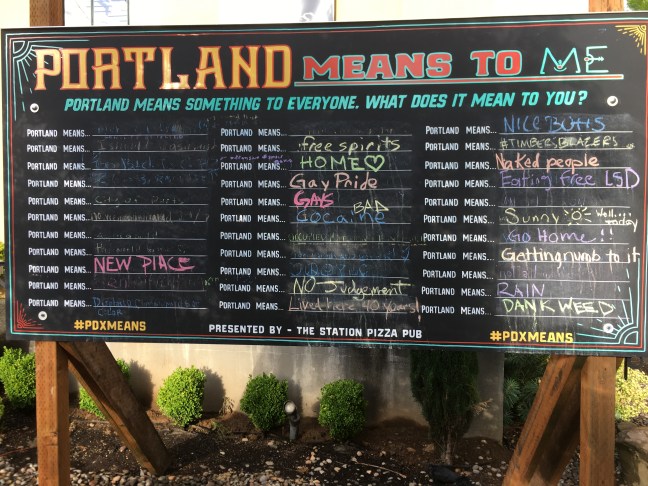
After a leisurely journey down the Oregon coast (with the requisite cheese stop at Tillamook), we paused again in Portland. A neighborhood scavenger hunt allowed us to savor the weirdness and sense of fun that permeates that city (even in the cold rain that decided to appear).

IMG_8938
Cape Disappointment


IMG_2452
Ecola State Park


IMG_8989
Portland – We added “adventure!”


From there, we headed back north closer to the mountains. One of my favorite experiences was hiking Ape Caves, the longest lava tube in the United States. The vastness of the caverns was impressive and the restricted views from headlamps made it exciting. The sun again returned, which allowed us some amazing views of St. Helens and Rainier. I could certainly get used to those views.

IMG_2586.jpg
St. Helens


IMG_9053.jpg
Rainier – Even the locals said that don’t become immune to this view!


On the divorce front, I had one “win” on this trip and one eye-opener.

Nine years ago, I received the text that ended my marriage while I was with my dad in Seattle. With my other trips there after the tsunami, I found that I would have flashbacks triggered by certain locations and a residual dread about being abandoned again while traveling would appear. This time there was no hint of either. (Yippee!!!)

On my way back to Atlanta, I was routed through the Kansas City airport. The only other time I’ve been there was on my journey to reclaim the car from the impound lot while my then-husband was in jail. When I stepped off the plane in Kansas City yesterday, I was immediately struck with an intense nausea and body tremors. Emotionally, I was fine. But the body sure remembered that space and the way it felt the last time it was there. Luckily, the layover was short and the feeling left as soon as the plane did.


The best part of travel is…

the adventure

the memories

the highs and the lows

the stories

the laughter

the company

and the reminder that home is ultimately where it’s at:)

“I Want You” vs. “I Need You”

I want you I need you
There’s nothing sexy about being needed.

I feel it after a long day at work after hundreds of children have made their demands, becoming more task-monitor and cognition-manager than woman. Mothers describe feeling like little more than a milk-generating machine during those months when breastfeeding may be a constant. Bread-winners may start to feel more like a money-making automaton than a living, breathing creature. Caretakers often begin to resent their charge, love clouded by a fog of endless need.

Those on the other side often chafe at their sense of dependency. They need, but they don’t want to need. They desire independence, yet may be unable (or unwilling) to strive for it.

There’s nothing sexy about being needed.

Yet, so often, “need” is exactly the energy that begins to permeate our relationships after the initial, heady rush of burgeoning love. As “I want you” is slowly replaced by “I need you.”

You hear this from people who bemoan that their spouse is essentially another child who is absolutely clueless at handling the day-to-day on their own. They begin to see their partner as dependent and incapable, neither of which are particularly attractive traits. Others may become overly needed on an emotional level. Often called emotional labor, this feeling of always being “on” and taking care of the family’s relationship, communication and emotional needs is as tiring as physical labor (if not more so). Those that are fearful of being alone may overly cling to their partner. And feeling suffocated by somebody’s anxieties is a sure way to dull any attraction.

And in all of these cases, the needed one speaks to seeing their spouse as more like a friend or a roommate than a romantic partner. The more needy partner can begin to take offense at their position and may begin to act out. Furthermore, the unhealthy dynamic can lead to an increase in irritations and frustrations on both sides.

Here’s the unbridled truth – if you are both adults, neither one of you truly needs the other (no matter what it feels like).

In fact, I think this is possibly the most important lesson I learned from the end of my first marriage. I sure believed that I needed my first husband. After all, I had never navigated adulthood without him. He would handle making retail returns and spending hours debating with the gas company on the phone, both tasks with which I struggled. He knew just how to soothe me after a stressful day and he would laugh at all of our inside jokes. He (sometimes) brought in needed income and used his impressive carpentry and handy-man skills to upgrade and maintain our home on the cheap. He was always willing to talk (even in the middle of the night) and so I rarely felt alone or ignored.

I thought I needed him.

But it turned out I was wrong. Somehow, with a few changes and some missteps along the way, I was able to survive (actually thrive) without the person I thought I couldn’t live without.

Thank goodness:)


lookatyoulivingandshit


Being needed can feel good. It gives you purpose. Shores up your confidence and helps to mitigate any fears about being alone (after all, if someone needs you, they’re unlikely to leave you). Yet, taken too far or applied too liberally and being needed can begin to feel like an inescapable prison.


On the other hand, we all like to feel to wanted.

It’s a compliment, an acceptance. It makes us feel both desirable and powerful. It speaks to being chosen. Appreciated and valued.


“I want you” vs. “I need you”


I need you says that you are responsible for my happiness.

I want you declares that I’m happier when you’re around.


I need you implies that neither one of you are free agents and that you’re trapped.

I want you suggests that there are other options and you are the chosen one.


I need you sets the stage for an imbalance of power as one gives and the other takes.

I want you acknowledges the power within both of you and allows for an equal exchange.


I need you speaks to what you can do for the other person; it focuses on the tasks you perform.

I want you expresses a desire for the person; it focuses on who you are.


There’s nothing sexy about being needed and there’s nothing sexier than hearing someone you care about say,

“I want you.”