When the Problem We Think We Have Isn’t the Problem We Have

It moved in a few days after I returned from my trip. This particular knot of muscle likes to curl up under my scapula like a kitten under a sofa. It’s my fault – I invite it in with an office chair (one of the few remnants from my former life) mismatched to my desk and too many hours spent typing and squinting at a tiny screen.

So when I found a Groupon that offered a superior price for a customized massage, I jumped at the opportunity. I didn’t even have to mention the spot on my back, the therapist immediately reached out to it through my shirt when examining my posture while I stood in the room.

“That’s my little friend, ” I explained, “But he’s overstayed his welcome this time. Can you help convince him to leave?”

Soon, the massage started on my back. The knot started to loosen, but slowly. And then the therapist slid his hands under the front of my shoulders and along the attachment of the pectoral muscles.

“Ahh,” he said, “Your back is not the problem after all. It’s actually right here. These muscles are too tight and are pulling you forward.”

And sure enough, as he coaxed those muscles to loosen, the knot slowly started to stretch and slide away.

The problem we have is often not the problem we think we have. And you can’t properly address it until you’ve correctly identified it.

The Subterfuge of Scarcity

I listened to an NPR podcast recently that explored the connection between poverty and the mental capacity for problem solving and planning for the future. On the one hand, the results of the research seem evident. After all, we all know that having money gives you the gift of not worrying about money.

On the other hand, the sheer magnitude of the effect was eye-opening. The researchers studied a particular group of sugar cane farmers in India that were “rich” for a few months after they received the annual payout for their efforts and destitute once the money inevitably ran out before the next harvest. The farmer’s impulse control and ability to plan for the long-term was measured and the results were striking. A lack of money literally makes it harder to think.

When the brain perceives scarcity, its focus narrows, much like how blood flow is shut off to the extremities in the case of an emergency situation. Decisions are made for the now, because short-term survival has to supersede any longer-term goals. The more evolved rational brain with its slower and more cautious processing is retired as the more primal and fast-acting limbic system takes center stage. As a result, actions are impulsive and although they may be advantageous in the moment, may cause the current scarcity situation to be lengthened.

A scarcity mindset and its impact on cognition are not limited to finances. When we’re short on time, we often fail to account for the moments we do have, focusing only on the lack of opportunities as the days fly by. When the cupboards are bare before the weekly grocery run, the creative impulse that could help to brainstorm options from the remaining food is dampened. And once the grocery trip is made, the emptiness of the belly may lead to poor choices in the store. The scarcity of words on the page causes writers’ minds to block. A perceived lack of available resources implicit in a short-term sale prompts the brain to jump at the first suggestion.

And after a break up, the scarcity of love and affection can result in an almost obsessive drive to find that intimacy again. Much like how those experiencing poverty may make poor decisions in regards to spending, those feeling a love deficit may make unhealthy choices when it comes to relationships. Anyone who shows attention and kindness is welcomed without regard as to the longer-term suitability and impact. It meets the needs of the moment, filling the void and postponing the sense of loneliness. Yet in the long term, those temporary fill-ins can cause more harm than good.

Since money, time, groceries, ideas, sale prices and love cannot be supplied upon demand, are we simply doomed to experience the cognitive weaknesses prompted by scarcity? In some ways, yes. We have evolved to prioritize the most important needs during times of drought. And when something is lacking, there is only so mental trickery we can do to pretend otherwise.

Yet we are not helpless in times of shortage. We can begin by recognizing what is lacking and also the extent of the impact on our initial reactions. Refrain from exaggerating the situation. Acknowledge what is needed and also be aware of what is still present. Balance the fear for what is missing with gratitude for what is not. Reflect on other times of scarcity and remember when the rains eventually came. Use external methods of providing structure and boundaries to help your reckless brain. If you are driven to make a poor choice, be kind to yourself and also strive to find a way to refrain from repeating the mistake.

Scarcity uses subterfuge to trick us into staying in a place of lack. It deceives us into making decisions that satisfy in the moment and starve us over time. Learn to recognize its pretense and be mindful before listening to its bidding.

Because nurturing new growth comes from watering what you have rather than focusing on the fear that you will never have.


Living the Adventure

I just got back from my grand road trip adventure. It was a blast!

Here’s the trip in images and numbers:


25 – The number of years since I had seen the friend I traveled with.

IMG_0133
Niagara Falls from a side viewing platform on the Canadian side. The power of the water was incredible!

7 – The number of days we were on the road.

IMG_0159
A surprise (for us) fireworks show above the falls.

4,600 – The number of miles we traveled by car.

IMG_0169
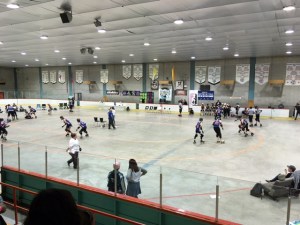
We got to see the #6 ranked Montreal Roller Derby team go against Buffalo in the Montreal arena.

13 – The number of U.S. states and Canadian provinces we visited.

IMG_7321
My own (very first) attempt at derby. There were a few falls and even more laughs.

43 – The range of temperatures (in degrees Fahrenheit) from a low of 39 to a high of 82.

IMG_0185
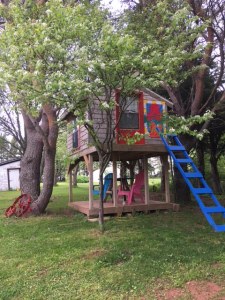
The treehouse where we stayed on Prince Edward Island. It was so much fun and helped us appreciate the heated space and real bed in Maine that much more!

7 – The number of Tim Horton coffee stops.

IMG_0181
Grand Falls in New Brunswick. It was an impulse stop based on an interstate sign and the coolest surprise of the trip. The volume is 90% that of Niagara!

1 – The number of successfully made iced coffees. Apparently they’re not a thing in Canada. The attempts made for lots of giggles!

IMG_0223
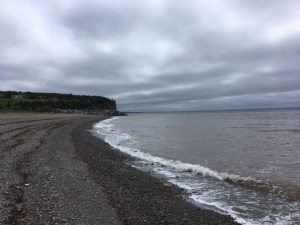
The Bay of Fundy. We lucked out and got there right at peak tide. The park is SO beautiful and I will definitely go back and spend more time there!

9 – The number of roadside picnics.

IMG_0198
Watch out for this statue in St. John. He gets kind of fresh:)

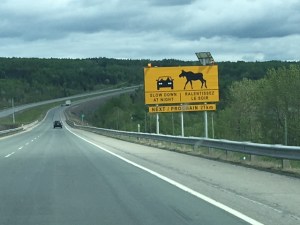
3 – Live moose sightings. My first ever moose experiences!!!

IMG_0176
I might have squealed every time I saw one of these signs. Which was about every 5 miles.

40 – Dead deer spotted. We had nothing to do with their demise.

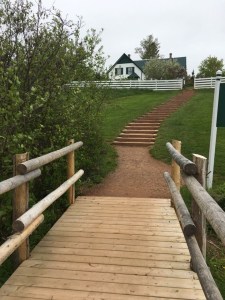
3 – The number of Anne of Green Gables sites visited on Prince Edward Island.


IMG_0284
Anne of Green Gables house from the haunted wood. 

Infinite – The fun and the adventure.

IMG_0283


Get My Motor Runnin’

It’s time to disconnect from my teacher persona for a time. I’m setting Mrs. Arends, the uber-planner and ultra-type-A educator, aside for a time so that I can reconnect with Lisa, the adventurous, may-be-afraid-but-will-do-it-anyway, side of myself.

And the summer of disconnection and reconnection starts tomorrow morning, when I fly to meet a childhood friend (that I haven’t seen since childhood) in her home state. I’m going to start my adventure by testing out roller derby, a passion of my friend’s and a curiosity of mine. After a (hopefully good!) night’s sleep, we will then be taking a week-long road trip to explore Southeastern Canada and the Northeastern U.S.

The planning is done. The packing is almost complete. And then it will be time to get my motor runnin’, head out on the highway and find some adventure.

Here’s to old friends, new journeys and the life-affirming thrill of adventure!

The Perks and Problems of Being an Only Child

I just saw a former student from a few years back.

“How are you?” I inquired, looking at the almost-adult in front of me.

“Great,” she replied, “I just got my license today!”

“Awesome! That’s got to be a little freaky to have your first day driving on such a stormy day.”

“That’s why I brought my [younger] brother with me. That way, if I got into a wreck, I wouldn’t be alone.”


I am an only child. It’s a status that never gave me much thought as a child and when it was worthy of consideration, my attitude was generally one of gratitude as I encountered my friends’ obnoxious younger siblings. I was also a deliberate only child, raised by parents who were well-versed in the stereotypes and generalizations of solo offspring.

So it came as somewhat of a surprise to me the other day when I realized an undeniable adverse impact that being an only child had on me. But before I get to the downsides of being siblingless, let me begin with the positives. Because there is a LOT to be grateful for.

Only children…

Are comfortable with adults. In larger families, there is a divide between the children and the adults. They occupy two separate spheres. As the only child, my world intersected the adult arena more often and, as a result, I grew comfortable talking to and interacting with adults. As a teacher, this is often the first clue I have about the size of my student’s families.

Learn to be assertive. I didn’t have a sibling to look out for me on the schoolyard or to help me navigate uncomfortable situations. I had to learn to do it myself (I didn’t find it an easy lesson). I had to reach out to have friends accompany me since I had no built-in peer group. Only children have to learn to speak for themselves.

Have a flexible view of family. Without siblings, children have a tendency to find and build familial relationships with others. Family is defined by the relationships formed between the people rather than the mandates of the DNA. This is a lesson that has served me well in adulthood as my tribe has morphed over time and location.

Independence. Without an older one to pave the way or a younger one to assume the blame, only children have to learn to stand on their own and take responsibility for their actions. I learned how to take care of myself, entertain myself and go out by myself. All good skills to have as an adult.

Of course, there were downsides too. As Brock and I watched two brothers tussle on screen in a series we’re watching, he mentioned how he and his siblings used to do similar all the time. And it suddenly clicked.

Only children…

Don’t learn how to fight. And not just physically, as in the case on the show, but verbally as well. Most siblings are constantly battling for attention and resources. They antagonize each other and engage in frequent arguments and altercations. And unlike with a friend that you can discard, you have to return home to your sibling so navigating the discord is essential. Sibling squabbles teach kids that disagreements are natural and that you can love one another even when you’re fighting.

Have nobody to verify their experience. Only children do not have somebody else to talk to about their experiences with their parents. I was lucky, I only had the normal childhood parental gripes. But for those with parents who are toxic, abusive or narcissistic, the lack of a sounding board can be devastating and extremely isolating.

Limited lessons in learning to compromise and share. Yeah, kindergarten did a good job here, but it was still limited. After all, my room and my things at home were still my domain with nobody to challenge that status. Perhaps that’s one of the reasons I became a teacher – it’s MY room! 🙂

Don’t have as much struggle for individuation. It’s always interesting to me how siblings assume family labels from a young age – “the athletic one,” “the smart one,” “the smart aleck one.” The kids have to find and fight for their individual identity from the beginning. And if they attend the same schools, it’s a struggle that follows them their entire childhood. As an only child, I never had to try to set myself apart from anyone.

I’m grateful for the recent ah-ha moment in my difficulty with interpersonal conflict and disagreement. It’s one of those areas where simply having an awareness pays dividends.

And as for Tiger, my current only canine child, we’re planning on getting him a sibling this fall in the hopes that he can pass on some of his awesomeness to the next doggy generation.