It seems like people fall into one of two categories when it comes to new experiences: toe-dippers who like to ease into the adventure or jumpers.
I had the awesome opportunity to zipline in Austin yesterday thanks to the generosity of my friend, Kay. It. Was. Amazing. First of all, I have never witnessed a tourist/adventure/entertainment company that is so well run and managed. I appreciated everything from the design, to the customer service to the efficiency with which they operate.
I’ve been ziplining before in the Caribbean. It was interesting to compare the experiences. The runs in the Caribbean were designed so that you had to climb up rickety platforms, navigate narrow ledges while ducking under branches and finally take a leap of faith by jumping from a deck 80 feet or more above the ground. Lake Travis Zipline was much different. A trail led from launch site to launch site. Each platform was large, sturdy and had plenty of decking around the launch site. Even though the runs were much longer (including one that is over 2800 feet) and higher (up to 20 stories), you never felt like you were forced to leap. They designed their facility with the toe-dippers in mind.
Getting hitched:)
It started with two “bunny” runs that ran fairly close to the ground. This let you get comfortable with the equipment and the sensation.
Baby run number one!
Their innovative braking system also facilitated ease; the guides braked for you so all you had to do was place your feet down when you arrived at a platform. This meant that you could fully be in the moment along the run instead of trying to perform the complex calculations based upon your weight, the wind speed and direction and the slackness in the line to try to figure out the optimum time to brake yourself.
You can the huge springs. Gotta love that physics!
Ever the social observer, I found it interesting to compare how people responded to the different designs. In the Caribbean, there were several people who panicked on the first run and never really improved. They had to be soothed and cajoled at every jump since their mind was sending out alert signals. Lake Travis Zipline could not have been more different. There was one woman in our group (no, not me!) who was very nervous prior to initial launch. She hung back, watching each person go ahead of her on the first training line. By the time she completed that run herself, she had a huge smile and was not hesitant again. All she needed was a little support and structure to be ready to take a risk.
We can be toe-dippers or jumpers at times, depending upon the situation. I tend towards the dipping in most physical pursuits (yeah, and I’m going skydiving – yikes!) and yet I am a jumper in many other areas. Brock is a full-on jumper physically yet dips his toes into emotional situations. One is not better than the other or more “right.” When dippers are given encouragement and are made to feel safe in increments, they can be willing to take the same risks as their more impulsive brethren, they just may take longer to get there.
If you find yourself fearful of a situation, think about what you can do to ease yourself in. Don’t worry about the last run that is 200 feet high; tackle the bunny line first. Learn to trust in increments and allow yourself to be comfortable at one stage before you move to the next. If you’re trying to help a toe-dipper, know that pushing too much will backfire and cause them to freeze. Work with their fear and teach them to move through it in stages.A nudge works better than a push!
With the right supports, fear can disappear. The run yesterday was so well designed that I, a self-proclaimed dipper, never even felt a twinge of nervousness.
You don’t have to jump to have the experience (okay, except for skydiving!). Build a ramp and ease your way in. Before you know it, you’ll be flying high!:)
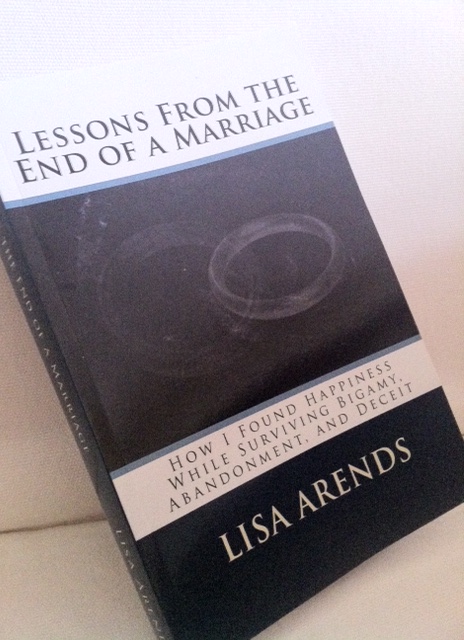
The proof copy of the book came in the mail today! 🙂
It’s a bit strange. I’ve gone from being completely ignorant about self-publishing to being to go-to person amongst my friends in the span of two months. I’ve already explored the early stages of the process here and now I will share some of the other hits, suggestions, frustrations and random thoughts about the process now that I am a whole month wiser (I need a sarcasm font!) and I have a couple more iterations of my book under my belt.
Because endless formatting and the start of the school year have left me unable to assemble sentences coherently, I’m going to present this in a series of rambling bullet points.
– ebooks are da bomb! Both programs were easy to work with and the formatting took a minimum of hassle. After I got my head around how certain styles and formatting options looked in html (the file type used for e-readers), it was pretty simple. The main difference between the two programs is that Kindle wants page breaks and PubIt! want section breaks (the latter is also used in CreateSpace so starting from a PubIt! formatted file saves some time).
-For the initial digital cover, I first tried using Fiverr, but I wasn’t happy with what came back. I ended up using Clipart (the online library is pretty good these days) to create my own image in the specified dimensions, saved it as a PDF, and then converted it into a JPEG. It was pretty simple. The main criteria to keep in mind is that the cover needs to look good as a thumbnail.
-I’m not sure about PubIt!, but Kindle offers formatting for a fee (under $100) if you don’t want to tackle it yourself. Otherwise, it’s free. Honestly, it was simple enough, I wouldn’t pay for this service.
-Another benefit of the ebook format is that you can update your file at any time. The turnaround seems to be a few days for the old file to be replaced with the new.
-I was planning on delaying the release of the print book for several months, mainly to give myself a break and to allow time to collapse after the early days of the school year. Alas, it was not to be:) I was surprised how many people not only preferred tangible books, but did not have access to an e-reader, smart phone, or iPad. So, I quickly got to work reformatting.
-Print books are another animal entirely. With an e-reader, you don’t have to worry about where the text breaks because it is different on every device and changes with the user settings. A paperback is static. You have to get that spacing right. CreateSpace walks you through the process. After I selected my book size (6″x9″), I downloaded a free MS Word template in which to paste my text. This is where I made mistake #1. I assumed that the template was already sized for the format I selected since it came after I was prompted to choose a size. Wrong. The template was for a standard size page. So, I formatted (and numbered!) the whole thing incorrectly on the first pass. Grrr. Unlike me, you should change the paper size (under page formatting) first. The template is a bit strange to get used to – it looks like an open book but the odd pages are on the left, not the right as it will be in print. Have fun with that one.
-I decided to purchase an ISBN number ($99) through Bowker so that I have options regarding distribution. CreateSpace gives you information on all of your options. As a side note, if you purchase your own ISBN, you are technically opening your own publishing house. I’m having fun with that one.
“What did you do this summer?”
“Oh, I just wrote a book and opened my own publishing house.”
Giggle:) I don’t tell them it was as easy as providing my address and credit card number.
-Next, set your margins. For most books, set the outer margins to .50 and the inner to .75. If your book ends up greater than 400 pages, your gutter will need to be increased.
-At this point, I recommend uploading your file to CreateSpace so that it can scan for errors and you can view the document in their mock-up program. This way you can fix any margin or gutter issues before you spend time on fonts and spacing. And, yes, this would be mistake #2. You can upload Word or PDF files. I had better luck with PDF holding true to format.
-Now it’s time to start working with the text. Make sure all of the text is the font and size you desire. I’m not going into all of that here – Google it for more information on fonts than you ever wanted to know. Size everything the way you want it before you begin monkeying around with spacing. Yup, you guessed it. That was my mistake #3.
-Okay, you’re margined and sized? Now you have the delightful task of playing with spacing and section breaks. If you need to change entire paragraphs, select the entire document and play around with Word’s paragraph settings. You can specify where they break, if words are hyphened, and the amount of space between paragraphs. Once the basic settings are where you want, go page by page and make sure that paragraphs are where you want. Remember that new chapters should always begin on odd numbered pages (left side in the template). If you need to add a blank page to make that happen, use a section break. One quirk to be aware of – you are not allowed more than three blanks in a row, including at the beginning and end of the book.
-A brief interlude: Save multiple copies of your file as you move through the process. My file became corrupted as I was putting on the finishing touches. I had been saving versions of it at various points, which ended up saving me. I still had to redo all of the formatting, but I could dig through several versions to find the most recent, yet uncorrupted, file.
-The final step is to insert headers (usually title or title/author) and footers (page numbers). I used the directions on this site. Once you get the hang of it, the page numbers aren’t too bad. Until you get the hang of it, you want to throw your computer out the window.
-Speaking of computers…I have a cute little 11″ MacBook Air. I love the thing. It’s small enough to slip into my purse or a backpack and take to the park or a coffee shop. The battery lasts long enough that I rarely have to worry about bringing along a charger. During the formatting process, however, my computer was not my friend. Its screen was simply too small to be efficient. If you have access to a large monitor, use it for this process!
-I thought I was home free after I finished the interior of the book. I was planning on using the image from my thumbnail in the cover template from CreateSpace. Yeah, not so much. First, the cover creator in CreateSpace is pretty (read: very) limited. There are only a handful of templates to choose from and they offer little in terms of customization. After discovering that the pixel count wasn’t high enough in my original image (they suggest 300 dpi), I had to start over from scratch. I was frustrated with the lack of choice, but I didn’t want to spend the time or money to create a cover (much harder to do for a physical book) without the template. If you use their program, try to enter the process with only a general idea of what you want so that you are not frustrated with their (lack of) options. If you’re still counting, I would call that mistake #4.
-As with Kindle, you can pay CreateSpace (around $300) to do the formatting for you. This may be worth it, especially if you have images or other elements that make it difficult to format.
Overall, self-publishing is relatively easy and can be done for little to no money. It is a great option to get your book out to the world without relying on the whims of agents and publishers. So, what are you waiting for? Finish that book you’re always talking about writing!


 Lessons From the End of a Marriage