My Lesson From the Blue Zone

This morning, as I was dicing fresh ginger and tumeric for a chickpea curry, I was transported back to a semi-cultivated garden I toured a couple weeks ago in Costa Rica. As we trekked through the plot on our way to a waterfall, the guides would point out interesting plants and invite us to taste the fruits and roots of what we encountered. It seemed that each description included the healing properties of the plants and it was this I was fondly remembering as I compared my small, rinsed tubers this morning with the muddy and generous roots from Costa Rica that seemed to grow with such wild abandon.   Maybe by ingesting these roots I could summon up a little of that pura vida that I feel like I left back in the jungle.

The region of Costa Rica that I visited, the Nicola Peninsula, is one of five so-called Blue Zones in the world, regions that are characterized by widespread well-being and prolonged lifespans. Research has identified the commonalities of these five, very different, zones: plant-based diets, plentiful movement, strong social connections, and moderate alcohol intake are shared traits of these happy and long-lived cultures.

Based on my experience in Costa Rica, I think there is another, less tangible, characteristic.

Acceptance.

A major storm devastated the area mere days before our scheduled arrival. Even after we were assured that the roads were passable and the resort was open for business, I feared the worst.

I need not have worried.

Although the destruction was evident in the flooded yards, potholed roads and washed-away concrete along bridges, the atmosphere was one of lighthearted determination, as people rallied to rebuild the infrastructure before the start of the official high season for tourism.

When asked, the people would speak about the enormity of this flood as compared to the usual deluges of the rainy season. They would describe what was lost and recount some of the more tragic stories. Yet in every retelling, I noticed that something was absent – there was no attachment to the story, no woe-is-me coming through in the tone. The destruction just was. It was a fact, something to be quickly accepted so that the work could begin.

The inhabitants of this peninsula have frequent training in the power of acceptance. Every year, the torrential rains wash away and the dry season scorches. Seismic activity reconfigures waterways and roadways and even reduces concrete to rubble. The wildlife frequently reminds the people that they are merely visitors, as evidenced by a matter-of-fact recounting from a woman about her dog being snatched off its leash by a crocodile.

Our resort had an amazing coffee and juice bar that seemed to be the local equivalent of a Starbucks, where people would bring their laptops and textbooks to work in a communal environment. Only in this coffee shop, the Wi-Fi was anything but a given, as the internet seemed as tempermental as a teenager. And when service was disconnected, the locals seemed to take that as a sign to simply relax for a few minutes or even an entire afternoon.

This attitude of acceptance permeated everything. The country is often described as “laid-back,” but that implies a sense of laziness that is certainly not evident. Instead, the people don’t waste their mental energy on “what ifs” and “why mes.” They reserve their energy and attention for appreciation of what they have and to shape those things they can change.

Pura vida, indeed, and a lesson we can all strive to be better at no matter where in world we reside.
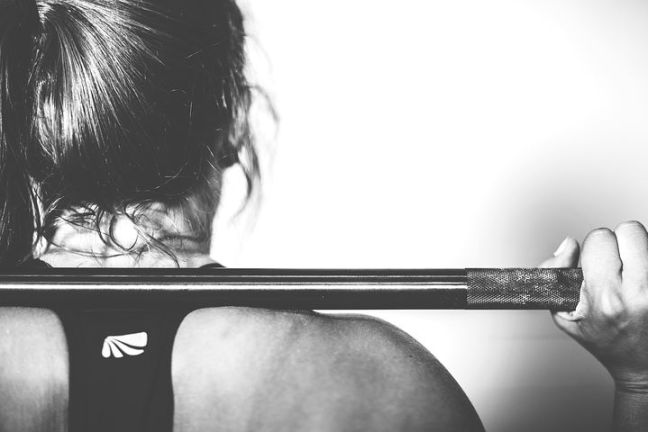
 

The Problem With Always Being “The Strong One”

strong

On Wednesday, I taught the wrong lesson to my 6th grade classes. And then on Thursday, I somehow lost the lesson I had previously prepared for my 8th grade classes. Friday was blessedly uneventful and then on Saturday, I walked into my yoga studio without any of my yoga gear.

None of this is like me. I’m always the Type A, super-planned and over-prepared type of person. My yoga bag, that I’ve never forgotten before, has two of everything. You know, just in case.  I’m the one that acted as a reminder and an alarm clock for friends and family before phones evolved to provide those services. My brain usually attends to details and dates without a problem. Both professionally and personally, I’m seen as the dependable, responsible and has-her-stuff together one.

But right now, that’s not the case.

Luckily, I’m not having trouble because of anything bad. I’m just struggling to handle too much. Yet in some ways, the results are similar. I’m having a hard time and, because I’m typecast as “the strong one,” I don’t always feel like I’m allowed to have a hard time.

I see this dynamic so often in single parents as they appear to balance it all during the day, only to collapse in tears behind the privacy of the closed bedroom door at night. They have no choice but to be strong – to keep it together for their children, even as they feel like they’re falling apart.

On the one hand, it feels good to be deemed strong, it means you’re independent, determined and resourceful. On the other hand, the moniker often brings with it an additional burden.

Because when you’re always the “strong one,”

You don’t feel like you’re allowed to break down.

When you’re always told that you’re strong or that you have it together, you don’t feel like you’re given permission to be any other way. You may be  told that you put this pressure on yourself, but the labels also promote this pressure. The expectations are there, you can uphold them or dash them.

You help others even when you need help.

When you’re the strong one, others depend upon you. Your own hardships get sublimated or postponed in your efforts to support others. Sometimes, this can be a blessing, because you’re not able to wallow when you’re busy lending a helping hand. Yet other times, you push yourself to exhaustion because you don’t give yourself permission to take a break.

You feel like you have to maintain the image.

When you’re the strong one, others look to you to learn how to push through. And you don’t want to let them down. Once you’ve assumed that role, it’s hard to take a break from its demands. And if you’re modeling fortitude for your children, it’s even harder to admit that sometimes you simply can’t do it.

People minimize your struggles.

“Oh, you’ve got this,” your friend breezily says as you try to confide your growing panic. When others perceive you as indomitable, they have a hard time believing that you are really fighting to keep it together. Your complaints are brushed aside or excused with a pat response, leaving you feeling like you have to do this alone.

You don’t know how to ask for help. 

You’re not accustomed to asking for help, so you ask quietly, or obtusely. Since you’re the one others turn to, you don’t know where to go now that you need support. You know that it’s okay to ask for help, but you still grapple with truly believing it.


All of us have time when we are the strong ones and time when we need to rely on the strengths of others. There is no need to be typecast in one role or the other, we can all move fluidly between the two positions.

One of the gifts I received from my divorce was the shattering of my lifelong “strong one” title and the need to learn to accept help. Even in my weakened state, I learned that people didn’t think less of me because I couldn’t do it all. In fact, I think, if anything, my increased vulnerability made me even closer with others.

Because all of us have times of strength and times of need.

It’s okay to embrace your role as the strong one.

And it’s also okay to let it go.


Turning Back the Clocks

My social media feeds this morning have been filled with various iterations of the following:

IMG_1074

The meme made me think. If I could turn back the clock to twenty, would I want to?

My immediate (and powerful) reaction was hell, no.

I had a specific image of twenty come to mind. I was in the living room of the apartment that I shared with my now-ex. The generous space was only furnished with a cheap couch from Montgomery Ward and a large, black, hand-me-down trunk that was serving as a television stand. It was shabby and yet I had such pride in the space because it was mine.

It was a Sunday, and so I was home just after 6:00 pm from my job as the manager of a tanning salon. I was grabbing a quick bite to eat before tackling an assignment for one of my classes (which was always frustrating because this professor used an online platform for submission and our dial-up internet often wasn’t up to the task).

While eating, my then-boyfriend came through the door. As always when he returned from his work at Sea World, our pug pressed her nose into every inch of his uniform, inhaling the delicious (to her) smells of sweat, oil and fish. He soon stripped off his uniform and headed to the shower while I headed to the home office to begin my assignment.

We were in limbo that year. His job offered no opportunity for advanced, he found the work un-stimulating and the wages were not sufficient to provide for any real future. He didn’t have much direction, but knew that we would most likely have to leave San Antonio in order for him to secure something better in his field.

Meanwhile, I had already given up on my first degree choice and was weighing options for a second choice while I completed the basic requirements. I hesitated to make any firm decisions, waiting instead to see where his job would take us.

Yes, in some ways life was easier then. Having little in terms of income or possessions meant there was little to lose. I had the certainty only found in the young that my boyfriend would always be by my side. I was drifting, but also not too worried about it because time seemed to stretch out in front of me like an endless Texas highway.

But I still wouldn’t want to go back.

Because I am grateful for every experience I’ve since then, either because I enjoyed it in the moment or because that event imbued me with wisdom and perspective. And even though I would love to have the smooth skin of twenty again or the ability to recover easily from a late night, I would much rather have the more wrinkled and tired version of myself that I am now. Because this is the person that my twenty-year-old self was waiting to find.

How about you? Would you want to turn back the clock? If so, to what age?