
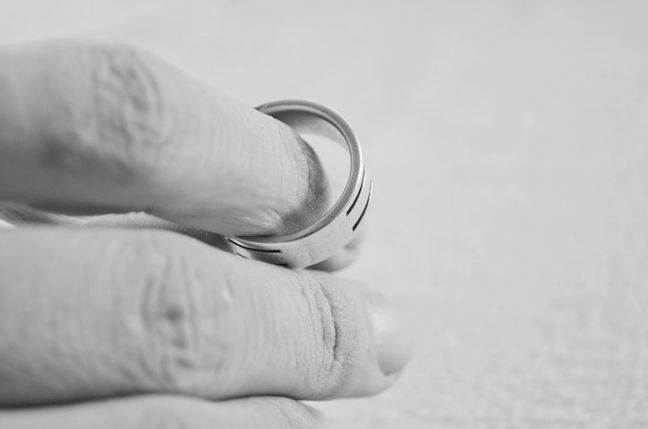
Have you reached the conclusion that your marriage is over yet you are still questioning your decision? Are you haunted by the thought that maybe you didn’t try hard enough to save your marriage and that you were too hasty in pronouncing it dead? Are you experiencing guilt surrounding your decision to divorce, especially as you see the ripple effect that it has on others?
I can’t reassure that you did everything you could and I also cannot tell you that there was more that you could have done. Only you know the particular culture of your marriage, the efforts you put forth and the responsiveness (or lack thereof) of your ex. But maybe I can help you find some clarity in your decision.
Just the fact that you’re stressing about your choice means that you are giving this decision the attention it merits. Your questions are a natural response to a life-altering conclusion, a sign that you take your commitments seriously and that you have empathy for the impact that your choices have on others. Furthermore, by wondering if there was more that you could have done, you’re demonstrating personal responsibility, an honorable trait.
Yet even though that questioning is a sign of consideration and character, listening to the constant barrage of “What ifs…” can drive you crazy, especially in the immediate aftermath of the split when everything seems worse than before. This constant doubt can hold you back, keeping your energy focused backwards instead of moving on from where you are.
The decision to divorce is rarely clear-cut. It’s no wonder you’re feeling confused when the waters are murky. This is especially true when you are unable to make a mutual decision about divorce, when the decision rests entirely on your shoulders. Maybe you’ve spent years trying to get your partner to engage and they continually refuse to put forth any effort in the marriage. Perhaps you’ve endured endless cutting words and psychological sabotage. Or possibly your partner is okay with a mediocre life and marriage but you desire more.
Regardless of your situation, your sphere of influence can only travel so far. You can makes changes within yourself. You can talk to your spouse about what you want your marriage to look like. You can ask for changes, suggest ideas and implement new strategies. But you also cannot do all of it alone. If you’re not satisfied with your marriage and your partner is refusing to work with you, you’re ultimately left with three choices: 1) accept the marriage and your spouse as they are, 2) stay in the marriage and continue to be unhappy and frustrated, or 3) leave.
I like to compare these choices to what happens when your bicycle breaks down:
I see the vows as like the wheels on a bicycle. Ideally, both are fully functioning and working in concert. If one tire is a little flat, the other can help support the weight for a time until the tire is re-inflated. If one wheel is bent, the ride may not be over as long as the metal is hammered back into shape. Yet if one wheel is removed, the bicycle is useless no matter how hard the remaining wheel works. And it’s time to either find a new wheel or learn how to ride a unicycle.
Here’s a painful truth – even if the decision to divorce was the right move in your case, it doesn’t mean that you’re necessarily going to feel good about it. The right thing is rarely the easy thing. And sometimes the decisions we have to make are going to result in some collateral damage. (Here are your responsibilities when making a decision that will negatively impact others.) You have to balance your needs with the desires of others.
For parents, it is impossible to separate the decision to divorce from the impact it will have on the children. You may be wondering if you should have stayed and dealt with your unhappiness quietly in order to preserve a two-parent home for your kids. Yet this is often presented as too simplistic of a choice: go and it’s bad for the kids or stay and it’s good for the kids. Both options have both potentially detrimental impacts and allow for new possibilities. Divorce is difficult for children, but so is staying in a home with fighting or constant negative energy. Make your choice and then do what you need to support your kids.
It’s common to question the decision to divorce in the year following the initial separation. This is a challenging time for everyone, a dismantling and demolition. From this vantage, it can often seem that the decision was made recklessly because the marriage doesn’t seem so bad compared to its aftermath. Be patient and compassionate with yourself during this period. This temporary struggle is not a sign about the integrity of your decision to divorce.
Some of the most difficult divorce decisions come when you still love your partner but you are unable to stay married to them for some reason. That’s a hard pill to swallow, that just because you love someone, it doesn’t necessarily mean that you’re good together. It’s true, sometimes the greatest sign of love is letting someone go. Even when the release hurts likes hell.
As you move forward with greater wisdom and self-reflection, you may indeed realize that there were things that you screwed up in your marriage. You can allow this to solidify into guilt and regret or you can accept that you did the best you could at the time and promise to not let those lessons go to waste in the future.
Related reading:
What Makes a Marriage Successful? (And Why Divorce Doesn’t Mean Failure)

 Lessons From the End of a Marriage