Why “Too Good” Isn’t Actually Good For Us

I live in a safe, suburban area. Runners don’t hesitate to fill the streets in the predawn dark and teenagers walk to their friend’s homes at night. Cars often remain unlocked and garage doors stay open for much of the day. When unclaimed dogs are found roaming, they are swiftly rescued, usually followed swiftly by a happy homecoming.

It’s good. Maybe too good.

I am a member of the local NextDoor app (super cool – check it out!). It’s handy for finding someone to repair drywall or to help locate the owner of those roaming dogs.

And it’s also useful for sounding the alarm when it’s needed.

As recently seemed to be the case. A story was posted about a man in a van (sounds like some twisted Dr. Seuss book, doesn’t it?) that was trying to grab children on their way home from school. People panicked. Kids were kept indoors. The school sent home a flyer. Neighbors patrolled the streets looking for this van.

And then came a somewhat timid post from a person who had contacted the local police station to find out the status of the investigation.

Only to find out that there was no investigation. Because there was no police report. And most likely, there was no man in a van with a nefarious plan.

I get the reaction. I get the caution. I am a full believer in better safe than sorry.

But I also am a firm believer (although not always a full participator) in being realistic about threats. And I know that when things are good, the smallest spec can easily become magnified from a combination of a lack of perspective and a surplus of mental energy.

And that overreaction can become a bigger threat than the original menace ever was.

At some point after my early childhood, parents (with the ever-present help from the product marketers) became increasingly concerned with their child’s exposure to germs. The chicken pox parties of my youth were replaced with the mom doling out squirts of Purell before allowing the birthday cake to be eaten. Pillows were carefully wrapped in hypoallergenic covers and food labels were diligently scanned for possible allergens.

And the kids got sicker. Allergies, including the life-threatening ones, increased. Asthma reached record numbers and the presence of auto-immune disorders climbed with it.

It turns out there is such a thing as an environment that is too clean. Surroundings that don’t sufficiently challenge the immune system on a consistent basis, allowing it to become incrementally stronger and more adept.

And instead lead to overreaction.

Too good isn’t good for us.

We need a little dirt. We need to experience (and be aware of) some actual risk. We thrive when we’re challenged. We flourish when we’re muddied and bloodied.  It’s only in falling that we learn how to rise.

So for today, instead of feeling discontent with whatever prevents your current world from being good enough, try embracing that which soils its surface. Because too good isn’t good for you, but learning to find peace in good enough is beyond compare.


When the Only Way Forward Is to Go Backward

“How are your legs doing?’ another friend asks, knowing that my (knock on wood) final procedures have now been completed.

I find it difficult to answer. The increase in pain and swelling that follows the procedures has now faded, but I am still months away from any improvement.

Because the only way to move the functioning of my legs forward is first to take a step (or several) backward.

The medical term for my diagnosis is venous insufficiency, which basically means that the veins that are responsible for carrying blood back to the heart from my legs aren’t doing their job. Veins rely on a series of valves which close tightly to prevent blood from flowing back down. My valves, instead of being secure doors slamming shut are slack and droopy curtains that do nothing to aid my blood in its battle against gravity to return to the heart. The result? Swollen, painful and tired legs.

The current pathways are faulty and cannot be repaired. There is no amount of exercise or lifestyle change that will provoke my veins to function as they should. The only solution is to remove the malfunctioning vessels and then to allow the body to grow new and healthy routes.

In the short-term, the problem is made worse. After all, minimally functioning veins are better than no veins at all. The swelling is more prominent, the pain and fatigue more pronounced. But in time, improvement is slowly found and optimal functioning is reached.

Backwards to go forwards.


Sometimes relationships develop their own faulty pathways. A suboptimal way of interacting or relating that is laid down out of habit or inattention. As a result, flow is interrupted and there is a backlog of negativity, leading to pain and the swelling of critical feelings.

And sometimes no amount of attention and exercises can modify those malfunctioning patterns. And the best thing to do is to strip them away and to start fresh, relaying new and ideally, healthier, connections.

Backwards to go forwards.

It seems a bit counterintuitive, doesn’t it? But then again, how much of our suffering in life comes not from our situations, but from our resistance to them? Maybe instead of fighting against an obstacle, we can be better served by finding an alternate course.

Much like a zipper whose teeth are misaligned has to be backed up before it can continue on, a relationship on the wrong path has to be reversed and straightened before continuing. To attempt forward progress without proper alignment only serves to jam the zipper. Perhaps causing irreversible damage.

Instead, a deliberate and careful reversal of course along with careful attention can change the outcome, bringing the two halves together. And in alignment.

Backwards to go forwards.

Going backwards feels unnatural. Often it can be painful. We grow accustomed to the pathways we have developed and even malfunctioning connections feel better than the temporary absence of attachments.

It’s easy to panic, to lose faith in the intention and the process. To think that a step back is permanent and doomed to become an unstoppable landslide.

Which is why is so important to hold a long view. To accept some discomfort today in the belief that it will lead to a better tomorrow. To focus more on the rebuilding than on the dismantling. To trust that new pathways can be forged and with them, more understanding and compassion.

To believe that sometimes the only way forward is to go backward.

And to be grateful for the opportunity to try again.

The Sun Is Always Shining (Even When Clouds Are In the Way)

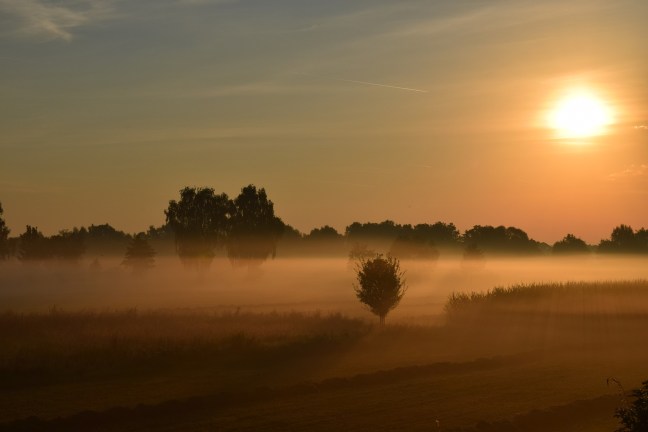
One of my favorite analogies in mediation compares thoughts to clouds passing across the sky. It is often mentioned that the sun is always shining even when its light is temporarily obscured. Similarly, negative or anxious thoughts do not mean that there is not light, it just means that you cannot see it for a time.

Meditation teaches you to note the clouds without judgement and without trying to change them. It teaches you to trust that they are temporary and also inevitable. It teaches you to be at peace in the shade and also to be aware and grateful for the moments of light.

The literal sun, along with the first fall temperatures of the year, blessed the final few days of my fall break. It was enough to convince me to put off some responsibilities and instead head up into the mountains to play.


And play was exactly what I needed:)

Feeling grateful for the opportunity and the reminder that the sun is always shining even when clouds are in the way.

This is Different

I have words in my head again that want to get out. That are demanding to get out, in fact.

But they won’t be shared here. At least not yet.

For the last several years, I’ve poured myself into my published writings. I made a commitment to myself in the beginning that I would always be real. Raw. Uncensored and authentic.

And I have been open and honest in everything I’ve shared about my first marriage, my divorce, my healing process and my second marriage. I didn’t have to worry about a need for privacy because it was either about my own issues or about the (many) issues of he-who-shall-not-be-named.

This is different. For the sake of privacy, there’s a lot that I’m not comfortable sharing in a public forum without performing literary acrobatics that would polish away any rough edges and, I’m afraid, tinge my words with inauthenticity.

And just like I won’t threaten what is being mended by sharing too much, I also refuse to write what isn’t real. So some of those demanding words will be locked away for now, with the continued result of less frequent posts. However, as my world is slowly coming back into focus, some of those words and thoughts will weave themselves into other posts. Hopefully with increasing frequency. Especially because a lot of what I’m dealing with is so common (and often only shared in guarded whispers).

Several of you have expressed for concern for me. And I appreciate it. More than you even know. I’m okay and things are getting better. As I often advise, I’m making self-care a priority right now. And it feels good.

All this is a good reminder that when we get so focused on taking care of others, we can lose track of ourselves.

And that knowing things and recognizing them in others does not mean that you’ll see it in your own home and automatically put your knowledge into action.

A good reminder that life is all about learning and growing and doing better. Both by ourselves and for ourselves and with and for others.

It looks like I was onto something when I chose my screen name stilllearning2b all those years ago. Because I’ve learned a lot since then and in many ways, I feel like I’m just starting to learn.

And as always, I’ll keep you posted on my lessons. As long as I can be real about them. Thanks for joining me on the journey:)


It’s Time For Me to Move Out

Out of my head, that is.

I have a long-entrenched tendency when things get difficult of retreating deep into the recesses of the thinky place. It’s a comfortable place for me where I can maintain the illusion of being able to out-deliberate any problem and I can pretend that I am in control.

It’s comfortable.

And it’s a lie.

It’s the security blanket that keeps me from getting all panicky and catastrophic. The analysis keeps me at a safe distance, as though I’m giving advice rather than being the one who needs to accept it.

It’s the remnants of the, “If I try hard enough, nobody will leave me again,” as I exert mental effort through my actions in a twisted game of barter.

It’s the voice that tells me that I can always do more. Be more. And has trouble receiving the moment.

It’s the tightened grip on the handlebars, having trouble letting go and trusting in the balance of the ride.

I’ve allowed myself to again get too busy. Too stretched.

Too thinky.

Time to move out.

And explore once more.