

The people of Alaska absolutely captivated me.
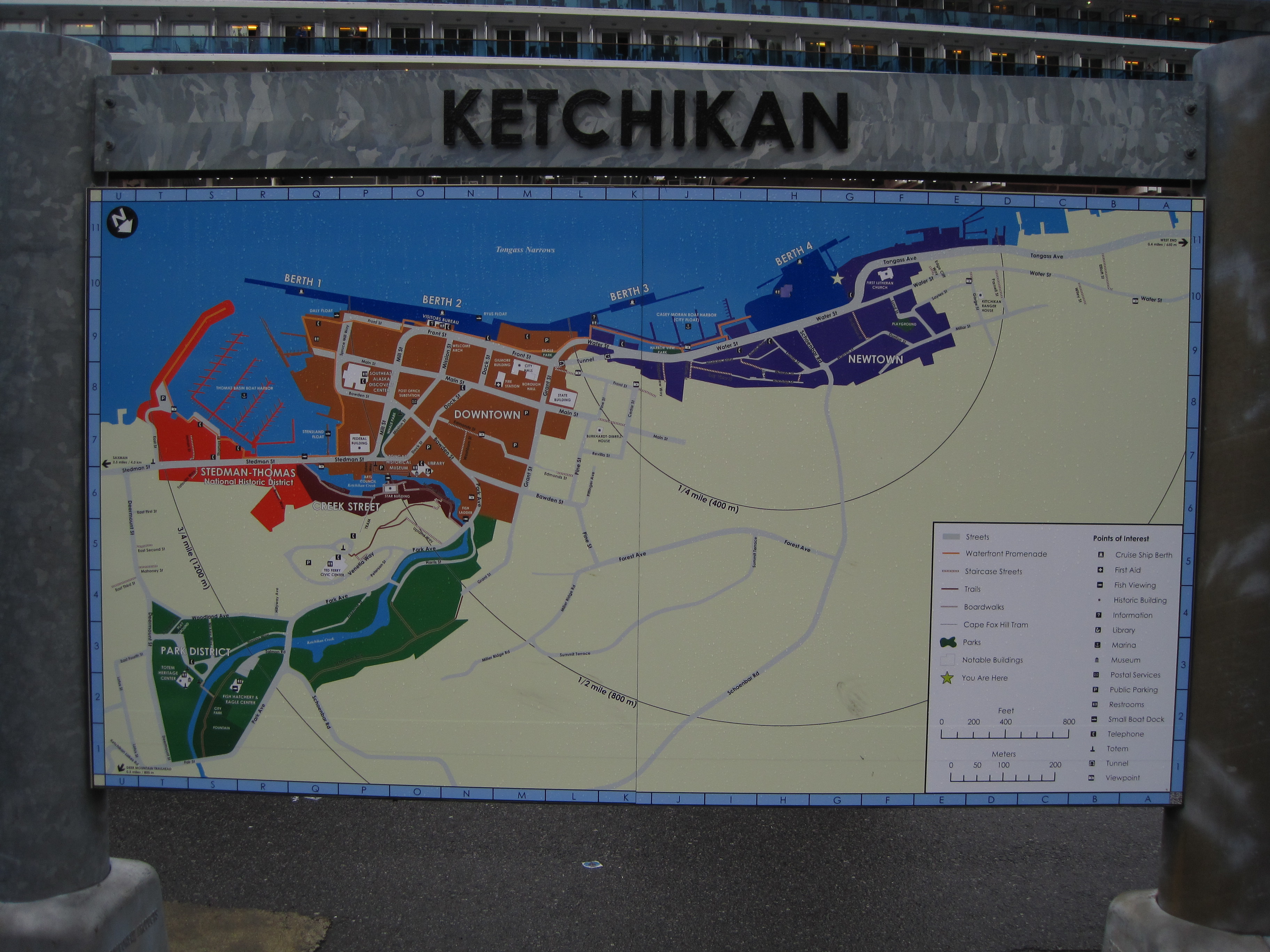
And nowhere was this more true than in Ketchikan, a town of around 8,000 people pressed between the towering mountains of the Tongass Forest on one side and the frigid waters of the Tongass Narrows on the other. Like many Alaskan cities, Ketchikan is only accessible by plane or boat. There are no airports in the actual city of Ketchikan; you must either utilize one of the countless floatplanes or land on Gravina Island and take a ferry across the inside passage into town (this is the site of the proposed “Bridge to Nowhere“).

At first glance, Ketchikan may resemble many other quaint coastal towns that survive off fishing and tourism.
But this isn’t any quaint coastal town. Although the temperate rainforest location helps to moderate the temperatures, this is no pleasure island; an everyday stroll can turn into a fight for survival at any moment. The winds fly through nearby Nichols Passage at hurricane forces through much of the winter months, forcing residents to hunker down and stranding them from any potential way out. The sun never stays long and is usually only visible through the ever-shifting layers of clouds. The forest is untamed and the wildlife is not safely tucked away in some zoo.
Survival is a way of life here.
But it’s not a way of living.
One of the benefits of taking this trip with my extroverted husband is that he engaged in conversation with everybody. We learned that one of the employees for Ketchikan Outdoors was brought there by her mom in middle school and now, as a college student in the lower forty-eight, returns to Alaska in the summer for work. She told us about the transition from a middle school with 1,000 students to one with 200 and the need to take a ferry for any interscholastic sports competitions. We met the owner of the excursion company, who first saw the city on a cruise and made the decision to move there after a second visit where he fell in love with a woman as well as the town. Our guide decided to call Ketchikan home after experiencing its raw and powerful beauty. And our server that afternoon was born and raised in the small town and, after a brief stint away, felt called back home.

Each of these residents spoke in glowing terms about their community. Yet they also remained firmly anchored in reality; life in Ketchikan can be hard.
So they prepare for the worst.
Every 7th grader is required to undergo survival training and complete a survival hike. The 8th graders have to demonstrate their survival skills with an overnight island stay with minimal supplies. Residents carry survival gear in the colder months for even a short trip into town, realizing that the weather turns on a quarter dime in SE Alaska. Nothing is taken for granted as winter approaches, supplies and food gathered and stored.

Yet they expect the best.
It would be easy to become fatalistic about death here; it takes far too many before their time. Yet even though tragedy is a constant threat, the people of Ketchikan possess a limitless spirit of hope and teamwork. We heard one story of a small fishing boat crashing within sight of the city. The stranded boaters immediately went into survival mode and one was spotted in a tree by a little British lady on her Zodiac excursion. The weather may have bested them, but they had faith in themselves and their community.

And they live for today.
I think I understand what is so captivating about Ketchikan – it is a place of acceptance and living in the moment. The shifting clouds change the views from each second to the next. The eagles swoop past in a flash and the whales peek through the waves. It’s a place that refuses to be tamed, to be controlled and molded into some imagined ideal.

Because it is perfect just as it is.
Although I think I’ll limit my visits to the summer months:)
If you ever find yourself in Ketchikan (and I hope you do!), I strongly recommend the Zodiac boat tours by Ketchikan Outdoors. They are a great group of people who run a great operation. We were the envy of our cruise ship!
 Lessons From the End of a Marriage