Society makes assumptions about those who are divorced. Maybe we lack the fortitude to persist through difficulties. Perhaps we possess some great fatal flaw that makes us unable to sustain matrimony. Or, possibility we are flighty, given to jump in without thought and give up just as easily.
There is often shame inherent in admitting that one is divorced, like some scarlet letter “D” is forever branded upon your character if your “ever after” ended sooner than expected. It’s as though you failed at one of the biggest assessments you face as an adult.
In the strictest sense, my marriage did fail. After all, it ceased to exist upon the receipt of the horrific text: “I’m sorry to be such a coward leaving you this way but I’m leaving you and leaving the state.” Furthermore, my husband failed me through his betrayal and abandonment. I failed him by not seeing that he needed help and I failed myself by not being aware of his actions and the signs of a crumbling marriage. Yet, even with all that defeat, I refuse to look at my marriage as a failure. That label undermines our years together with all its shared memories and joys; the shared life and experiences are negated with that single word. Although I did feel as though I failed in some ways, I was adamant that I was not going to let my divorce define me as a failure.
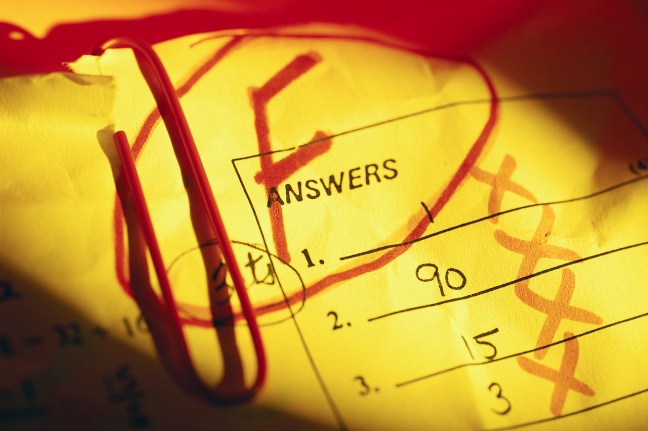
Failure is an act, not a person. I’m divorced. Not defective.
As I grappled with the end of my marriage, I found comfort in the words of others. Others who had faced their own challenges and were determined to learn from and grow from their mistakes and unrealized goals. Read the rest on The Huffington Post.
Forgiveness Mandala by Wayne Stratz (Photo credit: Nutmeg Designs)
Forgiveness. That word is often tossed about in hushed and almost reverent tones. It is the holy grail of one betrayed. Have you forgiven yet? We feel pushed to reach that nirvana, yet we are unsure how to navigate the labyrinthine path that leads us there. Nor are we even sure that we would recognize our destination once we have arrived. The trouble is that forgiveness will take on a different facade for every seeker and the path will vary depending upon who is stepping upon it. Even though forgiveness is an individual journey, there are some universal guideposts that can help you navigate your own way.
Understand What it is Not
Someone has wronged you. I get it. I’m not trying to take that away from you. Forgiveness is not a pardon. It is not excusing actions that are immoral or illegal. It is possible to accept the past, acknowledge the wrongs, but not be help prisoner by the actions of the object of your anger.
Blur
Forgiveness has always reminded me of one of those optical pictures where you have to relax your eyes and unfocus in order to see the image hidden in the pattern. If you look too hard and focus too much on absolution, it will remain hidden. Think of forgiveness like a shy kitten. If you lunge towards it and try to grab on, it will run away every time. Relax and soften and let it come to you.
Time
Forgiveness takes time. You can’t schedule it like an event upon a calendar (trust me, I tried). The time needed to forgive will differ for everyone. It doesn’t mean there is something wrong with you if it takes you longer than it did your friend. Be patient and allow it to unfold on its own schedule. I know, it is easier said than done, but that is the nature of this elusive beast.
Keep Living
Luckily, while you’re waiting for the forgiveness fairy, you can keep living. Don’t put your life on hold. Move forward and move on. Surround yourself with people that bring you joy. Play. Laugh. That ember that still burns inside does not weigh so much that you cannot move despite it. Live as though you have forgiven.
Gratitude
Gratitude and anger are mutually exclusive. Be mindful of what you have and (brace yourself, this is the hard part) what you gained from the person that you need to forgive. I know, your hackles went up. “That ^#%^&? How can I be grateful?? He/She did _______ to me!!” True. I’m not trying to take that away from you. You have a right to be angry. But you also have a right to see the good. Look for it.
Remove the Ego
We all find humor in the self-centered world of the 5 year old, yet we really haven’t evolved that much from kindergarten. When things happen around us, we have a tendency to believe that they happened to us. For example, your child comes home and immediately is defiant and argumentative. Your defences go up and you perceive your progeny’s behaviors as an attack. If you take a moment and breathe and remove yourself from the equation, you most likely realize that the instigation for the behavior is probably something that happened at school minutes or hours before. Spouses are no different. Perhaps you weren’t really a target after all, just collateral damage.
Humanize
We are familiar with the concept of putting someone on a pedestal when we idolize them. We essentially do the same when we demonize a person. It can be easy at those extremes to see a person as two-dimensional, flat. We conveniently remove those characteristics that do not fit our perception. The truth is that we are all human in our messy and sometimes contradictory three dimensionality. Allow yourself to see the human side of the object of your anger. Let your own humanness peek out as well.
Start With Yourself
It is amazing as you take the journey of forgiveness how much changes as your perspective moves. You may be surprised that the target, the object of your wrath has shifted to yourself. We don’t like to be angry at ourselves; it feels traitorous, so we often project it on another. Like with everything, you have to begin with yourself. Soften to your mistakes. We all make them. Be gentle with yourself yet firm in your intentions. Let it go. It’s okay.
How will you know when you have reached your destination? There is no placard that says, “You are here.” No one stands at the gate and hands you a medal. Perhaps forgiveness is best described as peace. I hope you can find your own nirvana. Please leave breadcrumbs for those who follow behind.
When I married for the first time, I changed my name without thought. I was happy to replace the name that I associated with childhood with one that I related to becoming an adult.
I was young – 22 – and I had not yet accomplished much with my given name. Shedding it caused me no harm, only the hassle of making the changes to accounts and cards.
I embraced my wedded name, had no regrets. And, yet, in court when the judge was finishing the last of the paperwork, I was struck dumb when she said, “And I assume you want to keep your last name of B—-.”
After the mute shock wore off, it took everything in my power not to scream, “$#!@ no!” I wanted away from that name as much as I wanted away from that artificial life. Besides, since he committed bigamy, there was already another Mrs. B—. That’s too many in my book.
My given name was legally restored that day yet I continued to use the other professionally for the remainder of the school year. It was strange time, bridging two worlds and using two names. I worked under one name yet was applying for new jobs using another. I had accounts and cards in both names. I started my first real Facebook account using my maiden name and it suggested that I friend myself that had the married name (I had an unused account that I opened out of curiosity). For a year, I carried my divorce decree in my purse so that I could prove that I was one and the same, even though I felt worlds apart from my former Mrs. I almost felt like a fraud.
Changing my name was different at that point. I was 32. I had made a name for myself professionally and had hundreds of former students who knew me only as Mrs. B—. I almost lost the opportunity for the job I currently hold. Upon receiving my resume, one of the administrators realized that she was close friends with a former coworker of mine.
The administrator called her friend, “Did you used to work with a Lisa Arends?”
“No,” replied the friend, assuming that I was some charlatan.
She was telling the truth. It was my other self that had worked with her. Luckily, she realized the duality of my identity and called the administrator back to clarify.
That was a wake up call for me.
In a time when women married young and operated primarily in the domestic sphere, a name change was harmless. Now, with women marrying later, working outside the home and facing the realities of potential divorce, a name change can have very tangible consequences. Most discussions that I see on issue address it from a philosophical perspective, eschewing the patriarchal origins or talking about embracing the new family.
That’s romantic and everything, but what about the real world?
When my parents divorced, my mom had no real choice but to keep her married name. She had spent years building up a small business and her name was key to the word of mouth. No name = no way to put food on the table. She has since remarried yet retains her prior married name, at least in the professional realm. Ideal? Perhaps not. But practical.
I am choosing to do much the same. Although I refused to keep my former name out of principle, I now am operating out of practicality. When I wed again this fall, I will keep my given name. I simply have too much to lose if I do not.
On a side note, this reminds me of one the nicest gifts I have ever received. I won Teacher of the Year under my old identity. After the divorce, the plaque, which once occupied a place of honor in my classroom, was relegated to a closet since it was no longer in the right name. For my birthday (the first we were together), Brock snuck the plaque out of the closet and had the nameplate redone to match my new identity. Yes, I cried.
I queried my Facebook followers the other day on this topic. Many of them had also faced setbacks and hassles with multiple name changes and do not intend to change it again, regardless of changes in marital status.
Did you change your name? Would you do it again? How do handle (or intend to handle) the kids’ names (an issue I don’t have to worry about:) )?
It’s always funny when my students comment on my former name. When they see Mrs. B— scrawled across a clipboard or emblazoned on a book, they ask, “Who is she?”
“Oh, just someone I used to work with.” She feels like a lifetime ago.
Besides, Tiger doesn’t care what I’m called, as long as I’m still his momma:)
Green smoothies are gaining in popularity as people realize that they are a great way to increase your consumption of leafy greens in a easy and great-tasting smoothie.
You may be amazed to discover that spinach can be make to taste like a mint chocolate chip shake or that kale can be blended into an apple crisp smoothie! Green smoothies are a great, easy way to eat (okay, actually drink) your veggies while enjoying great flavor and the convenience of a shake.
Leafy greens are low in calories yet high in vitamins, fiber and minerals. Their high water content means that it is difficult to eat them whole and raw in large quantities but this same characteristic makes them very blendable. It is quite easy to make almost half a pound of greens disappear into your smoothie!
In addition to the greens, these smoothies are chock full of other healthy ingredients: fruits, nuts, seeds, spices and even dark chocolate. These filling foods mean that these smoothies make a great snack or even a meal and can be a great component of a weight loss plan.
Many of these recipes are kid-friendly and can be a great way to encourage a greater intake of fruits and vegetables.
One of my favorite benefits of green smoothies is that they are easy. The greens don’t require any special prep. The oven is never turned on. All I have to do is throw a bunch of ingredients in the blender and let the machine do its job. It doesn’t get any easier!
This collection of recipes is sure to please your palate and your health!
You would think that I would be used to endings by now. I finish several books a week, following the tales to their final word. I run races, keeping my eye on the finish line. My weekdays are filled with bells that signal the end of a class period seven times a day. I’ve been through 29 last days of school – some as a student, some as a teacher and a few as both. Hell, even my blog is about an end.
So why do endings, even the ones I look forward to, still manage to feel abrupt? Too soon? A premature conclusion reached before resolution?
This past Friday was the last day of school with kids. I had been waiting for that day, counting down since the end of the spring testing season. Many days, it felt like the end would never come. The days felt longer, the children squirrelier.
But then, that final bell did ring.
As I watched those faces pull away in the school buses for one last time, I felt a loss. For the past nine months, I have laughed and cried with those kids. I have driven them crazy and they have driven me crazier. I’ve struggled to help them make sense of algebra and we have struggled together to make sense of tragedy. For nine months, those 120 teenagers are part of my extended family. And then they’re gone. I will never see or hear from most of them ever again. In one day, they go from constant presence to memory.
Eighth grade is a crossroads year. It is time when teenagers are beginning to develop themselves apart from their parents. They are learning to make choices and beginning to understand the nature of consequences. They try on different personas as often as outfits, going from class clown to teacher’s pet and back again in a blink of an. I call them 150 lb two-year-olds, as they test boundaries yet want to know that you’re still looking out for them. I see them develop over the year into more independent beings but I don’t get to see the conclusion. In May, many of them are still at a crossroads and I am unsure which path they will choose.
It often feels unfinished. I find myself, years later, wondering about certain students. Hoping they did okay yet fearing that they did not. I have to trust in them and relinquish any influence. Sometimes, I receive the gift of an update when former students track me down. It’s funny – I can see the echo of the eighth grader I knew in these adults, yet there are years of experiences that have shaped them after they left me. In some ways, they are frozen in time for me: middle school in perpetuum (now that’s a nightmare!).
I think we all struggle with endings, even those that we initiate or those which we welcome. Every ending has elements that we relish leaving behind and facets that we will miss. Every ending brings uncertainty and transition. Every ending requires a re-scripting and reappraisal as we disentangle ourselves from the past and set course for the future. Every ending has opportunity.
My school year begins with a list of names. Monikers with no faces, no personalities. My year ends with a list of names, as I file reports and stuff report cards. Only now these names have meaning. Visages. Character. The year may have ended, but its impact has not. Those nine months together have influenced us all regardless of what our collective futures hold.
We tend to see endings as a termination, a conclusion. Perhaps it more accurate to think of them as a transition, a sign of change. It may be over, but its reverberations carry forth.



 Lessons From the End of a Marriage